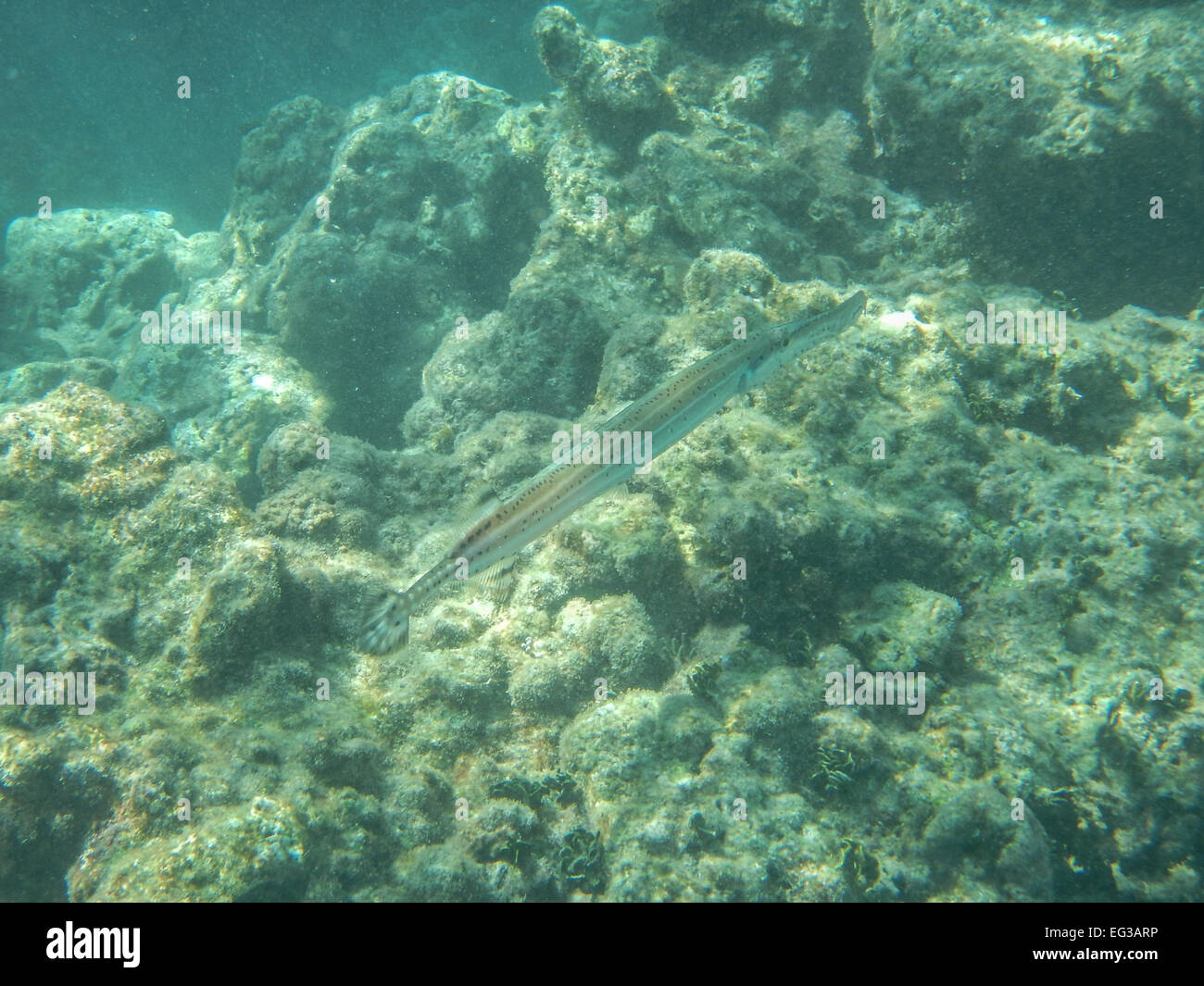
Long, skinny fish are not truly rare in the ocean; rather, many species are highly specialized, elusive, or inhabit deep-sea environments that make them infrequently encountered by humans. While some, like the giant oarfish, are legendary for their size and rarity in sightings, others—such as needlefish, trumpetfish, and various eel species—are common, familiar inhabitants of reef and pelagic ecosystems.
Understanding the Diversity of Elongated Marine Life
The perception that long, skinny fish are "rare" often stems from a confusion between biological population numbers and the probability of human observation. In marine biology, body shape is an evolutionary response to environmental pressures. Elongated bodies, often referred to as anguilliform or filiform shapes, provide specific tactical advantages in the ocean, including the ability to slip through tight coral crevices, reduce drag for high-speed bursts, or hover vertically to camouflage against vegetation and seagrass.
Because these adaptations serve very different ecological roles, "skinny fish" are found across diverse ocean zones. Some reside in the sunlit, shallow reefs that scuba divers frequent, while others are adapted to the crushing pressures of the bathypelagic zone. When someone asks if these fish are rare, they are usually reacting to a viral photograph of an oarfish (Regalecus glesne) washed ashore. In reality, the "skinny" body plan is a highly successful evolutionary strategy represented by thousands of species.
Taxonomic Breakdown of Elongated Fish
To determine if a specific long, skinny fish is rare, one must categorize them by their ecological niche and habitat. The following breakdown illustrates why some are considered common while others remain enigmatic.
Coastal and Reef-Dwelling Species
Many elongated fish are staples of coastal ecosystems. These are not rare, though they may be cryptic.
- Needlefish (Belonidae): Often found near the surface in bays and estuaries. They are common, though their thin, silver bodies make them difficult to spot unless they are jumping.
- Trumpetfish (Aulostomidae): Frequently seen by snorkelers in tropical reefs. They are masters of stillness, often hanging vertically to mimic soft corals.
- Cornetfish (Fistulariidae): Similar to trumpetfish but even more slender, these fish are widespread in the Indo-Pacific and Atlantic.
Deep-Sea and Mesopelagic Giants
These are the species that drive the "rare" perception.
- Oarfish: The longest bony fish in the world. They are rarely seen because they inhabit deep, offshore waters, usually coming to the surface only when injured, dying, or caught in abnormal currents.
- Snipe Eels: These possess extremely elongated, recurved jaws. They are common in the deep ocean but occupy a habitat that is almost entirely inaccessible to recreational observers.
Evolutionary Advantages of the "Skinny" Form
Evolutionary biology dictates that extreme body shapes are rarely accidental. For fish, a long and slender morphology offers three primary survival benefits:
- Stealth and Ambush: Fish like the trumpetfish use their thin profile to minimize their visual signature. By aligning their body with a branch of coral or a sea fan, they become virtually invisible to prey that rely on silhouette detection.
- Crevice Navigation: The eel-like body (anguilliform locomotion) is the ultimate design for traversing narrow gaps in rock or coral. Moray eels, for example, have evolved this shape to hunt and hide in environments where thicker fish would be pinned or injured.
- Hydrodynamic Efficiency: For high-speed predators like the needlefish, a thin, rigid body allows for rapid acceleration. By minimizing the frontal surface area, these fish can reach speeds necessary to hunt smaller schooling fish, often launching themselves completely out of the water to escape their own predators.
The Impact of Human Observation and Reporting
The "rarity" of these creatures is often a social construct driven by media coverage. A fisherman catching a standard moray eel is a routine event that rarely garners attention. However, a deep-sea specimen like the oarfish appearing near a beach is considered a "sighting" of significant interest.
In 2026, global ocean monitoring programs and citizen science databases, such as those maintained by regional fisheries and oceanographic institutes, show that there has been no significant decline in the population of most slender fish species. The rarity is almost exclusively a matter of encounter probability rather than population scarcity. If a fish lives at a depth of 500 meters, it is "rare" to a human, but it may be a dominant predator in its own specific ecological niche.
Comparative Analysis of Elongated Marine Species
The following table differentiates between commonly encountered species and those that are truly elusive to human observation.
| Species Name | Typical Habitat | Encounter Probability | Primary Reason for "Rare" Status |
|---|---|---|---|
| Trumpetfish | Shallow Reefs | High | Cryptic behavior, not rare |
| Needlefish | Surface/Coastal | High | Rapid movement, easily overlooked |
| Moray Eel | Reef Crevices | Moderate | Primarily nocturnal/hiding |
| Oarfish | Deep Open Ocean | Very Low | Extreme depth and offshore range |
| Snipe Eel | Bathypelagic | Extremely Low | Deep-sea habitat, small size |
Addressing Misconceptions: Why They Seem Rare
The most common misconception regarding these fish is that their long, thin appearance is a sign of evolutionary fragility. In reality, the "skinny" form is robust and ancient. Some of these species, such as eels, have remained relatively unchanged for millions of years.
Furthermore, social media has amplified the perceived rarity of these creatures. Because people only film what they find unusual, the internet becomes saturated with videos of "rare" sightings. This creates a feedback loop where the viewer assumes that because a fish looks strange or alien, it must be an endangered or vanishing species. While some marine species are indeed endangered due to overfishing or climate change, the elongated body shape itself is not an indicator of a species in decline.
When to Consider a Fish Truly Rare
When evaluating whether a specific long, skinny fish is truly rare, biologists look at three criteria:
- Range: Does the fish exist in a single, small geographic location, or is it cosmopolitan?
- Population Density: Are standardized survey nets or camera transects consistently failing to locate them?
- Environmental Sensitivity: Is the habitat of this fish being threatened by human activity?
Most "skinny" fish satisfy none of these. They are often widely distributed and have stable, albeit hidden, populations.
Frequently Asked Questions
Are oarfish sightings a sign of impending natural disasters? No. This is a persistent folklore, particularly in various coastal cultures. There is no scientific evidence linking the surfacing of deep-sea fish to seismic activity or earthquakes. These fish often surface due to illness, currents, or shifts in water temperature.
Do all long, skinny fish have similar diets? No. The diet varies significantly by species. Trumpetfish are ambush predators that feed on small fish and crustaceans. Moray eels are opportunistic scavengers and predators. Needlefish feed on small baitfish at the surface. Their body shape is an adaptation for locomotion and hunting, not a reflection of a shared diet.
Why do some skinny fish swim vertically? Vertical orientation, often called "head-standing," is a camouflage technique. By aligning with vertical structures like seagrass blades or gorgonian corals, the fish breaks up its outline, making it difficult for predators and prey to identify it as a fish.
Is it safe to touch a long, skinny fish if I find one washed up? It is generally discouraged. Many skinny fish have specialized defense mechanisms. Some, like certain eels, have powerful jaws and sharp teeth, while others might have spines or slime coatings that can cause irritation or infections. Always observe from a distance and contact local wildlife authorities if a large specimen is found.
Practical Steps for Marine Observation
If you are interested in seeing these animals in their natural habitat, prioritize the following steps:
- Snorkeling in Reef Environments: Focus on identifying trumpetfish by looking for vertical, motionless lines among the coral.
- Use Proper Gear: Polarized sunglasses significantly reduce surface glare, making it easier to spot needlefish near the water’s surface.
- Citizen Science Participation: If you happen to encounter an unusual deep-sea specimen, record the date, time, and specific GPS location. Submitting these findings to local marine research centers helps scientists track population distributions.
Long, skinny fish are a testament to the ocean's architectural diversity. While they may appear rare due to their elusive nature and deep-sea preferences, they are actually among the most successful and specialized survivors in the marine world. By understanding their habitats and behaviors, we can shift our perspective from seeing them as rare anomalies to recognizing them as vital components of a complex, thriving ecosystem.