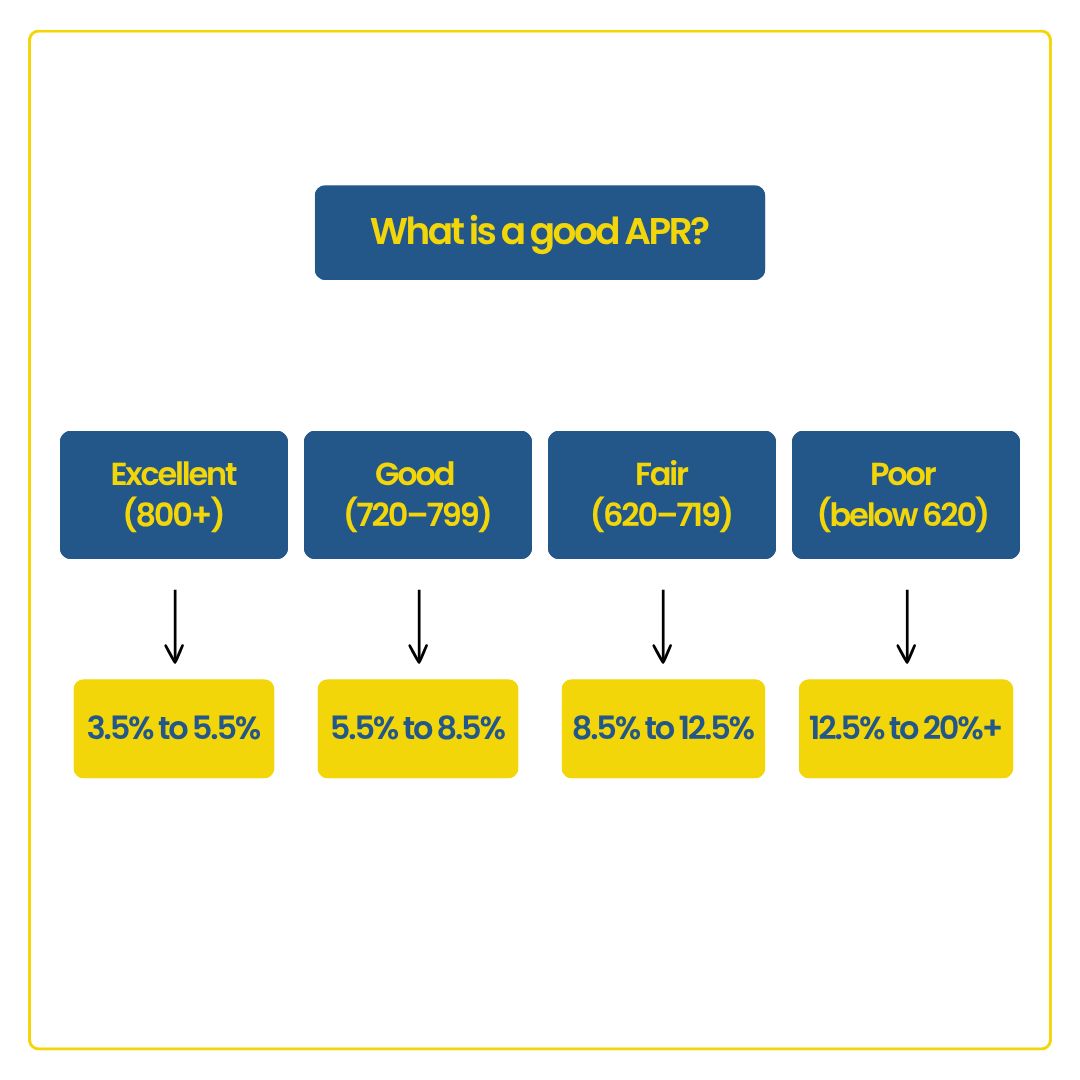
A good APR when buying a car in 2026 typically ranges between 5.0% and 7.5% for borrowers with excellent credit (780+). For used vehicles, a competitive rate is usually 1% to 2% higher. Your specific rate depends on your credit score, the loan term, and the current Federal Reserve benchmarks.
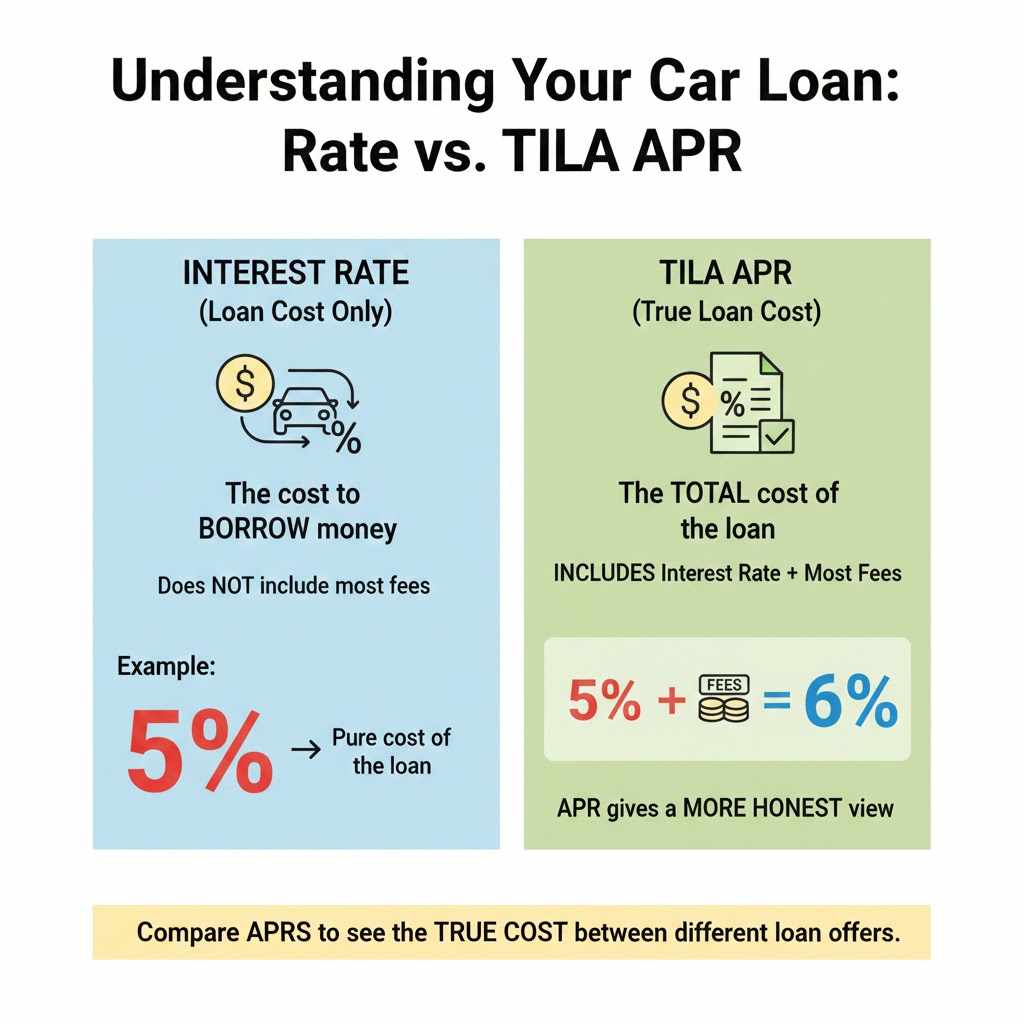
Understanding what constitutes a "good" Annual Percentage Rate (APR) is essential for any car buyer, as even a small percentage difference can result in thousands of dollars in extra costs over the life of a loan. APR is more than just an interest rate; it represents the total annual cost of borrowing, including interest and any prepaid finance charges or fees. To secure the best deal, you must evaluate your financial profile against current market conditions.
Understanding APR and Its Impact on Your Auto Loan
Before determining what a good rate looks like, it is vital to distinguish between a simple interest rate and the Annual Percentage Rate (APR). While the interest rate is the cost of borrowing the principal balance, the APR provides a more comprehensive view by incorporating lender fees and other costs associated with processing the loan.
In the 2026 automotive market, lenders use risk-based pricing. This means they assess the likelihood of a borrower defaulting on the loan and adjust the interest rate accordingly. A higher APR is essentially a "risk premium" the lender charges to offset potential losses. For the consumer, the APR determines the monthly payment and the total interest paid over the life of the loan.
For example, on a $35,000 car loan with a five-year term (60 months):
- At a 5% APR, the total interest paid is approximately $4,630.
- At an 11% APR, the total interest paid jumps to approximately $10,650.
This $6,020 difference highlights why finding a "good" rate is often more important than negotiating a few hundred dollars off the vehicle's sticker price.
Factors That Determine Your Car Loan Interest Rate
Several variables influence the APR a lender offers. While some factors are within your control, others are dictated by the broader economic environment of 2026.
Credit Score: The Primary Driver
Your credit score is the single most significant factor in determining your APR. Lenders typically categorize borrowers into tiers:
- Super Prime (781–850): These borrowers receive the lowest available rates, often referred to as "prime rates."
- Prime (661–780): These borrowers still qualify for competitive rates, though slightly higher than the super-prime tier.
- Nonprime (601–660): Interest rates begin to climb significantly here, as lenders perceive a moderate risk.
- Subprime (501–600) and Deep Subprime (300–500): These borrowers face very high APRs, sometimes exceeding 15% or 20%, due to the high risk of default.
The Federal Reserve and Market Benchmarks
Auto loan rates are closely tied to the federal funds rate set by the Federal Reserve. When the Fed raises rates to combat inflation or lowers them to stimulate the economy, auto lenders follow suit. In 2026, market stability or volatility continues to dictate the "floor" for interest rates. Even a borrower with a perfect credit score cannot get a rate lower than the bank’s own cost of capital plus a small profit margin.
Vehicle Age and Type
New cars generally qualify for lower APRs than used cars. This is because new cars have higher resale values and are easier for a lender to value accurately as collateral. Used cars carry more uncertainty regarding their mechanical longevity and future market value, leading lenders to charge a higher interest rate to compensate for the increased risk.
Loan Term Length
The duration of the loan significantly impacts the APR. While longer terms (e.g., 72 or 84 months) result in lower monthly payments, they almost always come with higher APRs. Lenders charge more for longer terms because they are exposed to risk for a longer period, and the vehicle’s value may drop faster than the loan balance is paid down—a situation known as being "underwater" or having negative equity.
Benchmarking "Good" APRs in 2026
The definition of a "good" APR is relative to your credit profile. The following table provides a benchmark for what you should expect to see in the current 2026 market across different credit tiers for both new and used vehicles.
| Credit Tier | Credit Score Range | Target APR (New Car) | Target APR (Used Car) |
|---|---|---|---|
| Super Prime | 781 - 850 | 5.0% – 6.2% | 6.5% – 7.5% |
| Prime | 661 - 780 | 6.5% – 8.0% | 8.0% – 10.0% |
| Nonprime | 601 - 660 | 9.5% – 12.0% | 13.0% – 16.0% |
| Subprime | 501 - 600 | 14.0% – 17.0% | 18.0% – 21.0% |
| Deep Subprime | 300 - 500 | 18.0% – 22.0%+ | 21.0% – 26.0%+ |
Note: These figures are estimates based on 2026 market trends. Actual rates may vary by lender, region, and specific vehicle model.
Dealer Financing vs. Independent Lenders
Where you get your loan can be just as important as your credit score. There are three primary avenues for car financing:
1. Direct Lending (Banks and Credit Unions)
It is highly recommended to obtain a pre-approval from a bank or credit union before visiting a dealership. Credit unions, in particular, are member-owned and often offer APRs that are 1% to 2% lower than traditional commercial banks. Having a pre-approval in hand gives you a "benchmark" to beat.
2. Captive Finance Companies
These are the lending arms of the manufacturers (e.g., Ford Credit, Toyota Financial Services). Captive lenders often provide the absolute lowest rates—sometimes 0% or 1.9%—but these promotional APRs are usually reserved exclusively for buyers with Super Prime credit and apply only to specific new models.
3. Dealership "Indirect" Financing
The dealer acts as a middleman, sending your application to various banks. While convenient, dealers often add a "markup" to the APR offered by the bank. For example, if a bank approves you at 6%, the dealer might present it to you as 7%, pocketing the difference as profit. This is why having your own pre-approval is a vital negotiation tool.
How to Secure the Lowest Possible APR
Securing a good APR requires preparation and strategy. Do not leave the financing of a major purchase to the last minute.
- Check Your Credit Report Early: At least three months before buying, review your credit reports from Equifax, Experian, and TransUnion. Dispute any inaccuracies and pay down revolving credit card balances to lower your credit utilization ratio, which can quickly boost your score.
- Compare Multiple Quotes: Apply for financing with at least three different institutions within a 14-day window. The credit bureaus treat multiple inquiries for an auto loan within a short period as a single "hard pull," minimizing the impact on your credit score.
- Increase Your Down Payment: A larger down payment reduces the Loan-to-Value (LTV) ratio. Lenders are more likely to offer a lower APR if you have "skin in the game," as it reduces their risk if they have to repossess and sell the vehicle.
- Opt for a Shorter Term: If your budget allows, choose a 48-month or 60-month loan instead of a 72-month or 84-month loan. You will likely qualify for a lower APR and pay significantly less interest over time.
- Consider a Co-signer: If your credit is in the subprime range, a co-signer with excellent credit can help you qualify for a much lower APR. However, both parties must understand that the co-signer is equally responsible for the debt.
Common Pitfalls: When a "Good" APR Isn't a Good Deal
A low interest rate is only one part of a healthy financial decision. Be wary of these common traps:
The "Monthly Payment" Trap
Dealers often ask, "What monthly payment are you looking for?" By focusing on the payment rather than the APR and the total price, you may be steered into a very long-term loan. You might get the "low" payment you want, but you will pay thousands more in interest over seven years at a higher APR.
Add-on Products
Lenders or dealers may suggest that your loan approval is contingent on purchasing products like Extended Warranties, GAP insurance, or "window etching." These costs are often rolled into the loan balance, meaning you are paying interest (your APR) on these products as well. In most cases, these are optional and can be purchased cheaper elsewhere.
Variable vs. Fixed APR
Ensure your auto loan has a fixed APR. A variable rate might start lower but can increase if market interest rates rise, making your monthly payments unpredictable and potentially unaffordable.
Frequently Asked Questions
Can I refinance my car loan if I didn't get a good APR initially?
Yes. If your credit score has improved significantly since you bought the car, or if market interest rates have dropped, you can refinance your auto loan. Most experts recommend waiting at least six to twelve months after the initial purchase to show a history of on-time payments.
Is 0% APR financing still available in 2026?
0% APR is still offered by captive finance companies, but it is increasingly rare and restricted to specific models and highly qualified borrowers. Often, choosing 0% financing means giving up a cash-back rebate. You should calculate whether the interest savings from 0% APR outweigh the immediate value of a cash rebate.
Does a "hard inquiry" from a car loan hurt my credit score?
A single hard inquiry typically drops a credit score by fewer than five points. However, as long as you do all your rate shopping within a 14-day window, the credit scoring models (FICO and VantageScore) generally group them as one inquiry for scoring purposes.
Why is my used car APR so much higher than my friend's new car APR?
Lenders view used cars as higher-risk collateral. Because used cars have a higher likelihood of mechanical failure and more volatile resale values, lenders charge a higher APR to mitigate the risk that the borrower might stop paying if the car breaks down.
Should I pay off my loan early if I have a "good" APR?
If your APR is lower than what you can earn in a high-yield savings account or a safe investment, there may be no mathematical rush to pay it off. However, most auto loans use simple interest calculated daily, so paying off the principal early will still save you money on the total interest paid.
Practical Recommendation
To secure a truly good APR in 2026, begin by securing a pre-approval from a local credit union or your primary bank. Aim for a loan term no longer than 60 months and a down payment of at least 10% to 20%. When you arrive at the dealership, allow the finance manager to attempt to beat your pre-approved rate. If they can offer a lower APR through a captive lender or a partner bank without inflating the vehicle price, you have successfully maximized your borrowing power.