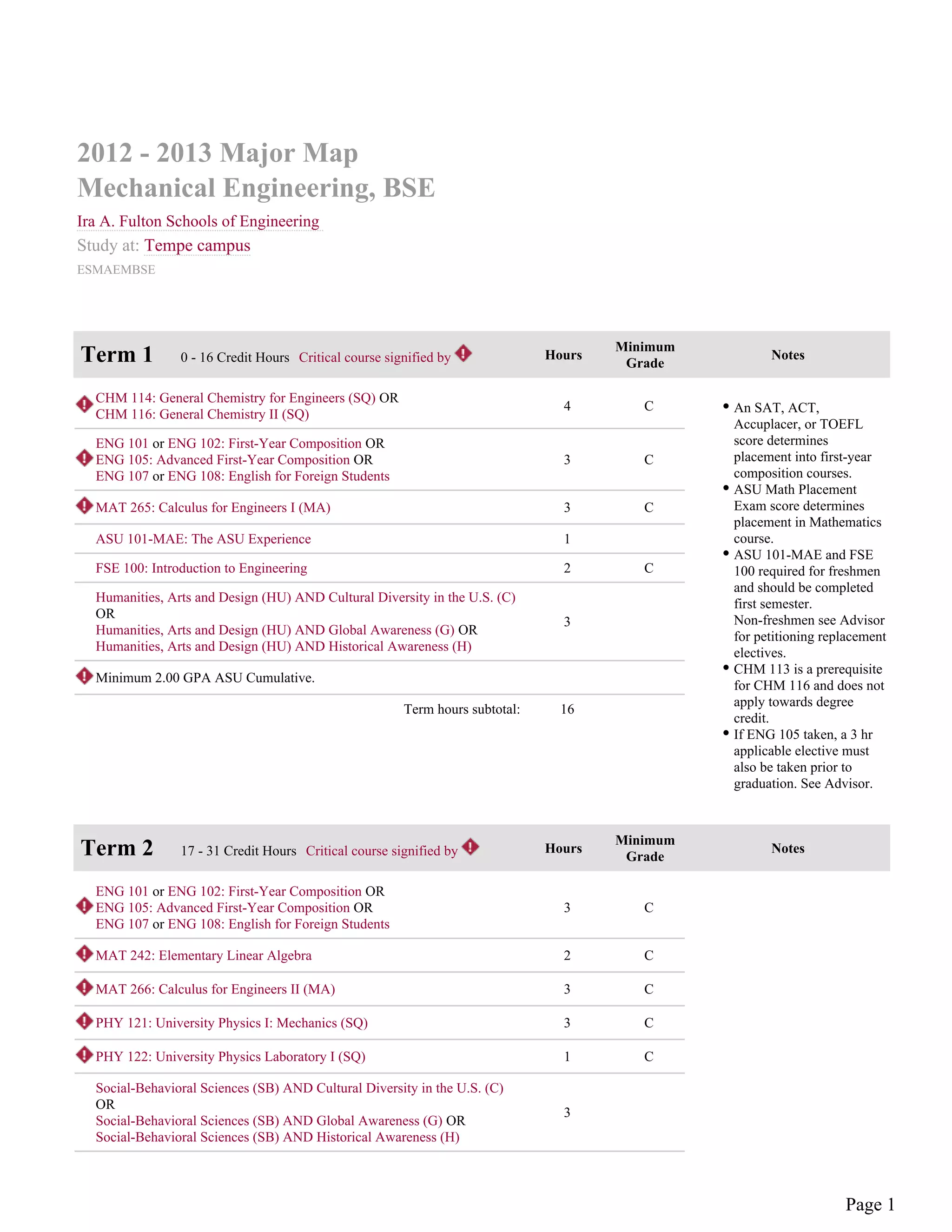
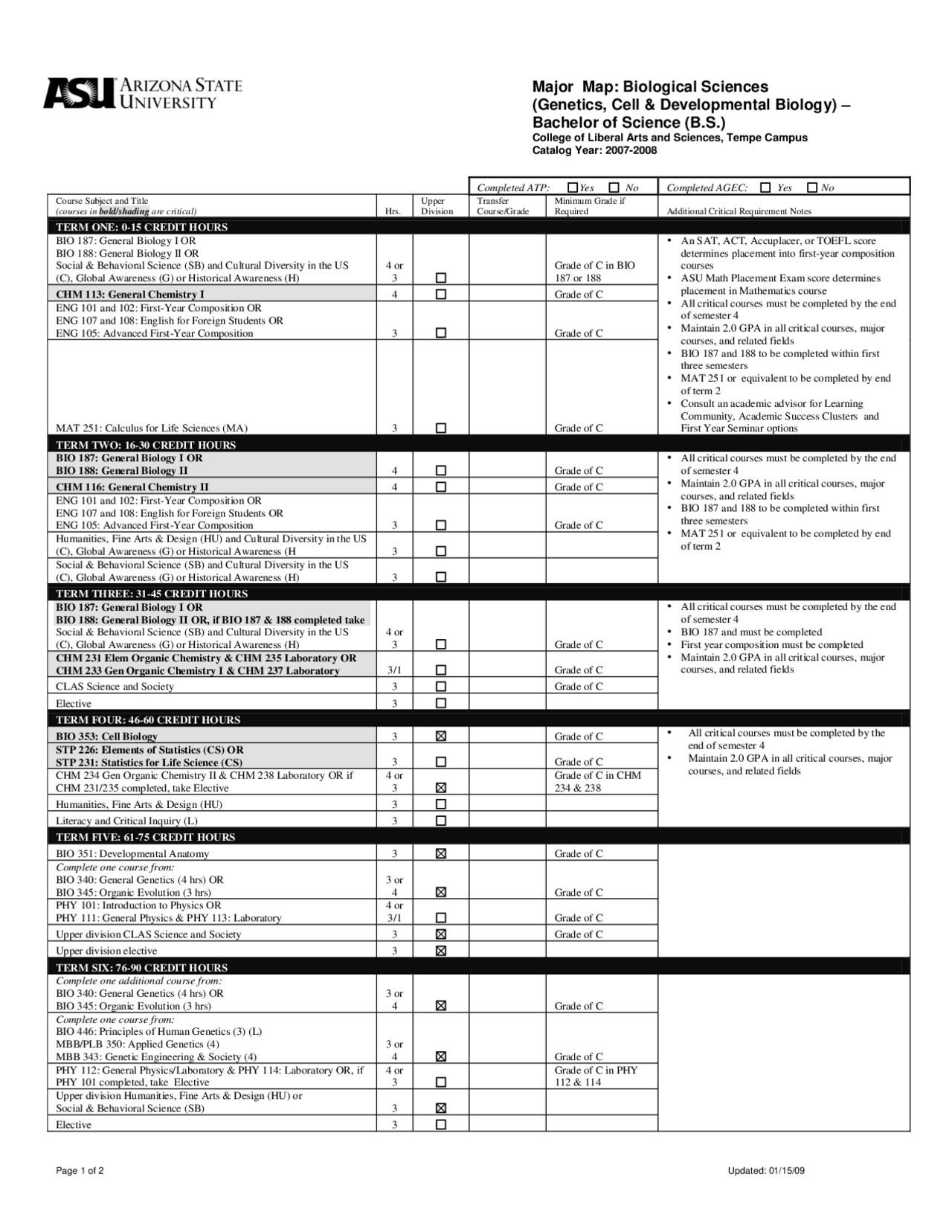
The ASU Biology Major Map is a dynamic, multi-year digital planning tool provided by Arizona State University designed to guide students through the sequential requirements of a Bachelor of Science in Biological Sciences. It serves as a visual and functional roadmap that maps out critical courses, milestones, and degree requirements semester-by-semester to ensure timely graduation.
Understanding the Role of the Major Map
For students navigating the complexities of an undergraduate degree at Arizona State University, the "Major Map" is not merely a list of classes; it is an essential navigation instrument. The Biology major at ASU is rigorous, offering various concentrations such as Biology and Society, Biomedical Sciences, Conservation Biology and Ecology, Genetics, Cell and Developmental Biology, and Neurobiology, Physiology, and Behavior.
Because these programs are credit-intensive and highly structured, the Major Map provides the "How" and "When" for academic success. It identifies which courses are "critical requirements"—classes that must be completed in a specific semester to maintain the intended graduation timeline. Failure to meet these milestones can trigger academic tracking alerts, which require intervention from an academic advisor. By consulting the map regularly, students can visualize the progression from foundational introductory biology and chemistry courses to upper-division electives and capstone experiences.
Decoding the Structure of a Major Map
The Major Map is organized chronologically, usually spanning eight semesters. Each semester is broken down into specific categories that guide the student’s registration strategy:
- Critical Requirements: These are the non-negotiable courses. For a Biology major, this typically includes the General Biology sequence (BIO 181/182), General Chemistry (CHM 113/116), and introductory Mathematics (such as MAT 251 or 270). Completing these in the designated term is vital because they serve as prerequisites for virtually every higher-level course in the curriculum.
- Course Sequence: The map identifies the progression of study. It signals when a student should transition from general education requirements (often called "General Studies" or "Gold" requirements) into specialized major coursework.
- Milestones: Beyond course completion, the map highlights administrative milestones. These may include applying for graduation, meeting with an academic advisor, or completing specific research or laboratory hours.
- Major-Specific Notes: The map provides context regarding course substitutions, lab requirements, and potential elective tracks, ensuring students don’t accidentally enroll in courses that do not count toward their degree.
Navigating the Critical Course Sequence
Biology students at ASU often find that the first four semesters are the most intensive. The "Critical Tracking" system is designed to identify students who may be falling behind in their core science sequence. If a student does not complete a critical course within the specified timeframe, they are often required to meet with an academic advisor to discuss a modified degree plan.
For example, the introductory sequence of General Biology I (BIO 181) and General Biology II (BIO 182) is standard for almost all biological sciences tracks. Because these courses provide the foundational knowledge for genetics, evolution, and physiology, the Major Map forces these into the first year. Deviating from this schedule can shift the graduation date significantly, as many upper-division biology courses are offered only once per academic year.
Comparison of Key Academic Planning Tools
While the Major Map is the primary tool, it functions best when used in conjunction with other ASU resources. The following table differentiates the tools available to a student in 2026.
| Tool Name | Primary Purpose | Best Used For |
|---|---|---|
| Major Map | Sequential course planning | Mapping out 4-year graduation goals |
| DARS Report | Degree audit | Checking specific remaining credit requirements |
| Course Catalog | Content overview | Researching course descriptions and prerequisites |
| Academic Advisor | Strategic planning | Resolving complex scheduling conflicts or probation |
Strategic Planning for Concentrations
ASU allows Biology majors to tailor their degree toward specific career goals. The Major Map is particularly useful when choosing a concentration. If a student is aiming for medical school, the Biomedical Sciences concentration map will prioritize specific chemistry and anatomy courses that align with medical school admissions requirements. Alternatively, the Conservation Biology and Ecology map will integrate field-based research and environmental science courses.
Students should use the Major Map to "work backward" from their post-graduation goals. If an internship in clinical research is a target for the junior year, the Major Map shows exactly which foundational courses must be completed by the end of the sophomore year to be eligible for that internship.
Common Pitfalls and Troubleshooting
A frequent mistake students make is treating the Major Map as a rigid contract that cannot be altered. While the "critical" requirements are strict, the elective portions are flexible.
Troubleshooting common issues:
- Prerequisite Loops: Sometimes a course is a prerequisite for another, but the latter is required to graduate. If a student fails a course, the domino effect is immediate. In such cases, the student must contact their advisor immediately to see if summer school or a course substitution is available to keep the graduation timeline intact.
- Transfer Credit Integration: Students transferring from community colleges often find that their credits map differently than native ASU students. The Major Map should be reconciled with the Transfer Credit Evaluation provided by the university to ensure no credits are "lost" or redundant.
- General Studies Overlap: Students sometimes struggle to balance major requirements with General Studies requirements (e.g., Humanities, Social-Behavioral Sciences). The Major Map suggests when to take these to avoid "heavy" semesters—semesters where the student is overwhelmed by multiple lab-based science courses simultaneously.
The Role of Academic Advising
Even with a clear Major Map, periodic consultation with an academic advisor is essential. As of 2026, ASU emphasizes proactive advising. Students are expected to use the Major Map to draft their own tentative schedule before their advising appointment. This demonstrates initiative and allows the advisor to focus on high-level strategy, such as discussing undergraduate research opportunities, study abroad programs, or preparing for professional examinations like the MCAT or GRE.
The Major Map is essentially the "syllabus" for the entire degree. Just as a syllabus tells a student what to expect in a single class, the Major Map tells the student what to expect from their four-year journey. It is a live document that reflects the most current university policies and academic standards.
Frequently Asked Questions
How often is the ASU Biology Major Map updated? The university reviews and updates major maps annually. Students are generally held to the requirements of the catalog year in which they were admitted, but the map serves as the primary reference for those requirements. Always ensure you are viewing the map associated with your specific catalog year.
What happens if I miss a Critical Requirement? Missing a critical requirement triggers a notification from the university. You will likely be required to meet with an academic advisor to discuss your academic progress. Failure to address these gaps can lead to a hold on your registration for the following semester until a plan for completion is established.
Can I follow a different concentration’s Major Map? While you can look at other maps for inspiration, you must follow the map associated with your declared major and concentration to ensure you meet the specific requirements for graduation in that degree program. If you wish to change your concentration, you must officially update your program of study with the registrar.
Does the Major Map account for summer school? Most maps are designed for a standard fall/spring cycle. However, the map can be used to identify courses you might want to "offload" to the summer term to make a heavy spring or fall semester more manageable. Always verify with an advisor that the specific course is offered during the summer session you plan to attend.
Where can I find my official DARS report to verify my map progress? Your Degree Audit Reporting System (DARS) report can be accessed through your student portal (My ASU). It provides a real-time, personalized look at how your completed courses satisfy your specific degree requirements as outlined in the major map.
Next Steps for Students
If you are currently enrolled in the Biology program at ASU, your first action should be to log into your student portal and pull your specific Major Map for your catalog year. Compare it against your current transcript. If you identify any courses that were moved or skipped, schedule an appointment with your academic advisor to recalibrate your path. By keeping your Major Map updated and monitoring your DARS report, you ensure that your academic progression remains efficient, focused, and aligned with your ultimate career objectives.