To listen to the Houston Astros on AM radio, tune your receiver to the flagship station SportsTalk 790 (KBME-AM) in the Greater Houston area. For expanded coverage across Texas and Louisiana, the Astros Radio Network utilizes dozens of affiliates, including high-power signals like KTRH 740 AM, ensuring fans can access live play-by-play throughout the 2026 season.
The tradition of baseball on the radio remains a cornerstone of the Houston sports experience. Despite the rise of digital streaming and high-definition television, AM radio continues to provide a unique, real-time connection to the game that internet-based services often struggle to match due to latency. For the 2026 season, the Houston Astros maintain one of the most robust radio networks in Major League Baseball, blending local flagship broadcasts with a massive web of terrestrial affiliates.
The Flagship Stations: KBME 790 and KTRH 740
The heart of the Houston Astros broadcast map is located in Houston, where the primary English-language broadcasts originate. Understanding which station to tune to depends largely on the time of day and the specific programming schedule of the iHeartMedia cluster, which holds the broadcast rights.
KBME 790 AM (SportsTalk 790)
As the primary flagship station, KBME 790 AM is the "Home of the Astros." Throughout the 2026 season, nearly every regular-season game, spring training matchup, and postseason contest is anchored here. The station provides extensive pre-game coverage, usually beginning 30 to 60 minutes before the first pitch, and "Astros OT," the popular post-game call-in show.
KBME operates with a 5,000-watt transmitter. While this provides excellent coverage within the immediate Houston metropolitan area—including Harris, Fort Bend, and Montgomery counties—the signal can encounter "nulls" or interference in the outer suburbs during the transition from day to night power settings.
KTRH 740 AM
For fans traveling further from the city or living in the outlying coastal regions, KTRH 740 AM serves as a vital secondary outlet. KTRH is a "clear channel" station, meaning it operates at a massive 50,000 watts. Because of the physics of AM radio propagation, 740 AM can often be heard hundreds of miles away, particularly at night when the signal reflects off the ionosphere (a phenomenon known as "skip").
The Astros often simulcast or move games to KTRH during high-profile matchups or when there are scheduling conflicts with other sporting events on 790 AM. If you find the 790 AM signal fading as you drive away from Houston, switching to 740 AM is the standard move for veteran listeners.
The Astros Radio Network: Regional Affiliates
The Houston Astros’ influence extends far beyond the ship channel. To accommodate fans across the Southwest, the team maintains the Astros Radio Network, a collection of over 40 affiliate stations. This network ensures that whether you are in the Hill Country, the Piney Woods, or the Louisiana bayous, the game is never more than a dial-turn away.
| City | Station | Frequency |
|---|---|---|
| Houston (Flagship) | KBME / KTRH | 790 AM / 740 AM |
| Austin | KTXX | 104.9 FM / 1260 AM |
| San Antonio | KTKR | 760 AM |
| Beaumont | KLVI | 560 AM |
| Corpus Christi | KSIX | 1230 AM |
| Bryan/College Station | WTAW | 1620 AM |
| McAllen/Brownsville | KTEE | 1260 AM |
| Lake Charles, LA | KLCL | 1470 AM |
Regional Signal Characteristics
In markets like San Antonio, KTKR 760 AM provides a reliable signal that covers the majority of Central Texas. Meanwhile, in the Golden Triangle area, KLVI 560 AM in Beaumont is one of the oldest and most stable affiliates in the network. For fans in the Rio Grande Valley, the signals are often weaker due to distance, making the local AM affiliates essential for consistent listening without the data charges or "blackout" restrictions often associated with mobile apps.
Spanish Language Broadcasts on KLAT 1010 AM
The Astros have a deep, historic connection with their Spanish-speaking fanbase, supported by a dedicated broadcast team. For the 2026 season, TUDN Radio Houston (KLAT 1010 AM) remains the home for Spanish play-by-play.
KLAT 1010 AM offers a distinct broadcast experience, often featuring legendary announcers who bring a high-energy, rhythmic style to the game. These broadcasts are crucial for inclusivity within the Houston community and provide an alternative perspective on the game's unfolding drama. Like the English flagship, KLAT also participates in a smaller network of Spanish-language affiliates in South Texas and Northern Mexico.
Technical Aspects: Why AM Radio Still Matters in 2026
In an era of 5G and fiber optics, some may wonder why AM radio remains the primary vehicle for baseball. The answer lies in the technical properties of the Medium Wave (MW) band and the nature of the sport itself.
Minimal Latency
The most significant advantage of AM radio over digital streaming (such as the MLB App or iHeartRadio stream) is the lack of a delay. Digital streams often lag 30 to 60 seconds behind the actual live action. This makes it impossible to listen to the radio while sitting in the stands at Minute Maid Park or while watching a muted TV broadcast. AM radio is near-instantaneous, providing the "crack of the bat" exactly when it happens.
Signal Propagation and Night Listening
AM radio signals travel as "ground waves" during the day, following the curvature of the Earth. At night, the atmosphere changes, allowing signals to bounce or "skip" off the ionosphere. This allows a 50,000-watt station like KTRH 740 AM to reach listeners in North Texas, Louisiana, and even parts of Oklahoma after the sun goes down. For truck drivers and late-night commuters, this atmospheric quirk is what makes baseball on the radio a classic American experience.
The EV Interference Challenge
A notable issue in 2026 is the increasing prevalence of Electric Vehicles (EVs). Some EV manufacturers have attempted to remove AM radio from their consoles because the electric motors can create electromagnetic interference that causes a "buzzing" sound on the AM band. However, due to consumer demand and potential federal safety mandates regarding the Emergency Alert System (EAS), most 2026 models have retained AM or implemented shielding to ensure clear reception. If you are listening in an EV, ensuring your antenna is properly grounded is key to a static-free game.
Troubleshooting Common Reception Issues
If you are having trouble picking up the Astros game on your AM dial, consider the following environmental and technical factors:
- Electronic Interference: Household appliances, LED light bulbs, and computer monitors can emit "noise" that drowns out AM signals. If listening at home, try moving your radio away from other electronics or closer to a window.
- Directional Antennas: Most AM radios use an internal "ferrite rod" antenna. These are highly directional. If the signal is weak, physically rotating the radio 90 degrees can often significantly improve clarity.
- The "Nighttime Pattern": Many AM stations are required by the FCC to change their signal strength or direction at sunset to avoid interfering with other stations on the same frequency. If your signal disappears suddenly at dusk, you may need to switch from 790 AM to the more powerful 740 AM.
- Weather Effects: While AM is less affected by rain than high-frequency satellite signals, severe thunderstorms can cause "static crashes" on the dial. This is caused by the lightning emitting radio frequency energy across the AM band.
Alternatives to the AM Dial
While the focus here is the traditional AM experience, there are times when the terrestrial signal simply won't reach. In these cases, fans have a few "hybrid" options that preserve the radio broadcast format.
- HD Radio: For those with newer car stereos, KODA 99.1 HD2 often carries the Astros radio feed. HD radio provides the digital clarity of an FM signal with the specific commentary of the AM broadcast team.
- SiriusXM: The MLB play-by-play channels on SiriusXM carry every Astros game. This is the best option for fans traveling cross-country who do not want to hunt for new local affiliates every two hours.
- The MLB App: With an "At Bat" subscription, you can stream the home or away radio feeds anywhere in the world. While this introduces the aforementioned latency, it eliminates the geographic limitations of a physical transmitter.
The Voice of the Game: What to Expect
Listening to the Astros on the radio in 2026 is defined by the chemistry of the broadcast booth. The radio announcers act as the "eyes" for the listener, providing detailed descriptions of the defensive shifts, the pitcher's body language, and the atmospheric conditions of the stadium.
Unlike television, which can rely on visual replays, radio broadcasters must maintain a constant flow of information. This creates a more intimate connection between the team and the fan. Whether it's a tense divisional matchup against the Rangers or a mid-summer interleague game, the AM broadcast provides a narrative depth that is often lost in more visual mediums.
Frequently Asked Questions
Can I listen to the Astros on FM radio?
Yes, in some markets. While the flagship stations are AM, several affiliates in the Astros Radio Network broadcast on FM frequencies. Additionally, within Houston, the game is often available on 99.1 HD2 for listeners with HD-capable receivers.
Why is the game blacked out on my radio app?
Digital streaming rights are different from terrestrial broadcast rights. If you are using a generic radio app like TuneIn, the stream may be "blacked out" during game time due to MLB's exclusive digital contracts. To stream the radio broadcast on a smartphone, you generally must use the official MLB App or the iHeartRadio app within the specific Houston geographic area.
Is there a cost to listen to the Astros on AM radio?
No. One of the primary benefits of terrestrial AM radio is that it is free to access. As long as you have a radio receiver and are within the signal's reach, there are no subscriptions or data fees required to enjoy the game.
Who are the current radio announcers for the Astros?
For the 2026 season, the English radio booth continues to be anchored by experienced play-by-play talent and color analysts who provide deep statistical insights and historical context. (Note: For the most current roster of broadcasters, check the official Astros Broadcasters page).
Can I hear the games in the Houston tunnels or parking garages?
AM signals struggle to penetrate deep concrete structures and underground tunnels. If you are commuting through the Houston tunnel system or parked in a heavy reinforced-concrete garage, you will likely experience a total loss of signal. Reception usually returns immediately upon exiting the structure.
Final Recommendation for Fans
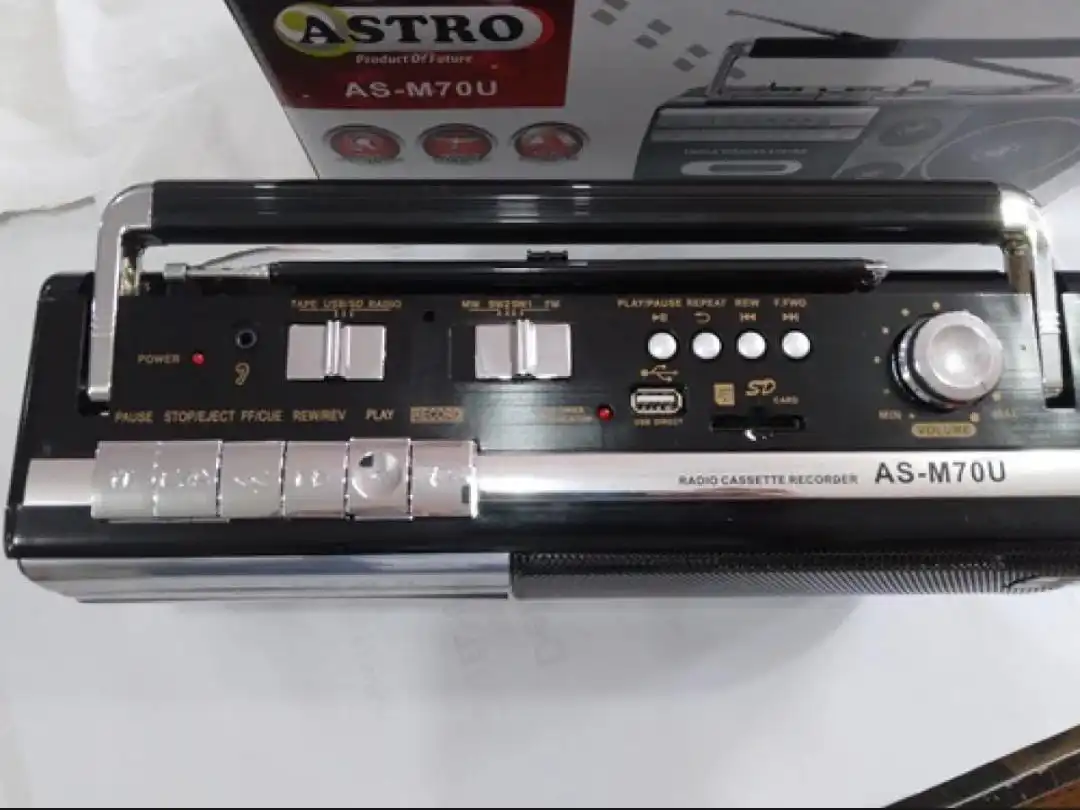
For the most reliable and immersive experience, keep a dedicated portable AM/FM radio in your vehicle or home. While smartphones are convenient, the stability, zero-latency, and battery efficiency of a traditional radio remain unmatched for following a three-hour baseball game. If you are within 50 miles of Houston, lock your dial to 790 AM for the primary broadcast, and keep 740 AM as your backup for night games or long-distance travel.