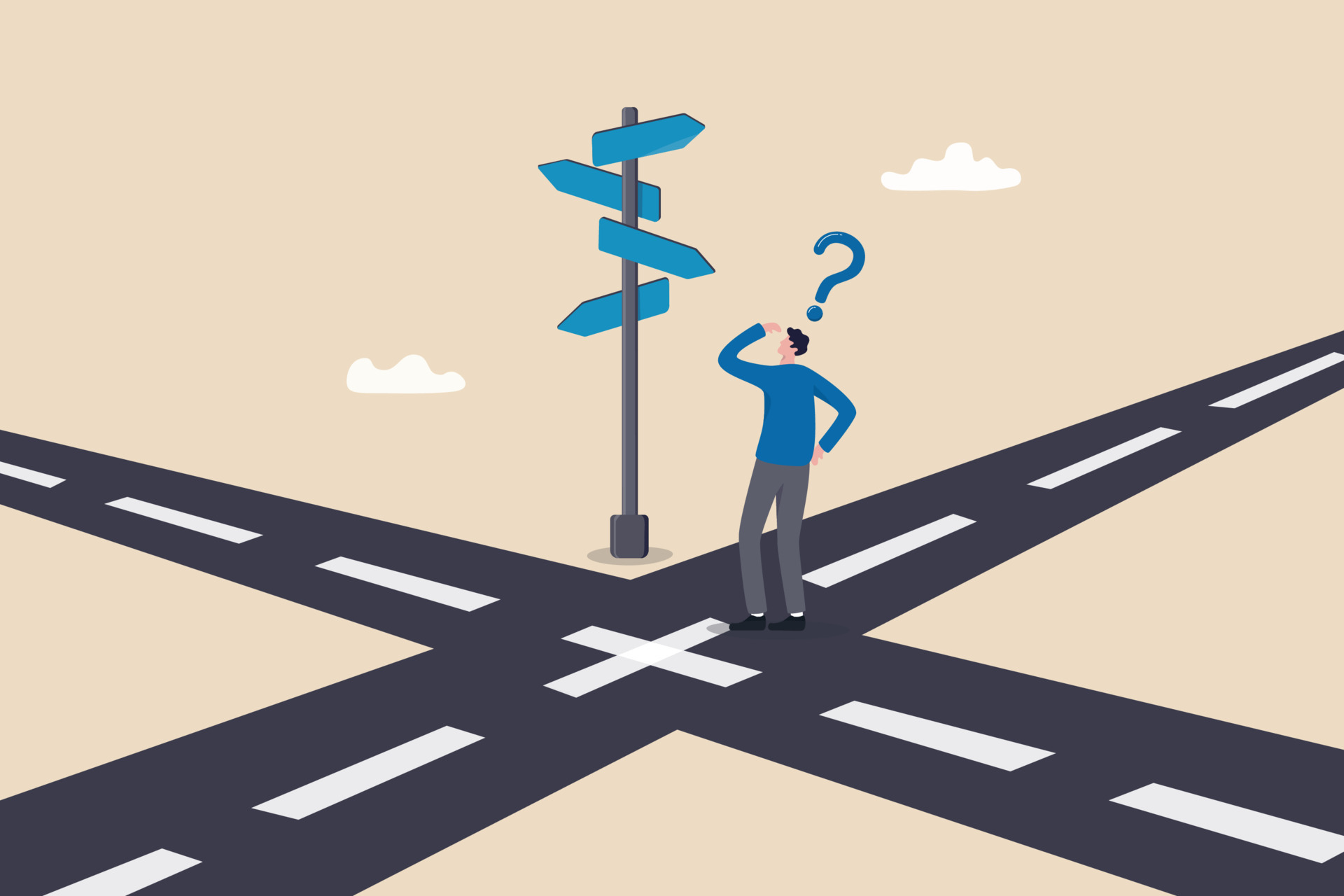
Standing at a crossroads in life signifies reaching a pivotal juncture where existing paths no longer suffice, requiring a decisive choice between significant, often mutually exclusive, future directions. This state typically involves deep self-reflection, a weighing of core values against external pressures, and the necessity of leaving a familiar status quo to embrace an uncertain but potentially more fulfilling reality.
In 2026, the concept of the "life crossroads" has evolved beyond traditional mid-life crises. With the rapid integration of artificial intelligence into the workforce and shifting social structures, people encounter these moments of profound decision-making more frequently and at various life stages. Whether triggered by a career disruption, a shift in personal relationships, or an internal existential awakening, navigating a crossroads requires a blend of psychological resilience and structured strategic planning.
Understanding the Anatomy of a Life Crossroads
A crossroads is rarely a sudden event; it is usually the culmination of gradual internal shifts or sudden external shocks. Psychologically, this state is known as liminality—the threshold between an old way of being and a new, yet-to-be-defined existence. In this space, the old rules no longer apply, but the new rules have not yet been written.
Identifying that you are at a crossroads is the first step toward resolution. Common indicators include a persistent sense of "stuckness," a disconnect between your daily actions and your personal values, or a significant life event—such as a layoff, a health scare, or the end of a long-term relationship—that renders your previous path untenable. In the context of 2026, many individuals find themselves at a crossroads due to the "Great Realignment," a societal shift where personal fulfillment and autonomy are prioritized over traditional corporate loyalty.
The Psychological Impact of Uncertainty
When you are at a crossroads, your brain’s amygdala often triggers a fear response. Uncertainty is viewed by the human nervous system as a threat, leading to decision paralysis. This is the state where the fear of making the "wrong" choice becomes so overwhelming that no choice is made at all, resulting in stagnation.
To move forward, one must distinguish between "productive discomfort"—the growing pains associated with change—and "destructive stress"—the paralyzing fear of the unknown. Understanding that the discomfort of the crossroads is a functional part of the growth process allows for more objective decision-making.
Identifying the Catalysts: Why We Reach These Points
While every individual's journey is unique, the catalysts for reaching a crossroads in 2026 generally fall into three primary categories: professional disruption, personal evolution, and existential reassessment.
Professional Disruption and the 2026 Job Market
The workforce of 2026 is characterized by "fluid roles." Many professionals find themselves at a crossroads because their specialized skills have been automated or augmented by advanced AI systems, necessitating a radical career pivot. This isn't merely a job change; it is a fundamental shift in professional identity.
The question at this crossroads is often: Do I double down on my current industry by upskilling, or do I pivot to a completely different sector that aligns more closely with human-centric skills? The financial implications and the time investment required for retraining make this a high-stakes decision point.
Personal Evolution and Relationship Shifts
Relationships often act as the landscape upon which our life paths are built. A crossroads in this area might involve the decision to commit to a partner, end a marriage, or redefine family dynamics. In 2026, social norms around "digital nomadism" and "decentralized living" have further complicated these choices, as individuals weigh their personal freedom against the stability of traditional domestic structures.
Existential Reassessment
Sometimes, the crossroads is entirely internal. You may have achieved all your external goals—career success, financial stability, social status—yet find yourself feeling empty. This "crisis of meaning" forces a choice between continuing the path of least resistance or dismantling your current lifestyle to find a more authentic sense of purpose.
Structured Frameworks for High-Stakes Decision-Making
When the "right" path isn't obvious, relying on intuition alone can be risky. Professional life coaches and psychologists in 2026 emphasize the use of structured frameworks to strip away emotional bias and reveal the most viable options.
The 10-10-10 Rule
Developed by Suzy Welch, this rule is a powerful tool for gaining perspective. When faced with a choice at a crossroads, ask yourself how you will feel about the decision in:
- 10 Minutes: Will you feel relief, anxiety, or regret?
- 10 Months: How will this choice have impacted your daily routine?
- 10 Years: Will this decision still matter, and how will it have shaped your life's trajectory?
This framework forces you to move past immediate emotional reactions and consider the long-term consequences of your actions.
Values-Based Alignment
A common mistake at a crossroads is making a decision based on what you should do rather than what aligns with your core values. To use this framework, you must first identify your top five non-negotiable values (e.g., autonomy, security, creativity, family, impact). Grade each potential path at your crossroads against these values. A path that offers high financial rewards but violates your value of "time freedom" will eventually lead to another crossroads or total burnout.
The Regret Minimization Framework
Popularized by tech leaders and adopted by modern career strategists, this involves projecting yourself into your senior years and looking back on your current situation. Ask: Which choice would I regret NOT making more? Usually, we regret the things we didn't try more than the things that didn't work out.
Comparing Decision-Making Strategies
The following table compares different approaches to navigating a life crossroads, helping you identify which method suits your current psychological state.
| Strategy | Primary Focus | Best Used When... | Potential Drawback |
|---|---|---|---|
| Logic-Based (SWOT) | Strengths, Weaknesses, Opportunities, Threats. | Choosing between two career paths or business ventures. | Can ignore emotional needs and intuition. |
| Intuition-Based | Gut feelings and "inner knowing." | Navigating personal relationships or creative pursuits. | High risk of being influenced by temporary fears. |
| Values-Alignment | Core principles and life purpose. | Facing an existential crisis or "meaning" gap. | May require significant financial or social sacrifice. |
| Scenario Planning | Mapping out multiple "what-if" futures. | Facing complex, multi-variable life changes (e.g., moving abroad). | Can lead to "analysis paralysis" if over-complicating. |
Practical Steps to Move Forward
Once you have identified that you are at a crossroads and have applied a decision-making framework, the transition phase begins. This is where most people falter, as the gap between deciding and acting is often filled with doubt.
1. Perform a "Life Audit"
Before making a move, catalog your current assets. This includes financial savings, transferable skills, professional networks, and emotional support systems. Knowing exactly what you have in your "toolkit" provides the confidence needed to step onto a new path.
2. Seek External Perspective (But Set Boundaries)
Talk to mentors, therapists, or trusted friends who have navigated similar transitions. However, be wary of "consensus seeking." Asking too many people for their opinion can drown out your own voice. In 2026, many utilize AI-driven career and life coaching tools to get objective, data-backed insights without the emotional baggage of personal acquaintances.
3. The "Small Experiment" Method
If the crossroads involves a radical change—like starting a new career—don't jump in all at once. If possible, conduct a small-scale experiment. Take a freelance project in the new field, shadow someone in that role, or spend a week in the city you’re considering moving to. This provides "on-the-ground" data that no amount of thinking can replicate.
4. Manage the "Sunk Cost Fallacy"
The biggest obstacle at a crossroads is the Sunk Cost Fallacy—the tendency to continue on a path because you’ve already invested significant time, money, or effort into it. Remember that those resources are gone regardless of what you do next. The only question that matters is: What is the best use of my time and energy from this moment forward?
Common Pitfalls to Avoid
Navigating a crossroads is a delicate process, and several psychological traps can lead to poor outcomes.
- Making a Choice Based on "Away From" Rather Than "Toward": Many people choose a path simply because they want to escape their current situation. This often leads them into a new situation that is just as unfulfilling. Ensure your choice is a proactive step toward a goal, not just a reactive flight from discomfort.
- Ignoring Financial Realities: While "following your passion" is a popular sentiment, failing to account for the financial requirements of a new path can lead to disaster. Ensure you have a "runway" of at least six months of expenses if your crossroads involves a career or lifestyle shift.
- The Myth of the "Perfect" Choice: At a major crossroads, there is rarely a perfect option. Every path involves trade-offs. Accepting that you will lose something (the "path not taken") is a necessary part of committing to your chosen direction.
The Role of Resilience in 2026
By 2026, resilience is no longer just about "toughing it out." It is about cognitive flexibility—the ability to pivot and adapt as new information becomes available. Being at a crossroads is not a sign of failure; it is a sign that you have outgrown your current container. The most successful individuals in this era are those who view the crossroads as a recurring feature of a dynamic life, rather than a one-time obstacle to be overcome.
When you finally choose a direction, do so with total commitment, but remain observant. The goal of navigating a crossroads is not to reach a final destination where you never have to make a choice again, but to move into a new phase of growth that is more aligned with who you have become.
FAQ
How do I know if I'm at a true crossroads or just having a bad week?
A true crossroads is characterized by a "persistent misalignment." If the feeling of dissatisfaction remains regardless of external changes (like a vacation or a new project) and involves a fundamental question about your identity or future, it is likely a crossroads. Bad weeks are temporary and usually tied to specific, transient stressors.
Is it ever okay to choose "neither" path?
Sometimes, a crossroads reveals that none of the apparent options are correct. This is known as the "Third Way." It may require staying in your current situation temporarily while you actively build a completely new, previously unconsidered alternative.
How do I handle the guilt of leaving people behind when I choose a new path?
Growth often requires changing your social or professional circles. This guilt is a natural part of the transition. The most effective way to handle it is through clear communication and the realization that staying in a situation that stunts your growth ultimately serves no one, including those you feel guilty about leaving.
What if I make the wrong decision?
In most cases, decisions made at a crossroads are not irreversible. They are simply pivots. If a new path proves to be incorrect, you will eventually arrive at another crossroads with more information than you had before. The only truly "wrong" decision is staying stuck in a state of chronic indecision.
How long should I spend in the "reflection" phase?
While you shouldn't rush a major life choice, set a deadline. Without a timeline, reflection turns into rumination. Depending on the scale of the decision, 30 to 90 days of active research and reflection is usually sufficient to make an informed choice.
Practical Recommendation
If you currently feel you are at a crossroads, your immediate next action should be a Value Alignment Audit. Write down your three most important life priorities for 2026. If your current path does not serve at least two of those three, commit to choosing a new direction within the next 60 days. Start by identifying the smallest possible step toward the new path—such as a single conversation or a one-hour research session—and complete it within 24 hours to break the cycle of paralysis.