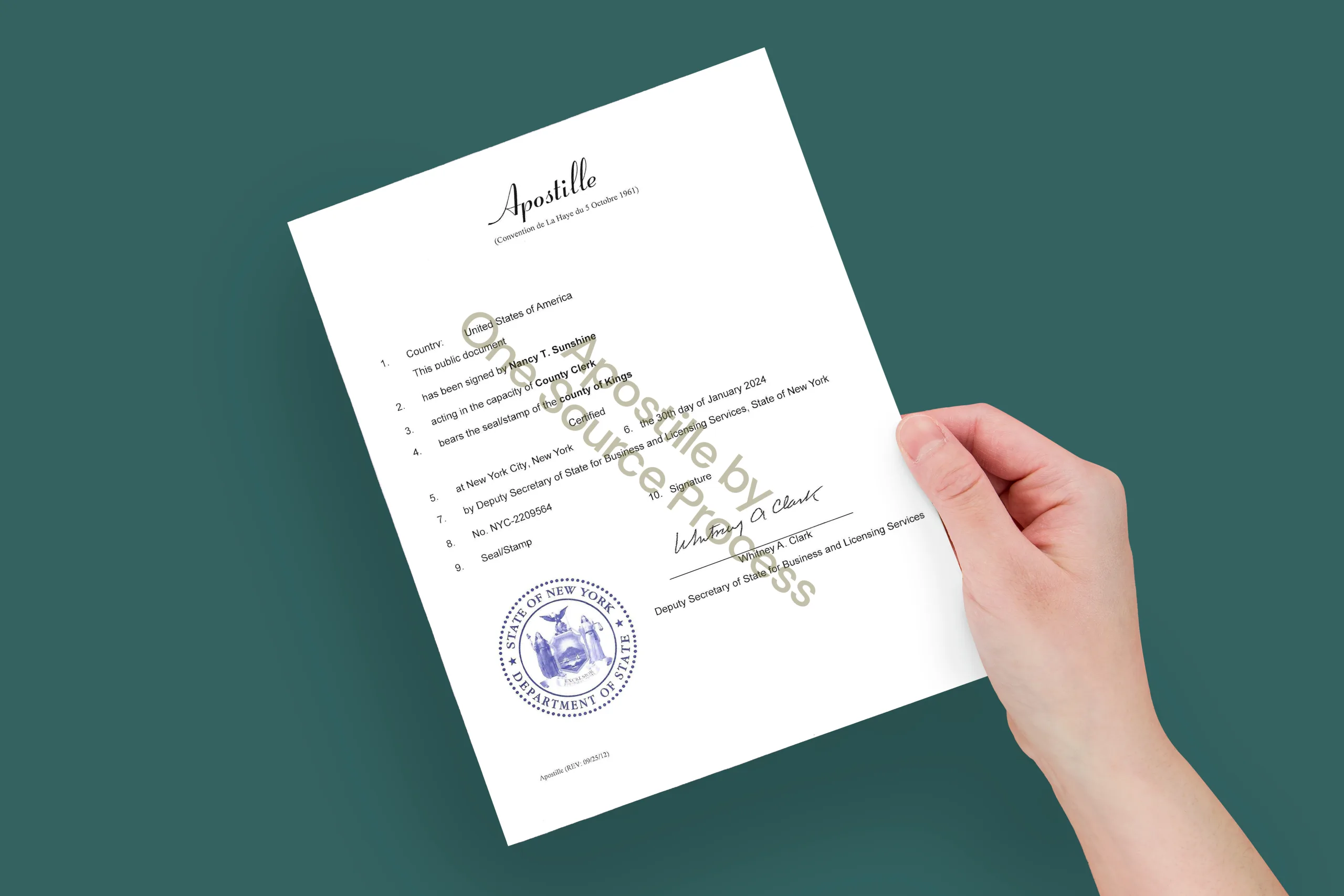
Obtaining an apostille in New York City requires a structured, multi-tier authentication process governed by the New York Department of State and local County Clerks. Legal documents must be properly notarized or issued as certified public records, authenticated by the appropriate County Clerk, and submitted to the New York State Department of State alongside the required statutory fees. Professional NYC apostille service providers offer hand-courier processing and compliance pre-screening to navigate these strict jurisdictional steps efficiently.
Understanding the Apostille Process in New York City
An apostille is a specialized certificate issued by a designated government authority that authenticates the origin of a public or legal document. Established under the Hague Convention of October 5, 1961 (the Apostille Convention), this international treaty simplifies the legal recognition of public documents across member countries. When a legal document created in New York City is intended for use in another Hague Convention signatory country, foreign governments require an apostille to verify the official capacity, seal, and signature of the issuing authority or notary public.
The process in New York City differs significantly from standard notary services. An apostille does not validate the truthfulness or factual accuracy of a document's contents; rather, it certifies the authenticity of the signature, the capacity in which the signing official acted, and the identity of any seal or stamp affixed to the document.
- Document Issued / Notarized
- County Clerk Signature Authentication
- NYS Department of State Apostille Issuance
- International Acceptance (Hague Nations)
If the destination country is not a party to the 1961 Hague Convention, the document must undergo a traditional, multi-step legalization sequence. This chain authentication process involves obtaining authentication from the local County Clerk, the New York Department of State, the U.S. Department of State Office of Authentications in Washington, D.C., and finally the consulate or embassy of the destination country located in NYC or Washington, D.C.
Determining whether your document requires a state-level or federal-level apostille is crucial:
- State-Level Apostilles: Issued by the New York Department of State for documents executed by local official authorities, New York State notaries public, local vital statistics offices, and state court clerks.
- Federal-Level Apostilles: Issued exclusively by the U.S. Department of State for documents produced by federal courts, federal agencies (such as the FBI, IRS, or Department of Homeland Security), or consular officials.
Step-by-Step Procedure for Obtaining an Apostille in NYC
Securing an apostille on legal documents originating within the five boroughs of New York City (Manhattan, Brooklyn, Queens, the Bronx, and Staten Island) follows a strict sequence. Skipping any intermediate step will result in immediate rejection by state officials.
Step 1: Document Preparation and Correct Notarization
Before any official authentication can occur, the document must be in the correct original or certified format.
For private legal contracts, powers of attorney, affidavits, or corporate agreements, the document must be executed before an active Notary Public commissioned in New York State. The notary must include a complete and correct New York notary acknowledgment or jurat block, along with their signature, expiration date, notary registration number, and official notary stamp or seal. Indistinct stamps or missing notary language are among the leading causes of document processing delays.
For official vital records (such as birth or death certificates), private notarization is invalid. Instead, the original certified copy issued by the proper municipal authority must be presented.
Step 2: County Clerk Signature Authentication
The primary procedural hurdle unique to New York State is the mandatory County Clerk authentication step. The New York Department of State will not issue an apostille directly on a notary public's seal without prior verification from the County Clerk where that notary public is qualified.
- Identify the Qualification County: Check the notary's stamp or seal to locate their county of qualification (e.g., New York County, Kings County, Queens County, Bronx County, or Richmond County).
- Submit to the County Clerk: The document must be submitted to the County Clerk’s Office in that specific county. For example, a document notarized by a notary qualified in Manhattan must be brought to the New York County Clerk's Notary Public Department, located at 60 Centre Street, Room 141B, New York, NY 10007.
- Authentication Certificate: The County Clerk verifies the notary's active status and signature on file, then attaches an official paper certificate of authentication (often called a "Notarial Certificate") to the document for a statutory fee of $3.00 per document.
Step 3: Submission to the New York Department of State (NYS DOS)
Once the County Clerk has authenticated the signature, the document packet is ready for final processing by the New York State Department of State Division of Licensing Services.
The complete package submitted to the state must include:
- The original document featuring the County Clerk's authentication certificate attached.
- A completed NYS Department of State Apostille/Certificate of Authentication Request Form.
- The required statutory state fee of $10.00 per document (payable via check, money order, or credit card authorization form).
- A self-addressed, prepaid return envelope if submitting by mail.
In New York City, documents can be processed via mail to the main Albany office or submitted in person for drop-off processing at the NYC customer service counter located at 123 William Street, 2nd Floor, New York, NY 10038.
Document-Specific Requirements in New York City
Different types of legal documents carry precise statutory rules regarding which issuing agency must provide the base certificate before an apostille can be affixed.
| Document Type | Required Base / Issuing Office | Mandatory Intermediate Step |
|---|---|---|
| NYC Birth or Death Certificate | NYC Dept. of Health & Mental Hygiene | Letter of Exemplification + County Clerk |
| NYC Marriage Certificate | NYC Marriage Bureau (Office of City Clerk) | County Clerk / City Clerk Signature Cert. |
| Notarized Affidavit / Power of Atty | NY Commissioned Notary Public | County Clerk Authentication (Notary County) |
| Corporate Charter / Good Standing | NYS Dept. of State Corporations Division | Direct submission to NYS DOS Apostille Unit |
| FBI Background Check | Federal Bureau of Investigation (CJIS) | U.S. Dept. of State (Washington, D.C. ONLY) |
NYC Vital Records (Birth and Death Certificates)
Obtaining an apostille for a birth or death certificate issued within New York City requires a specialized procedure that differs from the rest of New York State.
Standard certified copies of NYC birth certificates issued for domestic use cannot be directly apostilled. When ordering a vital record from the NYC Department of Health and Mental Hygiene, you must explicitly request a Letter of Exemplification attached to the certificate.
The Letter of Exemplification is an official document signed by the City Registrar attesting to the validity of the vital record copy. Once received:
- Take both the original birth certificate and the original Letter of Exemplification to the New York County Clerk (60 Centre Street).
- The County Clerk authenticates the signature of the City Registrar.
- The combined document set is then submitted to the NYS Department of State for the final apostille.
NYC Marriage Certificates
Marriage certificates issued in New York City fall under the jurisdiction of the Office of the City Clerk (Marriage Bureau). To prepare an NYC marriage certificate for an apostille:
- Obtain an original "Extended Form" marriage certificate from the City Clerk’s office (located at 141 Worth Street, New York, NY 10013). Short-form certificates or municipal ceremonial certificates are insufficient.
- The Extended Form contains vital statistical data and bears the hand signature or official stamp of the City Clerk.
- Submit the Extended Form certificate to the New York County Clerk's Office to authenticate the City Clerk’s signature before forwarding it to the NYS Department of State.
Corporate Legal Documents
Businesses operating in New York frequently require apostilles for commercial papers, including Certificates of Incorporation, Certificates of Good Standing, Articles of Organization, or amendments.
- State-Issued Corporate Documents: Documents issued directly by the New York State Department of State Division of Corporations (such as a certified copy of Articles of Incorporation bearing the Secretary of State's digital signature and seal) do not require County Clerk authentication. They can be submitted directly to the NYS DOS Apostille Unit.
- Private Corporate Documents: Commercial contracts, Board Resolutions, Powers of Attorney, and Corporate Bylaws executed by company officers must be notarized by a New York Notary Public. These follow the standard notary path:
- Notarization
- County Clerk Authentication
- NYS Department of State Apostille
Academic Credentials and Transcripts
Diplomas, transcripts, and enrollment verifications from New York institutions (such as Columbia University, NYU, CUNY schools, or Fordham) must be processed through an academic notarization workflow:
- The university registrar produces a certified copy of the transcript or diploma and signs a statement of authenticity in the presence of a Notary Public.
- The notary completes an official acknowledgment block on the document.
- The document is authenticated by the County Clerk in the county where the university notary is commissioned.
- The packet is submitted to the NYS Department of State for apostille issuance.
Federal Legal Documents
Documents issued by U.S. federal authorities cannot be apostilled by the New York State Department of State. Common federal legal documents include FBI Identity History Summary Checks, Naturalization Certificates, U.S. Patent and Trademark filings, and federal court orders.
These documents must bypass state channels entirely and be submitted directly to the U.S. Department of State Office of Authentications in Washington, D.C. Federal processing requires a separate federal application form (DS-4194) and statutory fees.
Professional NYC Apostille Services vs. DIY Processing
Individuals and legal departments face a choice between managing the multi-agency apostille workflow independently or hiring a professional NYC apostille service provider.
DIY vs. Professional Service Workflow
- DIY Path:
- Applicant
- County Clerk Office
- Mail/Drop to DOS
- Potential Delay/Rejection
- Professional Service Path:
- Client
- Service Pre-Screening
- In-Person Hand Courier
- Completed Apostille
Self-Processing (DIY)
Handling the process independently is the most budget-friendly approach, requiring only the baseline statutory government fees:
- Cost: $3.00 for County Clerk authentication + $10.00 for the NYS Department of State fee per document.
- Pros: Minimal monetary expense; full control over original personal documents.
- Cons: Requires physical travel between multiple government agencies in Lower Manhattan during limited public hours, or relying on mail-in processing, which can take several weeks. High risk of document rejection due to missing exemplifications, incorrect notary stamps, or submitting to the wrong county clerk.
Professional Apostille Services
Professional agencies operate extensively throughout New York City, specializing in expedited and concierge processing for law firms, corporations, and private individuals.
- Cost: Ranges from $100 to $350+ per document, depending on processing speed, physical courier hand-delivery, and administrative handling.
- Pros:
- Document Pre-Screening: Expert reviews ensure notary blocks, exemplifications, and seals meet exact state specifications prior to official submission.
- In-Person Hand Delivery: Service couriers physically walk documents through local County Clerk offices (e.g., 60 Centre St) and drop them off directly at state intake counters, bypassing mail queues.
- Troubleshooting: Immediate handling of minor administrative rejections or notarization errors.
- Cons: Higher out-of-pocket costs.
Direct Operational Comparison
| Feature / Metric | DIY Processing (Mail / Self) | Professional NYC Apostille Service |
|---|---|---|
| NYS Department of State Fee | $10.00 per document | Included in service package |
| County Clerk Fee | $3.00 per document | Included in service package |
| Service Provider Fee | $0.00 | $100 – $350+ (varies by speed) |
| Average Turnaround Time | 3 to 6 weeks (by mail) | 1 to 5 business days (expedited options) |
| Document Pre-Review | No (risk of formal rejection) | Yes (comprehensive pre-audit) |
| In-Person Processing | Requires personal attendance | Managed by professional courier |
| Error Handling | Application rejected via mail | Immediate client alert & correction |
Standard Costs and Timeline Expectations
Budgeting for an apostille in New York City requires accounting for both government statutory fees and potential service provider premiums.
- Government Base Fees:
- NYS DOS: $10.00
- County Clerk: $3.00
- Vital Record Copy: $15–$30
- Courier & Service Fees:
- Pre-Audit & Courier: $100–$350+
- Return Shipping: Varies
- Total Cost Envelope
Statutory Government Fee Breakdown
- New York County Clerk Authentication: $3.00 per document/signature.
- New York State Department of State: $10.00 per document certificate.
- NYC Department of Health Vital Records Copy: $15.00 per copy (plus processing fees if ordered online via VitalChek).
- NYC City Clerk Extended Marriage Record: $35.00 for certified copy + signature authentication.
Expected Processing Timelines
Processing timelines depend heavily on whether documents are submitted in person or processed via standard government mail channels.
- Mail-In State Processing: Submitting documents independently to the NYS Department of State office in Albany typically takes between 3 to 5 weeks, depending on current agency application volumes.
- County Clerk Walk-in: In-person processing at the Manhattan County Clerk (60 Centre St) or Kings County Clerk (360 Adams St, Brooklyn) is usually completed same-day over the counter.
- Expedited Professional Processing: Utilizing a licensed NYC hand-courier service allows documents to be submitted directly to state processing channels, often yielding completed apostilles in 24 hours to 5 business days.
Note on Legal Limitations: Government fees are fixed by state statute under New York Executive Law § 131 and related municipal administrative codes. Professional service fees are unregulated market rates for administrative, logistics, and legal support services.
Common Pitfalls and How to Avoid Rejection
Document rejection by the NY County Clerk or the NYS Department of State causes significant delays and unexpected re-issuance costs. Understanding these common technical mistakes ensures your application succeeds on the first attempt.
- Common Rejection Modes & Mitigation:
- Missing Exemplification Letter: Obtain from NYC DOHMH prior to clerk submission
- Out-of-County Notary Submission: Check stamp; match qualification county clerk
- Improper Notary Language: Ensure complete NY Acknowledgement/Jurat block
- Document Intended for Non-Hague: Pursue Legalization Chain instead of Apostille
1. Missing Letter of Exemplification on NYC Vital Records
Submitting a standard NYC birth or death certificate without an attached Letter of Exemplification will result in immediate rejection by the County Clerk. You cannot request an exemplification letter after the birth certificate has already been printed; it must be requested at the exact time the vital record is ordered from the NYC Department of Health.
2. Submitting to the Incorrect County Clerk
A common mistake is bringing a document notarized in Queens to the New York County Clerk in Manhattan. The County Clerk can only authenticate notaries who are qualified within their specific county. Always examine the notary's stamp for the wording: "Qualified in [County Name] County."
3. Defective Notary Acknowledgment Clauses
New York State enforces strict statutory notary language under Real Property Law § 309-A. If a notary public simply signs and stamps a document without a proper state-compliant acknowledgment or jurat block, the County Clerk will refuse to authenticate the signature. Ensure the notary uses correct, unabbreviated NY statutory verbiage.
4. Confusion Between Hague and Non-Hague Destination Nations
An apostille is only valid in countries that are signatories to the 1961 Hague Convention. If your legal documents are bound for a non-signatory nation (such as the United Arab Emirates, Qatar, or Vietnam), requesting an apostille is an error. The document must instead undergo full authentication: County Clerk $\rightarrow$ NYS Department of State $\rightarrow$ U.S. Department of State $\rightarrow$ Foreign Embassy Consular Legalization.
5. Attempting to State-Apostille Federal Documents
The New York State Department of State cannot apostille federal paperwork such as an FBI criminal background check, a U.S. Federal Court judgment, or a Naturalization Certificate. Submitting federal documents to the NYS DOS leads to outright rejection. These must be submitted directly to the U.S. Department of State Office of Authentications.
Frequently Asked Questions
Can I get an apostille on a document notarized outside New York State?
No. The New York State Department of State can only issue apostilles for documents notarized by a notary public commissioned by New York State, or public records signed by a New York state or local official. Documents notarized outside NY must be sent to the Secretary of State office within that specific state.
Can an NYC apostille service handle the entire process if I am currently abroad?
Yes. Professional NYC apostille agencies regularly assist individuals residing outside the United States. You can arrange to have original legal documents, corporate records, or university diplomas delivered directly to the provider's NYC office. The provider will handle the County Clerk authentication, submit the document to the NYS Department of State, and courier the apostilled package to your international address.
What is the difference between a notary public signature authentication and an apostille?
A notary public signature authentication is an intermediate step performed by a local County Clerk confirming that the notary public who signed your document was validly commissioned and active at the time of notarization. An apostille is the final international certification issued by the Secretary of State that authenticates the County Clerk's or public official's authority for foreign legal recognition.
Does an apostille expire?
An apostille certificate itself does not carry an explicit expiration date under the Hague Convention. However, the receiving foreign country, foreign court, or foreign government agency may enforce internal rules requiring public records, corporate documents, or background checks to have been apostilled within a specific timeframe (often within 3 to 6 months of submission).
How do I obtain an apostille for an FBI background check while living in NYC?
Because an FBI background check is a federal document, it cannot be processed by the New York Department of State or an NYC County Clerk. You must submit the original digital PDF or paper result issued by the FBI (or an approved Channeler) to the U.S. Department of State Office of Authentications in Washington, D.C. Many NYC apostille agencies offer expedited hand-carry service to Washington, D.C., to accelerate federal processing.
Can I obtain a same-day apostille in New York City?
While in-person counter service at the local NYC County Clerk (such as 60 Centre Street) can provide same-day notary signature authentication, the New York Department of State's NYC counter office operates primarily on a drop-off system. Same-day completion directly from the NYS DOS is rarely available to the general public. Achieving same-day or 24-to-48-hour turnarounds generally requires using professional agency services that utilize specialized drop-off and pickup channels.
Practical Recommendations and Next Actions
To ensure your legal documents are processed efficiently and accepted internationally, follow this strategic checklist:
- Verify Destination Requirements: Confirm whether the receiving country is a member of the 1961 Hague Apostille Convention. If not, prepare for full embassy legalization instead of an apostille.
- Audit Your Documents: Check all notarized papers for complete, compliant New York acknowledgment blocks. For NYC vital records, verify that you hold a certified copy accompanied by an official Letter of Exemplification.
- Confirm the Notary's Qualification County: Look at the notary stamp to identify the correct County Clerk office (e.g., New York County vs. Kings County) to avoid unnecessary trips or misdirected mail.
- Determine Your Strategy:
- Choose DIY Processing if you have flexible deadlines (3–5 weeks) and are comfortable traveling between Lower Manhattan municipal buildings or managing state mail-in applications.
- Hire a Professional NYC Apostille Service if you face strict deadlines, require expedited delivery, are operating from outside the state or country, or need expert pre-auditing to guarantee acceptance.
Disclaimer: Apostille regulations, state intake policies, and municipal administrative fees are subject to statutory updates. For binding legal matters, consult the official New York Department of State Division of Licensing Services or a licensed attorney in New York State.