For policyholders holding legacy Allstate life insurance policies, dividends represent a return of a portion of the premiums paid, issued when the insurance company’s financial performance exceeds its projections. These dividends are typically available only on "participating" whole life insurance policies and are currently managed and distributed by Everlake Life Insurance Company, which acquired Allstate’s life insurance business in 2021.
Life insurance dividends are often misunderstood as corporate stock dividends, but in the insurance world, they function differently. If you own a participating whole life policy originally issued by Allstate, understanding how these dividends are calculated, their tax implications, and the various ways you can utilize them is essential for maximizing your policy’s value in 2026.
The Evolution of Allstate Life Insurance and the Everlake Transition
To understand your dividends in 2026, you must first understand the corporate structure. In 2021, Allstate completed the sale of Allstate Life Insurance Company and Allstate Life Insurance Company of New York to entities managed by Blackstone. This entity was subsequently rebranded as Everlake Life Insurance Company.
While you may still see the Allstate brand on older documentation or work with an Allstate agent who services your account, the financial responsibility for paying dividends on legacy policies rests with Everlake. For policyholders, this transition was designed to be seamless, maintaining the original terms of the contract. If your policy was "participating" at the time of purchase, it remains participating today.
What is a Participating Policy?
Not all life insurance policies are eligible for dividends. Most term life policies and many "current assumption" universal life policies are non-participating. A participating policy is one where the policyholder is essentially "participating" in the financial experience of the insurance pool. When the company experiences lower-than-expected mortality rates (fewer death claims), lower administrative expenses, or higher-than-expected investment returns, it shares that surplus with policyholders in the form of dividends.
How Life Insurance Dividends are Calculated in 2026
The calculation of a life insurance dividend is not a simple percentage of your cash value. It is a complex actuarial determination based on three primary "sources of surplus." Understanding these can help you manage your expectations regarding annual dividend fluctuations.
1. Mortality Gains
Insurance companies set premium rates based on mortality tables—projections of when people in a certain demographic are likely to pass away. If the actual number of deaths among the policyholder group is lower than what Everlake projected, a surplus is created. In 2026, advancements in medical technology and wellness tracking have continued to influence these mortality trends, though they are balanced against long-term demographic shifts.
2. Investment Income
The premiums you pay are invested by the insurance company into a general account, primarily consisting of high-quality bonds, mortgages, and other stable assets. The company guarantees a minimum interest rate on your policy's cash value. If the insurer's actual investment portfolio earns more than the guaranteed rate and the cost of doing business, the excess can be distributed as a dividend.
3. Expense Savings
Operating an insurance company involves significant overhead, including underwriting, commissions, and administrative costs. If Everlake operates more efficiently than the expense assumptions built into the policy’s original pricing, those savings contribute to the dividend pool.
Comprehensive Breakdown of Dividend Options
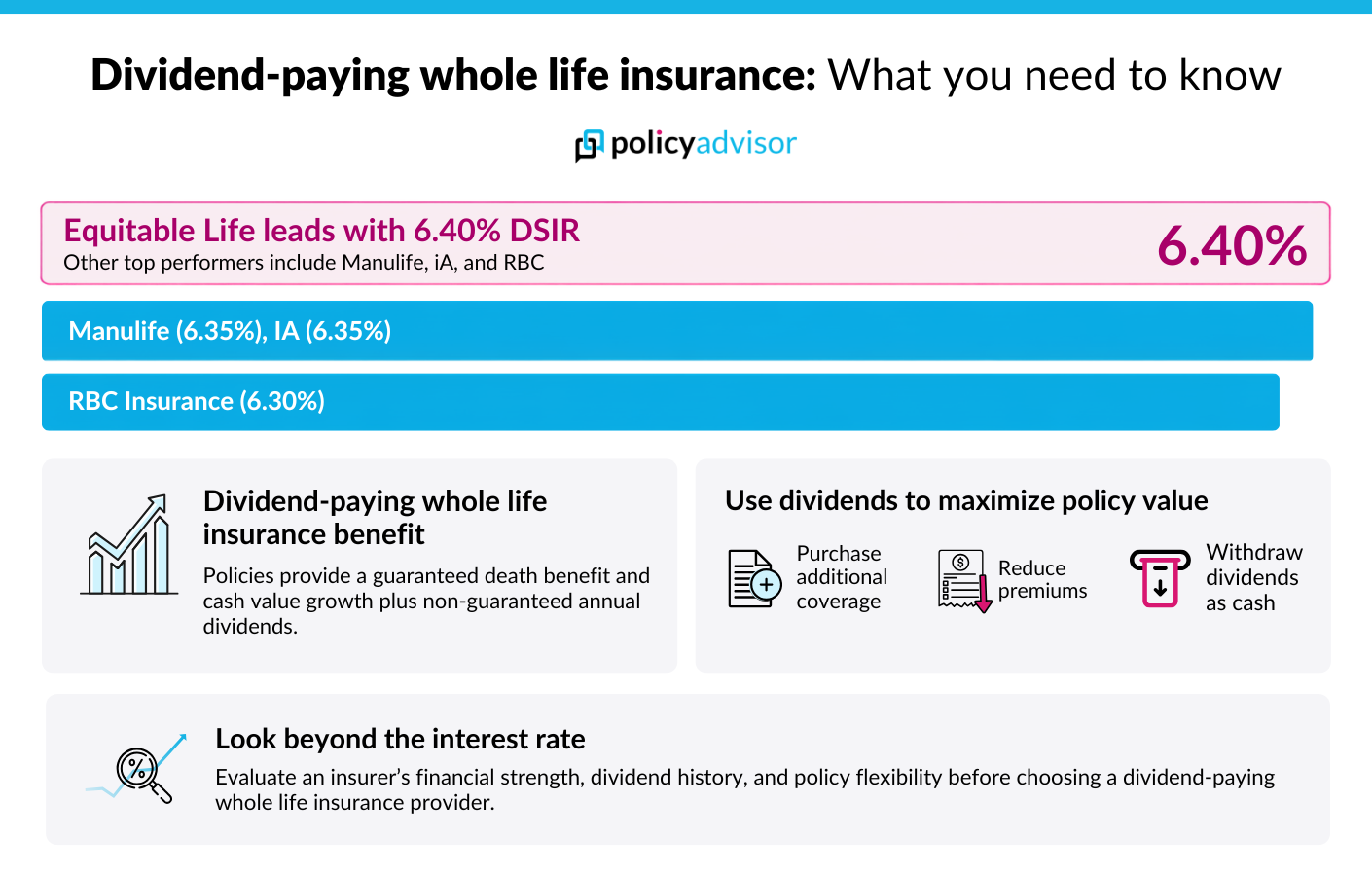
As a policyholder, you generally have five primary ways to receive or use your dividends. You can usually change your selection once per year on the policy anniversary.
Paid-Up Additions (PUA)
This is often considered the most powerful option for long-term wealth accumulation. Dividends are used to purchase additional "mini" whole life policies that are fully paid up. These additions have their own cash value and death benefit, and they also earn dividends. Over time, this creates a compounding effect that significantly increases the total death benefit and the cash value of the policy without requiring any additional out-of-pocket premium payments.
Premium Reduction
If you want to lower your out-of-pocket costs, you can instruct the insurer to apply your dividends toward your annual or monthly premium. In some cases, once a policy has been in force for several decades, the dividend may be large enough to cover the entire premium, essentially making the policy "self-funding."
Cash Payments
You can choose to receive your dividend as a direct check or electronic deposit. While this provides immediate liquidity, it is important to remember that taking the cash prevents those funds from growing within the tax-advantaged environment of the life insurance policy.
Accumulation at Interest
You can leave the dividends with the insurance company in a side account where they earn a set interest rate. Unlike the cash value of the policy, the interest earned on these accumulated dividends is generally taxable as ordinary income in the year it is credited.
One-Year Term Insurance
In some policy structures, you can use dividends to purchase one-year term insurance equal to the policy's current cash value. This is often used in business insurance or estate planning situations where maximizing the death benefit in the early years is a priority.
Tax Treatment of Life Insurance Dividends
From a tax perspective, the IRS generally views life insurance dividends as a return of premium rather than a capital gain or investment income. Because you are essentially receiving back a portion of the money you already paid with after-tax dollars, dividends are typically not taxable as long as they do not exceed the "cost basis" of the policy.
The cost basis is the total amount of premiums you have paid into the policy, minus any previous tax-free withdrawals. If your total dividends (plus any other withdrawals) eventually exceed the total premiums you have paid, the excess amount is taxed as ordinary income.
Important Note on Loans: If you have an outstanding policy loan, dividends may be impacted. Furthermore, if you surrender a policy with a loan or if the policy lapses, the dividends that were previously "tax-free" could contribute to a taxable event if they pushed the policy value above the cost basis.
Comparison of Dividend Utilization Strategies
| Option | Impact on Death Benefit | Impact on Cash Value | Tax Status (Typical) | Best For |
|---|---|---|---|---|
| Paid-Up Additions | Increases | Increases | Tax-Deferred | Long-term growth & maximum legacy. |
| Premium Reduction | Neutral | Neutral | Tax-Free | Reducing monthly expenses. |
| Cash Payment | Neutral | Neutral (Stops growth) | Tax-Free | Immediate cash needs. |
| Accumulate at Interest | Increases (via side account) | Increases | Interest is Taxable | Short-term savings with liquidity. |
| One-Year Term | Increases significantly | Neutral | Tax-Free | Temporary high-need coverage. |
Managing Your Legacy Allstate (Everlake) Policy in 2026
If you are looking to check your current dividend status or change your dividend option, you should follow these steps:
- Locate Your Policy Number: This is found on your original Allstate documents or your most recent annual statement from Everlake.
- Access the Everlake Policyholder Portal: Since the 2021 sale, policy management has moved to Everlake's digital infrastructure. You may need to register your account if you haven't logged in since the transition.
- Review the Annual Statement: Every year, on the anniversary of your policy's start date, you receive a statement. This document details the dividend earned for the year, the current cash value, and the total death benefit.
- Contact Customer Service: If your policy is complex, speaking with an Everlake representative or your designated Allstate agent is recommended. They can provide a "policy illustration," which is a projection of how different dividend options will affect your policy’s value over the next 10 to 20 years based on current dividend scales.
Common Mistakes to Avoid
- Ignoring the Dividend Option: Many policyholders leave their dividends on a "default" setting (often cash or accumulation at interest) without realizing that Paid-Up Additions might offer better long-term value.
- Assuming Dividends are Guaranteed: Unlike the guaranteed minimum interest rate in a whole life policy, dividends are never guaranteed. They are declared annually by the board of directors. If the company has a poor financial year, dividends can be reduced or eliminated.
- Neglecting Tax on Interest: If you choose the "Accumulate at Interest" option, remember that the interest is taxable annually. Many people forget to report this on their tax returns because they don't receive a physical check.
Frequently Asked Questions
Can I withdraw dividends that I previously used to buy Paid-Up Additions?
Yes, you can generally "surrender" Paid-Up Additions for their cash value. However, this will reduce your total death benefit and may have tax implications if the amount withdrawn exceeds your policy's cost basis. It is usually more efficient to take a policy loan against the value rather than surrendering the additions entirely.
Why did my dividend amount decrease this year?
Dividend scales are sensitive to interest rates and the insurance company’s claims experience. If the general interest rate environment is low or if Everlake experienced higher-than-expected mortality claims, the board may vote to lower the dividend scale. Even if the scale stays the same, your dividend might change if you have an outstanding policy loan, as some companies use "direct recognition," which adjusts dividends based on loan activity.
How do Allstate/Everlake dividends compare to other major insurers?
Historically, Allstate's whole life products were competitive, but because the business was sold to a private equity-managed firm (Blackstone/Everlake), the dividend philosophy may differ from "mutual" insurance companies like Northwestern Mutual or New York Life. Mutual companies are owned by policyholders, whereas Everlake is a stock company. Stock companies must balance dividend payments to policyholders with profitability for their owners.
Are dividends paid on Allstate Term Life policies?
No. Term life insurance is pure protection with no cash value component. Since there is no investment element and the premiums are priced as low as possible to cover the risk of death for a specific period, there is no surplus to distribute back to policyholders.
Can I change my dividend option at any time?
While you can submit a request at any time, most insurance companies only process the change on the policy's anniversary date. If you change your mind mid-year, the new selection will typically take effect at the start of the next policy year.
What happens to my dividends if my policy lapses?
If your policy lapses due to non-payment of premiums, any accumulated dividends are usually used to purchase "extended term insurance" or "reduced paid-up insurance," depending on the non-forfeiture or automatic premium loan provisions in your contract. It is critical to monitor your dividends if you are relying on them to pay your premiums.
Practical Recommendation for Policyholders
If you hold a legacy Allstate life insurance policy in 2026, your first priority should be to request a current policy illustration from Everlake. This document will show you exactly how your dividends are currently being used and provide a year-by-year projection of your policy's growth.
For most individuals focused on long-term stability and maximizing their estate, the Paid-Up Additions option remains the most effective choice. It leverages the power of compounding and keeps your funds within the tax-advantaged "envelope" of the life insurance policy. However, if you are approaching retirement and looking to lower your monthly expenses, switching to Premium Reduction can provide immediate cash flow relief without sacrificing the core death benefit of your original policy.
Always consult with a qualified financial advisor or tax professional before making significant changes, especially if your policy has a large cash value or outstanding loans, to ensure you don't inadvertently trigger a taxable event.