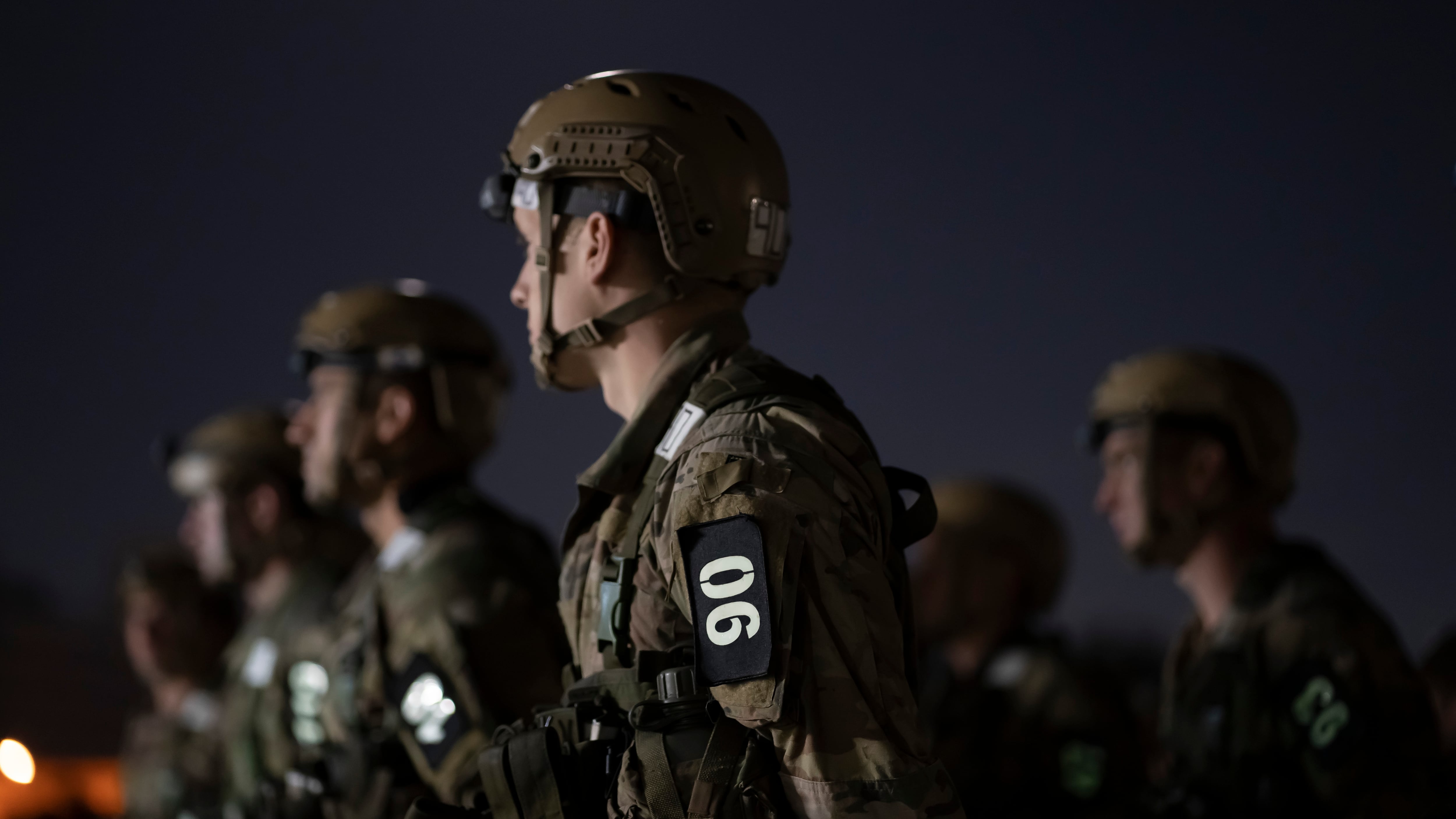
The Air Force Special Warfare (AFSPECWAR) training program is a multi-phased, rigorous pipeline designed to forge elite ground combat forces capable of operating in any environment. As of 2026, this program consolidates several distinct career fields—including Pararescue, Combat Control, Special Reconnaissance, and Tactical Air Control Party—into a unified selection and training process managed by the 350th Special Warfare Training Wing.
Understanding the Air Force Special Warfare Mission
Air Force Special Warfare represents the Air Force’s unique contribution to the United States Special Operations Command (USSOCOM). Unlike traditional pilot roles, AFSPECWAR Airmen operate primarily on the ground, often embedded with Navy SEALs, Army Special Forces, or working independently to provide specialized capabilities. The mission is categorized into three primary pillars: Global Access, Precision Strike, and Personnel Recovery.
Global Access involves the ability to deploy into denied or austere environments to establish airfields or landing zones. Precision Strike focuses on the coordination of lethal airpower from the ground, ensuring that munitions are delivered with surgical accuracy. Personnel Recovery is the most well-known pillar, centered on the rescue and medical treatment of isolated personnel in hostile territory.
The training program is designed to filter out individuals who lack the physical endurance, mental fortitude, or cognitive agility required for these high-stakes missions. By 2026, the curriculum has matured to incorporate advanced sports science and human performance metrics, ensuring that those who graduate are not just survivors of the "grind," but elite tactical athletes.
The Core Career Fields within AFSPECWAR
Before entering the pipeline, candidates must understand the specific Air Force Specialty Codes (AFSCs) that fall under the AFSPECWAR umbrella. While the initial phases of training are joint, the later stages diverge based on the specific mission set of each career field.
Pararescue (PJ) - 1Z1X1
Pararescuemen are the only Department of Defense elite force specifically tasked with the rescue and medical treatment of personnel in humanitarian and combat environments. Their training includes becoming certified Paramedics and mastering technical rescue skills, such as high-angle rope work, SCUBA diving, and mountain climbing. The PJ mission is summed up by the motto, "That Others May Live."
Combat Control (CCT) - 1Z2X1
Combat Controllers are FAA-certified air traffic controllers who operate in hostile or remote environments. They are responsible for "seizing" airfields and directing air traffic under fire. Their training focuses heavily on communications technology, demolition, and small-unit tactics. CCTs are often the first on the ground to establish a foothold for follow-on forces.
Special Reconnaissance (SR) - 1Z4X1
Special Reconnaissance is the evolution of the former Special Operations Weather Technician (SOWT) role. SR Airmen focus on multi-domain reconnaissance, electronic warfare, and long-range surveillance. They utilize advanced drones, sensors, and cyber tools to gather intelligence deep behind enemy lines. Their training emphasizes stealth and technical proficiency with high-end intelligence-gathering hardware.
Tactical Air Control Party (TACP) - 1Z3X1
TACP specialists are the primary link between the ground commander and the air assets above. They are experts in Close Air Support (CAS) and serve as Joint Terminal Attack Controllers (JTACs). While TACP training has traditionally been separate from the "Battlefield Airman" pipeline, as of 2026, it is more closely integrated into the Special Warfare training infrastructure to ensure standardized physical and tactical excellence.
Eligibility and Initial Requirements
Entering the AFSPECWAR pipeline is not as simple as visiting a standard recruiter. Candidates must meet stringent baseline requirements before they are even allowed to attempt the selection process.
- Citizenship: Candidates must be U.S. citizens.
- ASVAB Scores: High scores in the General (G) and Mechanical (M) categories are required. Specifically, a General score of 49 or higher is typically the minimum, though specific AFSCs may require more.
- Medical Standards: Candidates must pass a Class III Flight Physical. This includes rigorous vision, hearing, and cardiovascular screenings. Any history of chronic joint issues or significant respiratory problems is usually a disqualifier.
- Security Clearance: Because of the sensitive nature of special operations, all candidates must be eligible for a Top Secret security clearance.
In 2026, the Air Force continues to use the Initial Fitness Test (IFT), formerly known as the PAST, to gauge a candidate's readiness. This test includes pull-ups, sit-ups, push-ups, a 1.5-mile run, and two 25-meter underwater swims followed by a 500-meter surface swim.
The Special Warfare Training Pipeline: Step-by-Step
The journey from civilian to Special Warfare operator is one of the longest and most difficult in the military. It is structured to build the candidate progressively, ensuring they have the foundational skills before moving into high-risk tactical training.
1. Special Warfare Preparatory Course (SW Prep)
Located at Lackland Air Force Base, Texas, this eight-week course is the first stop after Basic Military Training (BMT). SW Prep is focused on "pre-habilitation" and physical conditioning. Candidates work with strength and conditioning coaches, physical therapists, and nutritionists to prepare their bodies for the rigors of Selection. The goal here is to reduce the injury rate that historically plagued the pipeline.
2. Special Warfare Assessment and Selection (A&S)
This is the "crucible." For four weeks, candidates are pushed to their absolute limits. The A&S course is designed to evaluate candidates against the "Attributes of a Special Warfare Operator," which include integrity, courage, physical courage, and teamability. Instructors look for how a candidate performs when they are cold, tired, and hungry. A large portion of the attrition occurs here, as the "Stress Inoculation" phases test whether a candidate will quit when faced with perceived insurmountable odds.
3. Special Warfare Pre-Dive and Combat Dive Course
Those who pass Selection move on to water-based training. Pre-dive is a rigorous "weeding out" phase held at Lackland AFB, followed by the Air Force Combat Dive Course in Panama City, Florida. Here, candidates learn open-circuit and closed-circuit (rebreather) diving. The focus is on subsurface infiltration and underwater search and recovery. Water confidence is a major hurdle; candidates must remain calm while performing complex tasks underwater on a single breath.
4. Airborne and SERE Training
All AFSPECWAR candidates must be jump-qualified. They attend the Basic Airborne Course at Fort Moore, Georgia, to learn static-line parachuting. Following this, they attend Survival, Evasion, Resistance, and Escape (SERE) training at Fairchild Air Force Base, Washington. This course teaches them how to survive in various climates, evade capture, and handle prisoner-of-war situations.
Skill-Specific Apprentice Courses
Once the foundational "purple" (joint) training is complete, Airmen move to their specific Apprentice Courses (also known as "Schoolhouses") to master their primary trade.
- Pararescue Apprentice Course: This is the longest phase, lasting over 30 weeks. It includes intensive medical training to reach National Registry Paramedic status, followed by technical rescue training (mountain, water, and extrication).
- Combat Control Apprentice Course: Focuses on air traffic control theory, radio procedures, and airfield survey techniques. CCTs also attend the Advanced Skills Training (AST) to integrate these skills with combat tactics.
- Special Reconnaissance Apprentice Course: Focuses on signals intelligence, surveillance photography, and the deployment of unmanned aerial systems (UAS).
- TACP Apprentice Course: Primarily located at Lackland AFB, this course focuses on land navigation, vehicle operations, and the basics of CAS.
| Career Field | Primary Focus | Training Location (Key Hubs) | Average Pipeline Length |
|---|---|---|---|
| Pararescue (PJ) | Combat Medicine / Rescue | Kirtland AFB, NM | 18–24 Months |
| Combat Control (CCT) | Air Traffic Control / Airfields | Pope Field, NC | 15–20 Months |
| Special Reconnaissance | Intelligence / Multi-Domain Ops | Pope Field, NC | 12–16 Months |
| TACP | Precision Strike / JTAC | Lackland AFB, TX | 6–9 Months |
Human Performance and Technology in 2026
The Air Force has moved away from the "break them until they quit" mentality of previous decades. In 2026, the Special Warfare Human Performance Support Group plays a vital role. Every candidate is tracked using wearable technology that monitors heart rate variability (HRV), sleep quality, and caloric expenditure.
Data-driven training allows instructors to see when a candidate is at high risk for a stress fracture or rhabdomyolysis before the injury becomes career-ending. Furthermore, cognitive training—using virtual reality and neurofeedback—is now integrated to help candidates improve their "situational awareness" and decision-making speed under fire. This holistic approach ensures that the Air Force is producing more durable operators who can sustain long careers in the Special Operations community.
Common Challenges and Attrition Factors
Despite the advancements in training science, the attrition rate for AFSPECWAR remains among the highest in the military, often exceeding 75% for certain career fields.
- Water Confidence: The "pool sessions" are the primary point of failure. Many physically fit candidates struggle with the mental panic associated with underwater knot-tying or "buddy breathing" (sharing an air source while being harassed by instructors).
- Mental Resilience: It is rarely a single event that causes a candidate to quit. Instead, it is the cumulative effect of weeks of sleep deprivation and constant evaluation.
- Injury Management: Even with top-tier medical support, the sheer volume of running and rucking can lead to overuse injuries. Candidates are encouraged to be "tactical athletes," which means knowing when to push through pain and when a "niggle" is a brewing injury that requires attention.
Frequently Asked Questions
What is the difference between AFSPECWAR and Navy SEALs?
While both are elite special operations forces, their missions differ significantly. Navy SEALs focus on maritime-based special operations and direct action. AFSPECWAR Airmen provide specialized support to the air domain on the ground—such as rescue (PJ), air traffic control (CCT), or air-to-ground strike coordination (TACP). Often, they work together on the same team.
Can women join Air Force Special Warfare in 2026?
Yes. Since 2016, all combat roles in the U.S. military have been open to women. Female candidates must meet the exact same physical and mental standards as their male counterparts. Several women have successfully graduated from the TACP and PJ pipelines, though the numbers remain small due to the extreme physical demands.
Do I need to be a great swimmer to start?
You do not need to be a competitive swimmer, but you must be comfortable in the water. The IFT requires a 500-meter swim, and the pipeline involves significant "water con" (water confidence). If you have a fear of deep water or cannot swim effectively, you will likely struggle during the Pre-Dive phase.
What happens if I fail out of the program?
If a candidate fails due to a lack of effort ("Quit"), they are typically reclassified into a standard Air Force career field based on the needs of the Air Force. If a candidate is "washed out" for medical reasons or a "training deficiency" (meaning they tried hard but couldn't master a specific skill), they may be given the opportunity to heal and return at a later date or be reclassified into a related high-demand field.
How do I prepare for the AFSPECWAR pipeline?
Prospective candidates should focus on a balanced fitness regimen that includes heavy rucking (carrying a weighted pack), interval running, and calisthenics. Improving "grip strength" and swimming technique is also vital. The Air Force provides official training apps and developmental programs through local recruiters to help candidates reach the necessary benchmarks.
Final Recommendations for Candidates
Success in the Air Force Special Warfare training program requires more than just physical strength; it requires a deep-seated "Why." Before beginning this journey, candidates should research each AFSC thoroughly to ensure their personal goals align with the mission of the unit.
Prospective Airmen should seek out a Special Warfare Developer—a former operator who works with recruiters to mentor candidates. These developers provide the most accurate, up-to-date guidance on the standards and expectations of the 350th Special Warfare Training Wing. For official requirements and to find a specialized recruiter, visit the official Air Force Special Warfare website. Engaging with the community through reputable forums or local "Special Warfare Prep" groups can also provide the peer support necessary to survive the initial phases of training.