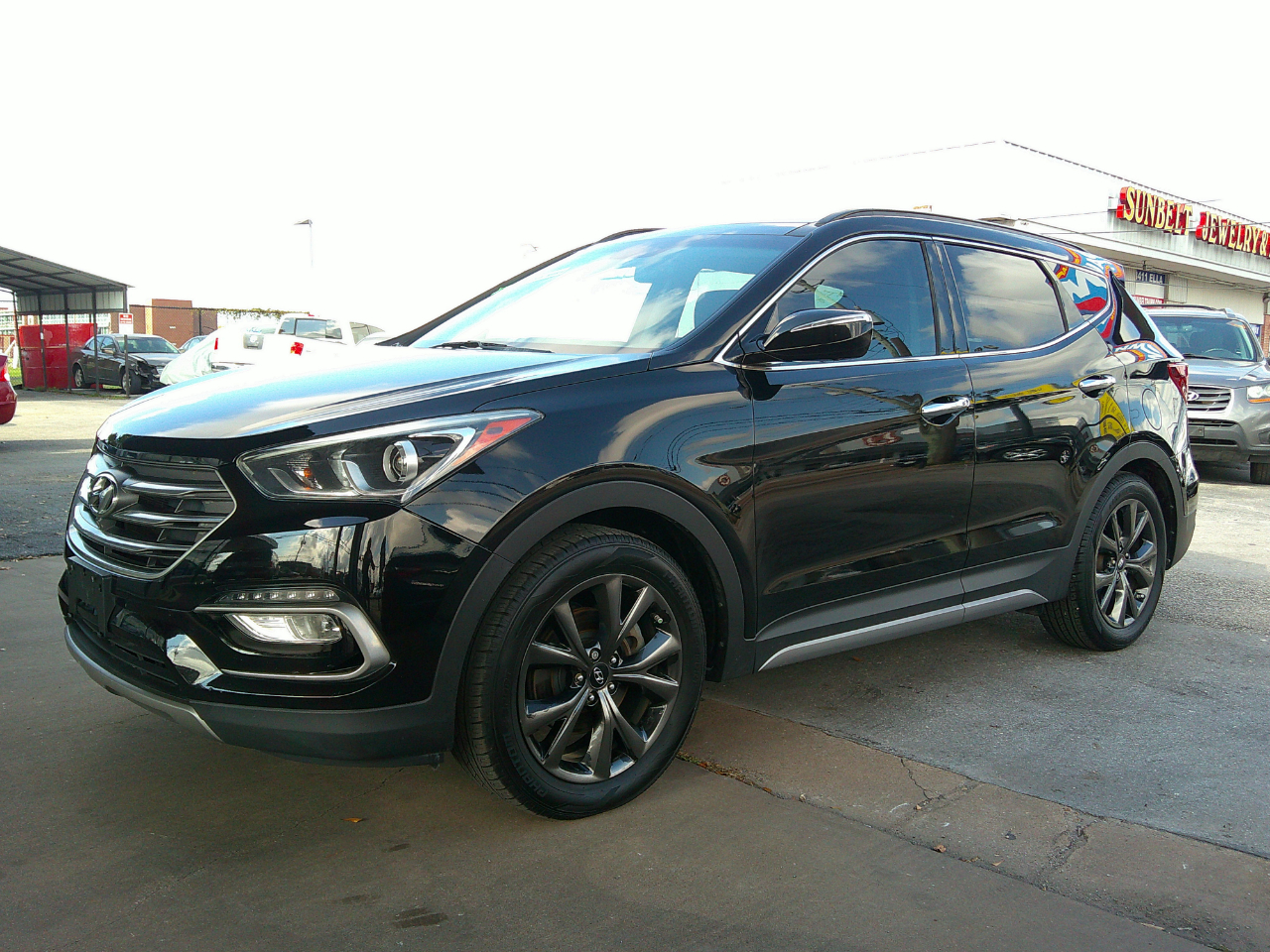
The 2017 Hyundai Santa Fe Sport features two engine options from the Theta II family: a naturally aspirated 2.4-liter Gasoline Direct Injection (GDI) four-cylinder producing 185 horsepower and a 2.0-liter turbocharged GDI four-cylinder generating 240 horsepower. Both engines offer strong performance, but owners must carefully monitor oil levels and verify participation in Hyundai's extended warranty campaigns due to documented connecting rod bearing wear.
Overview of 2017 Hyundai Santa Fe Sport Engine Options
The 2017 Hyundai Santa Fe Sport received a mid-cycle refresh that refined exterior aesthetics, upgraded interior technology, and retuned the powertrain configurations for improved fuel economy and throttle response. Unlike the larger three-row Hyundai Santa Fe, which came equipped with a 3.3-liter Lambda II V6 engine, the five-passenger Santa Fe Sport exclusively utilized four-cylinder engines from Hyundai’s Theta II engine family.
Both available engines rely on Gasoline Direct Injection (GDI) technology. GDI injects high-pressure fuel directly into the combustion chamber rather than into the intake port. This design enables higher compression ratios, improved thermal efficiency, and sharper throttle response. However, it also introduces specific operational characteristics and long-term maintenance requirements, such as increased susceptibility to intake valve carbon accumulation.
- 2017 Hyundai Santa Fe Sport
- 2.4L Theta II Naturally Asp. (185 hp)
- 2.0T Theta II Turbocharged (240 hp)
2.4-Liter Theta II GDI (Naturally Aspirated)
The standard engine for the base 2017 Hyundai Santa Fe Sport trim is the 2.4-liter Inline 4-cylinder (Engine Code G4KJ).
- Displacement: 2,359 cc
- Block and Head Material: Aluminum alloy construction for weight reduction and thermal dissipation
- Valvetrain: Dual Overhead Camshafts (DOHC), 16 valves, with Continuously Variable Valve Timing (D-CVVT) on both intake and exhaust camshafts
- Fuel Delivery: High-pressure direct injection operating at pressures up to 200 bar (2,900 psi)
- Horsepower Output: 185 hp @ 6,000 RPM
- Torque Output: 178 lb-ft @ 4,000 RPM
- Compression Ratio: 11.3:1
This naturally aspirated engine is tuned for smooth power delivery across daily driving scenarios. By pairing variable valve timing with gasoline direct injection, the 2.4L engine balances commuting fuel efficiency with sufficient passing torque.
2.0-Liter Turbocharged Theta II GDI (2.0T)
Offered as an upgrade on the 2.0T trim level, the 2.0-liter Turbocharged Inline 4-cylinder (Engine Code G4KH) provides significantly increased horsepower and low-end torque.
- Displacement: 1,998 cc
- Block and Head Material: Reinforced aluminum alloy block with cast-iron cylinder liners
- Valvetrain: DOHC, 16 valves, Dual CVVT
- Turbocharging: Twin-scroll turbocharger integrated directly into the exhaust manifold
- Horsepower Output: 240 hp @ 6,000 RPM
- Torque Output: 260 lb-ft @ 1,450–3,500 RPM
- Compression Ratio: 10.0:1
The defining engineering feature of the 2.0T engine is its twin-scroll turbocharger. By dividing the exhaust channels into two distinct passages, exhaust gas pulses from alternating cylinders are kept separate. This layout reduces exhaust gas interference, accelerates spool-up speed, and yields peak torque as early as 1,450 RPM, minimizing turbo lag during acceleration.
Technical Specifications & Performance Comparison
The table below outlines the core engineering specifications, performance metrics, and mechanical parameters of both 2017 Hyundai Santa Fe Sport engine variants.
| Feature / Metric | 2.4L Theta II GDI (Naturally Aspirated) | 2.0L Theta II Turbo GDI (2.0T) |
|---|---|---|
| Engine Code | G4KJ | G4KH |
| Configuration | Inline 4-Cylinder | Inline 4-Cylinder, Turbocharged |
| Displacement | 2,359 cc (2.4L) | 1,998 cc (2.0L) |
| Bore x Stroke | 88.0 mm x 97.0 mm | 86.0 mm x 86.0 mm |
| Compression Ratio | 11.3:1 | 10.0:1 |
| Peak Horsepower | 185 hp @ 6,000 RPM | 240 hp @ 6,000 RPM |
| Peak Torque | 178 lb-ft @ 4,000 RPM | 260 lb-ft @ 1,450–3,500 RPM |
| Valvetrain | DOHC, 16-Valve, D-CVVT | DOHC, 16-Valve, D-CVVT |
| Fuel System | Direct Injection (GDI) | Direct Injection (GDI) |
| Recommended Oil Grade | SAE 5W-20 or 5W-30 | SAE 5W-30 or 5W-40 (Full Synthetic) |
| Engine Oil Capacity | 5.07 US quarts (4.8 liters) | 4.97 US quarts (4.7 liters) |
| EPA Fuel Economy (FWD) | ~21 City / 27 Hwy / 24 Combined MPG | ~20 City / 27 Hwy / 23 Combined MPG |
Known Engine Issues and Mechanical Vulnerabilities
While the 2017 Hyundai Santa Fe Sport offers solid utility, both Theta II engine variants have documented failure modes that owners and prospective buyers should evaluate.
- Theta II Engine Vulnerabilities
- Mechanical Wear
- Rod Bearings
- Debris Contam.
- Seizure Risk
- Fuel & Oil Issues
- Excessive Oil Consumption
- GDI Valve Carbon
- HPFP Failure
- Mechanical Wear
1. Connecting Rod Bearing Wear and Engine Seizure
The primary mechanical weakness in the Theta II engine architecture involves premature wear of the connecting rod bearings. The main causes include:
- Manufacturing Debris: During assembly at manufacturing facilities, metallic debris (machining metal shavings) was occasionally left behind inside the crankshaft oil passages.
- Oil Starvation: Over time, restricted oil flow through contaminated passages starves the connecting rod bearings of adequate lubrication.
- Cyclic Friction: High friction causes excessive heat buildup, causing the rod bearings to score, deform, and eventually rotate out of position (spun bearing).
- Catastrophic Failure: If left unaddressed, the bearing disintegrates, leading to engine knocking, total crankshaft locking, connecting rod fracture, or engine block puncture.
2. Excessive Oil Consumption
Both the 2.4L and 2.0T engines can experience high rates of engine oil consumption. This issue typically stems from piston ring fouling.
Because GDI engines produce fine carbon particulate during combustion, carbon deposits can settle inside the oil control ring grooves on the pistons. When these rings become stuck or gummed up with carbon, they can no longer wipe excess oil from the cylinder walls effectively. The uncollected oil enters the combustion chamber and burns off, reducing oil levels between service intervals. If the oil level drops below critical thresholds, it accelerates connecting rod bearing wear.
3. Intake Valve Carbon Accumulation
Unlike Port Fuel Injection (PFI) engines, where atomized gasoline constantly washes over the intake valves to remove residual oil vapor, GDI engines spray fuel directly into the cylinder. Consequently, oil vapors routed through the Positive Crankcase Ventilation (PCV) system settle on the hot intake valves and bake into hard carbon deposits. Over time, heavy carbon accumulation can cause:
- Misfires and rough idling
- Hesitation during acceleration
- Reduced overall engine airflow and diminished fuel economy
4. High-Pressure Fuel Pump (HPFP) & Camshaft Follower Wear
The GDI fuel system relies on a mechanical High-Pressure Fuel Pump driven directly by an extra lobe on the intake camshaft. The mechanical follower residing between the camshaft lobe and the HPFP plunger can experience accelerated wear if oil change intervals are neglected or improper oil viscosities are used. A worn HPFP follower can lead to loss of high-pressure fuel supply, extended crank times, vehicle stalling, or illuminated check engine lights indicating low fuel rail pressure.
Recalls, Service Campaigns, and Class-Action Settlement Warranties
To address widespread Theta II engine failures, Hyundai initiated multiple voluntary safety recalls, service campaigns, and extended warranty programs under supervision by the National Highway Traffic Safety Administration (NHTSA).
NHTSA Safety Recalls & Service Campaign 953
Hyundai issued several major recalls covering vehicles equipped with 2.4L and 2.0T Theta II GDI engines. Key programs affecting the 2017 Santa Fe Sport include:
Knock Sensor Detection System (KSDS) Software Update (Campaign 953 / TXXI): Hyundai developed custom engine control unit (ECU) software that repurposes the engine's knock sensor to monitor high-frequency vibrations unique to premature connecting rod bearing wear.
Limp-Home Mode Activation: If the KSDS software detects vibrations characteristic of bearing degradation, it triggers Diagnostic Trouble Code (DTC) P1326, illuminates or flashes the Check Engine Light, and places the vehicle into a protective "Limp-Home Mode." This restricts maximum engine speed to approximately 1,800–2,000 RPM and reduces engine power, allowing the driver to pull over safely before a complete lockup occurs.
Knock Sensor Monitors Mechanical Vibrations
Detects Frequencies Specific to Rod Bearing Wear
Triggers DTC P1326 & Flashing Check Engine Light
Enters Limp-Home Mode (Max ~2,000 RPM) to Protect Engine
Lifetime Engine Extended Warranty
As a result of class-action lawsuit settlements involving Theta II GDI engines, Hyundai extended the warranty for eligible engine short-block assemblies (including the engine block, crankshaft, main bearings, connecting rods, and pistons) to a Lifetime Extended Warranty for qualifying original and subsequent owners.
Key Requirements for Warranty Coverage:
- The vehicle must have received the KSDS software update (Campaign 953) prior to experiencing an engine failure.
- The failure must be specifically linked to connecting rod bearing wear.
- The owner must provide reasonable maintenance documentation (oil change receipts or service records) establishing that the engine was not neglected or run without oil.
If an engine failure meets these criteria, authorized Hyundai dealerships are mandated to replace the engine assembly at no cost to the owner.
Troubleshooting Symptoms and Diagnostic Steps
Properly diagnosing engine noise and operational faults helps owners address early warning signs before complete power failure occurs.
- Engine Symptom Identification
- Valve Train Noise
- High-frequency
- Ticking/tapping
- 1/2 engine speed
- Upper cylinder
- Rod Knock Noise
- Deep, metallic
- Heavy thumping
- Increases with engine load
- Valve Train Noise
Identifying Engine Knock vs. Valve Train Noise
- Valve Train Ticking: Direct-injection fuel injectors produce a fast, high-frequency mechanical clicking or ticking noise, which is completely normal for GDI engines.
- Connecting Rod Knock: A failing rod bearing produces a lower-pitched, metallic thumping or knocking sound that deepens under load and speeds up with engine RPM. If a distinct metallic double-knock is audible from the lower engine block during acceleration, stop driving immediately.
Diagnostic Trouble Code (DTC) P1326
If the Check Engine Light flashes and the vehicle loses power, an OBD-II scanner will frequently return code P1326 (Knock Sensor Detection System - Spark Cut Action).
- Verify KSDS Trigger: Connect an OBD-II scanner to confirm if P1326 is active.
- Check Engine Oil Level and Condition: Inspect the dipstick immediately. Never attempt to run the engine if oil is below the minimum fill line.
- Perform Bearing Clearance Test: Authorized Hyundai technicians use a specialized engine bearing clearance testing tool (which measures crankshaft movement via engine cylinder pressurization) to verify whether physical bearing displacement has exceeded limits.
Testing for Excessive Oil Consumption
If an engine burns oil rapidly without active external leaks, technicians perform a standardized Oil Consumption Test:
- The engine is filled with fresh oil to the exact full line on the dipstick, and the oil drain plug and filter are sealed.
- The owner drives the vehicle for 1,000 miles.
- The dealership re-evaluates the oil level. If oil consumption exceeds 1 US quart per 1,000 miles, further engine cleaning or short-block replacement procedures may be initiated under technical service bulletins (TSBs).
Recommended Maintenance & Preventive Care
Consistent preventive maintenance is crucial to prolonging the lifespan of both the 2.4L and 2.0T Theta II GDI engines.
| Maintenance Item | Recommended Interval |
|---|---|
| Oil & Filter Changes | 3,000 to 5,000 Miles (Full Synthetic) |
| Engine Oil Dipstick Check | Every 500 Miles / Every Gas Fill-Up |
| GDI Valve & Fuel Cleaning | Every 15,000 to 30,000 Miles |
| Spark Plug Replacement | Every 45,000 Miles (2.0T) / 90,000 (2.4L) |
| Coolant & Belt Service | Every 60,000 to 75,000 Miles |
1. Frequent Engine Oil & Filter Changes
- Service Interval: Change oil every 3,000 to 5,000 miles. Although severe-service intervals in standard manuals cite 5,000 miles, shorter intervals help prevent sludge build-up and piston ring sticking.
- Oil Specification: Use high-quality full synthetic oil matching API SN PLUS, SP, or ILSAC GF-6 standards to minimize low-speed pre-ignition (LSPI) risk. Use SAE 5W-30 for standard climates, or 5W-40 for 2.0T engines operating under heavy loads or high ambient temperatures.
- Oil Filter Selection: Use original equipment manufacturer (OEM) Hyundai oil filters (Part No. 26300-35505 or equivalent). OEM filters feature built-in bypass valves calibrated to maintain proper oil pressure during cold starts.
2. Routine Manual Oil Level Checks
Do not rely solely on the instrument cluster oil pressure warning light; this warning light typically illuminates only after oil pressure has dropped to dangerously low levels. Manually check the dipstick every 500 miles or at every other fuel refill to catch oil consumption early.
3. Intake Valve and GDI Fuel System Maintenance
- Top-Tier Gasoline: Use high-detergent fuels to prevent carbon build-up inside the fuel injectors.
- Intake Valve Cleaning: Perform professional intake valve cleaning (chemical induction cleaning or manual walnut-shell blasting) every 30,000 to 45,000 miles to clear carbon deposits from the intake valves and preserve engine breathing performance.
4. Spark Plug Replacement
- 2.0T Turbocharged Engine: Replace iridium spark plugs every 45,000 miles. Turbocharged engines run higher cylinder pressures and heat, which accelerates spark plug electrode wear.
- 2.4L Naturally Aspirated Engine: Replace iridium spark plugs every 90,000 miles.
Frequently Asked Questions
Which engines are in the 2017 Hyundai Santa Fe Sport?
The 2017 Hyundai Santa Fe Sport comes with either a naturally aspirated 2.4-liter Theta II GDI 4-cylinder engine (185 hp) or a 2.0-liter turbocharged Theta II GDI 4-cylinder engine (240 hp). The non-Sport, 3-row Hyundai Santa Fe uses a 3.3-liter V6 engine.
How do I know if my 2017 Hyundai Santa Fe Sport engine is covered by the lifetime warranty?
To qualify for lifetime warranty coverage on connecting rod bearing failures, your vehicle must have had the Knock Sensor Detection System (KSDS) software update (Service Campaign 953) installed by a Hyundai dealer prior to engine failure. You can verify whether your vehicle has completed this recall update by entering your 17-digit VIN on the official Hyundai Recall Portal or the NHTSA Safety Recalls Website.
What should I do if code P1326 appears on my dashboard scanner?
Code P1326 indicates that the Knock Sensor Detection System has identified abnormal combustion or mechanical vibration consistent with connecting rod bearing wear. Drive the vehicle safely off the road immediately, turn off the ignition, and contact an authorized Hyundai dealership to schedule a tow. Avoid driving at highway speeds in Limp-Home Mode, as doing so can worsen internal engine damage.
Why is my 2017 Santa Fe Sport burning oil rapidly without any leaks?
GDI engines tend to form carbon deposits around the piston oil control rings. Over time, these rings stick and lose their seal, allowing engine oil to pass into the combustion chamber and burn off. Checking oil levels manually every 500 miles and using high-quality full synthetic oil helps prevent carbon buildup.
Can I install a used Theta II engine from a salvage yard if mine fails?
Installing a used salvage-yard Theta II engine is generally not recommended unless the donor engine's full maintenance history and internal bearing conditions are verified. Used engines may suffer from the same manufacturing debris or bearing wear issues. If replacing out-of-pocket, select a remanufactured short or long block that includes updated bearing designs and revised oil passages.
Summary and Next Actions
The 2017 Hyundai Santa Fe Sport provides practical performance and comfort, but its 2.4L and 2.0T Theta II engines demand proactive maintenance and close oversight.
Recommended Actions for Owners and Buyers:
- Check Open Recalls Immediately: Enter your VIN on the NHTSA Recalls Website to confirm Campaign 953 (KSDS update) has been installed.
- Maintain Strict Oil Inspection Routines: Inspect the engine oil dipstick bi-weekly and change full synthetic oil every 3,000 to 5,000 miles using OEM filters.
- Keep Complete Service Records: Maintain receipts for oil, filters, and routine maintenance in an organized file to streamline potential warranty claims.
- Respond Promptly to Engine Warning Signs: If you notice deep engine metallic knocking, sudden oil drops, or a flashing Check Engine Light, stop driving and contact an authorized service department right away.