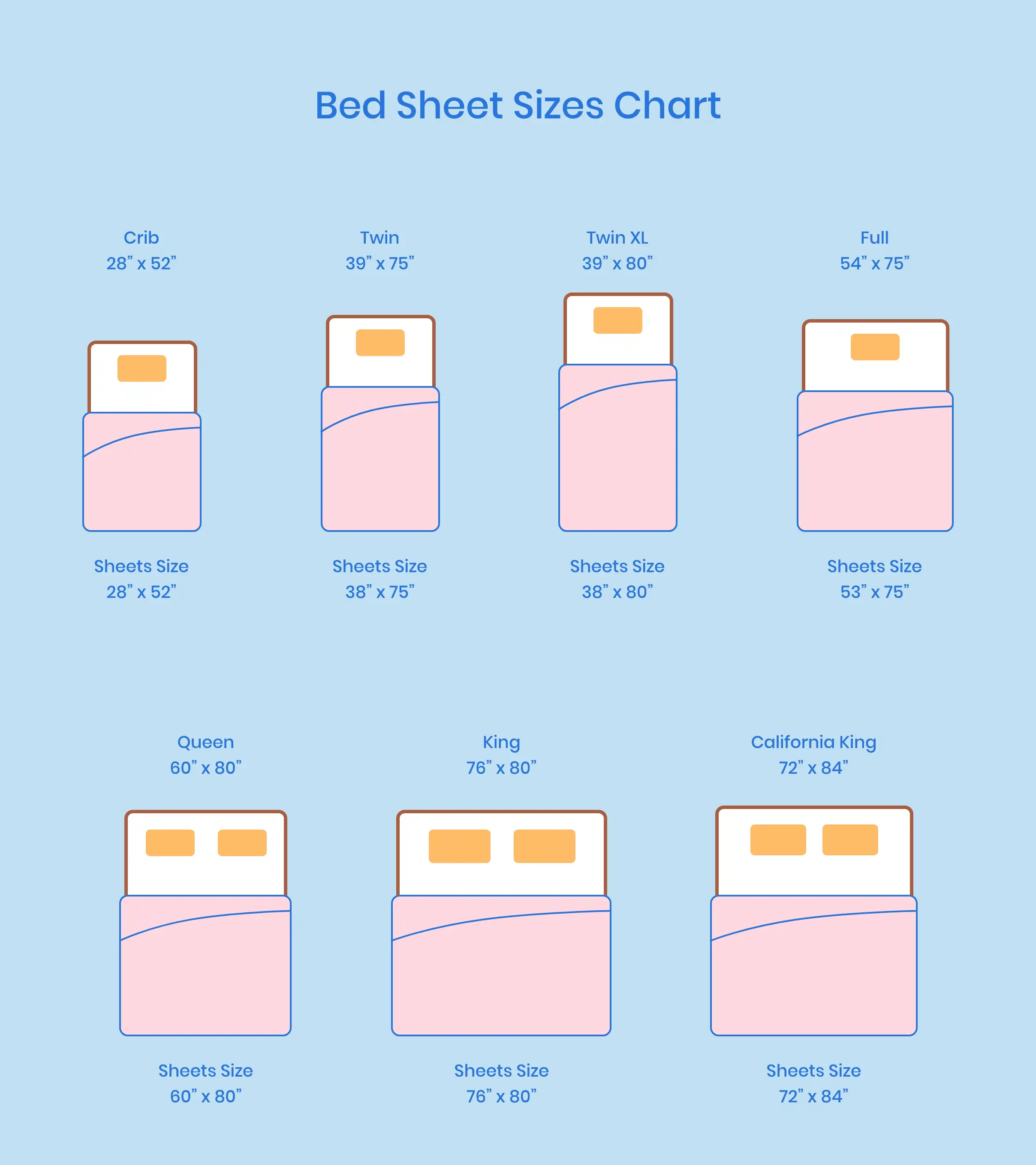
A standard double bed measures approximately 54 inches wide by 75 inches long (137 cm by 190 cm), making it a compact choice for single adults who want extra stretching room or smaller guest bedrooms where space is at a premium.
When shopping for bedroom furniture or planning a room layout, understanding exact mattress dimensions is vital. A common point of confusion for shoppers is distinguishing between a standard double bed—historically also known as a full bed—and other mattress categories like twin, queen, and king. While "double" and "full" refer to the exact same mattress size in North America, regional naming conventions and room size requirements can complicate the selection process. This guide provides a comprehensive breakdown of standard double bed dimensions, spatial requirements, comparative analysis against other sizes, and practical considerations for sleepers.
Defining the Double Bed: Exact Dimensions and Terminology
The term "double bed" carries specific measurements that have remained largely standardized across the mattress industry for decades. In the United States and Canada, a standard double mattress—interchangeably called a full-size mattress—measures 54 inches wide by 75 inches long (or 4 feet 6 inches by 6 feet 3 inches).
In the United Kingdom and Ireland, however, the terminology and dimensions shift slightly. A standard UK/Irish "double" bed measures 135 cm wide by 190 cm long (approximately 53 inches by 75 inches). While very close to the North American full size, this 2-centimeter variance can occasionally impact the fit of imported bed frames and bedding linens.
To visualize the physical scale:
- Width (54 inches / 137 cm): Provides roughly 27 inches of personal sleeping space for each person when shared by two adults.
- Length (75 inches / 190 cm): Accommodates individuals up to approximately 5 feet 9 inches comfortably without their feet hanging over the edge. Taller sleepers often find standard double beds restrictive.
Historical Context and Evolution of the Term
The designation "double bed" originates from an era when standard mattress sizes were limited. Before the widespread adoption of queen and king mattresses in the mid-20th century, the double (or full) bed was the standard option for married couples sharing a single sleeping surface.
Over subsequent decades, as average human heights and desired personal sleeping space increased, the double bed became less popular for couples. Today, queen beds (60 inches wide by 80 inches long) have largely replaced double beds as the standard choice for master bedrooms, leaving the double bed to occupy a distinct niche for single adults, teenagers, and guest rooms.
Room Size Requirements and Layout Planning
Purchasing a double bed requires evaluating not just the floor space taken up by the mattress itself, but also the surrounding clearance needed for movement, furniture, and door swings. Placing a 54x75-inch bed into a room requires careful spatial planning.
Minimum Recommended Room Dimensions
Design professionals generally recommend a minimum bedroom size of 10 feet by 10 feet (approx. 3 meters by 3 meters) to comfortably accommodate a standard double bed.
This room dimension allows for:
- Centering the bed against a wall.
- Leaving approximately 30 inches of walking clearance on both sides and at the foot of the bed.
- Accommodating essential supporting furniture, such as a bedside nightstand or a small dresser, without making the space feel cramped.
Tight Spaces and Studio Apartments
In urban apartments, tiny homes, or multi-purpose guest rooms, a double bed can fit into smaller rooms measuring down to 9 feet by 9 feet. However, fitting a double bed into a smaller footprint requires compromises:
- The bed may need to be pushed directly against one wall to maximize floor space.
- Large case goods (dressers, armoires) may need to be replaced with vertical storage solutions or built-in shelving.
- Doorways and closet swings must be checked to ensure they do not collide with the mattress perimeter or bed frame.
Comparing Double Beds to Other Mattress Sizes
Choosing the right mattress involves understanding how a double bed stacks up against smaller and larger alternatives. The table below outlines standard dimensions, target sleepers, and recommended room sizes for common mattress categories.
| Mattress Size | Dimensions (Inches) | Dimensions (Centimeters) | Ideal Sleepers | Minimum Room Size |
|---|---|---|---|---|
| Twin / Single | 38" W x 75" L | 97 cm x 190 cm | Children, single adults, bunk beds | 7' x 10' |
| Twin XL | 38" W x 80" L | 97 cm x 203 cm | Taller single adults, college dorms | 8' x 10' |
| Double / Full | 54" W x 75" L | 137 cm x 190 cm | Single adults, teens, occasional guest room | 10' x 10' |
| Queen | 60" W x 80" L | 152 cm x 203 cm | Couples, single adults wanting extra space | 10' x 11' |
| King | 76" W x 80" L | 193 cm x 203 cm | Couples, families with pets/children | 12' x 12' |
Double vs. Twin XL
While a Twin XL offers the same narrow width as a standard twin (38 inches), it provides an extra 5 inches of length, totaling 80 inches. A double bed provides significantly more width (54 inches vs. 38 inches) but the same 75-inch length. Taller single sleepers who toss and turn may prefer a Twin XL for legroom, whereas sleepers who value rolling space or sleeping with pets often prefer the width of a double bed.
Double vs. Queen
The queen mattress is 6 inches wider and 5 inches longer than a standard double bed. For two adults sharing a bed, a queen is generally considered the minimum viable size for long-term comfort. A double bed provides each adult with only 27 inches of personal width—roughly the same width as a crib mattress. Consequently, while two adults can sleep on a double bed, it is typically recommended only for single sleepers or occasional guest use.
Pros and Cons of Choosing a Double Bed
Evaluating the advantages and limitations of a double bed ensures it aligns with your lifestyle, sleeping habits, and living space.
Advantages
- Space Efficiency: Fits comfortably in smaller bedrooms, guest rooms, and home offices where a queen or king would overwhelm the layout.
- Cost-Effective: Double mattresses, bed frames, and bedding (sheets, duvets, blankets) are consistently less expensive than their queen and king counterparts.
- Versatility: Ideal as an upgrade for growing teenagers transitioning from twin beds, or as a comfortable option for single adults living in apartments.
- Ease of Transport: Lighter and less bulky than larger mattresses, making it easier to maneuver through narrow hallways, stairwells, and doorways during moves.
Limitations
- Restricted Space for Couples: Sharing a double bed with a partner can feel cramped, particularly for restless sleepers or individuals who require personal space.
- Length Constraints: At 75 inches long, individuals over 6 feet tall may find their feet reaching the edge of the mattress, especially when using thick pillows.
- Accessory Availability: While widely available, certain specialized luxury bedding lines offer fewer pattern options in full/double sizes compared to queen and king sizes.
Frequently Asked Questions
Can two adults sleep comfortably on a double bed?
Two adults can physically sleep on a double bed, but comfort depends heavily on sleeping habits. With only 54 inches of total width, each person has roughly 27 inches of space—equivalent to a crib mattress. It is suitable for occasional guest use or couples with smaller body frames, but most couples prefer a queen or king bed for nightly sleeping.
Is a "full bed" the exact same thing as a "double bed?"
Yes. In North America, "full" and "double" are marketing synonyms referring to a mattress measuring 54 inches wide by 75 inches long. Manufacturers and retailers use both terms interchangeably, though "full" has become increasingly common in modern retail environments.
What size sheets fit a standard double bed?
A standard double (full) bed requires fitted sheets, flat sheets, and mattress protectors sized specifically for "Full" or "Double" beds (54" x 75"). Twin sheets will be too small to stretch across the width, while queen sheets will be too loose and prone to bunching up underneath the sleeper.
How much weight can a standard double bed support?
Weight capacity depends primarily on the bed frame, foundation, and mattress construction rather than the surface dimensions alone. A standard, well-built double mattress and sturdy wooden or metal frame typically support between 300 to 500 pounds distributed evenly. Heavy-duty or hybrid models designed for couples can support significantly more.
Is a double bed long enough for tall adults?
At 75 inches in length, a double bed accommodates individuals up to approximately 5 feet 9 inches comfortably. Taller adults often experience their feet hanging off the edge or feel restricted. Taller sleepers should consider a Twin XL (80 inches) or a Queen (80 inches) for adequate legroom.
Practical Next Steps and Recommendations
When selecting a double bed, begin by measuring your available bedroom floor space with a tape measure, accounting for at least 24 to 30 inches of clearance around the perimeter. If you are shopping for a guest room or a teenager's bedroom, a double bed offers an optimal balance of comfort and space efficiency. Verify your room dimensions, check your doorframes for clearance, and select bedding explicitly labeled for full or double sizes to ensure an exact fit.