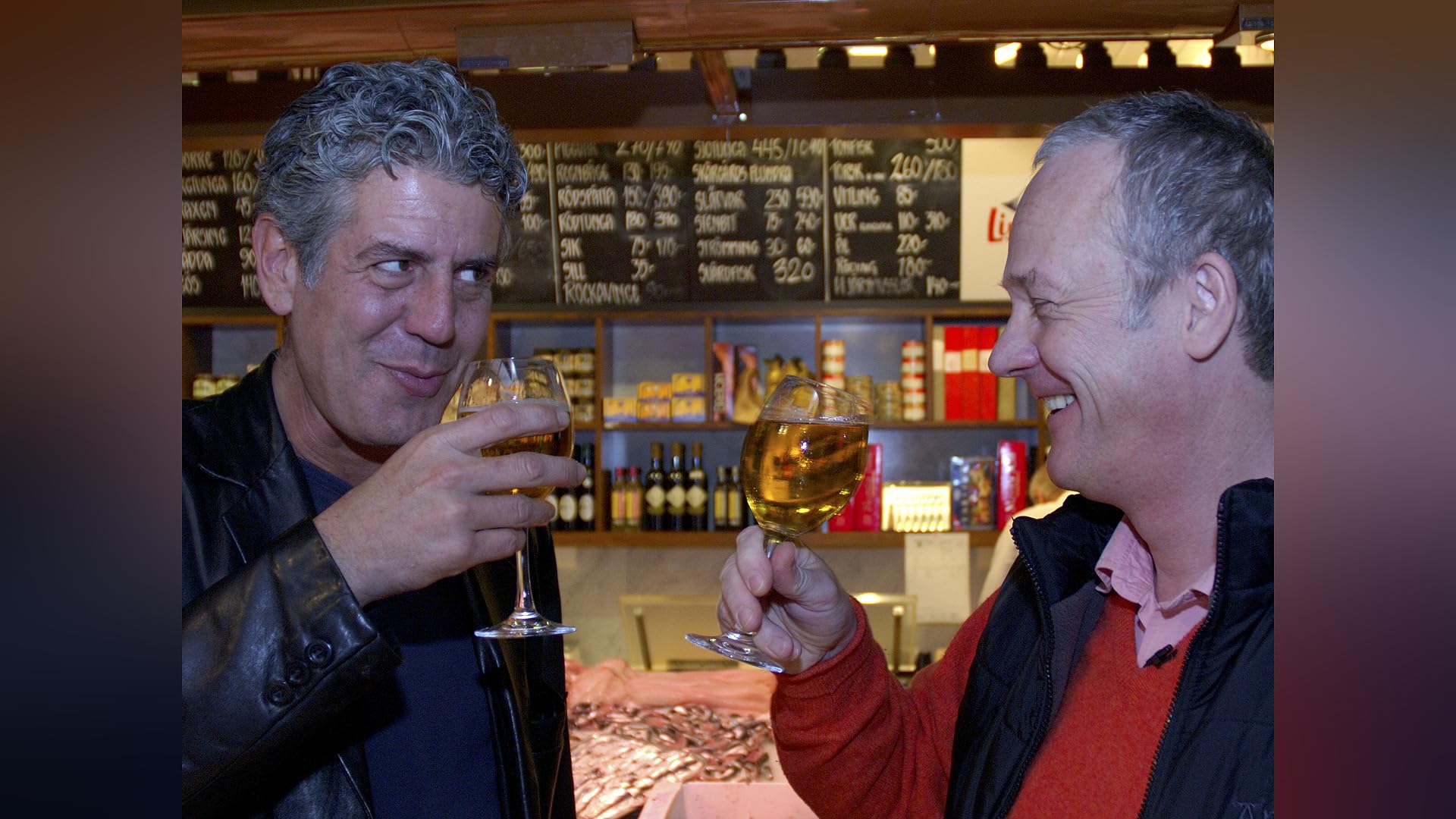
The culinary exchange between Anthony Bourdain and Jiro Ono represents a pivotal moment in food media, where Western curiosity met the pinnacle of Japanese "shokunin" craftsmanship. This encounter, primarily documented during the "Tokyo" episode of No Reservations in 2008, fundamentally changed how global audiences perceived sushi, discipline, and the pursuit of perfection.
In the history of culinary television, few moments carry as much weight as Anthony Bourdain’s visit to Sukiyabashi Jiro. This wasn’t merely a review of a restaurant; it was a cultural exchange between a man who lived to explore the world’s messy complexities and a man who lived to master a single, focused craft. As we look back from 2026, the resonance of this meeting remains a benchmark for food journalism, illustrating the profound respect that exists between different philosophies of excellence.
The Context of the Encounter: No Reservations Tokyo
In 2008, Anthony Bourdain was at the height of his influence on the Travel Channel’s No Reservations. Having transitioned from a cynical professional chef to a global cultural diplomat, Bourdain sought out experiences that transcended the "tourist" lens. His journey to Tokyo led him to a modest, ten-seat basement restaurant in the Ginza subway station: Sukiyabashi Jiro.
At that time, Jiro Ono was already a legend within Japan, but he had not yet become the global household name he would later be following the 2011 documentary Jiro Dreams of Sushi. Bourdain’s visit served as one of the first major Western exposures to the rigorous standards of Edo-mae sushi. The "exchange" was less about verbal dialogue—as Jiro is a man of few words and Bourdain was uncharacteristically quiet in his presence—and more about the communication of values through the act of eating and serving.
The Shokunin Philosophy: Understanding Jiro Ono
To understand why this exchange was so significant to Bourdain, one must understand the concept of the shokunin. Often translated as "artisan" or "craftsman," the term carries a much deeper spiritual and social obligation in Japan. A shokunin does not just have technical skills; they have a social consciousness and an internal drive to repeat the same task daily until it reaches a state of impossible perfection.
The Discipline of the Craft
Jiro Ono’s life is defined by a repetitive, disciplined routine. For decades, his schedule remained unchanged: rising early, visiting the fish market (Tsukiji at the time), and preparing sushi with a level of focus that Bourdain described as "intimidating."
For Bourdain, who often championed the "beautifully broken" and the chaotic street stalls of Vietnam or Mexico, Jiro represented the opposite end of the culinary spectrum. Jiro’s kitchen was a place of absolute order. Apprentices famously spent years learning how to properly hand-squeeze a towel before they were allowed to touch the fish, and a full decade of training was required before an apprentice was permitted to cook the tamago (egg omelet).
The Technical Mastery of Edo-mae Sushi
The exchange highlighted the technical nuances that separate Sukiyabashi Jiro from typical high-end sushi:
- Rice Temperature: Jiro serves his rice at body temperature, managed through precise fanning and vinegaring.
- Pressure: The "hand-press" technique ensures the rice is aerated—firm enough to hold together but light enough to melt in the mouth.
- Sourcing: The relationship between Jiro and his specific vendors (the tuna dealer, the shrimp dealer) was a masterclass in supply-chain loyalty.
Bourdain’s Perspective: The "Perfect Meal"
Anthony Bourdain was known for his evocative prose, but at Jiro’s counter, he was visibly humbled. He described the experience as a "quick, brutal, and amazing" twenty-minute meal. In the world of fine dining, where three-hour tasting menus are the norm, Jiro’s pace—serving one piece immediately after the other—was a revelation.
Bourdain noted that there was no room for error. The exchange was a performance where the diner had to be as focused as the chef. If you lingered too long, the rice temperature would drop, and the structural integrity of the nigiri would fail. This required a level of presence that Bourdain often sought in his travels but rarely found in such a concentrated form.
He famously stated that if he were to have a "last meal," Jiro’s sushi would be a top contender. This wasn't just because of the flavor, but because of the honesty of the work. There were no garnishes, no distractions, and no "fusion" elements—only the essential elements of fish, rice, and wasabi.
The Cultural Impact of the Exchange
The televised meeting between Bourdain and Ono acted as a bridge. It demystified Japanese high culture for the West while maintaining the mystery of the craft itself.
| Aspect | Impact of the Bourdain/Jiro Meeting |
|---|---|
| Global Recognition | Elevated Sukiyabashi Jiro to an international pilgrimage site for foodies. |
| Culinary Standards | Popularized the "Omakase" (chef's choice) format in Western urban centers. |
| Documentary Influence | Paved the way for Jiro Dreams of Sushi, influencing a generation of food cinematographers. |
| Appreciation of Process | Shifted the focus from the final product to the years of "invisible" work behind it. |
Following the episode, the demand for Sukiyabashi Jiro skyrocketed. It became one of the most difficult reservations in the world, eventually leading to its removal from the Michelin Guide in 2019—not because the quality diminished, but because it ceased to be open to the general public, opting instead for a private booking system.
Reflections in 2026: The Legacies of Two Icons
As of 2026, the landscape of the culinary world has changed, yet the exchange remains a cornerstone of food history. Anthony Bourdain passed away in 2018, leaving a void in cultural storytelling that has yet to be filled. His ability to translate Jiro’s silence into a meaningful narrative for millions of viewers is considered one of his greatest editorial achievements.
Jiro Ono, now a centenarian (born in 1925), has largely passed the mantle to his eldest son, Yoshikazu Ono. However, the standards established during Jiro’s prime—and witnessed by Bourdain—continue to define the restaurant. The exchange is now viewed as a "passing of the torch" moment for global food awareness.
The Evolution of the "Subway Sushi" Legend
In the years since the original broadcast, many have tried to replicate the "Jiro style." We have seen an explosion of high-end omakase counters in New York, London, and Los Angeles. However, as Bourdain pointed out in his later writings, you cannot replicate Jiro by simply buying expensive fish. You replicate Jiro through the "monastic" devotion to a single task, a concept that feels increasingly rare in the fast-paced, social-media-driven world of 2026.
Technical Specifications of the Experience
For those researching the historical and technical context of this culinary exchange, the following details provide the framework of the encounter:
- Restaurant Name: Sukiyabashi Jiro (Ginza)
- Location: Tsukamoto Sogyo Building, Basement Level 1, Ginza, Tokyo.
- Style: Edo-mae Sushi (Traditional Tokyo style)
- Original Broadcast: No Reservations, Season 4, Episode 9 ("Tokyo")
- Key Figures: Anthony Bourdain, Jiro Ono, Yoshikazu Ono (Son/Sous Chef)
- The Menu: Approximately 19-20 pieces of nigiri, served in rapid succession.
- Significance: This was the first time a major Western television personality highlighted the "speed" and "intensity" of a three-Michelin-star experience as a positive attribute.
Lessons from the Exchange: What Modern Chefs Can Learn
The interaction between Bourdain and Jiro offers several lessons that remain relevant to the culinary industry in 2026:
- Eliminate the Unnecessary: Jiro’s sushi is a lesson in subtraction. There is no ginger on the plate during the meal; there are no decorative flowers. The focus is entirely on the ingredient.
- The Importance of Sourcing: The exchange highlighted that the chef’s work begins long before the guest sits down. The relationship with the "market" is the foundation of the plate.
- The Value of Routine: In an era of constant menu changes and "innovation," Jiro proved that there is profound value in doing the same thing better every single day.
- Respect for the Guest's Time: By serving the meal quickly, Jiro respects the fleeting window of perfection for the ingredients. Bourdain respected this by not interrupting the flow with unnecessary questions.
Frequently Asked Questions
Did Anthony Bourdain speak Japanese during the exchange?
No, Bourdain primarily used a translator for technical questions, but much of the exchange was non-verbal. Bourdain noted that Jiro’s movements and the way he placed the sushi spoke for themselves. The "exchange" was one of mutual professional respect rather than a deep conversation.
Is Sukiyabashi Jiro still open in 2026?
The restaurant remains an institution in Tokyo, though Jiro Ono himself has significantly reduced his time behind the counter due to his age. His son, Yoshikazu, has been the primary operator for several years, maintaining the exact standards and techniques popularized during the Bourdain era.
Why did Bourdain call it "the most intimidating meal" of his life?
Bourdain was intimidated by the lack of margin for error. At Jiro’s, the diner is expected to understand the etiquette: eat with your hands (preferred), eat the piece in one bite, and do not let it sit on the plate. Bourdain felt the pressure to be a "worthy diner" for such a master.
Can a regular tourist visit Jiro’s restaurant today?
As of 2026, Sukiyabashi Jiro remains essentially closed to the general public for new reservations. Bookings are typically handled through high-end hotel concierges for long-standing clients or through private connections. This exclusivity is what led the Michelin Guide to stop listing the restaurant, as their criteria require a restaurant to be accessible to the public.
What was the most famous piece of sushi Bourdain ate there?
While the tuna (maguro) sequence is legendary, Bourdain was particularly struck by the Anago (Sea Eel). He described the texture and the traditional sweet tare sauce as a perfect conclusion to the savory portion of the meal, showcasing Jiro’s ability to balance delicate textures.
Final Recommendation for Culinary Enthusiasts
To truly appreciate the depth of the exchange between Anthony Bourdain and Jiro Ono, one should watch the original No Reservations Tokyo episode in tandem with the documentary Jiro Dreams of Sushi. While the documentary provides the technical and familial backstory, Bourdain’s segment provides the soul and the outsider’s perspective that made the world fall in love with the shokunin spirit.
For those seeking to experience this level of craft in 2026, look for restaurants that prioritize "Edo-mae" techniques and seasonal sourcing over "fusion" trends. While Jiro’s counter may be difficult to reach, his influence lives on in thousands of sushi-yas globally that have adopted his dedication to rice temperature, fish aging, and the relentless pursuit of the perfect bite.