While Anthony Bourdain spoke extensively about the French capital, his most resonant sentiment about Paris is that it is the only city in the world where one can be perfectly happy doing absolutely nothing. He famously argued that the essence of Paris is not found in its monuments, but in the simple, repetitive rituals of its cafes, bistros, and streets.
To understand an Anthony Bourdain Paris quote, one must look beyond the words and into the philosophy of a man who viewed the city as his spiritual and professional North Star. Bourdain didn't just visit Paris; he interrogated it, ate it, and eventually, surrendered to it. For him, Paris was the "center of the universe" for anyone who cared about food, but more importantly, it was a place where the "unbearable lightness of being" was not a burden, but a goal.
The Most Famous Quotes and Their Contexts
Bourdain’s relationship with Paris was documented over two decades of television and writing. Because he was so prolific, several distinct quotes often surface in search of his definitive take on the city. Identifying the specific context of these quotes helps clarify his evolving perspective.
"Paris is the only city in the world where you can stay and be perfectly happy without ever actually doing anything."
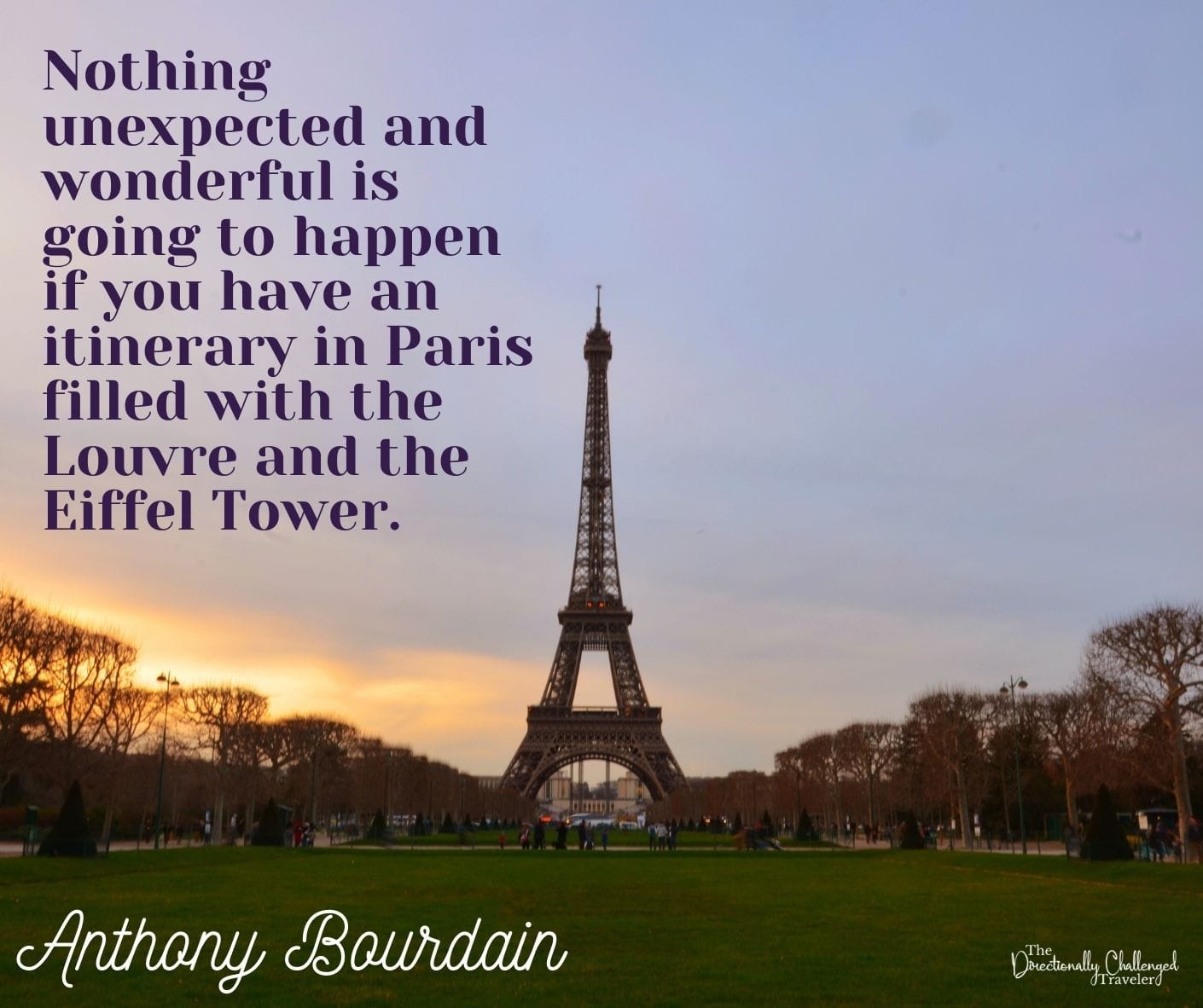
This quote, frequently cited by travelers looking for a reason to slow down, captures Bourdain’s rejection of "check-list tourism." He uttered variations of this sentiment throughout his series No Reservations and The Layover. To Bourdain, the "doing" in Paris was the observation of life itself—sitting at a sidewalk table with a glass of wine, watching the world pass by, and realizing that this activity was more valuable than standing in line for the Eiffel Tower.
"The smell of Paris—the diesel, the Gauloises, the Metro—is the most beautiful smell in the world."
In the series premiere of No Reservations in 2005, Bourdain spoke about the sensory landscape of the city. While many tourists complain about the grit of urban life, Bourdain found romance in it. He often spoke of the "funk" of the city, both in its streets and its cheeses. This quote highlights his "beauty in the breakdown" aesthetic—the idea that a city’s imperfections are what make it authentic and lovable.
"Paris is the center of the universe for a cook."
As a classically trained chef, Bourdain acknowledged that all roads in the culinary world eventually lead back to the French brigade system and the techniques refined in Parisian kitchens. Even as he championed street food in Vietnam or bold flavors in Mexico, he maintained a profound respect for the "old school" Parisian institutions that prioritized technique, tradition, and the sanctity of the ingredient.
The Misattribution: "Paris is Always a Good Idea"
A common point of confusion for those searching for an Anthony Bourdain Paris quote is the phrase "Paris is always a good idea." While it sounds like something the romantic version of Bourdain might say, this quote is actually attributed to Audrey Hepburn (as the character Sabrina Fairchild) in the 1954 film Sabrina.
Bourdain’s version of this sentiment was much more grounded and less whimsical. He didn't think Paris was "nice"; he thought it was essential. He viewed the city as a demanding, sometimes rude, but ultimately rewarding partner in a lifelong dialogue about what it means to live well.
The Philosophy of "The Bourdain Way" in Paris
To live by Bourdain’s words in Paris requires a specific mindset. It is a rejection of the polished, "Instagrammable" version of the city in favor of something more visceral.
Embracing the Solitude
Bourdain often spoke about the pleasure of being alone in Paris. He suggested that the city is perfectly designed for the solitary traveler. The layout of the cafes—with chairs facing outward toward the street—invites one to be a spectator. In his writing, he emphasized that you are never truly lonely in a Parisian cafe because you are part of the collective theater of the street.
The Sacredness of the Routine
For Bourdain, the "best" Paris was found in the repetition of daily acts. Buying a baguette, choosing a piece of cheese, and having a "regular" spot for an espresso were, to him, the heights of human achievement. He argued that the French had figured out the "work-life balance" long before it became a corporate buzzword, prioritizing the pleasure of the table above the pursuit of the dollar.
Practical Guide: Experiencing Bourdain’s Paris in 2026
Even years after his passing, the locations Bourdain frequented remain a map for those seeking an authentic experience. While some of his favorites have changed or closed, the core institutions he championed continue to uphold the standards he admired.
Essential Locations to Visit
| Venue | Neighborhood | Why Bourdain Loved It | Current Status (2026) |
|---|---|---|---|
| Le Comptoir du Relais | 6th Arrondissement | Yves Camdeborde’s "Bistronomy" at its finest. | Remains a high-demand icon of casual excellence. |
| L'Ami Louis | 3rd Arrondissement | Famous for its "excessive" portions of snails and foie gras. | Still the "most famous bistro in the world," maintaining its grit. |
| Le Dôme | 14th Arrondissement | A classic brasserie where he enjoyed seafood towers. | A bastion of traditional service and fresh Atlantic oysters. |
| Frenchie | 2nd Arrondissement | Represented the "New Guard" of Parisian chefs. | Now a multi-venue empire (wine bar, to-go, and restaurant). |
| Les Halles (The Area) | 1st Arrondissement | The "Belly of Paris" where his journey as a chef began. | Now a modern park and mall, but surrounding bistros keep the spirit alive. |
How to Order Like Bourdain
If you want to eat in the spirit of a Bourdain quote, you must abandon the "safe" menu options. Bourdain was a vocal advocate for offal, raw seafood, and "peasant food" that required time and care to prepare.
- Steak Frites: Look for a place that uses high-quality hanger steak (onglet) and hand-cut fries.
- Bone Marrow (Moelle): A staple of his favorite meals, often served simply with sea salt and toasted bread.
- Pot-au-Feu: The quintessential French beef stew that represents the soul of home cooking.
- The Plateau de Fruits de Mer: A massive tower of chilled shellfish that demands hours of slow picking and conversation.
The Evolution of the Narrative: From "Cook's Tour" to "The Layover"
Bourdain’s perspective on Paris shifted as he aged. In his early years (seen in A Cook's Tour), he was the student, returning to the source of his training with a mix of reverence and intimidation. He looked for the Paris of the 1970s—the one he had read about in books.
By the time he filmed The Layover and later episodes of Parts Unknown, his tone had become more relaxed. He was no longer trying to prove his culinary mettle. Instead, he was looking for the soul of the city in its immigrant neighborhoods, such as Belleville and the 10th Arrondissement. He began highlighting the North African and Vietnamese influences that are as much a part of modern Paris as the croissant. This shift is crucial for anyone using his quotes as a travel guide; "Bourdain's Paris" is as much about a couscous restaurant in a hidden alley as it is about a Michelin-starred dining room.
Common Mistakes When Following Bourdain’s Advice
Many fans attempt to replicate Bourdain’s experiences but fail to capture the spirit because they focus on the "where" rather than the "how."
- Over-scheduling: If your itinerary is packed from 8:00 AM to midnight, you are violating the core Bourdain principle of "doing nothing." Leave at least three hours of your day completely blank.
- Chasing "Hidden Gems": Bourdain often said that sometimes the "tourist trap" is actually good, and the "hidden gem" is hidden for a reason. Don't spend three hours on the Metro looking for a specific bakery he mentioned ten years ago; find the best one in the neighborhood where you are currently standing.
- Ignoring the Season: Bourdain’s Paris was a city of seasons. Eating oysters in the heat of July or looking for fresh asparagus in December is a mistake. Follow the markets, as he did.
The Significance of the "Paris Episode" Tradition
Almost every series Bourdain produced featured a Paris episode, and they were often the most atmospheric. He used these episodes to pay homage to his influences, such as the writer George Orwell (Down and Out in Paris and London) and the chef Auguste Escoffier.
In these episodes, the cinematography often slowed down. There were long shots of rain on the pavement, the steam from a coffee cup, and the focused hands of a butcher. This visual storytelling reinforced his quotes about the city’s beauty. He wasn't just telling us that Paris was special; he was showing us that the "mundane" parts of Paris were more cinematic than the "spectacular" parts of other cities.
Frequently Asked Questions
Did Anthony Bourdain have a favorite restaurant in Paris?
While he had many favorites, L'Ami Louis is perhaps the one most associated with him due to his legendary segment there where he marveled at the sheer volume of butter and fat consumed. However, for a more "everyday" favorite, he frequently recommended Le Comptoir du Relais for its accessibility and high culinary standards.
What did Bourdain say about the "rudeness" of Parisians?
Bourdain often defended Parisians, suggesting that what Americans perceive as rudeness is actually a form of directness and a demand for mutual respect. He believed that if you approached a Parisian with a basic "Bonjour" and a genuine interest in their craft, the "rudeness" would vanish instantly.
Is Bourdain's Paris still accessible in 2026?
Yes, though the city has modernized significantly. While some of the gritty smoke-filled cafes he loved have been replaced by specialty coffee shops and vegan bistros, the "bones" of his Paris—the markets, the classic brasseries, and the public parks—remain unchanged. The 2024 Olympic renovations also improved the walkability of many areas he frequented.
Which book contains his best writing on Paris?
Kitchen Confidential contains the roots of his French obsession, but Medium Raw offers a more mature reflection on his relationship with the city. For a visual and narrative guide, his posthumous book World Travel: An Irreverent Guide provides specific addresses and advice based on his decades of filming in Paris.
What is the most important "rule" for eating in Paris according to Bourdain?
"Don't be a square." This meant being open to new experiences, not complaining about small tables or lack of ice in your water, and trusting the chef. He believed that the meal is a contract between the kitchen and the diner, and your job as the diner is to be an enthusiastic participant.
Final Recommendation: How to Use the Quote Today
If you are looking for an Anthony Bourdain Paris quote to inspire your next trip or to understand his legacy, do not look for a slogan. Instead, look for the spirit of curiosity and surrender.
The next time you find yourself in Paris, find a small cafe on a non-tourist street. Order a "café serré" or a glass of house red. Put your phone away. Watch the people. Listen to the sound of the city. In that moment of "doing nothing," you are experiencing exactly what Bourdain spent a lifetime trying to describe. The best way to honor his words is to stop reading them and start living them—one slow, deliberate meal at a time.