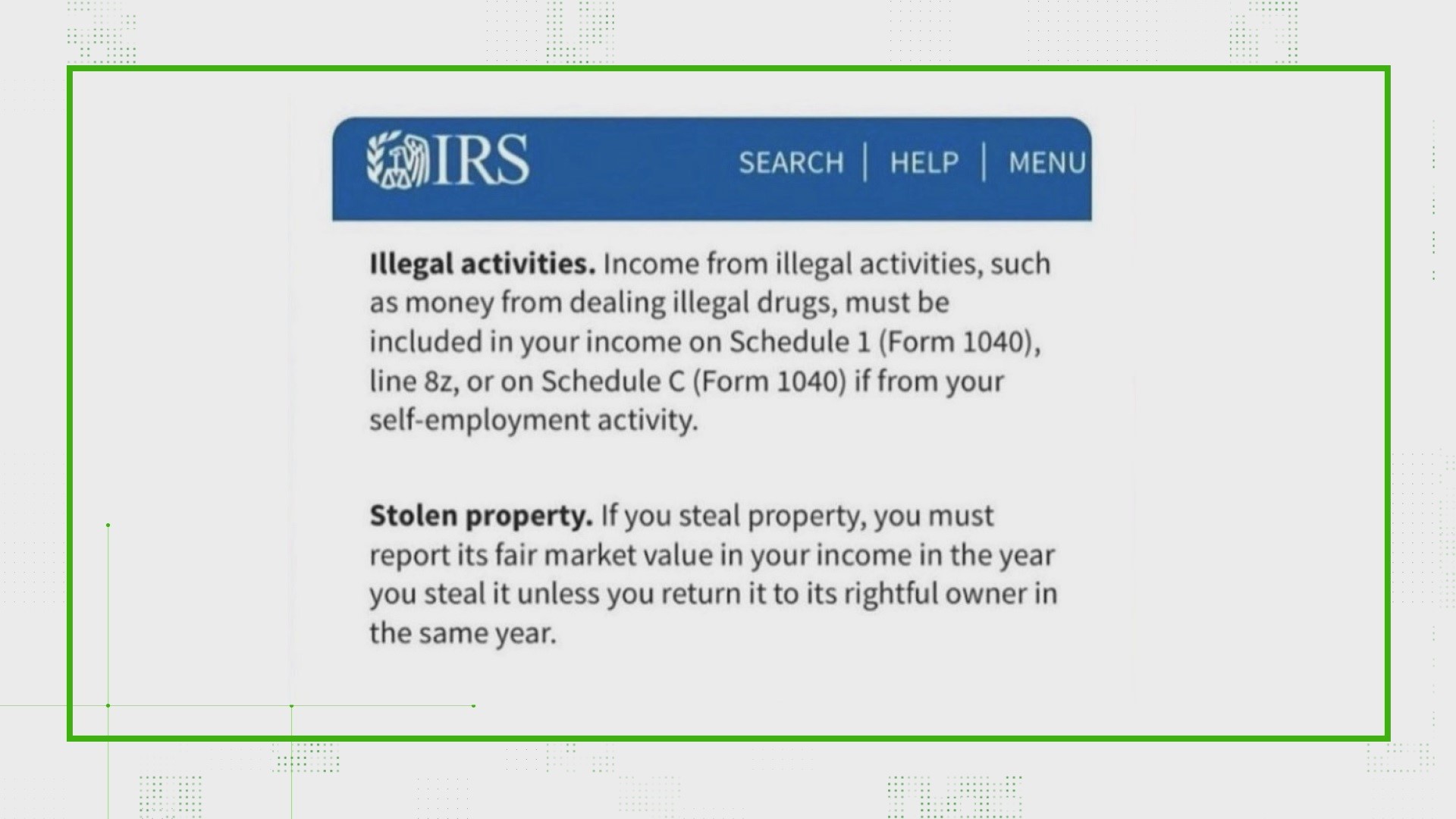
Federal income taxes are not illegal; they are authorized by the Sixteenth Amendment to the United States Constitution and codified in Title 26 of the United States Code. While various "tax protester" theories claim otherwise, the U.S. Supreme Court and lower federal courts have consistently upheld the legality of the federal income tax system for over a century.
The Constitutional Foundation of Federal Income Tax
To understand why income taxes are legal, one must look at the evolution of the U.S. Constitution and the judicial rulings that shaped it. The primary authority for the federal income tax is the Sixteenth Amendment, which was ratified in 1913. Before this amendment, the Supreme Court had ruled in the 1895 case Pollock v. Farmers' Loan & Trust Co. that a federal income tax on rents, interest, and dividends was a "direct tax" that had to be apportioned among the states based on population.
The Sixteenth Amendment was specifically designed to overturn the Pollock decision. The text of the amendment is concise: "The Congress shall have power to lay and collect taxes on incomes, from whatever source derived, without apportionment among the several States, and without regard to any census or enumeration." By removing the requirement for apportionment, the amendment gave Congress the clear authority to tax individual and corporate income directly.
Since 1913, the Supreme Court has repeatedly affirmed this authority. In the 1916 case Brushaber v. Union Pacific Railroad Co., the Court held that the Sixteenth Amendment did not create a new power of taxation but rather removed the constitutional obstacle that required income taxes to be apportioned. This established the bedrock upon which all modern federal tax laws are built.
Statutory Authority and the Internal Revenue Code
While the Constitution grants the power to tax, the Internal Revenue Code (IRC) provides the specific rules for how that power is exercised. The IRC is contained within Title 26 of the United States Code, which is the official compilation of federal statutes.
Section 1 of the IRC imposes a tax on the taxable income of every individual who is a citizen or resident of the United States. Section 61 defines "gross income" broadly as "all income from whatever source derived," including but not limited to compensation for services (wages), business income, interest, dividends, and pensions.
Critics often argue that because the IRC is not "positive law," it is not legally binding. This is a misunderstanding of the U.S. Code. While some titles of the U.S. Code have been enacted into positive law by Congress, those that have not (including Title 26) still serve as prima facie evidence of the law. The underlying statutes that make up Title 26 were passed by both houses of Congress and signed by the President, making them the law of the land. Federal courts have consistently rejected the argument that the Internal Revenue Code is invalid or unenforceable.
Debunking Common Frivolous Tax Arguments
Over the decades, several theories have circulated claiming that the income tax is illegal, unconstitutional, or voluntary. The Internal Revenue Service (IRS) and the Department of Justice refer to these as "frivolous arguments." Engaging in these theories can lead to severe civil and criminal penalties.
The "Ratification" Myth
One of the most persistent claims is that the Sixteenth Amendment was never properly ratified. Proponents of this theory, such as Bill Benson in his book The Law That Never Was, argue that various states committed clerical errors during the ratification process. However, this argument was decisively rejected by the courts in United States v. Thomas (1986). The court ruled that the Secretary of State’s certification of the amendment’s ratification is binding upon the courts and is a "political question" beyond judicial review.
The "Income is Not Wages" Argument
Some individuals claim that wages are not income because they represent an even exchange of labor for money, resulting in no "profit." This theory ignores the broad definition of income provided in IRC Section 61 and clarified by the Supreme Court. In Commissioner v. Glenshaw Glass Co., the Court defined income as any "undeniable accessions to wealth, clearly realized, and over which the taxpayers have complete dominion." Wages clearly fall under this definition, as they increase an individual's wealth.
The "Voluntary" Nature of Taxes
The IRS often uses the phrase "voluntary compliance" to describe the U.S. tax system. Tax protesters frequently misinterpret this to mean that paying taxes is optional. In reality, "voluntary" refers to our system of self-assessment—the fact that taxpayers are responsible for calculating their own tax liability and filing returns, rather than the government doing it for them. If a taxpayer fails to "voluntarily" comply, the law provides the IRS with the authority to assess the tax and use enforced collection methods, such as levies and liens.
The "Federal Enclave" Theory
This theory suggests that the federal government only has the authority to tax people living in the District of Columbia or on federal land (enclaves). This is based on a misreading of Article I, Section 8, Clause 17 of the Constitution. Courts have clarified that the federal government’s taxing power extends to all citizens and residents of the United States, regardless of whether they live on federal or state land.
Legal Consequences of Claiming Income Taxes are Illegal
In 2026, the IRS and the federal court system maintain a zero-tolerance policy for frivolous tax positions. The consequences for acting on these theories are significant and can impact a person's financial and legal standing for years.
- Frivolous Return Penalty: Under IRC Section 6702, the IRS can impose a $5,000 penalty on any individual who files a tax return based on a frivolous position. This penalty is in addition to any taxes, interest, and other penalties owed.
- Civil Fraud Penalties: If the IRS determines that a taxpayer's underpayment is due to fraud, they may impose a penalty equal to 75% of the underpayment.
- Criminal Prosecution: Tax evasion (willfully attempting to defeat or evade a tax) is a felony. Conviction can result in up to five years in prison and fines of up to $100,000 for individuals.
- Injunctions: The Department of Justice frequently seeks injunctions against "tax defiance" promoters who sell books or packages teaching others how to stop paying taxes based on illegal theories.
| Argument Category | Common Claim | Legal Reality/Court Precedent |
|---|---|---|
| Constitutional | The 16th Amendment was not properly ratified. | United States v. Thomas: The Secretary of State's certification is conclusive. |
| Statutory | The Internal Revenue Code is not "positive law." | Title 26 is valid federal law enacted by Congress; Ryan v. Bilby. |
| Administrative | Tax payment is "voluntary" and optional. | "Voluntary" refers to self-assessment; compliance is mandatory under Section 1. |
| Definitions | Wages are an exchange of labor, not taxable "income." | Commissioner v. Glenshaw Glass Co.: Income is any accession to wealth. |
| Jurisdictional | Only residents of DC or federal territories are taxed. | United States v. Collins: Federal taxing power applies to all U.S. citizens. |
The Role of the Judiciary in Upholding Tax Law
The judicial branch serves as the final arbiter of the law, and its stance on the legality of income taxes is unambiguous. Every federal court that has addressed these "illegal tax" claims has found them to be without merit.
In United States v. Sullivan (1927), the Supreme Court famously ruled that even income derived from illegal activities (such as bootlegging) is subject to federal income tax. This reinforced the idea that "income from whatever source derived" is a literal and comprehensive mandate. Furthermore, the courts have ruled that the Fifth Amendment privilege against self-incrimination does not provide a basis for refusing to file a tax return. While a taxpayer can refuse to answer specific questions on a return that might incriminate them regarding a crime, they cannot use the Fifth Amendment to avoid the entire filing requirement.
For those who believe the system is unfair, the proper channel for change is the legislative process—petitioning Congress to change the law—not the judicial process. Courts generally refuse to hear arguments that have already been labeled frivolous, and attorneys who present such arguments on behalf of clients can face sanctions or disbarment.
2026 Filing Requirements and Compliance
As of the 2026 tax season, the requirements for filing remain firmly in place. Most U.S. citizens and residents must file a federal income tax return if their gross income exceeds the standard deduction for their filing status.
For the tax year 2025 (filed in early 2026), the following deadlines and rules apply:
- Filing Deadline: The standard deadline is April 15, 2026.
- Electronic Filing: The IRS continues to encourage electronic filing via the Free File program or authorized software providers, which reduces errors and accelerates refunds.
- Documentation: Taxpayers must keep records of all income, including traditional W-2 wages, 1099-NEC non-employee compensation, and digital asset transactions.
- Automated Enforcement: The IRS has significantly increased its use of automated data matching. Information reported by employers and financial institutions is automatically compared to individual returns. Discrepancies often trigger immediate "CP2000" notices, which can lead to audits or assessments if not resolved.
Navigating the tax system can be complex, but complexity does not equate to illegality. Taxpayers who find the burden too high or the rules too difficult to follow are encouraged to seek the help of a Certified Public Accountant (CPA), an Enrolled Agent (EA), or a tax attorney. These professionals provide legitimate strategies for tax avoidance (minimizing tax liability through legal means like deductions and credits) while avoiding the dangers of tax evasion.
Frequently Asked Questions
Is the IRS a private corporation or a government agency?
The Internal Revenue Service is a bureau of the Department of the Treasury, which is an executive department of the federal government. Claims that the IRS is a private company based in Puerto Rico or Delaware are false. The IRS was established by the Commissioner of Internal Revenue Act of 1862 and functions as a legitimate federal agency under the authority of the Secretary of the Treasury.
Can I be arrested for not paying taxes?
You can be arrested and prosecuted for willful failure to file a return or for tax evasion. However, the IRS generally does not seek criminal prosecution for people who simply cannot afford to pay. If you file your return but cannot pay the balance, the IRS offers installment agreements and "offers in compromise" to help settle the debt. Criminal charges are typically reserved for those who intentionally hide income, lie on their returns, or use frivolous arguments to avoid their obligations.
Why do some people say the 16th Amendment is "void"?
This claim usually stems from the work of researchers who studied the historical records of state ratifications in the early 1900s. They argue that because some states had slight variations in punctuation or spelling in their ratified versions, the amendment is invalid. Federal courts have consistently ruled that these "technicalities" do not invalidate the amendment and that the Secretary of State’s certification in 1913 is the final word on the matter.
What should I do if I haven't filed because I thought it was illegal?
If you have missed filing deadlines based on the belief that income taxes are illegal, the best course of action is to file your past-due returns as soon as possible. The IRS often shows more leniency to taxpayers who come forward voluntarily to correct their records before an audit or criminal investigation begins. Consult a qualified tax professional to help you navigate the process of "voluntary disclosure" and to help mitigate potential penalties.
Is it true that the "Internal Revenue Code" was never enacted?
No. While Title 26 (the IRC) has not been "codified" as a single unit of positive law like Title 38 (Veterans' Benefits), the individual statutes that comprise the IRC were all legally passed by Congress and signed into law. Under 1 U.S.C. § 204, the U.S. Code is legal evidence of the laws of the United States. Numerous court cases, such as United States v. Ward, have confirmed that the IRC is binding law.
Practical Recommendation for Taxpayers
The most effective way to manage your tax obligations is through legal tax planning rather than tax defiance. Instead of pursuing theories that have a 100% failure rate in court, focus on maximizing the credits and deductions available under the law. This includes contributing to retirement accounts (like a 401(k) or IRA), utilizing Health Savings Accounts (HSAs), and ensuring you claim all eligible business expenses if you are self-employed. If you are concerned about the constitutionality of specific tax policies, the most productive path is to contact your Congressional representatives or participate in advocacy groups that lobby for tax reform.
Disclaimer: This article is for informational purposes only and does not constitute legal or financial advice. Tax laws are subject to change, and individuals should consult with a qualified professional regarding their specific tax situation.