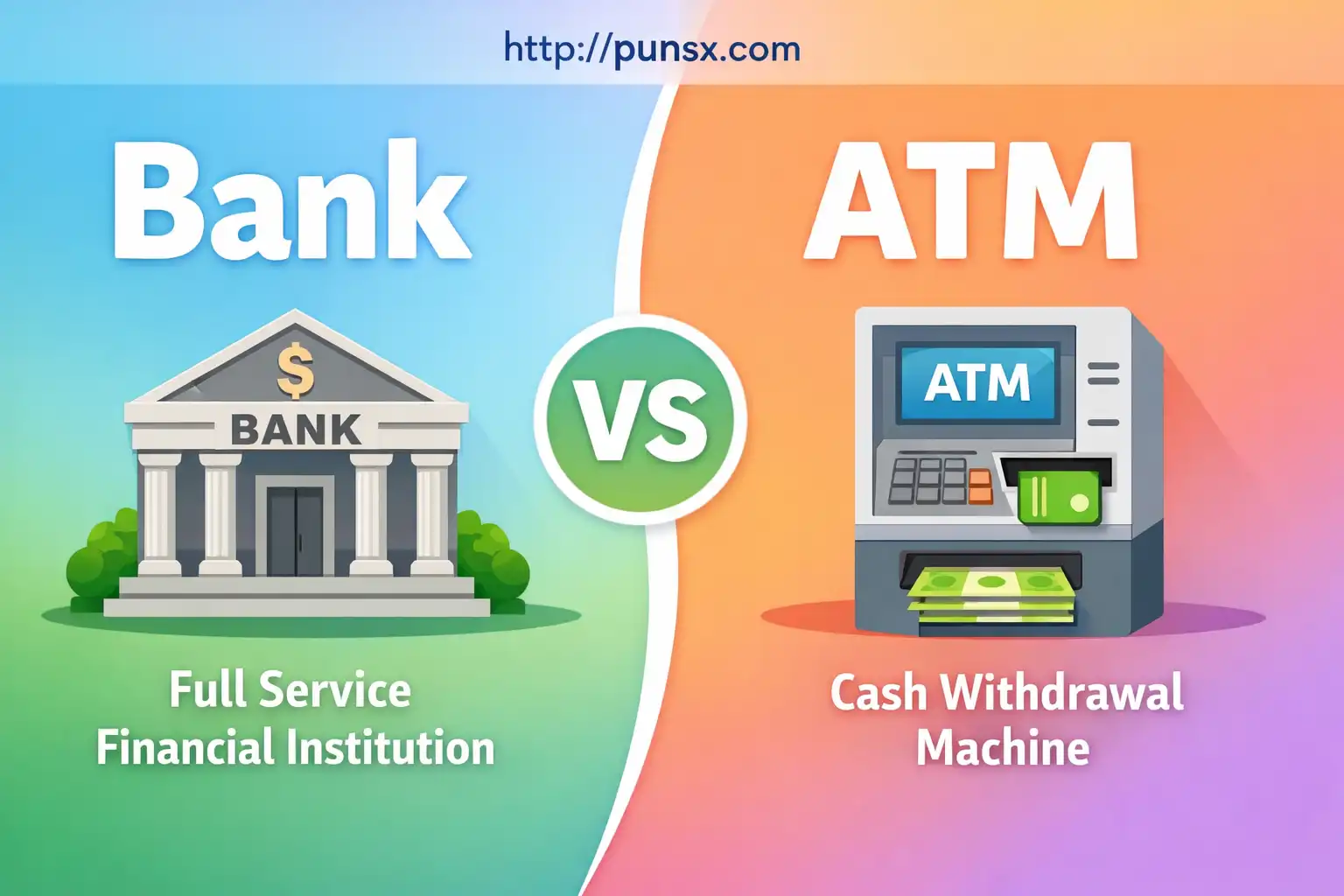
An ATM primarily refers to an Automated Teller Machine, a computerized telecommunications device that provides financial institution customers with access to financial transactions in a public space without the need for a human clerk. In other contexts, ATM can also mean Asynchronous Transfer Mode in networking or At The Moment in digital shorthand.
The Dominant Meaning: Automated Teller Machines (Banking)
In the global financial landscape of 2026, the Automated Teller Machine remains a cornerstone of retail banking. While the world has shifted significantly toward digital and contactless payments, the physical necessity of cash and the requirement for localized banking services keep the ATM relevant. An ATM acts as a bridge between the digital ledger of a bank and the physical currency held by the user.
How Banking ATMs Function
To understand the meaning of an ATM in a functional sense, one must look at the hardware and software synergy. An ATM is essentially a data terminal with two input devices (card reader and keypad/touchscreen) and four output devices (speaker, display screen, receipt printer, and cash dispenser).
The process begins with authentication. When a user inserts a chip-enabled card or taps an NFC-enabled device (mobile wallet), the ATM reads the account information. The user then provides a Personal Identification Number (PIN). In 2026, many high-security ATMs also utilize multi-factor authentication (MFA), such as a push notification to a smartphone or a biometric scan (fingerprint or iris), to mitigate the risks associated with stolen cards or PINs.
Once authenticated, the ATM does not "know" how much money is in the account. It must communicate with a host processor. This host processor acts as a gateway to various ATM networks and the user's actual bank. The communication is typically encrypted using standards like Triple DES (3DES) or AES to ensure that sensitive financial data cannot be intercepted during transit.
The Evolution of ATM Technology
By 2026, the definition of an ATM has expanded beyond simple cash dispensing. Modern machines are now referred to as ITMs (Interactive Teller Machines) or "Smart ATMs." These devices offer a range of services that were traditionally reserved for bank branches:
- Check Imaging and Instant Deposit: Instead of using envelopes, users feed checks directly into the machine, which scans them using Optical Character Recognition (OCR) to verify the amount and credit the account instantly.
- Currency Exchange: High-traffic international locations feature ATMs that can dispense multiple currencies, calculating exchange rates in real-time based on global market data.
- Cardless Access: Utilizing Near Field Communication (NFC) or QR codes, users can initiate a withdrawal on their banking app and simply verify their identity at the machine to receive cash, eliminating the risk of card skimming.
- Bill Payments and Account Management: Many machines now allow users to pay utility bills, transfer funds between internal and external accounts, and even update personal contact information.
Technical Meaning: Asynchronous Transfer Mode (Networking)
Outside of finance, the acronym ATM carries a heavy technical weight in the field of telecommunications and data networking. Asynchronous Transfer Mode (ATM) is a dedicated-connection switching technology that organizes digital data into 53-byte cell units and transmits them over a physical medium using digital signal technology.
The Architecture of ATM Cells
Unlike the Internet Protocol (IP), which uses variable-length packets, ATM uses fixed-length cells. This design was intentional. In the early development of high-speed networking, variable-length packets could cause "jitter" or unpredictable delays, which is detrimental to voice and video traffic.
An ATM cell consists of:
- Header (5 bytes): Contains the Virtual Path Identifier (VPI) and Virtual Channel Identifier (VCI), which handle the routing of the cell to its destination. It also includes generic flow control and error control bits.
- Payload (48 bytes): The actual data being transmitted (voice, video, or data).
Because every cell is the exact same size, the switching hardware can process them at extremely high speeds with predictable latency. This makes ATM an "Asynchronous" technology because the cells are transmitted as they are filled, rather than according to a rigid clock signal, though they maintain a synchronous bitstream at the physical layer.
The Role of ATM in 2026
While Ethernet and MPLS (Multiprotocol Label Switching) have largely superseded ATM in local area networks (LANs) and many wide area networks (WANs), ATM technology still exists in the "legacy" backbone of some telecommunications providers. It is often found in specialized environments like avionics, certain satellite communications, and older DSL (Digital Subscriber Line) infrastructures that have not yet been fully migrated to fiber-to-the-premises (FTTP) systems.
Scientific and Linguistic Interpretations
The exploration of the "ATM" acronym is not complete without mentioning its roles in science and social communication.
Standard Atmosphere (Pressure Unit)
In physics and chemistry, atm is the symbol for a standard atmosphere, a unit of pressure. It is defined as exactly 101,325 Pascals (Pa), or 760 mmHg (millimeters of mercury). This measurement represents the average atmospheric pressure at mean sea level.
Engineers and scientists use this "atm" value as a reference point for:
- Gas Laws: Calculating how gases behave under different pressures.
- Diving and Aerospace: Determining the pressure exerted on hulls or human bodies at varying depths or altitudes.
- Chemical Stability: Reporting the properties of chemicals under "standard temperature and pressure" (STP).
Linguistic Shorthand: "At The Moment"
In the realm of digital literacy and social media, "atm" is a ubiquitous initialism for the phrase "at the moment." This usage is informal and serves to indicate a user's current status or activity. For example, "I'm busy atm" conveys a temporary state of unavailability. While simple, this version of ATM is likely the most frequently typed version of the acronym in daily human-to-human digital interaction.
Comparing the Different "ATM" Meanings
To help resolve the ambiguity of this term, the following table compares the primary contexts in which "ATM" is used.
| Context | Full Name / Meaning | Primary Use Case | Key Characteristic |
|---|---|---|---|
| Finance | Automated Teller Machine | Withdrawing cash and banking | Hardware-based; requires PIN/Biometrics |
| Networking | Asynchronous Transfer Mode | Telecommunications data transport | 53-byte fixed-length cells; low latency |
| Science | Standard Atmosphere | Measuring physical pressure | Equivalent to 101,325 Pascals |
| Social | At The Moment | Informal digital communication | Used as a temporal adverb in text |
Operational Security and ATM Safety (Banking Focus)
Since the most common search intent for "ATM" relates to the banking machine, understanding the security protocols is vital. In 2026, the landscape of ATM crime has shifted from physical theft to sophisticated digital exploitation.
Common Threats
- Skimming and Shimming: Skimmers are devices placed over the card slot to read magnetic stripe data. Shimmers are thinner and sit inside the card slot to read data from the EMV chip.
- Deep Insert Skimmers: These are placed deep within the machine's transport mechanism, making them invisible from the outside.
- Cash Trapping: Criminals install a "claw" or adhesive strip in the dispenser slot that prevents cash from being released, leading the user to believe the machine is broken. The criminal then retrieves the trapped cash after the user leaves.
- Jackpotting: This involves installing malicious software or hardware that forces the ATM to dispense its entire cash reserve without a valid card.
Defensive Measures for Users
To ensure a safe transaction at an ATM, users should adhere to the following 2026 safety standards:
- Physical Inspection: Wiggle the card reader and look for loose parts or unusual overlays before inserting a card.
- Shield the PIN: Even if no one is standing nearby, hidden cameras (pinhole cameras) can be used to record keystrokes. Always cover your hand when typing.
- Prefer Contactless: Whenever possible, use NFC/contactless withdrawal methods. These use one-time tokens that are useless to hackers if intercepted, unlike the static data on a card's magnetic stripe.
- Use Bank-Located Machines: ATMs located inside bank vestibules or highly visible, well-lit areas are less likely to be tampered with than isolated, "white-label" machines in convenience stores or gas stations.
The Economics of ATMs: Fees and Costs
Operating an ATM network involves significant overhead, which is passed on to users through various fee structures. In 2026, these costs are generally categorized into three types:
- Surcharge Fees: These are fees charged by the owner of the ATM (the "operator") to the person using the machine. This is common when using a machine that does not belong to your specific bank.
- Foreign/Out-of-Network Fees: These are fees charged by your own bank for the convenience of using another institution's machine.
- International Transaction Fees: If you use an ATM in a different country, you may be charged a percentage of the withdrawal amount (typically 1-3%) for currency conversion and international processing.
Why Do Fees Exist?
The cost of maintaining an ATM includes the price of the machine itself (which can range from $3,000 to $50,000 for high-end models), armored car services to replenish cash, electricity, internet connectivity, and regular software security updates. For non-bank entities (independent ATM deployers), the surcharge is the primary source of revenue.
Troubleshooting Common ATM Issues
Even in 2026, mechanical and network failures occur. Knowing how to handle these situations can prevent financial loss.
- ATM Retains the Card: This can happen if the card is reported stolen, if the PIN is entered incorrectly too many times, or if there is a mechanical failure. Action: Immediately call the number listed on the ATM or use your banking app to "freeze" the card. Do not leave the machine until you have contacted your bank.
- Cash Not Dispensed (but account debited): This is usually a synchronization error between the dispenser and the host processor. Action: Take a photo of the screen if an error message is displayed. Keep the receipt if one was printed. Contact your bank to file a "Reg E" claim (Electronic Fund Transfer Act claim).
- Machine Reboots During Transaction: If the power flickers or the software crashes, your transaction may be left in an uncertain state. Action: Wait for the machine to fully reboot to ensure it returns to the "Welcome" screen, then check your mobile banking app immediately to see if the funds were deducted.
FAQ
What does "ATM" stand for in slang?
In slang and text messaging, ATM stands for "at the moment." It is used to describe what someone is doing or feeling right now. For example, "I'm watching a movie atm." It is a temporal marker that helps provide context in fast-paced digital conversations.
Is it safe to use a "Free ATM" found in a shop?
While many "free" or low-cost ATMs in shops are legitimate, they often lack the advanced security monitoring found in bank-owned machines. These are frequently "white-label" ATMs operated by third-party companies. Always inspect the machine for tampering and prioritize machines that offer contactless (NFC) options to reduce the risk of skimming.
How much cash can I withdraw from an ATM daily?
Withdrawal limits vary by bank and account type. In 2026, most standard checking accounts have a daily ATM limit between $500 and $1,000. These limits are a security measure designed to protect your funds if your card or account access is compromised. You can often request a temporary or permanent increase in this limit through your bank's mobile app.
Does ATM (Networking) have anything to do with Banking ATMs?
Technically, they can be related, but they are not the same thing. In the past, the communication network that connected a banking ATM to the bank's central servers might have utilized Asynchronous Transfer Mode (ATM) networking protocols. However, most modern banking ATMs now use standard Internet Protocol (IP) over cellular (LTE/5G) or fiber-optic connections.
What should I do if an ATM gives me the wrong amount of money?
If the machine dispenses less cash than requested but your receipt or account shows the full amount, you must act quickly. Note the exact time, the ATM's ID number (usually found on a sticker on the machine), and the location. Contact your bank immediately to report the discrepancy. They will perform a "cash audit" on the machine to see if it is "over" by the amount you are missing.
Strategic Recommendation
When navigating the world of ATMs—whether you are dealing with financial transactions or technical implementations—the priority should always be security and verification. If you are using a banking ATM, prioritize machines with biometric or NFC capabilities to minimize physical vulnerabilities. If you are exploring the technical "ATM" (Asynchronous Transfer Mode) for networking purposes, ensure you are evaluating it within the context of its modern, specialized applications rather than as a general-purpose LAN solution. For the everyday user, remember that "atm" in a text message is merely a snapshot of time, but "ATM" at the bank is a gateway to your financial resources that requires constant vigilance.