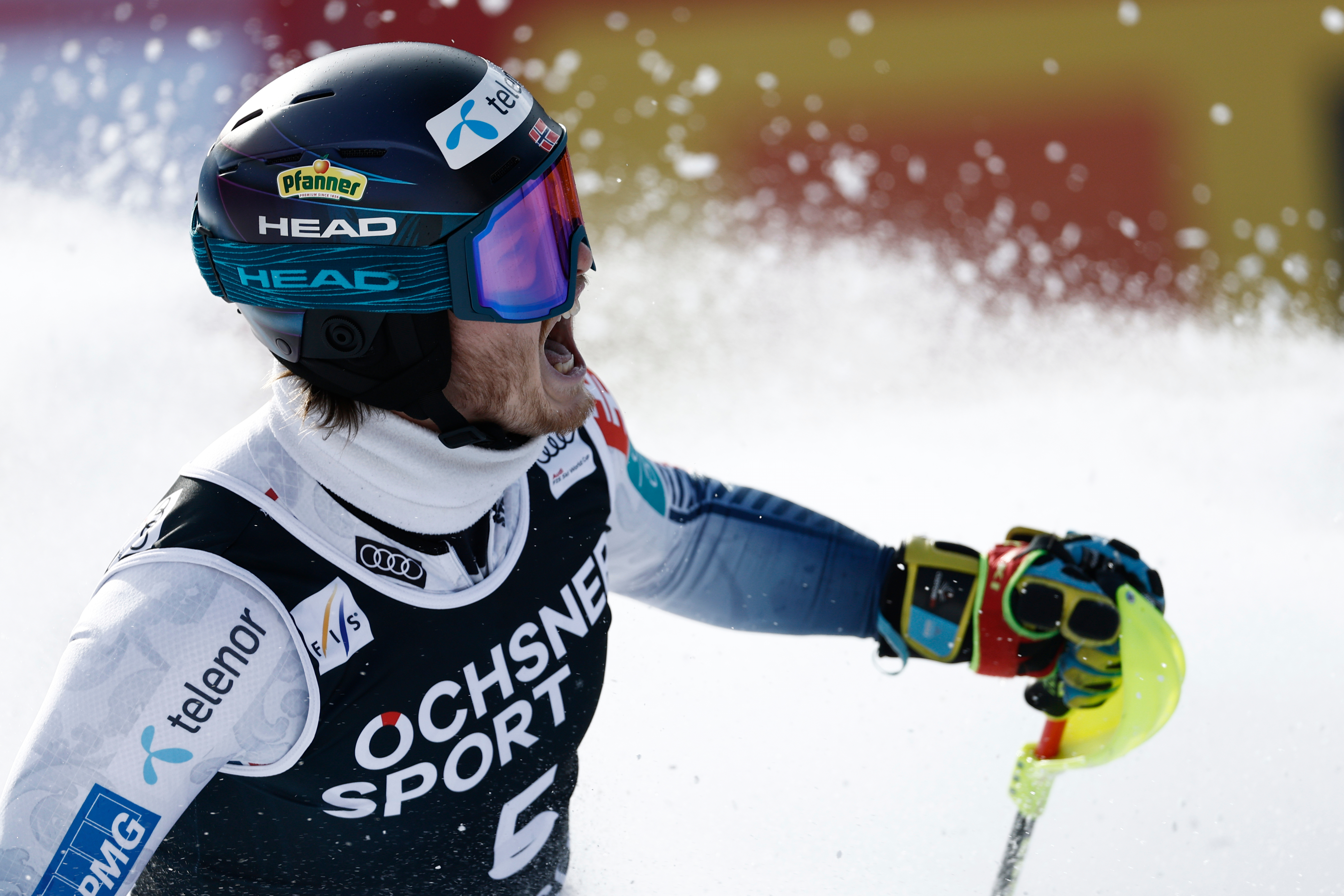
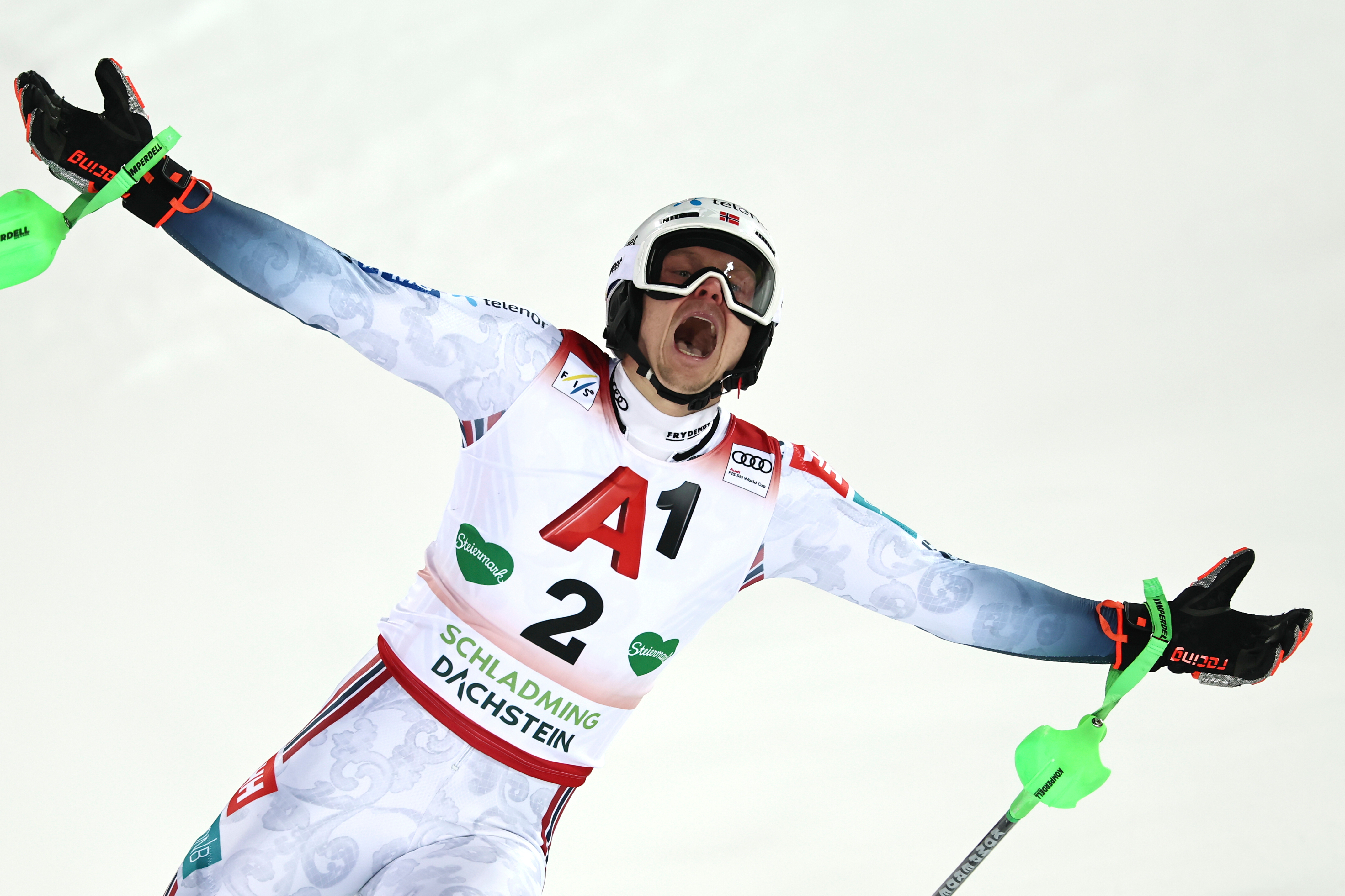
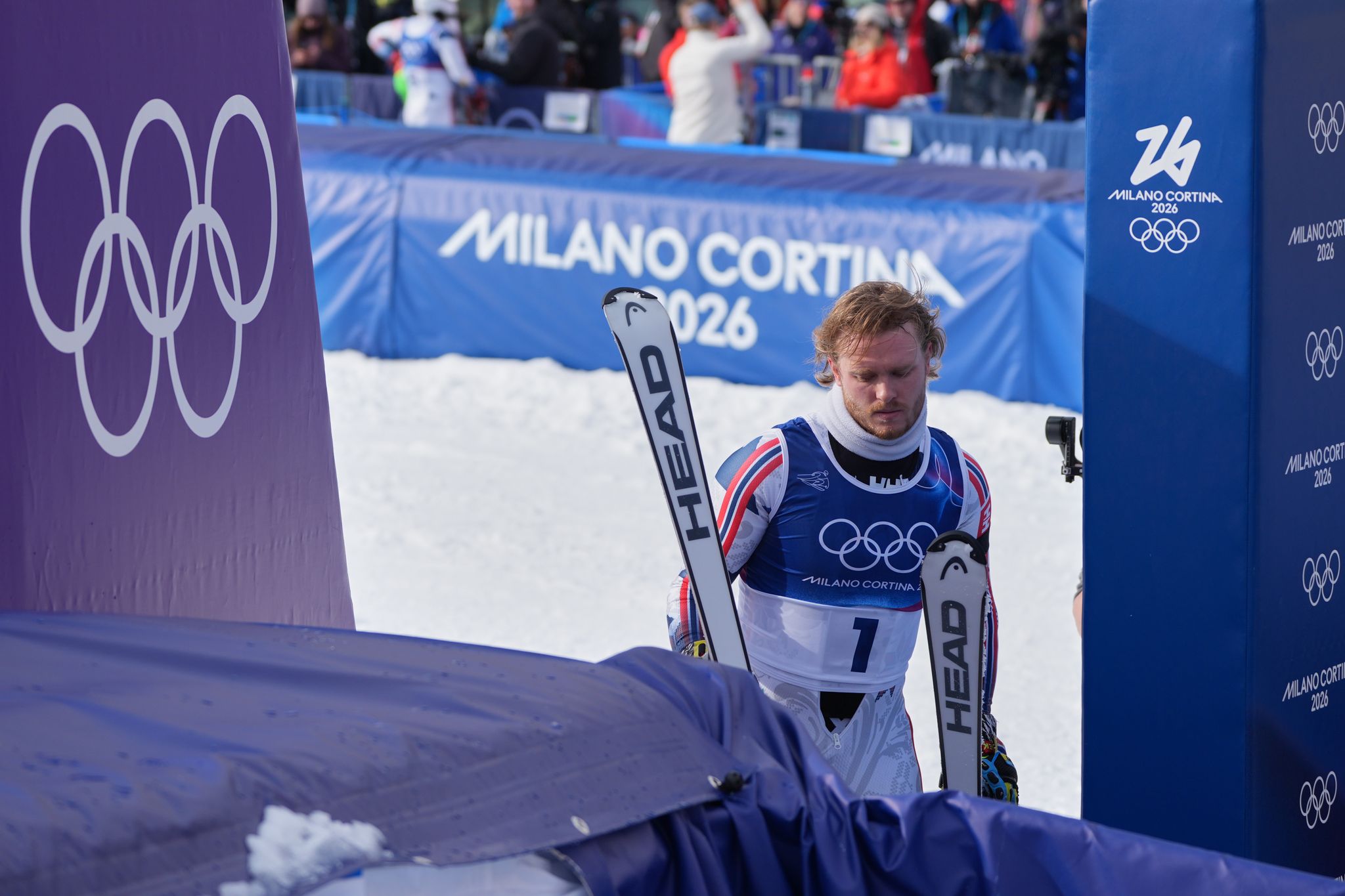
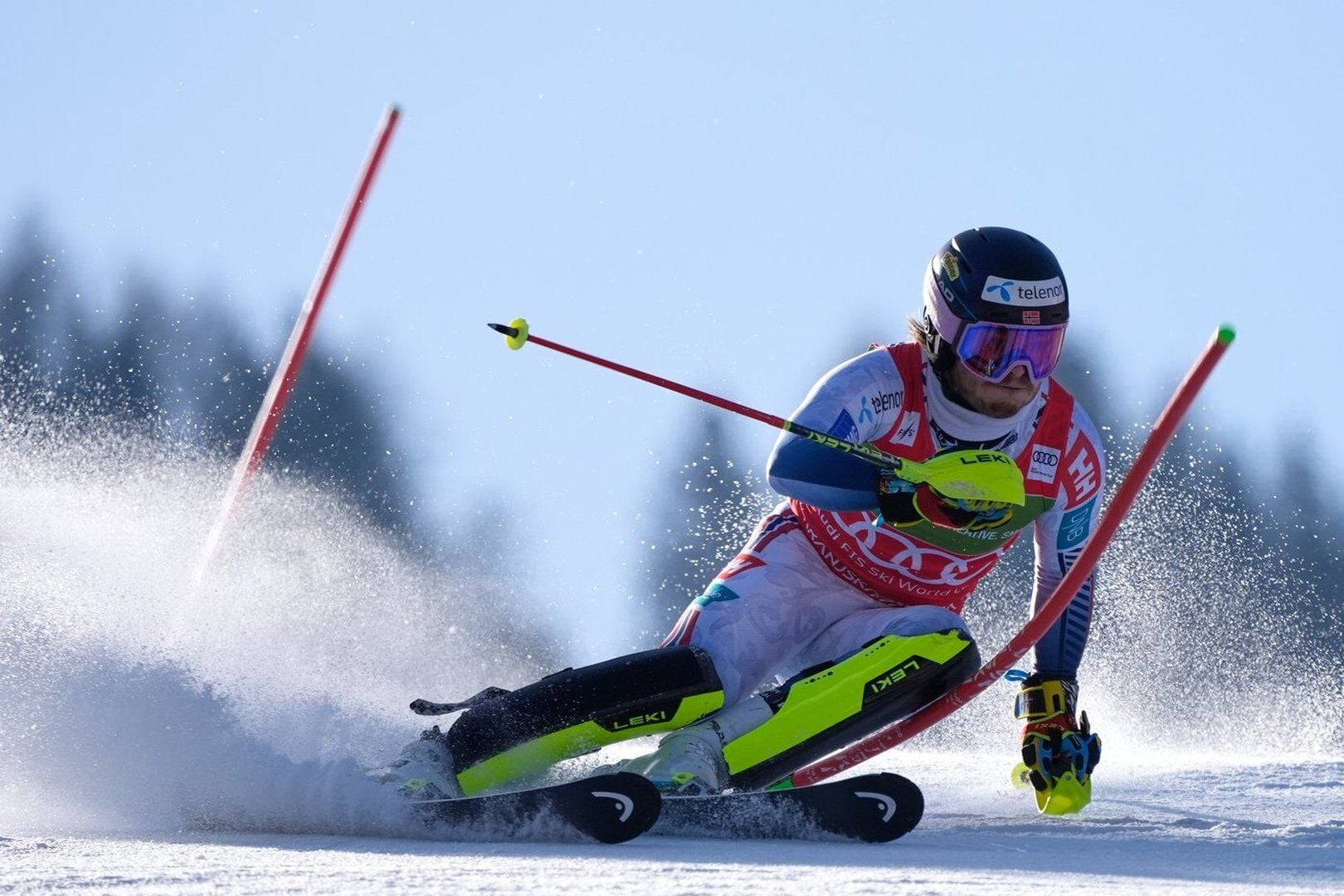
Atle Lie McGrath was disqualified from the men’s slalom event at the 2022 Beijing Winter Olympics after straddling a gate during his first run. This technical error, common in high-speed technical skiing, resulted in an immediate "Did Not Finish" (DNF) status, ending his medal hopes in his Olympic debut.
The disqualification of Atle Lie McGrath during the 2022 Winter Games remains a significant moment in Norwegian alpine history. As one of the brightest young talents in the sport, McGrath entered the competition as a podium threat, only to be sidelined by the razor-thin margins of error that define professional slalom. To understand the disqualification, one must look at the technical requirements of gate passage, the specific conditions of the Yanqing "Ice River" course, and the physical mechanics of a "straddle" in modern alpine racing.
The Technical Definition of a Straddle in Alpine Skiing
In the context of the International Ski Federation (FIS) rules, which govern Olympic alpine events, the disqualification of a racer usually stems from a failure to follow Rule 661.4.1 regarding gate passage. For a gate to be considered correctly passed, both the ski tips and both feet must cross the gate line.
A "straddle" occurs when a skier passes a gate with one ski on one side of the pole and the other ski on the opposite side. Because slalom poles are designed to "brush" or "hinge" out of the way when hit by a skier’s shins or guards, athletes often ski incredibly close to the base of the pole. If a skier miscalculates the line by even a few millimeters, the inner ski can catch the wrong side of the gate.
Atle Lie McGrath’s disqualification in Beijing was the result of this exact scenario. While attempting to maintain a tight, aggressive line to shave off hundredths of a second, he "hooked" a gate. In the high-speed environment of an Olympic slalom, where gates are spaced between 9 and 13 meters apart, a straddle is often instantaneous and irrecoverable.
The Beijing 2022 Context: The "Ice River" Course
The conditions at the National Alpine Skiing Centre in Yanqing played a massive role in the high attrition rate of the men’s slalom. The 2022 Olympics utilized 100% artificial snow in a region that sees very little natural precipitation but extreme cold and wind.
The Nature of Artificial "Man-Made" Snow
Artificial snow is significantly denser and more "aggressive" than natural snow. It consists of small, round ice pellets rather than the complex crystal structures of natural flakes. When injected with water and groomed, it creates a surface often referred to as "bulletproof ice."
For Atle Lie McGrath, this surface offered immense grip but also zero forgiveness. On such a surface, if a ski edge catches or if the skier is slightly out of position, the reaction of the ski is violent. McGrath’s straddle was a byproduct of trying to find the limit of grip on a surface that rewarded aggression but punished the slightest deviation in balance.
Course Setting and Complexity
The first run of the men’s slalom in 2022 was set with a rhythm that challenged the athletes' ability to transition between vertical flushes and hairpins. McGrath, known for his rapid footwork, was navigating a particularly technical section when the error occurred. The disqualification was not due to a lack of speed—McGrath was showing competitive split times—but rather the inherent risk of the "direct line" strategy required to win Olympic gold.
Atle Lie McGrath’s Road to the Olympics
To understand the weight of the disqualification, one must consider McGrath's trajectory leading up to 2022. Born to an American father (former Olympian Felix McGrath) and a Norwegian mother, Atle represented the new "Attacking Vikings" generation alongside Lucas Braathen.
The 2021 Knee Injury
Just a year before the Beijing Olympics, McGrath suffered a major setback. During a Giant Slalom race in Adelboden in January 2021, he sustained a Grade 3 MCL tear. His recovery was a grueling process that required him to miss the remainder of the 2021 season.
Coming into the 2022 Olympics, McGrath had only recently returned to top form. He had secured podiums in the World Cup circuit, proving that his speed was back. The disqualification in Beijing was particularly painful because it represented the end of a long, difficult comeback journey on the world's biggest stage.
Comparing Technical Infractions in Slalom
Disqualifications in slalom are common, but they occur for various reasons. The following table highlights the differences between the types of errors that lead to a "DSQ" or "DNF" in professional alpine racing.
| Infraction Type | Technical Description | Resulting Status | Frequency in Slalom |
|---|---|---|---|
| Straddle | One ski passes on the left of the pole, the other on the right. | DNF / DSQ | Very High |
| Missed Gate | Both skis pass on the wrong side of the gate line. | DSQ | Moderate |
| Hiking | Skier stops, walks back up to pass a missed gate. | Legal (but slow) | Rare in Pros |
| Equipment Failure | Loss of a ski or broken binding during the run. | DNF | Low |
| Interference | External factor (fan, animal, gate judge) on course. | Re-run granted | Very Low |
The Impact on Team Norway
Norway entered the 2022 men's slalom with one of the strongest teams in the world, featuring Sebastian Foss-Solevåg (the reigning World Champion at the time), Henrik Kristoffersen, Lucas Braathen, and Atle Lie McGrath.
The event turned into a rollercoaster for the Norwegian squad. While McGrath and Braathen both suffered DNFs in the first run, Sebastian Foss-Solevåg managed to secure a bronze medal. The disqualification of McGrath was seen as a "changing of the guard" moment where the younger racers were pushing the limits so hard that the risk of failure was maximized.
McGrath’s exit was handled with his characteristic sportsmanship. Despite the heartbreak, he remained in the finish area to support his teammates, a trait that has made him a fan favorite in the skiing community.
Life After the Disqualification: 2022 to 2026
Since the 2022 Beijing Games, Atle Lie McGrath has evolved from a "young prospect" into a consistent World Cup powerhouse. The disqualification served as a pivotal learning moment regarding "finish-rate" versus "peak-speed."
World Cup Success
In the seasons following the Olympics, McGrath secured several prestigious victories, including a historic slalom win in Flachau, Austria. His ability to bounce back from the Olympic disappointment demonstrated a psychological resilience that is often more important than technical skill in alpine skiing.
Technical Adjustments
Analysts noted that McGrath slightly adjusted his stance following the 2022 season. By being more disciplined with his upper body stability, he reduced the frequency of "hooking" gates. While he remains one of the most aggressive skiers on the tour, the "straddle" errors that plagued his early career have become less frequent as he moved toward 2026.
Frequently Asked Questions
Why was Atle Lie McGrath disqualified?
Atle Lie McGrath was disqualified because he "straddled" a gate during the first run of the men’s slalom at the 2022 Beijing Olympics. This means one of his skis went on the wrong side of the gate pole, which is an automatic disqualification under FIS alpine skiing rules.
Can a skier appeal a straddle disqualification?
While athletes can protest a decision, a straddle is usually caught on high-speed "gate-judge" cameras. If the footage clearly shows the ski tips on opposite sides of the pole, the disqualification is upheld. In McGrath's case, the error was clear, and no formal appeal was pursued.
What is the difference between DNF and DSQ in this context?
Technically, if a skier stops immediately after a straddle, they are listed as DNF (Did Not Finish). If they continue to the finish line and are later found to have committed an error, they are listed as DSQ (Disqualified). In the Olympic results, McGrath is categorized as DNF because he did not complete the course after the error.
How did the snow conditions in Beijing affect his run?
The snow in Beijing was 100% artificial and extremely icy. This created a very high-vibration environment where skis can easily "chatter" or bounce. This instability increases the risk of a skier being slightly off-line, which often leads to straddling a gate.
Who won the race that McGrath was disqualified from?
The men's slalom gold medal at the 2022 Beijing Olympics was won by Clément Noël of France. Johannes Strolz of Austria took silver, and McGrath's teammate Sebastian Foss-Solevåg took the bronze.
Practical Takeaway for Competitive Skiers
The disqualification of Atle Lie McGrath serves as a masterclass in the "risk vs. reward" nature of technical alpine skiing. For competitive racers, the takeaway is clear: the fastest line is often the most dangerous. To minimize the risk of a disqualification due to straddling, athletes must focus on:
- Anticipation: Clearing the gate with the shinguard is secondary to having the feet in the correct position before the gate is even reached.
- Edge Pressure: On icy surfaces like those in Beijing, maintaining consistent edge pressure prevents the ski from sliding into the "danger zone" near the pole base.
- Mental Resilience: As McGrath showed in the years following 2022, a single disqualification—even at the Olympics—does not define a career. The ability to analyze the technical failure and return with a more refined approach is what separates world-class athletes from the rest.
As we look toward future international competitions, McGrath remains a primary example of how technical setbacks are often the catalysts for technical breakthroughs.