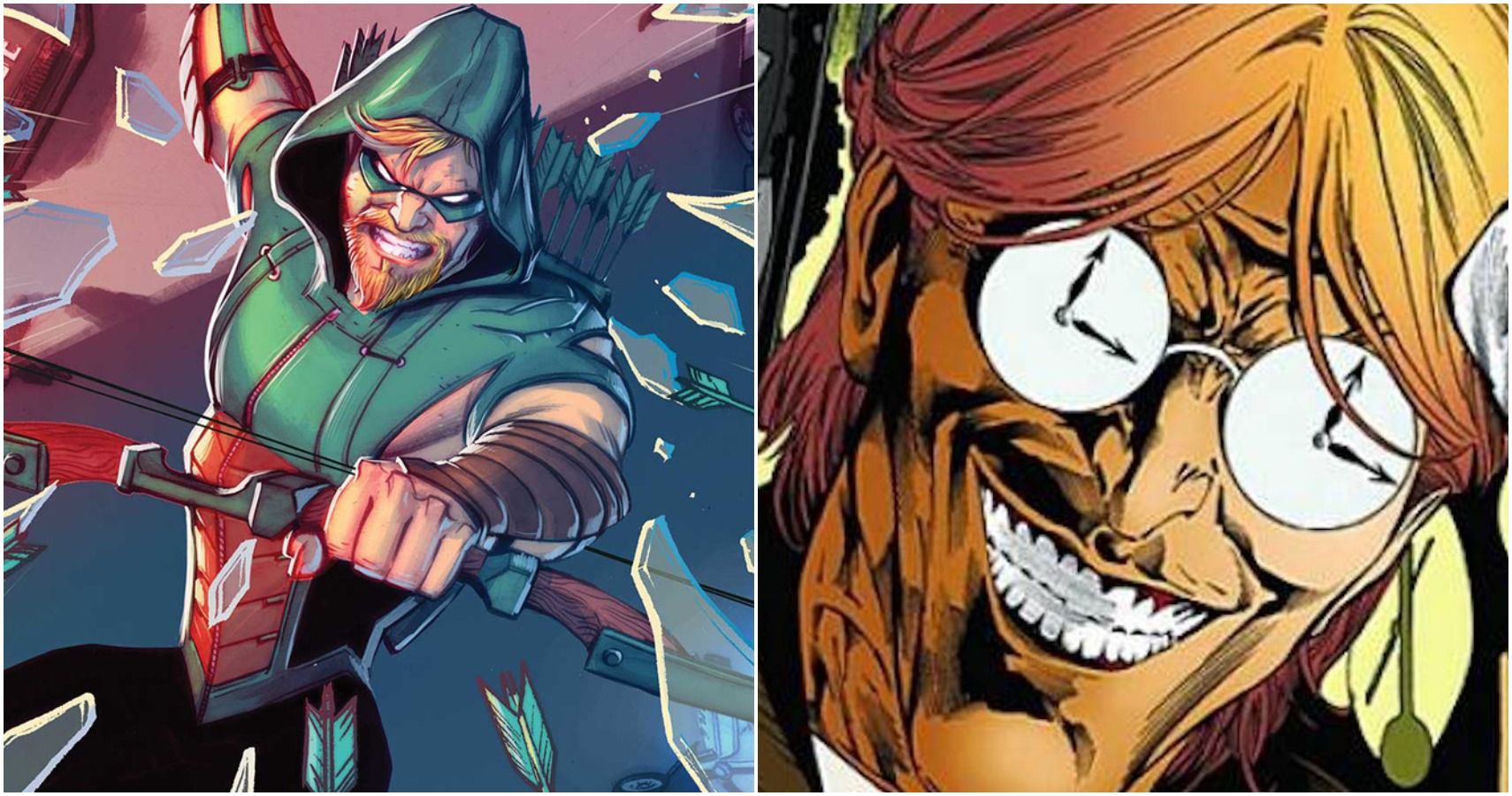
Villains in the CW’s Arrow evolve from grounded, non-powered social elites and assassins into high-concept supernatural and cosmic threats. This progression mirrors Oliver Queen’s transition from a street-level vigilante to a multiversal savior, reflecting the broader expansion of the Arrowverse from a gritty crime drama into a sprawling superhero epic.
The Foundation of the Rogues: Grounded Malice in Season 1
When Arrow premiered, it set itself apart from previous superhero adaptations by emphasizing a "no powers" rule. The villains of the first season were not meta-humans or sorcerers; they were the corrupt elite of Starling City. This era of the show focused on white-collar crime, systemic corruption, and the consequences of institutional failure.
The primary antagonist, Malcolm Merlyn (The Dark Archer), represented the dark mirror of Oliver Queen. Like Oliver, Malcolm was a man forged by tragedy who sought to "save" the city. However, his method—the Undertaking—involved the literal destruction of the Glades, the city’s poorest district. Merlyn’s evolution as a villain was rooted in his mastery of the same skills Oliver possessed: archery and league-trained hand-to-hand combat. This established a precedent where the "Big Bad" was often a reflection of the hero’s own shadows.
In this early stage, the rogues were mostly "names on a list." These were businessmen and politicians who had failed the city. The evolution here was simple: the villainy was rooted in greed and class warfare. The stakes were localized, focusing on the soul of Starling City rather than the fate of the world.
The Shift to Super-Soldiers and Personal Vendettas
As the series progressed into its second season, the scope of the villains began to expand through the introduction of pseudo-scientific enhancements. Slade Wilson (Deathstroke) remains perhaps the most iconic villain in the series because his evolution was both physical and deeply emotional.
The introduction of the Mirakuru serum served as a bridge between the grounded realism of Season 1 and the more fantastical elements that would eventually define the Arrowverse. Slade wasn't just a skilled fighter; he was a super-soldier with enhanced strength and a healing factor. However, the true evolution in Season 2 was the shift from "saving the city" to "destroying the man." Slade’s motivation was purely personal, stemming from the death of Shado on Lian Yu.
This era taught the audience that the most dangerous rogues were those with a history tied to the hero. The evolution of the rogue's gallery during this period moved away from ideological goals (like the Undertaking) and toward psychological warfare. Slade didn't want to rule Starling City; he wanted Oliver to watch everyone he loved die. This heightened the emotional stakes and forced Oliver to evolve from a killer into a hero who spares his enemies.
Transitioning to the Mythic and the Supernatural
By Season 3 and 4, Arrow underwent a significant tonal shift. The arrival of Ra's al Ghul and the League of Assassins pushed the show into the realm of the mythic. While the League had been hinted at since the beginning, Ra’s represented an ancient, almost immortal threat. The evolution here was about legacy. Ra’s didn't want to kill Oliver; he wanted Oliver to succeed him.
This period introduced the Lazarus Pit, the first true supernatural element in the series. This opened the floodgates for Season 4’s primary antagonist, Damien Darhk. Darhk represented the ultimate departure from the show’s grounded origins. As a practitioner of dark magic, Darhk could stop arrows in mid-air and drain the life force from his victims.
The evolution of villains into the supernatural was polarizing for the fanbase. It moved the show away from its gritty "Batman-lite" roots and into the broader DC mythos of magic and mysticism. However, this evolution was necessary to integrate Arrow with its spin-offs, The Flash and Legends of Tomorrow. The rogues were no longer just criminals; they were existential threats to the very fabric of reality.
The Return to Form: Psychological Deconstruction
Following the supernatural heights of Season 4, the show deliberately pivoted back to a more grounded, yet significantly more complex, villain in Season 5: Adrian Chase (Prometheus). Chase’s evolution as a villain was a masterclass in psychological deconstruction.
Prometheus was not a meta-human, nor did he use magic. He was a man who used Oliver’s past against him. By 2026, critics looking back at the series often cite Prometheus as the peak of the show's rogue evolution because he forced a reckoning with the hero’s violent history. Chase’s goal was to prove that everything Oliver touched died and that Oliver was, at his core, a murderer who enjoyed the hunt.
This phase of villainy evolved the concept of the "Big Bad" from a physical threat to a philosophical one. It wasn't about whether Oliver could beat Chase in a fight; it was about whether Oliver could survive the exposure of his own sins. This internal focus revitalized the series and proved that the most effective villains are those who challenge the hero’s morality.
Organized Crime and the "Dragon"
In Seasons 6 and 7, the show explored a different kind of evolution: the rise of a street-level crime lord who could actually win. Ricardo Diaz (The Dragon) lacked the flair of Merlyn or the powers of Darhk, but he possessed something more dangerous: total systemic control.
Diaz evolved the threat by corrupting the city's infrastructure—the police, the courts, and the mayor’s office. This forced the Green Arrow into a position where he couldn't just punch his way to victory. The evolution here was about the limits of vigilantism. When the villain owns the law, the hero becomes a true outlaw. This era also introduced the Longbow Hunters and the Ninth Circle, expanding the scope of organized crime into a global conspiracy, further complicating the landscape of the rogues.
The Cosmic Culmination: The Anti-Monitor
The final evolution of Arrow’s villains occurred in Season 8, culminating in the Crisis on Infinite Earths crossover. The villain was no longer a man, a magician, or a crime lord; it was the Anti-Monitor, a cosmic being intent on destroying the entire multiverse.
This evolution completed Oliver Queen’s journey. The man who started by hunting corrupt businessmen ended by sacrificing his life to birth a new universe. The rogue's gallery had evolved from "The List" to a literal god of destruction. This transition showcased the massive scale the Arrowverse had achieved. For a show that began with a man on a deserted island, the evolution into multiversal stakes was a testament to the character's growth and the expanding narrative ambitions of the CW writers.
Comparison of Key Villain Evolution Phases
| Phase | Representative Villain | Nature of Threat | Core Motivation |
|---|---|---|---|
| The Grounded Era | Malcolm Merlyn | Martial Arts / Social Influence | Social Engineering (The Undertaking) |
| The Enhanced Era | Slade Wilson | Super-Soldier (Mirakuru) | Personal Revenge / Trauma |
| The Mythic Era | Ra's al Ghul | Ancient Secret Society | Legacy and Succession |
| The Supernatural Era | Damien Darhk | Dark Magic / Sorcery | Nihilistic Destruction |
| The Psychological Era | Adrian Chase | Tactical / Psychological Warfare | Deconstructing the Hero's Morality |
| The Systemic Era | Ricardo Diaz | Institutional Corruption | Power and Total Control |
| The Cosmic Era | The Anti-Monitor | God-like Entity | Universal Annihilation |
The Role of Redemptive Evolution
A unique aspect of the rogues in Arrow is their capacity for evolution into allies. The show frequently blurred the lines between hero and villain, a trend that became a staple of the Arrowverse.
- Slade Wilson: After his initial rampage, Slade returned in later seasons as a weary ally, seeking his own son and providing Oliver with crucial help. His evolution from mentor to monster and back to a flawed ally is one of the most celebrated arcs in the series.
- Black Siren (Laurel Lance of Earth-2): Starting as a villainous meta-human working for Zoom and Prometheus, she eventually evolved into a hero, taking up the mantle of the Black Canary. Her journey explored the idea of nature vs. nurture and the possibility of choice in the face of tragedy.
- Malcolm Merlyn: Malcolm remained a "frenemy" throughout the series, his motivations always shifting between his love for his daughter, Thea, and his own selfish desires for power.
This redemptive evolution added layers of complexity to the rogues, making them more than just obstacles for the protagonist. It suggested that in the world of Arrow, no one is beyond saving—or at least, no one is entirely one-dimensional.
Common Mistakes in Analyzing Arrow Villains
When examining the evolution of these characters, viewers often make the mistake of viewing the supernatural shift in Season 4 as a standalone failure. However, from a narrative standpoint, it was a necessary bridge. Without the "failure" of Damien Darhk’s magical overreach, the grounded, high-stakes psychological warfare of Prometheus would not have felt as impactful.
Another common oversight is ignoring the impact of the Flashbacks. The villains in the flashbacks (Edward Fyers, Ivo, Baron Reiter, Konstantin Kovar) often mirrored or contrasted the evolution of the present-day villains. For example, Kovar’s brute force and political power in Russia foreshadowed the systemic corruption Oliver would face with Ricardo Diaz years later.
FAQs
Who is considered the most powerful villain in Arrow?
In terms of raw power, the Anti-Monitor is the most powerful, as he is a multiversal threat. However, within the context of the standalone Arrow series, Damien Darhk held the most significant advantage due to his mastery of magic, which Oliver could not initially counter with physical skills.
Why did Arrow move away from grounded villains in the middle seasons?
The shift was primarily driven by the need to expand the Arrowverse. As The Flash introduced meta-humans and Legends of Tomorrow introduced time travel and magic, Arrow had to evolve to ensure its characters could reasonably participate in crossover events. This required introducing more high-concept threats like the League of Assassins and H.I.V.E.
Did any villain successfully "win" against Oliver Queen?
Adrian Chase (Prometheus) is often cited as the villain who "won" because he achieved his goal of proving Oliver was a killer and successfully committed suicide on his own terms, which triggered a series of explosions that killed several of Oliver's allies, including the mother of his son. Similarly, Ricardo Diaz successfully ousted Oliver from Star City and forced him into a maximum-security prison for a significant portion of Season 7.
How did the concept of "The List" change over the series?
"The List" was the primary driver of Season 1, focusing on specific corrupt individuals. By Season 2, the list was largely abandoned as the threats became more personal and global. However, the list returned as a symbolic element in later seasons, representing Oliver’s origins and the weight of his father’s legacy.
Is Malcolm Merlyn considered a villain until the end?
Malcolm Merlyn occupies a gray area. While he sacrificed himself for Thea in the Season 5 finale, his actions throughout the series were consistently self-serving and manipulative. He is best described as a tragic antagonist whose evolution was defined by a distorted sense of love and a thirst for control.
Final Recommendation for Series Analysis
To fully appreciate the evolution of the rogues in Arrow, one should view the series not as a collection of separate seasons, but as a three-act play. Act 1 (Seasons 1-2) focuses on the Physical and Personal, Act 2 (Seasons 3-5) explores the Mythical and Psychological, and Act 3 (Seasons 6-8) deals with the Systemic and Cosmic. By 2026, the series stands as a complete study on how a television rogue's gallery can grow in scale without losing the personal stakes that make the hero-villain dynamic compelling. For those revisiting the series, pay close attention to how each villain forces Oliver to adopt a new skill or mindset, as the rogues were ultimately the catalysts for his transformation into the Spectre.