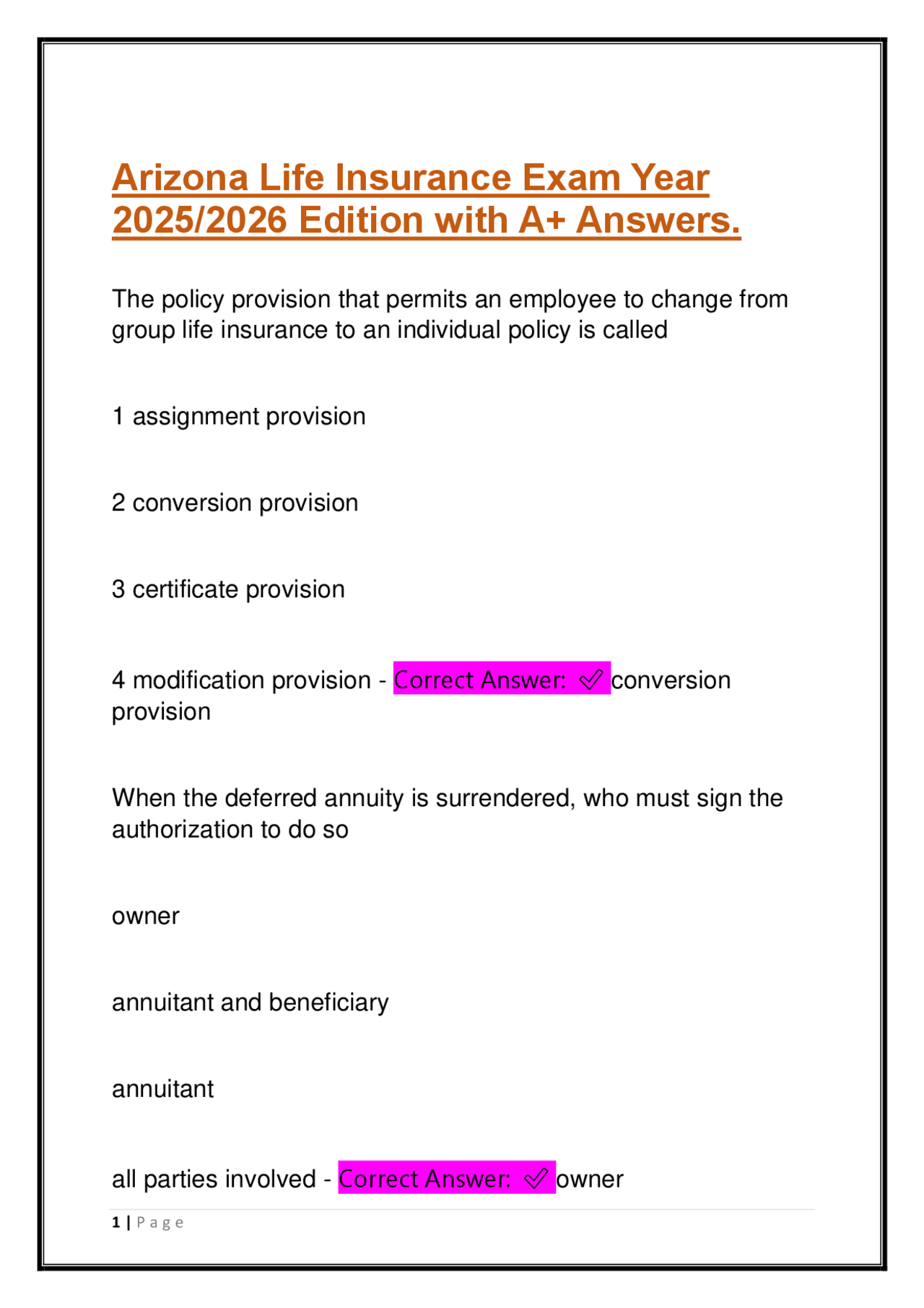
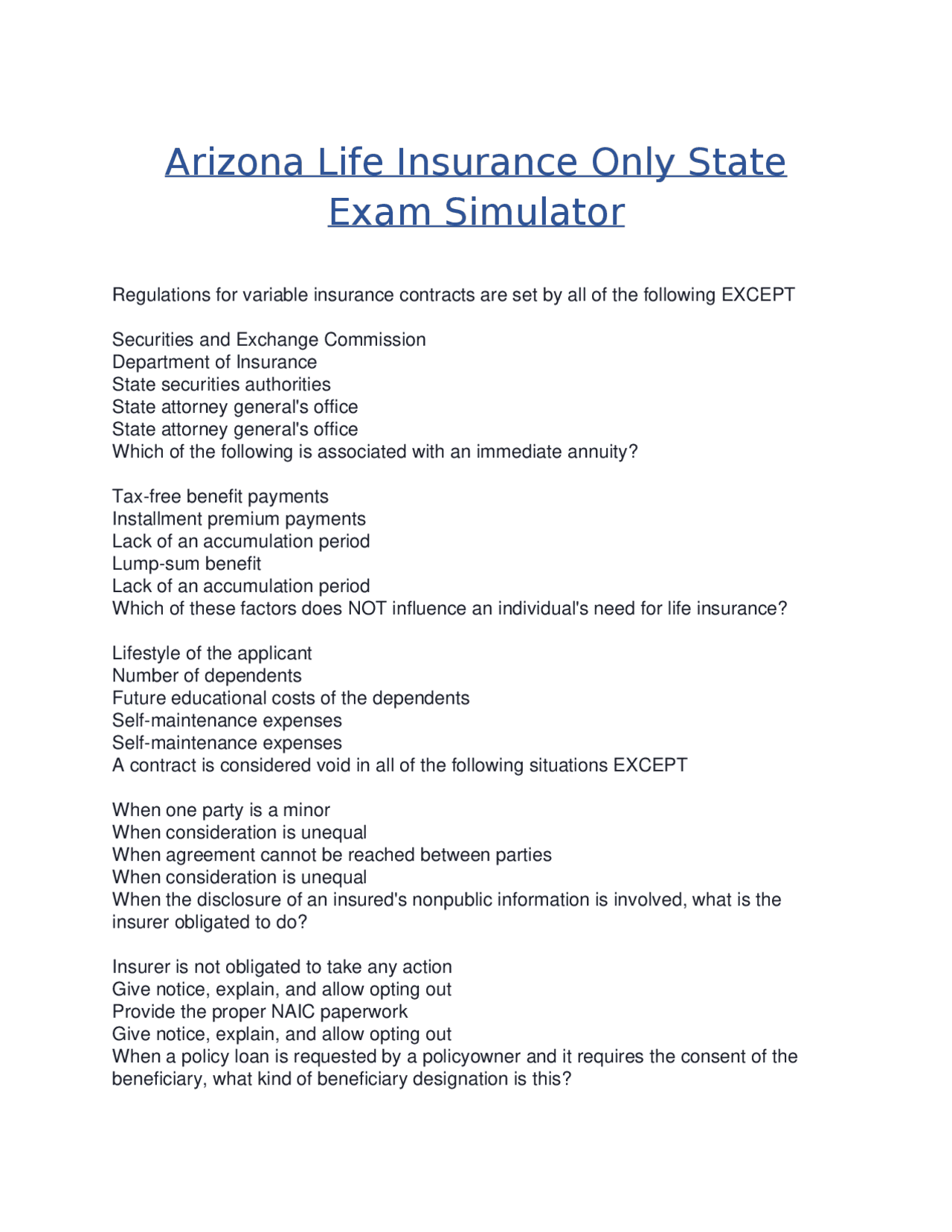
To pass the Arizona Life Insurance Exam in 2026, candidates must master 100 scored multiple-choice questions covering general insurance principles and Arizona-specific statutes. Administered by Prometric, the exam requires a minimum passing score of 70%. Preparation focuses on policy types, provisions, tax laws, and state regulations regarding producer conduct and consumer disclosures.
Understanding the Arizona Life Insurance Exam Structure
The Arizona Life Insurance Producer exam (Series 13-01) is a rigorous assessment designed to ensure that entry-level insurance professionals possess the requisite knowledge to protect the public interest. As of 2026, the exam continues to be administered by Prometric, the state’s authorized testing vendor.
The exam is divided into two primary components: the General Knowledge section and the State-Specific section. While these are presented as a single continuous test, they represent two different bodies of knowledge. The General Knowledge portion covers national concepts that apply across the United States, such as the mechanics of whole life insurance and federal tax implications. The State-Specific portion focuses on the Arizona Revised Statutes (ARS) Title 20, which governs how insurance is sold and regulated specifically within the Grand Canyon State.
Candidates generally encounter 100 scored questions, but the exam also includes "pretest" questions. These are unweighted questions being trialed for future exams; they do not count toward your score, but they are indistinguishable from the scored items. You should treat every question as if it determines your passing status. You are typically allotted two hours to complete the examination.
Core Content Areas: General Insurance Principles
A significant portion of Arizona life insurance exam questions focuses on the "national" or general knowledge component. This section tests your understanding of how life insurance products function, the risks they mitigate, and the legal frameworks that define the contract between the insurer and the policyholder.
Types of Life Insurance Policies
Questions in this category require a deep understanding of the differences between temporary and permanent protection.
- Term Life Insurance: You must understand the various forms of term insurance, including level, increasing, and decreasing term. Decreasing term is often tested in the context of mortgage protection.
- Whole Life Insurance: This is permanent protection with a cash value component. Candidates should be familiar with Ordinary (Straight) Life, Limited Payment Life, and Single Premium Life.
- Flexible Premium Policies: Expect questions on Adjustable Life, Universal Life, and Variable Life. For Variable products, the exam may touch upon the dual regulation by the state and the SEC/FINRA, as these involve investment risks.
- Specialized Policies: This includes Joint Life (First-to-Die) and Survivorship Life (Second-to-Die), often used in estate planning to cover federal estate taxes.
Policy Provisions, Options, and Riders
This is often the most technical part of the exam. Questions frequently revolve around the standard provisions that must be included in a life insurance contract by law.
- Incontestability Clause: In Arizona, a policy generally becomes incontestable after it has been in force for two years during the insured’s lifetime.
- Grace Period: You must know the standard grace period (typically 30 or 31 days) during which a policy remains in force despite a late premium.
- Reinstatement: The requirements for bringing a lapsed policy back to life, including proof of insurability and payment of back premiums plus interest.
- Policy Loans and Withdrawals: The mechanics of how a policyowner can access cash value and the impact on the death benefit if a loan is not repaid.
- Riders: Questions often ask about the "Cost of Living" rider, "Waiver of Premium," "Accidental Death Benefit," and "Guaranteed Insurability" riders.
Life Insurance Tax Issues and Annuities
The 2026 exam continues to emphasize the tax-qualified status of various accounts. You must understand that while death benefits are generally received income tax-free, the interest earned on cash value is tax-deferred. The exam also covers Annuities, specifically the differences between fixed, variable, and indexed annuities, and the phases of accumulation versus annihilation.
Arizona-Specific Statutes and Regulations
The Arizona Department of Insurance and Financial Institutions (DIFI) oversees the conduct of producers. To answer Arizona life insurance exam questions correctly, you must be intimately familiar with the powers of the Director of Insurance and the specific rules governing the local market.
The Director of Insurance and Financial Institutions
The Director is appointed by the Governor and has the authority to conduct examinations, investigations, and hearings. While the Director does not make the laws (the legislature does), they have the power to issue rules and regulations to enforce them. You may be tested on the frequency of insurer examinations and the penalties for failing to comply with a subpoena or a cease-and-desist order.
Producer Licensing Requirements
In Arizona, an individual must be at least 18 years old, pass the exam, and submit a full set of fingerprints for a background check.
- Continuing Education (CE): Arizona requires 48 hours of CE every four years, which must include at least 6 hours of ethics.
- Change of Address: Licensed producers must notify the DIFI within 30 days of any change in residency or business address.
- Reporting Actions: If a producer is subject to administrative action in another jurisdiction or is convicted of a felony, they must report this to the Director within 30 days.
Unfair Trade Practices
Arizona law is very strict regarding how insurance is marketed. Exam questions frequently use "situational" prompts to test your knowledge of:
- Misrepresentation: Making false or misleading statements about a policy’s benefits or dividends.
- Twisting: A specific form of misrepresentation used to induce a policyholder to drop an existing policy and buy a new one to the insured's detriment.
- Rebating: Offering anything of value (like a portion of the commission) to a prospect as an inducement to buy insurance, which is illegal in Arizona.
- Defamation: Making false or malicious statements about the financial condition of an insurance company.
Arizona Life and Disability Insurance Guaranty Fund
This fund protects policyholders if an insurance company becomes insolvent. You must know the limits of coverage provided by the fund in 2026. For life insurance, the fund typically provides up to $300,000 in death benefits and $100,000 in cash surrender value per individual. Crucially, it is an unfair trade practice to use the existence of the Guaranty Fund as a selling point or advertisement.
The Testing Experience: Registration and Procedures
Successfully navigating the Arizona life insurance exam requires more than just subject matter expertise; you must also manage the administrative requirements of the testing process.
Registration and Fingerprinting
Before you can sit for the exam, you must register through the Prometric website. In Arizona, the licensing process is "exam-first," meaning you take the test before submitting the formal license application to DIFI. However, the fingerprinting process is a critical prerequisite for the background check. Most candidates utilize digital fingerprinting services at the testing center or through an authorized vendor like Fieldprint.
What to Expect at the Testing Center
Upon arrival at a Prometric center in cities like Phoenix, Tucson, or Flagstaff, you will be required to present two forms of valid identification. One must be a government-issued photo ID (such as a 2026 Arizona Driver’s License or a Passport).
- Security: Testing centers are highly secure. You will likely be asked to store all personal belongings in a locker and may undergo a security scan.
- Materials: You are not allowed to bring your own calculators or scratch paper. Prometric provides an on-screen calculator and a digital or physical scratchpad for any math-related questions (such as calculating a client's "Human Life Value" or "Needs Approach").
Scoring and Results
The exam is computer-based, and you will receive your unofficial results immediately after submitting your answers. The score report will indicate whether you passed or failed and will provide a breakdown of your performance in different categories. This feedback is invaluable if you do not pass on the first attempt, as it allows you to target specific areas—like "Policy Provisions" or "State Regulations"—for further study.
Arizona Insurance Licensing Cost and Fee Table (2026 Estimates)
The following table outlines the estimated costs associated with obtaining a Life Insurance Producer license in Arizona. Fees are subject to change by DIFI or the testing vendor.
| Service/Requirement | Estimated Cost (USD) | Frequency |
|---|---|---|
| Exam Fee (Life Producer - Series 13-01) | $45 - $60 | Per Attempt |
| Fingerprinting Fee | $30 - $50 | Once (Initial Licensing) |
| License Application Fee (DIFI) | $120 | Every 4 Years |
| Pre-Licensing Study Materials | $150 - $400 | Optional but Recommended |
| Background Check Fee | $22 | Once (Initial Licensing) |
Proven Strategies for Answering Exam Questions
Mastering the content is only half the battle; the other half is understanding the logic of the questions. Most Arizona life insurance exam questions are written at the "Application" or "Analysis" level, meaning they don't just ask for definitions; they ask you to apply a rule to a specific scenario.
- Identify the Distractors: Most questions have one clearly wrong answer, one "distractor" that looks correct but applies to a different situation, and the actual correct answer. For example, a question about "Reinstatement" might include the "Incontestability" time frame as a distractor.
- Watch for "Except": Many questions are phrased negatively (e.g., "All of the following are characteristics of Universal Life EXCEPT..."). These require you to find the one false statement among three true ones.
- The "Arizona" Difference: When answering state-specific questions, always look for Arizona-specific numbers. For instance, the "Free Look" period for life insurance in Arizona is typically 10 days, but it may be 30 days for replacement policies or long-term care. Pay close attention to these distinctions.
- Read the Entire Question: Professional exams often include irrelevant information in the "stem" (the scenario) to see if you can identify the material facts. Focus on what the question is specifically asking for at the very end of the paragraph.
Frequently Asked Questions
How many times can I retake the Arizona Life Insurance Exam?
In Arizona, there is no state-mandated limit on the number of times you can attempt the exam. However, you must pay the exam fee for each attempt. If you fail, it is recommended to wait at least a few days to review your score report and focus on your weak areas before scheduling another appointment with Prometric.
Does Arizona require a pre-licensing education course?
As of 2026, Arizona is one of the few states that does not mandate a specific number of pre-licensing education hours from a state-approved provider. However, the exam's complexity makes self-study without professional materials extremely difficult. Most successful candidates use online portals, textbooks, or "boot camp" style classes to prepare.
Is the Arizona Life Insurance Exam available in Spanish?
Yes, the exam is available in both English and Spanish. You must select your language preference at the time of registration with Prometric. Be aware that the technical terminology can be challenging in either language, so it is best to study using materials in the language in which you intend to take the exam.
Can I sell health insurance with a Life license in Arizona?
No. To sell health insurance (Disability insurance) in Arizona, you must either take the combined "Life and Health" exam (Series 13-03) or pass a separate Health-only exam. A Life-only license limits you to life insurance products, annuities, and certain types of accidental death and dismemberment coverages.
How long is my passing score valid?
Typically, your exam results are valid for one year. You must complete the fingerprinting process and submit your license application to the DIFI within this timeframe. If you wait longer than one year, you will be required to retake the examination.
Final Recommendation for Candidates
The path to becoming a licensed producer in Arizona requires a disciplined study schedule. Begin by obtaining a current 2026 study guide that specifically focuses on the Arizona Prometric outline. Devote 60% of your time to General Knowledge (National) concepts and 40% to the Arizona Revised Statutes. Focus heavily on "Provisions and Riders," as this section typically carries the highest weight in terms of question count. Finally, take multiple full-length practice exams to build the mental endurance necessary for the two-hour testing window.