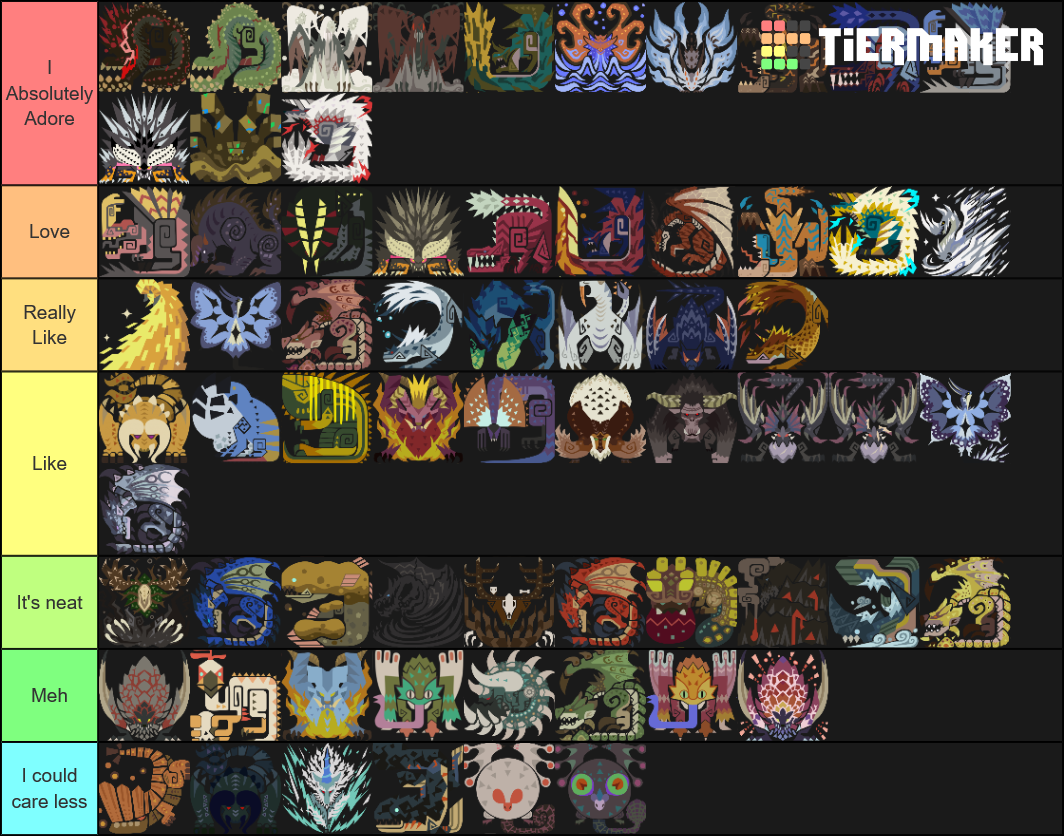
Monster Hunter World: Iceborne introduced a massive roster of over 30 additional monsters, including brand-new species like the flagship Velkhana, returning series icons such as Tigrex and Nargacuga, and powerful variants like Savage Deviljho. These additions expanded the game's depth through Master Rank challenges, complex elemental mechanics, and high-tier endgame gear.
The Iceborne expansion significantly shifted the landscape of Monster Hunter World by introducing the Hoarfrost Reach and the Master Rank difficulty. Unlike the base game, Iceborne focused heavily on environmental interaction and the "Clutch Claw" mechanic, which influenced how players engaged with the expanded roster. This comprehensive guide details every major addition, categorized by their ecological role and introduction phase, to provide a complete picture of the Iceborne ecosystem in 2026.
The Brand New Monsters of Iceborne
Iceborne wasn't just a collection of old favorites; it introduced entirely new species that became central to the lore of the New World. These monsters were designed to take advantage of the verticality and treacherous terrain of the new snowy biome.
Velkhana
As the flagship Elder Dragon of Iceborne, Velkhana represents the mastery of ice. Unlike previous ice-based monsters, Velkhana uses "supercooled" liquid to create pillars and walls of ice instantly. Its fight is a dance of positioning, requiring players to navigate a battlefield that changes every second. Its armor remains a staple for "Frostcraft" builds, which reward a hit-and-run playstyle that has remained popular through 2026.
Namielle
Found in the Coral Highlands, Namielle is an Elder Dragon that controls both water and electricity. Its design is inspired by deep-sea creatures, featuring bioluminescent wings. The mechanical depth of this fight lies in the interaction between its water puddles and electric attacks; standing in water while Namielle discharges electricity results in massive area-of-effect damage. Managing the "wet" state of the floor is the primary challenge of this encounter.
Shara Ishvalda
The final boss of the Iceborne story, Shara Ishvalda, is a unique two-phase encounter. It begins as a lumbering rock-clad giant, requiring players to break its outer shell. The second phase reveals a slender, vibrating predator that uses ultrasonic waves to turn the ground into quicksand. It is a technical masterpiece of boss design that tests a hunter’s ability to adapt to radically different movement patterns mid-fight.
Banbaro and Beotodus
These are the early-game gatekeepers of the Hoarfrost Reach. Beotodus teaches players how to handle monsters that submerge themselves (in this case, in deep snow), while Banbaro introduces the concept of environmental weapons. Banbaro will pick up trees or massive boulders depending on the locale, changing the shape and reach of its attacks dynamically.
Returning Fan Favorites
Capcom utilized Iceborne to bring back some of the most requested monsters from previous generations, rebuilt from the ground up for the modern engine.
- Nargacuga: Known for its incredible speed and "bleeding" status effect. It inhabits the Ancient Forest and Coral Highlands, utilizing its prehensile tail to deliver lethal strikes.
- Tigrex: A brute wyvern that relies on sheer raw power and deafening roars. It is famous for its charging attacks that can overwhelm unprepared hunters.
- Barioth: Combining the agility of Nargacuga with the ice element, Barioth is often considered the first major "wall" for players entering Master Rank due to its erratic movements.
- Glavenus: A "Sword-Tailed" brute wyvern that sharpens its tail with its mouth to deliver fiery, wide-reaching slashes.
- Brachydios: The flagship of Monster Hunter 3 Ultimate, it uses explosive slime that sticks to the hunter, creating a ticking clock for players to wash it off before it detonates.
- Zinogre: The "Thunder Wolf Wyvern" that charges itself up using Thunderbugs. Its high-energy fight and heavy metal-inspired theme song made it an instant favorite in the Iceborne roster.
Master Rank Subspecies and Variants
Subspecies and variants are not just "color swaps" in Iceborne; they feature entirely different elemental affinities and move sets, often requiring completely different armor skills to counter.
Technical Distinction: Subspecies vs. Variants
It is important to understand the difference. Subspecies (like Coral Pukei-Pukei) are separate branches of a species evolved for different environments. Variants (like Savage Deviljho) are specific individuals of a standard species that have undergone a physiological change due to age, stress, or extreme energy intake.
| Monster Name | Type | Primary Element/Status | Major Weakness |
|---|---|---|---|
| Coral Pukei-Pukei | Subspecies | Water | Ice |
| Viper Tobi-Kadachi | Subspecies | Poison / Paralysis | Thunder |
| Nightshade Paolumu | Subspecies | Sleep | Water |
| Fulgur Anjanath | Subspecies | Thunder | Water |
| Ebony Odogaron | Subspecies | Dragon | Water / Elemental |
| Acidic Glavenus | Subspecies | Defense Down (Acid) | Fire |
| Shrieking Legiana | Variant | Ice | Fire |
| Seething Bazelgeuse | Variant | Blast | Ice |
| Savage Deviljho | Variant | Dragon | Thunder / Dragon |
| Blackveil Vaal Hazak | Variant | Effluvium | Fire / Dragon |
| Ruiner Nergigante | Variant | Bleeding | Dragon |
The Impact of Variants on Gameplay
Variants like Savage Deviljho and Seething Bazelgeuse act as "invader" monsters. In Master Rank, these monsters are more aggressive than their base versions. Savage Deviljho, in particular, stays in a permanent state of rage and will actively hunt other monsters on the map, often helping or hindering the player through the "Turf War" mechanic.
The Endgame and Title Update Additions
Following the initial launch, Capcom released several "Title Updates" that added some of the most powerful entities in the franchise's history. These monsters represent the pinnacle of Iceborne's difficulty.
Rajang and Furious Rajang
Rajang is a fanged beast that channels electricity. It is small, fast, and incredibly strong. The Furious Rajang variant removes its tail weakness and stays in its golden "Super Saiyan" state permanently, making it one of the most punishing fights for melee users.
Safi'jiiva
The adult form of Xeno'jiiva, Safi'jiiva, was introduced as a 16-player Siege encounter. This fight takes place in the "Selas Crystal" depths, where players must drain the energy of the levels to corner the dragon. Safi'jiiva introduced "Awakened" weapons, a customizable gear system that redefined the meta.
Alatreon
Alatreon, the Blazing Black Dragon, brought a controversial but rewarding mechanic: the "Elemental DPS Check." Players are required to deal a certain amount of elemental damage to suppress Alatreon's "Escaton Judgment" attack. This forced the community to move away from purely raw-damage builds and explore the elemental weapon trees of Iceborne.
Fatalis
The final update for Iceborne brought back the legendary Fatalis at Castle Schrade. This is widely considered the hardest fight in the game. With a 30-minute time limit and attacks that can one-shot most hunters, Fatalis requires perfect mastery of the game's mechanics. Defeating Fatalis grants access to the "Inheritance" and "Transcendence" set bonuses, which are the most powerful in the game.
Unlocking Secret Monsters in the Guiding Lands
The Guiding Lands is the endgame hunting ground where several monsters are hidden behind "Region Levels." To see the full roster of Iceborne, players must level up specific biomes to trigger spawns.
- Yian Garuga: Unlocked after the first assignment in the Guiding Lands. Its scarred variant, Scarred Yian Garuga, appears only in high-level Forest regions.
- Gold Rathian and Silver Rathalos: These "Rare Species" are found in the Desert and Coral regions respectively once they reach level 6. They provide the "True Critical Element" and "Divine Blessing Secret" armor skills.
- Stygian Zinogre: Introduced in a title update, this Dragon-element variant of Zinogre is found in the Tundra region. It is the precursor to the Safi'jiiva questline.
- Brute Tigrex: A subspecies that focuses on sonic attacks, found in the Rotten region at level 6.
Requirements for Accessing Iceborne Content
To engage with the "all monsters" list in Iceborne, players must first meet specific prerequisites within the base Monster Hunter World game. As of 2026, the process remains streamlined but demanding.
- Completion of the Base Game: Players must finish the main story of Monster Hunter World and reach Hunter Rank (HR) 16.
- The Iceborne Expedition: Upon reaching HR 16, a prompt appears in Astera to speak with the Feisty Fiver, which initiates the journey to the Hoarfrost Reach.
- Master Rank (MR) Progression: Much like HR, certain monsters are locked behind MR milestones. For example, the "Ruiner Nergigante" is capped until MR 99.
Common Strategic Mistakes in Iceborne
With the influx of new monsters, many players struggle by using outdated base-game tactics. The most common mistake is ignoring the Clutch Claw. In Iceborne, monsters have higher health pools designed around the assumption that players will "tenderize" parts and wall-bang monsters for massive damage.
Another mistake is neglecting Elemental Resistances. In High Rank, players could often ignore a -10 Fire resistance. In Master Rank Iceborne, facing a Silver Rathalos or Alatreon with negative resistance often results in being "one-shot." Using the "Blightproof" skill or eating for "Elemental Resistance (Large)" at the Canteen is essential for the later additions to the roster.
Frequently Asked Questions
Which monster is the hardest in Iceborne?
Fatalis is widely considered the hardest monster. It has the highest damage output and a strict 30-minute time limit. Unlike other monsters, Fatalis requires players to break its head at least once before the final phase to weaken its "blue flame" attacks, which otherwise deal lethal damage even through the strongest armor.
How many total monsters were added in the Iceborne expansion?
Iceborne added 27 monsters at launch (including subspecies and variants) and expanded to over 35 through free title updates. This effectively doubled the size of the original game's roster.
Can I skip the base game monsters and go straight to Iceborne?
While you must complete the base game story (HR 16), Capcom introduced the Guardian Armor and Defender Weapons. These are high-stat items designed to help players breeze through the base game content so they can reach the Iceborne additions quickly.
Are there any monsters that are exclusive to the Guiding Lands?
Yes. Monsters like Zinogre, Stygian Zinogre, Brute Tigrex, Gold Rathian, and Silver Rathalos primarily appear in the Guiding Lands. While they can later be fought in Investigations or Event Quests, they must usually be "discovered" in the Guiding Lands first.
What is the difference between a Subspecies and a Rare Species?
A Subspecies is a common variation (like Viper Tobi-Kadachi). A Rare Species is a much more powerful, "apex" version of a monster that only appears under very specific conditions. Gold Rathian and Silver Rathalos are the primary Rare Species in Iceborne.
Final Recommendations for Hunters
To successfully hunt every monster in Monster Hunter World: Iceborne, prioritize building a versatile gear set early in Master Rank. The Beotodus and Banbaro sets offer a significant defense jump over High Rank Elder Dragon armor.
Focus on upgrading your Clutch Claw skills and learning the "Wall Bang" opening. As you progress toward the title update monsters like Alatreon and Fatalis, transition into specialized elemental builds. In the current 2026 meta, the "Teostra/Raging Brachydios" mixed set remains one of the most efficient ways to bridge the gap between the mid-game and the ultimate challenges of the expansion.