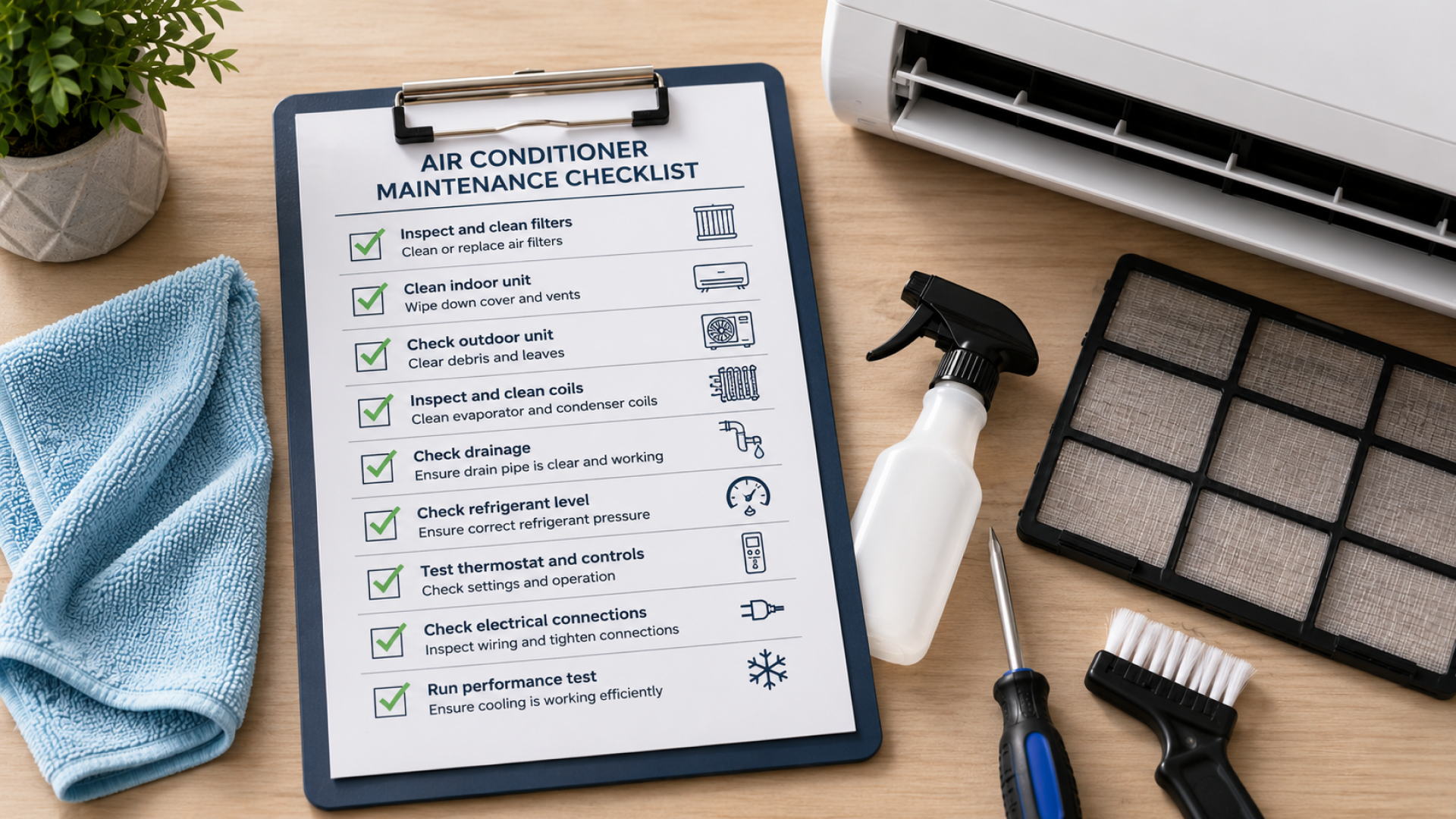
A comprehensive aircon maintenance checklist involves regular filter cleaning, coil inspections, debris removal, and system testing to ensure peak performance. By performing monthly DIY checks and annual professional tune-ups, you can improve energy efficiency, prevent unexpected breakdowns, and extend the lifespan of your cooling system throughout the year.
The reliability of an air conditioning system in 2026 depends less on the age of the unit and more on the consistency of its upkeep. As cooling technology has evolved toward higher efficiency standards—such as the widespread adoption of SEER2 ratings—the internal components have become more sophisticated and sensitive to neglect. A single layer of dust on an evaporator coil or a slightly clogged drainage line can cause a chain reaction of component failures, leading to costly emergency repairs during peak summer months.
Reliable cooling is not merely about comfort; it is an issue of mechanical preservation and indoor air quality. This guide provides a detailed breakdown of the essential maintenance tasks required to keep your system running optimally, distinguishing between what you can safely handle and when you must call a licensed HVAC technician.
The Foundation of Reliability: Monthly DIY Maintenance
The most significant cause of air conditioner failure is restricted airflow. When air cannot move freely through the system, the compressor must work harder, the coils may freeze, and electrical components are pushed to their thermal limits.
1. Air Filter Management and MERV Ratings
The air filter is your system’s first line of defense. By 2026, most residential systems utilize high-efficiency filters, but these require stricter monitoring. You should inspect your filter every 30 days. If you live in a dusty environment, have pets, or suffer from allergies, you may need to replace it more frequently.
When selecting a replacement, pay attention to the Minimum Efficiency Reporting Value (MERV) rating. Most modern residential systems are designed for MERV 8 to MERV 11. While MERV 13 filters provide superior filtration of microscopic particles, they also increase static pressure. If your system is not rated for high-MERV filters, the restricted airflow can lead to a frozen evaporator coil or a burnt-out blower motor. Always verify your system's specifications before upgrading to a higher density filter.
2. Cleaning Return Air Grilles and Vents
Dust accumulation on return grilles can bypass the filter and enter the internal housing of the air handler. Monthly vacuuming of these grilles prevents "ghosting" (dark streaks on walls) and ensures that the system is pulling the required volume of air to satisfy the thermostat’s demands. Ensure that furniture, curtains, or rugs are not obstructing any supply vents, as blocked vents increase pressure within the ductwork, which can lead to leaks over time.
3. Thermostat Calibration and Battery Checks
In 2026, smart thermostats are the standard for maintaining reliability. However, even the most advanced units can suffer from sensor drift. Once a month, use a standalone digital thermometer to verify that the temperature reading on your thermostat matches the actual room temperature. If there is a discrepancy of more than two degrees, your system may be "short-cycling"—turning on and off too frequently—which drastically reduces the lifespan of the compressor. If your thermostat is battery-powered, replace the batteries annually, regardless of the "low battery" indicator status, to prevent a system shutdown while you are away.
Quarterly Deep Cleaning and Exterior Care
As seasons transition, your air conditioner faces different environmental challenges. The outdoor unit (the condenser) and the drainage system require specific attention every three to four months to prevent catastrophic failures.
1. Clearing the Condenser Perimeter
The outdoor condenser unit works by dissipating heat from your home into the outside air. For this heat exchange to happen efficiently, the unit needs at least two feet of clear space in every direction. During the autumn and spring, check for accumulated leaves, grass clippings, or overgrown shrubs. Use a soft brush to remove debris from the exterior fins. Never use a high-pressure power washer on the condenser fins, as the delicate aluminum can easily bend, permanently restricting airflow and requiring a specialized "fin comb" to repair.
2. Inspecting the Condensate Drain Line
Your air conditioner removes a significant amount of moisture from the air. This water is collected in a drain pan and funneled outside through a PVC pipe. Over time, algae and mold can grow inside this pipe, creating a gelatinous "slug" that causes the pan to overflow.
To maintain reliability, pour a half-cup of distilled white vinegar down the condensate drain access point every three months. This kills bacterial growth before it can form a clog. If your system features a secondary drain pan or a "float switch," inspect these for any standing water. Standing water in the emergency pan is a definitive sign that your primary line is already partially blocked.
3. Checking Refrigerant Line Insulation
The large copper pipe entering your home (the suction line) carries cold refrigerant. It should be covered in thick, black foam insulation. Exposure to UV rays and local wildlife often causes this insulation to degrade. If the copper is bare, the refrigerant will pick up heat from the outside air before it reaches the evaporator coil, forcing the system to run longer to achieve the same cooling effect. Replace any brittle or missing insulation with "slit-to-fit" foam tubing available at most hardware stores.
Technical Maintenance: The Annual Professional Tune-Up
While DIY tasks address the "symptoms" of wear, a professional HVAC technician addresses the "vitals." To maintain your manufacturer's warranty and ensure reliability through 2026 and beyond, an annual professional inspection is mandatory.
Electrical Component Analysis
A technician will use a multimeter to measure the capacitance of your start and run capacitors. Capacitors are the most common point of failure in air conditioning systems; they provide the initial "jolt" of energy needed to start the compressor and fan motors. A capacitor that is measuring outside its 5% tolerance range is a "ticking time bomb" that will eventually fail, often during the hottest part of the year. Professionals also inspect the contactor for "pitting" or carbon buildup, which can cause the unit to hum or fail to turn on entirely.
Refrigerant Charge and Leak Detection
Modern refrigerants, such as R-454B and R-32, which have become the industry standard following the phase-down of R-410A, operate at specific pressures. A professional will check the subcooling and superheat levels to ensure the charge is exact. A system that is low on refrigerant does not "use up" the gas; it has a leak. A professional can use electronic leak detectors to find small pinholes in the evaporator coil before they lead to a total system freeze-up.
Detailed Component Comparison Table
| Task | Frequency | Type | Primary Benefit |
|---|---|---|---|
| Filter Replacement | Monthly | DIY | Prevents motor strain & improves air quality |
| Clear Condenser Debris | Quarterly | DIY | Ensures efficient heat dissipation |
| Flush Drain Line | 3 Months | DIY | Prevents water damage & mold growth |
| Check Capacitor Levels | Annually | Professional | Prevents sudden electrical failure |
| Refrigerant Level Check | Annually | Professional | Maintains cooling capacity & prevents ice |
| Blower Motor Lube | Annually | Professional | Reduces friction & energy consumption |
| Duct Integrity Check | 2-3 Years | Professional | Prevents 20-30% energy loss from leaks |
Troubleshooting Reliability Issues
Even with a strict checklist, issues may arise. Understanding the early warning signs can prevent a minor adjustment from turning into a full system replacement.
- Short Cycling: If the system turns on and off every 5-10 minutes, check the air filter first. If the filter is clean, the issue may be an oversized unit or a malfunctioning thermostat sensor.
- Ice on the Lines: If you see ice on the copper pipes or the indoor coil, turn the system off immediately. Running an iced-over unit can destroy the compressor. The cause is usually either restricted airflow (dirty filter) or low refrigerant.
- Unusual Noises: A "screeching" sound often indicates a failing blower motor belt or bearing. A "clicking" sound usually points to an electrical issue in the contactor. Metal-on-metal "clanging" suggests a loose fan blade in the outdoor unit.
- Dirty Sock Syndrome: A musty smell upon startup indicates bacterial growth on the evaporator coil. This requires a professional cleaning with a specialized biocidal foam to ensure the organic material is fully removed.
Energy Efficiency and Cost Considerations in 2026
In 2026, energy prices remain a significant portion of household expenditures. A well-maintained air conditioner consumes approximately 15% to 25% less electricity than a neglected one. Furthermore, the cost of emergency service calls has risen significantly. While a standard maintenance contract might cost between $150 and $300 annually, a single emergency compressor replacement can exceed $2,500, and a full system replacement for a high-efficiency 2026 model can range from $8,000 to $15,000 depending on the tonnage and ductwork requirements.
By sticking to the maintenance checklist, you are effectively self-insuring against these massive capital outlays. Reliability is the result of cumulative small actions rather than a single grand repair.
FAQs
How often should I change my air filter in 2026?
Most homeowners should change their air filter every 1 to 3 months. However, this depends on the filter type and household environment. A standard 1-inch pleated filter usually lasts 30-60 days. If you have pets or live in a high-pollen area, monthly changes are necessary to prevent the blower motor from overheating due to static pressure.
Is it safe to clean aircon coils myself?
You can safely clean the outdoor condenser coils by gently spraying them with a garden hose (low pressure) to remove surface dust. However, cleaning the indoor evaporator coil is more complex and involves handling sensitive fins and electrical components. It is generally recommended to leave indoor coil cleaning to a professional to avoid damaging the system or causing a refrigerant leak.
Why is my air conditioner running but not cooling the house?
This is typically caused by a dirty air filter, a blocked outdoor condenser, or a refrigerant leak. If the airflow feels weak, the filter is the likely culprit. If the air is blowing strongly but is not cold, the compressor may not be engaging, or the refrigerant levels may be insufficient to facilitate heat exchange.
What are the signs that my aircon needs professional service?
Signs include unusual grinding or squealing noises, frequent cycling, a sudden spike in energy bills, or the presence of ice on the refrigerant lines. Additionally, if the system cannot maintain the set temperature during a moderately warm day, it indicates a loss of efficiency that requires a professional diagnostic.
Can I skip annual maintenance if my unit is brand new?
No. In fact, skipping maintenance on a new unit can void the manufacturer's warranty. Most warranties explicitly state that the system must be maintained by a licensed professional annually. Furthermore, new systems use more sensitive electronic components that benefit significantly from early detection of minor calibration issues.
Final Recommendation for Homeowners
To ensure the highest level of reliability, do not treat aircon maintenance as a reactive task. Schedule your professional tune-up in the early spring, before the first heatwave hits. This timing allows you to secure lower rates and ensures that any necessary parts can be ordered and installed before the peak season rush. Combine this professional oversight with your monthly DIY filter checks to guarantee consistent, cost-effective cooling throughout 2026.