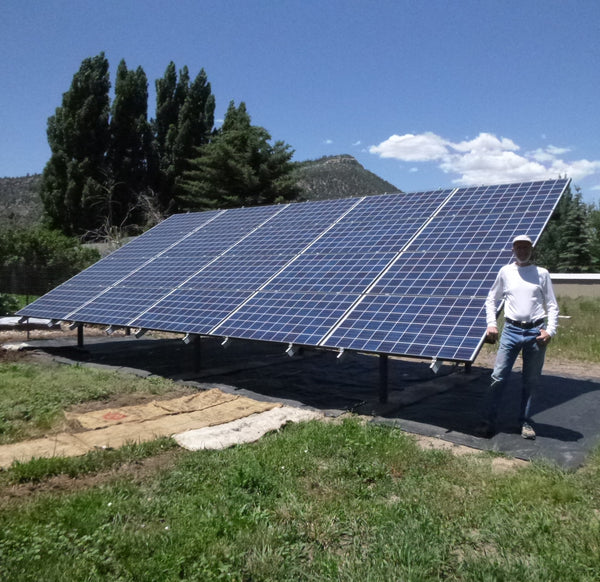
The GoGreenSolar 5kW ground mount kit is a comprehensive DIY renewable energy solution designed for properties where roof space is limited or unsuitable. It includes high-efficiency panels, customized racking, an inverter system, and full permitting support. In 2026, it remains a premier choice for homeowners seeking a professional-grade, code-compliant solar installation without the high cost of full-service contractors.
Understanding the 5kW Ground Mount System
A 5kW (5,000-watt) solar array is a versatile size, often serving as a significant offset for a medium-sized energy-efficient home or a complete power solution for a sustainable ADU (Accessory Dwelling Unit). When choosing a ground mount over a traditional roof-mounted system, you are opting for a structure that is anchored into the earth, typically using concrete piers and steel pipes.
GoGreenSolar specializes in "kitting" these systems, which means they don't just sell the hardware; they provide the engineering, wiring diagrams, and permit assistance necessary to make the system legal and functional. In 2026, as utility rates continue to fluctuate, the autonomy provided by a ground-mounted system is increasingly valuable.
Why Choose a Ground Mount?
There are several technical and practical reasons why a homeowner might select the GoGreenSolar ground mount kit over a roof-mounted alternative:
- Optimal Orientation and Tilt: Roofs are rarely oriented at the perfect angle or direction for maximum solar gain. A ground mount can be positioned exactly south (in the northern hemisphere) and tilted at the precise degree needed to capture the most sunlight year-round.
- Ease of Maintenance: Cleaning snow, dust, or debris from panels is significantly safer and easier when they are six feet off the ground rather than twenty feet up on a pitched roof.
- Passive Cooling: Panels on a ground mount have better airflow around them compared to roof-mounted panels. This keeps the cells cooler, and since solar panel efficiency drops as temperature rises, ground-mounted systems often have a slightly higher energy yield.
- No Roof Penetrations: For homeowners with expensive roofing materials (like slate or premium tile) or those with older roofs, avoiding dozens of lag bolts into the rafters is a major advantage.
Component Deep-Dive: What’s in the Kit?
The 5kW kit from GoGreenSolar is curated to ensure that all components are compatible. In 2026, the technology has reached a point where "plug-and-play" is the standard, though electrical safety remains paramount.
Solar Panels
In 2026, GoGreenSolar typically utilizes N-type monocrystalline bifacial or high-density panels. A 5kW system usually consists of 12 to 14 panels, depending on the individual panel wattage (typically 380W to 420W). These panels are selected for their durability and low degradation rates, often guaranteed to produce 85-90% of their original power after 25 years.
The Racking System (IronRidge or Similar)
The "bones" of the system usually involve an IronRidge Ground Mount racking solution. This system uses locally sourced Schedule 40 steel pipe combined with IronRidge's proprietary XR1000 rails and UFO (Universal Fastening Object) clamps. The use of heavy-duty rails is essential for ground mounts to withstand wind loads and snow loads, which can be more significant than those on a sheltered roof.
Power Conversion: Microinverters vs. String Inverters
GoGreenSolar kits frequently feature Enphase Microinverters or SolarEdge String Inverters with Power Optimizers.
- Enphase Microinverters: These sit behind each panel, converting DC to AC immediately. This is safer for ground mounts because there is no high-voltage DC traveling in the underground trench.
- SolarEdge: This uses a single central inverter but includes optimizers on every panel to mitigate shading issues.
The "Secret Sauce": The Plan Set
Perhaps the most critical component isn't the hardware, but the documentation. GoGreenSolar provides a custom-engineered plan set tailored to your specific zip code. This includes the structural engineering required by building departments to ensure the ground mount won't fly away in a storm or sink into soft soil.
Site Requirements and Preparation
Before the crates arrive on a freight truck, the site must be prepared. A 5kW system requires a footprint of approximately 300 to 400 square feet, depending on the panel layout (e.g., two rows of seven panels).
Soil and Foundation
Ground mounts require a "Pipe and Pier" foundation. You will typically need to dig holes (piers) that are 12 to 18 inches in diameter and 3 to 5 feet deep, depending on your local frost line and soil type. These holes are filled with concrete to anchor the vertical steel pipes. If your soil is particularly rocky or consists of "expansive clay," GoGreenSolar's engineering team may require deeper piers or specialized footings.
The Trench
You must dig a trench from the solar array to your home’s electrical main panel. Per the National Electrical Code (NEC), this trench must usually be 18 to 24 inches deep if using PVC conduit. This is often the most labor-intensive part of the DIY process, leading many homeowners to rent a trencher for a day.
The Installation Process: A Step-by-Step Overview
Installing a GoGreenSolar kit is a multi-phase project that typically takes two to three weekends for a DIYer.
Phase 1: Layout and Excavation
Using the provided plan set, you will mark the locations for your piers. Precision is key here; if your pipes are not square and level, the racking rails will be difficult to attach. Once marked, you dig the holes and the trench.
Phase 2: Setting the Pipes
Insert the Schedule 40 steel pipes into the holes. Most installers use a string line and a level to ensure all pipes are perfectly aligned. You then pour the concrete and allow it to cure for at least 24 to 48 hours.
Phase 3: Racking and Rails
Once the concrete is set, you attach the horizontal cross-pipes and the IronRidge XR1000 rails. The rails run perpendicular to the pipes and provide the mounting surface for the solar panels.
Phase 4: Electrical Rough-in
Run your wires through the conduit in the trench. If using microinverters, you will install the "trunk cable" along the racking. This is also when you install the junction box on the racking structure.
Phase 5: Mounting Panels
Lifting panels onto a ground mount is much easier than a roof. You simply slide the panels onto the rails and secure them with the provided clamps. In 2026, most clamps are "integrated grounding" versions, meaning they automatically create an electrical bond between the panel frame and the racking for safety.
Phase 6: Final Connections and Inspection
The final step involves connecting the system to your home’s electrical panel. Note: While much of this is DIY-friendly, GoGreenSolar and most local laws recommend (or require) a licensed electrician to perform the final "tie-in" to the main breaker box.
Cost Analysis and ROI in 2026
Purchasing a 5kW ground mount kit is a significant investment, but it is structured to maximize long-term savings.
| Expense Category | Estimated Cost (2026 USD) | Notes |
|---|---|---|
| GoGreenSolar 5kW Kit | $8,500 - $11,000 | Includes panels, inverter, racking, and plans. |
| Permit Fees | $200 - $600 | Varies widely by municipality. |
| Foundation Materials | $400 - $800 | Concrete and Schedule 40 steel pipe (local buy). |
| Trenching/Conduit | $300 - $700 | Rental of trencher and PVC materials. |
| Electrician (Final Tie-in) | $500 - $1,200 | For final inspection and panel connection. |
| Total Gross Cost | $9,900 - $14,300 | Before incentives. |
| Federal Tax Credit (ITC) | ($2,970 - $4,290) | Assuming 30% credit remains active. |
| Net DIY Cost | $6,930 - $10,010 | Final out-of-pocket estimate. |
Return on Investment
In 2026, the average cost of electricity in the United States is approximately $0.18 to $0.22 per kWh. A well-placed 5kW system can produce roughly 7,500 kWh per year. This equates to approximately $1,500 in annual savings. At a net cost of roughly $8,500, the payback period is approximately 5.6 years, after which the electricity produced is essentially free for the remaining 20+ years of the system's life.
Common Challenges and Troubleshooting
Despite the comprehensive nature of the GoGreenSolar kit, DIY installers often encounter a few common hurdles:
- Permit Rejections: Sometimes a local building department is unfamiliar with DIY solar. GoGreenSolar’s support team is vital here; they can provide the specific UL listings or structural stamps required to satisfy local inspectors.
- Shading Issues: Homeowners often underestimate how much a distant tree or a neighbor's fence will shade the ground mount in the winter when the sun is lower in the sky. It is highly recommended to use a solar pathfinder tool before pouring concrete.
- Communication Errors: For systems using Enphase or SolarEdge, the inverters must "talk" to a gateway (Envoy or Zigbee) to report production. If the ground mount is too far from the house (over 100 feet), you may need a wireless bridge or a hardwired Ethernet cable in the trench to ensure monitoring works.
Maintenance for Ground Mounted Systems
Maintenance is minimal but necessary to ensure the 5kW system operates at peak efficiency:
- Vegetation Management: This is the most unique requirement for ground mounts. You must ensure that grass, weeds, or bushes do not grow tall enough to shade the bottom row of panels. Many owners use landscape fabric and gravel under the array to prevent growth.
- Visual Inspections: Check the underside of the panels once a season to ensure that birds or rodents haven't attempted to nest among the wires.
- Panel Cleaning: A simple spray with a garden hose (avoiding high-pressure power washers) twice a year is usually sufficient to remove dust and pollen.
FAQ
Does the GoGreenSolar kit include the steel pipes for the ground mount?
No. To save on shipping costs, GoGreenSolar (and most racking manufacturers) does not include the 2-inch or 3-inch Schedule 40 steel pipes. These are heavy and bulky. They provide a shopping list for you to purchase these pipes at a local home improvement store like Home Depot or a local steel yard.
Is a 5kW system enough to go completely off-grid?
Typically, no. A 5kW system is designed to offset a large portion of a standard home's grid usage. To go entirely off-grid, you would need a much larger battery bank and likely a larger solar array (10kW+) to account for consecutive cloudy days, depending on your energy consumption.
Do I need a structural engineer for the ground mount?
GoGreenSolar includes engineered plan sets with their kits. In most cases, these plans are pre-stamped or designed to meet national standards. However, some specific jurisdictions (like high-velocity hurricane zones in Florida or seismic zones in California) may require a local wet stamp, which GoGreenSolar can often help facilitate for an additional fee.
How far away from the house can I install the 5kW ground mount?
You can technically install it hundreds of feet away, but the further the distance, the larger the wire gauge you will need to prevent "voltage drop." Large wires are expensive. Most DIYers try to keep the array within 50 to 100 feet of the main electrical panel to keep costs manageable.
Can I add batteries to this kit later?
Yes. If you choose an "AC-coupled" battery solution (like the Tesla Powerwall 3 or Enphase IQ Battery), you can easily add storage to the system at any point in the future without changing your existing inverter setup.
Final Recommendation
The 5kw solar panel ground mount installation kit by GoGreenSolar is an ideal solution for the "capable DIYer." If you are comfortable digging a trench, mixing concrete, and following a technical wiring diagram, this kit offers the best balance of professional engineering and cost savings available in 2026.
Your next action should be to perform a shading analysis of your yard and contact your local building department to ask about the specific requirements for "accessory structures." Once you have a clear spot and a basic understanding of your local rules, GoGreenSolar’s team can customize the kit to your specific site conditions.