Securing a $50,000 term life insurance policy that runs until age 65 provides a reliable, cost-effective safety net to cover final expenses, debts, or income replacement during your working years, locking in level premiums for a fixed duration until retirement age.
Choosing the right life insurance policy is a foundational step in financial planning, particularly for individuals who want to protect their dependents without paying for permanent coverage they may not need later in life. A $50,000 term life policy until age 65 strikes a specific balance between affordability and targeted protection. This type of insurance is engineered to cover the exact window when financial responsibilities—such as mortgages, raising children, and replacing lost earnings—are at their highest, expiring right around standard retirement age when accumulated savings and pensions are intended to take over.
Understanding how this policy works, what it costs, how to qualify, and whether a $50,000 face value is sufficient requires a detailed look at the mechanics of term life insurance. Navigating the underwriting process, evaluating carrier financial strength, and comparing policy riders will ensure that the coverage you select aligns cleanly with your long-term family and financial goals.
Understanding Term Life Insurance Mechanics
Term life insurance is the most straightforward form of life insurance protection. Unlike whole life or universal life insurance, which include cash value accumulation components and last for your entire life, term insurance provides pure, temporary protection. You select a specific face amount—in this case, $50,000—and a specific duration or terminal age, such as age 65.
If the insured passes away while the policy is active, the insurance company pays the full $50,000 tax-free death benefit to the designated beneficiaries. If the insured outlives the policy expiration date of age 65, the coverage simply terminates, and no benefits are paid out unless the policy includes a specific return-of-premium rider. Because there is no investment or savings vehicle attached, term life insurance offers significantly lower initial premium rates than permanent insurance options.
| Feature | Term Life Insurance (to Age 65) |
|---|---|
| Coverage Duration | Fixed term ending at age 65 |
| Death Benefit | $50,000 (Guaranteed level) |
| Premium Structure | Level (remains constant) |
| Cash Value | None |
| Renewal / Conversion Options | Usually convertible to permanent |
The "until age 65" specification is a decreasing-duration term structure. For example, if you purchase this policy at age 30, the term lasts for 35 years. If you purchase it at age 45, the term lasts for 20 years. In both scenarios, your premiums remain level throughout the entire duration, provided you continue to make timely payments. This predictability makes budgeting straightforward and protects you against age-based price spikes found in annual renewable term policies.
Determining if a $50,000 Death Benefit is Right for You
A $50,000 face value is often categorized as a small-to-moderate policy, sitting above standard final expense or burial insurance (which typically ranges from $10,000 to $25,000) but below comprehensive family income replacement policies that often start at $250,000 or $500,000. Deciding whether $50,000 is enough requires a careful assessment of your current financial obligations and liabilities.
Final Expenses and Debt Clearance
For many policyholders, a $50,000 policy is specifically purchased to clear unsecured debts, car loans, credit cards, and funeral expenses. The average cost of a funeral and burial often exceeds $7,000 to $10,000, leaving a remaining balance of $40,000+ to help surviving spouses manage immediate out-of-pocket costs or transition into a single-income household.
Income Replacement Calculations
If you are the primary earner for a family, $50,000 will generally replace less than one year of gross income. Therefore, a $50,000 term policy until age 65 is rarely sufficient as a standalone income replacement tool for a young family with a mortgage and dependent children. However, it can serve as a valuable supplement to group life insurance provided by an employer, or act as an affordable baseline policy for single individuals, older adults whose children are financially independent, or couples needing modest final protection.
Cost Factors and Premium Estimation
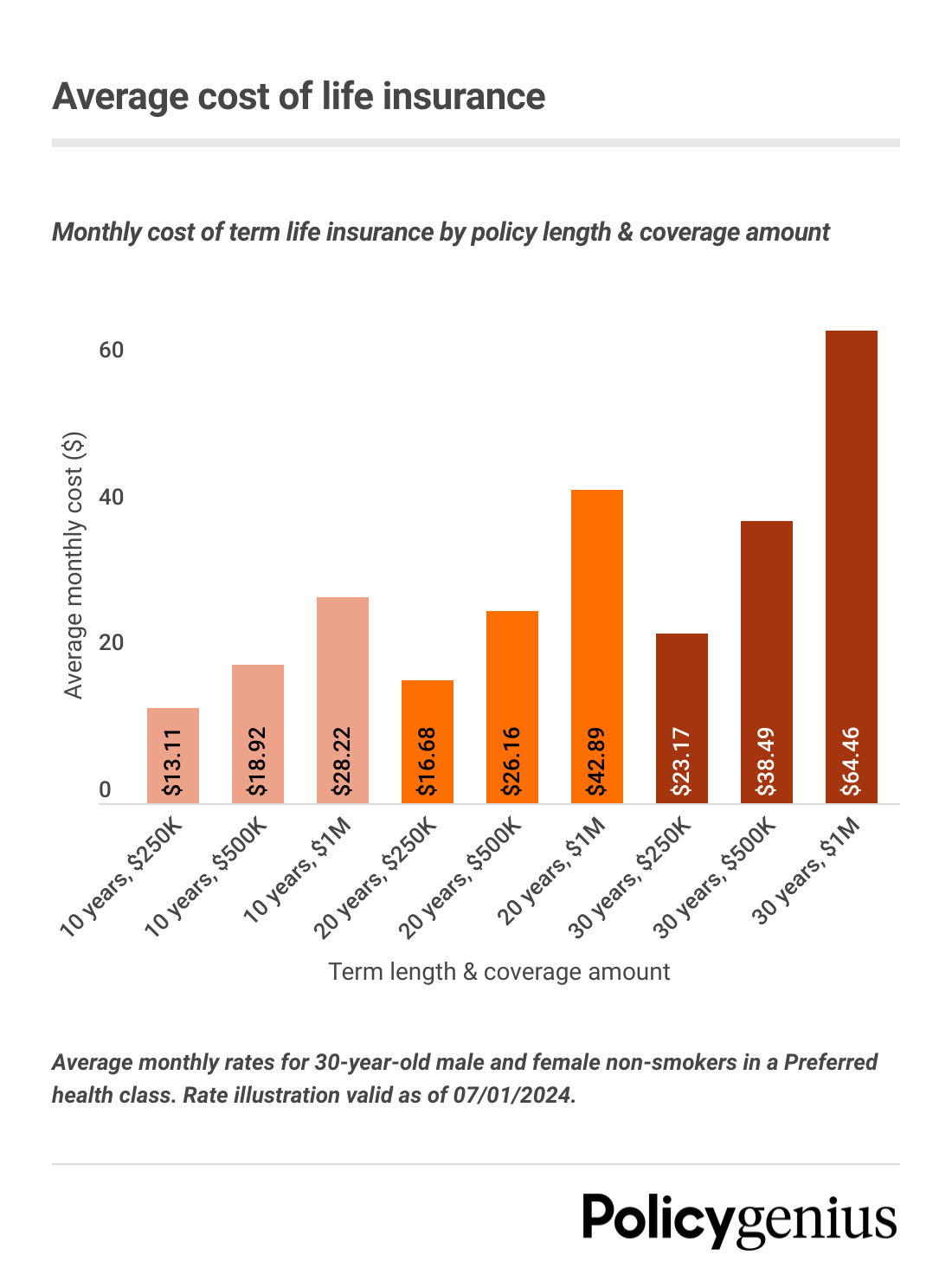
The cost of a $50,000 term life policy until age 65 is heavily influenced by several core underwriting variables. Because term insurance pricing is calculated based on the probability of mortality during the active term, younger applicants secure significantly lower rates than older applicants purchasing the same coverage amount.
Key Factors Influencing Your Rate
- Age at Application: Your biological age when the policy is issued dictates your base rate. Locking in at age 30 secures decades of low, level payments, whereas applying at age 50 shortens the term window and increases the monthly cost.
- Health and Medical History: Life insurance carriers evaluate your personal health history, including blood pressure, cholesterol levels, height-to-weight ratios, and prescription drug use.
- Tobacco and Nicotine Use: Smokers, vapers, and users of alternative nicotine products face tobacco-class premium rates that are often two to three times higher than non-smoker rates.
- Family Medical History: Underwriters examine whether immediate family members (parents and siblings) suffered from major hereditary conditions like heart disease, stroke, or certain cancers before age 60.
- Lifestyle and Occupation: Engaging in high-risk hobbies (such as skydiving, private aviation, or rock climbing) or working in hazardous occupations can result in flat extra fees added to the base premium.
Underwriting Pathways: Fully Underwritten vs. Simplified Issue
When applying for a $50,000 term life policy, you will generally encounter two primary underwriting pathways. Choosing the right pathway depends on how quickly you need coverage and your comfort level with medical examinations.
Fully Underwritten Policies
A fully underwritten policy requires a paramedical exam, which typically includes a nurse visiting your home or office to record your height, weight, blood pressure, and pulse, as well as collect blood and urine samples. The carrier also orders your Medical Information Bureau (MIB) report, prescription database check, and motor vehicle record. While this process can take anywhere from two to six weeks, it almost always yields the lowest available premium rates for healthy individuals.
Simplified Issue and Accelerated Underwriting
Many modern life insurance carriers offer simplified issue or accelerated underwriting pathways for face amounts like $50,000. These policies do not require a physical medical exam. Instead, approval is based on your answers to a health questionnaire, combined with instantaneous database checks of your medical history and prescription records.
- Advantages: Approval can happen in minutes or days rather than weeks.
- Trade-offs: Premiums are occasionally higher than fully underwritten options because the insurance company takes on slightly more uncertainty regarding unverified health conditions.
Policy Riders and Customization Options
Insurance carriers allow you to customize a $50,000 term life policy until age 65 by attaching riders—optional endorsements that modify coverage terms for an additional cost. Evaluating these riders before signing your contract ensures your policy addresses unforeseen life events.
The Conversion Privilege
One of the most valuable features to look for in a term life policy is a conversion rider. This provision allows you to convert all or part of your $50,000 term policy into a permanent life insurance policy (such as whole life) before the term expires, without undergoing a new medical examination or proving insurability. This is crucial if your health declines later in life, ensuring you maintain the option to secure lifelong coverage.
Waiver of Premium for Disability
If you become totally and permanently disabled due to an accident or illness before age 60 or 65, the waiver of premium rider waives all subsequent premium payments while keeping your $50,000 death benefit fully active. This protects your policy from lapsing during a period when you are unable to work and earn an income.
Accelerated Death Benefit Rider
Most standard term policies now include an accelerated death benefit rider at no additional premium. This rider allows the insured to access a significant portion of the $50,000 death benefit (typically up to 50% or 80%) while still alive if they are diagnosed with a qualifying terminal illness with a life expectancy of 12 to 24 months. These funds can be used to cover medical bills, experimental treatments, or end-of-life care.
Common Mistakes to Avoid When Buying Term Insurance
Navigating the life insurance market involves several common pitfalls that can lead to delayed approvals, higher costs, or inadequate protection. Avoiding these mistakes ensures a smoother application process.
- Waiting Too Long to Apply: Procrastination is the single biggest driver of high life insurance costs. Every year you age increases your base premium rate. Locking in a policy at age 30 locks in a significantly lower lifetime rate than waiting until age 45 or 50.
- Undervaluing Financial Needs: While $50,000 is appropriate for specific final expense and debt goals, assuming it covers full income replacement for a family with young children leaves dependents exposed to financial hardship. Always match the face value to a verified financial calculation.
- Failing to Disclose Medical History: Omitting pre-existing conditions, past treatments, or recreational tobacco use on your application can lead to a denial of claims during the contestability period (typically the first two years of the policy). Complete transparency ensures your beneficiaries receive the payout without legal disputes.
- Overlooking Company Financial Strength: Purchasing a policy from an unrated or financially unstable carrier introduces long-term counterparty risk. Always verify that the insurance company holds strong financial strength ratings from independent agencies such as AM Best, Standard & Poor's, or Moody's.
Frequently Asked Questions
What happens to a $50,000 term life policy when I turn 65?
When you reach age 65, the term period expires. The coverage terminates, and the insurance company ceases to collect premiums. No death benefit is paid out because you survived the term. If you still require coverage, you must either convert the policy to a permanent plan beforehand (if your policy includes a conversion privilege) or apply for a new policy, though a new policy will be priced based on your age 65 health and mortality rates.
Can I get a $50,000 term policy without a medical exam?
Yes. Many carriers offer simplified issue term life insurance policies up to $50,000 that do not require a physical exam or blood draw. Approval relies on health questions and electronic database verification. While convenient and fast, these policies can sometimes feature slightly higher premiums compared to fully underwritten plans that require a paramedical exam.
Is the $50,000 death benefit subject to income taxes?
In the vast majority of cases, life insurance death benefits paid out to individual beneficiaries are completely free from federal and state income taxes. However, if the policy is owned by a business or if the estate is named as the beneficiary rather than a specific individual, complex tax rules or estate taxes may apply.
Can I have multiple term life insurance policies at the same time?
Yes. There is no legal limit to the number of life insurance policies you can own, provided you have an insurable interest and total coverage aligns with financial underwriting guidelines. Many people supplement employer-sponsored group life insurance with an independent term policy to ensure continuous coverage if they change jobs.
What is the difference between term life and final expense insurance?
While both offer fixed death benefits, final expense insurance is typically a permanent whole life policy with a smaller face value (such as $10,000 to $25,000) designed exclusively for burial costs. A term life policy until age 65 provides a larger temporary death benefit designed to cover active working-year financial obligations and expires at retirement age.
Next Steps and Action Plan
Securing a $50,000 term life policy until age 65 requires a methodical approach to ensure you receive the right coverage at a competitive rate.
- Assess Your Obligations: Confirm that $50,000 adequately addresses your target expenses, such as final costs, specific debts, or supplemental family support.
- Compare Multiple Carriers: Request quotes from at least three reputable insurance companies with high financial strength ratings (AM Best rating of A or higher).
- Review Underwriting Guidelines: Determine whether you qualify for accelerated underwriting or if a fully underwritten exam will yield a lower premium based on your health profile.
- Lock in Your Rate: Submit your application to lock in your age-based premium before your next birthday increases your base rates.