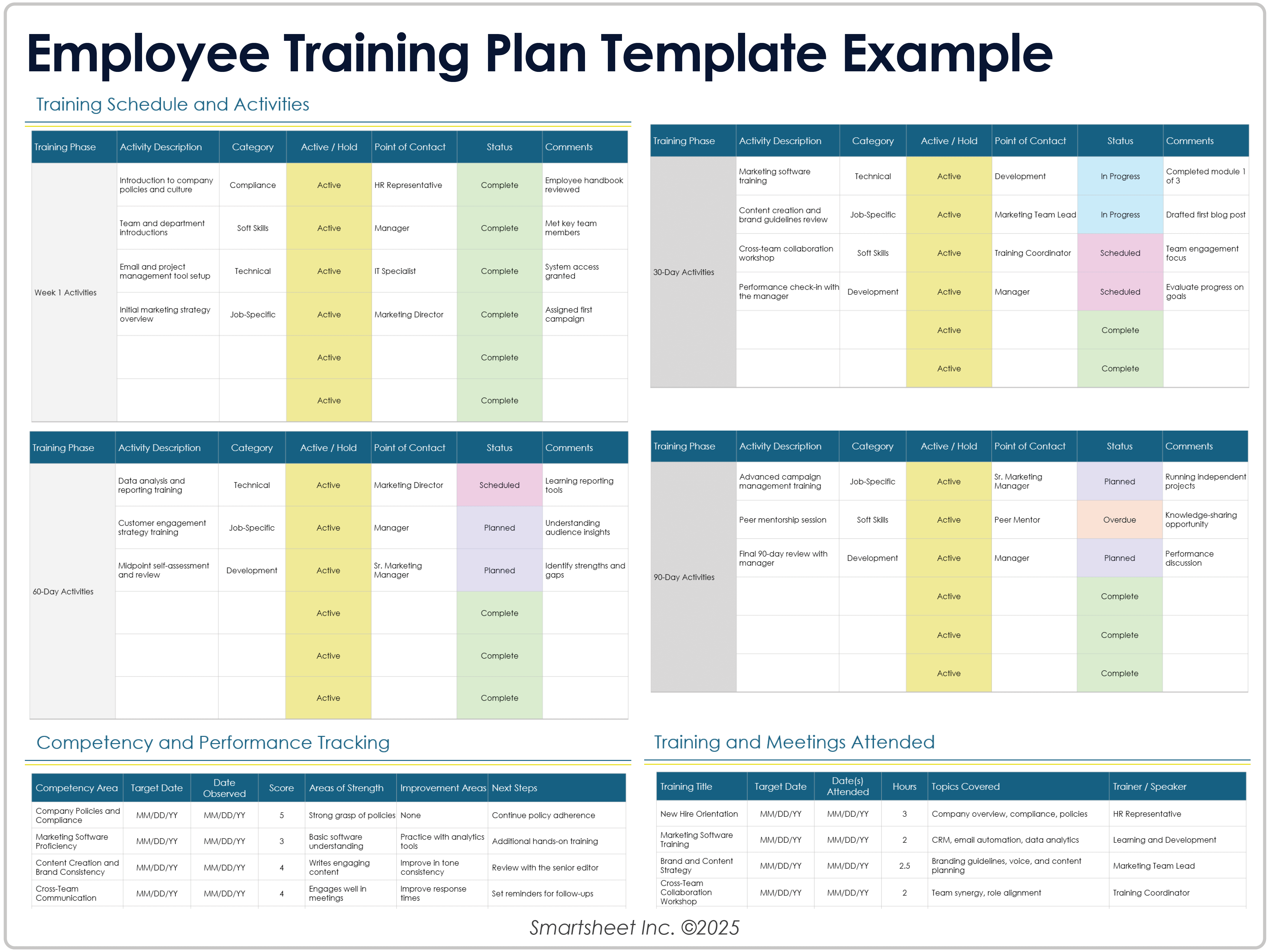
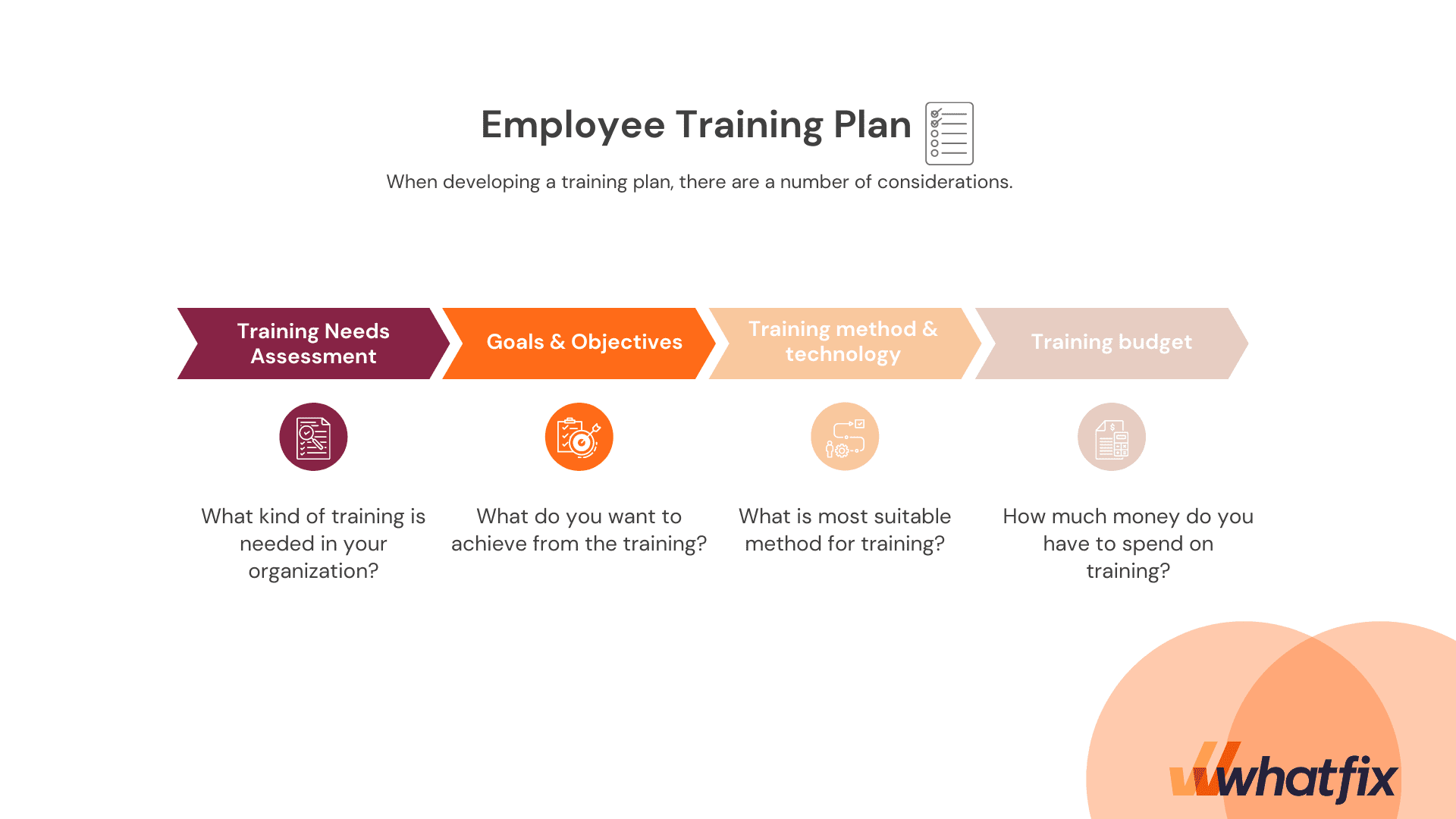
Employee training programs are structured learning initiatives designed to improve workforce performance, expand technical capabilities, and ensure regulatory compliance. The five core examples of employee training programs are onboarding training, compliance training, technical skills training, soft skills and leadership development, and product knowledge training. Each addresses specific organizational needs and skill gaps.
The Strategic Role of Employee Training in Modern Organizations
Employee training programs are systematically planned activities that equip workers with the knowledge, skills, and competencies required to perform their roles effectively. Rather than treating learning as a one-time event during hiring, modern organizations structure training into continuous learning pathways. Effective training aligns individual performance with business objectives, directly impacting workforce productivity, employee retention, and operational efficiency.
Organizations that invest in structured learning and development (L&D) frameworks build long-term agility. Skill requirements change rapidly due to technological advances, shifting regulatory standards, and evolving market demands. A well-designed training architecture helps organizations identify skill gaps early, upskill existing staff, and reduce reliance on expensive external recruitment.
Beyond direct performance gains, employee training drives workforce engagement. Structured professional development demonstrates an organization's commitment to career progression, which significantly lowers voluntary turnover rates. Training programs also establish standardized operational processes, ensuring consistent quality, safety, and operational excellence across departments and geographic locations.
5 Examples of Employee Training Programs
Organizations deploy distinct types of training depending on their operational priorities, compliance obligations, and skill requirements. The following five examples represent the core pillar programs utilized by corporate L&D departments.
- EMPLOYEE TRAINING ARCHITECTURE
- Onboarding Training
- Compliance Training
- Technical Skills
- Leadership & Soft Sk.
- Product Knowledge
1. Onboarding and Orientation Programs
Onboarding training introduces newly hired employees to the organization's culture, policies, workflows, and tools. Unlike basic orientation—which focuses primarily on administrative paperwork—a comprehensive onboarding program extends across the employee's first 30 to 90 days. It aims to accelerate time-to-productivity while integrating the hire into their functional team.
Key Components
- Company Culture and Core Values: Introduction to organizational mission, leadership philosophy, and workplace standards.
- Administrative and IT Provisioning: Configuration of software credentials, security access, workstation setups, and hardware policies.
- Role-Specific Workflows: Detailed walk-throughs of standard operating procedures (SOPs), team deliverables, and performance expectations.
- Mentorship and Buddy Systems: Pairing new hires with experienced peers to provide informal guidance and administrative support.
Delivery Formats and Best Practices
Successful onboarding uses blended learning, combining self-paced microlearning modules for policy reviews with structured 1-on-1 coaching for role training. Structuring the program into milestone-based schedules (e.g., 30-day, 60-day, and 90-day objectives) allows managers to track progress objectively and address performance gaps early.
2. Compliance and Regulatory Training Programs
Compliance training ensures that employees understand and adhere to statutory laws, industry regulations, and internal ethics guidelines. These programs are often mandatory, requiring documented completion records to safeguard the organization against legal liability, regulatory fines, and operational risks.
Key Components
- Workplace Safety and Health: Operational safety protocols, emergency procedures, and guidelines established by authorities such as the Occupational Safety and Health Administration (OSHA).
- Data Privacy and Cybersecurity: Protocols covering the Handling of Personal Identifiable Information (PII), regulations such as GDPR and CCPA, baseline threat prevention, and phishing awareness.
- Ethics and Anti-Harassment: Standards for workplace conduct, diversity and inclusion rules, reporting mechanisms, and non-retaliation policies.
- Industry-Specific Mandates: Specialized frameworks such as HIPAA in healthcare, anti-money laundering (AML) in financial services, or HACCP in food manufacturing.
Delivery Formats and Best Practices
Compliance training typically relies on Learning Management Systems (LMS) to track completion rates, record quiz scores, and issue recertifications annually. To make compliance training effective, instructional designers use scenario-based assessments rather than passive video lectures. Case studies based on real legal enforcement actions increase retention and demonstrate practical application.
3. Technical and Hard Skills Training Programs
Technical training focuses on teaching the specific tools, software, machinery, and analytical methodologies required to carry out operational duties. As technology updates, technical training transitions from initial instruction to continuous upskilling and reskilling.
Key Components
- Software and Tool Proficiency: Mastery of enterprise resource planning (ERP) systems, customer relationship management (CRM) software, data analytics platforms, and design tools.
- Technical Certifications: Formal preparation for recognized industry credentials, such as AWS, Cisco, CompTIA, or Project Management Professional (PMP) certifications.
- Equipment and Machinery Operation: Specialized practical instruction for manufacturing, field services, engineering, and laboratory operations.
- Coding and System Architecture: Engineering workshops covering modern programming languages, cloud architecture patterns, and DevOps protocols.
Delivery Formats and Best Practices
Technical skill development requires hands-on practice. High-performing programs incorporate sandbox software environments, interactive lab exercises, and simulation tools. Micro-credentialing frameworks—such as digital badges awarded upon mastering a specific technical skill—help organizations track inventory of technical capabilities across teams.
4. Soft Skills and Leadership Development Programs
Soft skills training enhances interpersonal capabilities, communication, emotional intelligence, and strategic problem-solving. Leadership development programs specifically prepare high-potential individual contributors for management roles and refine executive leadership capabilities.
Key Components
- Communication and Active Listening: Articulating ideas clearly, conducting cross-functional negotiations, and managing client relations.
- Conflict Resolution and Feedback: Delivering constructive performance evaluations, managing workplace disputes, and navigating difficult conversations.
- Strategic Thinking and Decision-Making: Financial literacy, resource allocation, and long-term risk assessment for management roles.
- Time Management and Delegation: Prioritization techniques, project coordination, and empowering team members.
Delivery Formats and Best Practices
Soft skills development relies heavily on interactive, human-centered methodologies. Workshops, peer-to-peer role-playing, executive coaching, and 360-degree feedback assessments are effective strategies. Rather than relying on isolated seminars, organizations format soft skills development as multi-month cohort programs to allow participants to apply learning in real workplace scenarios and reflect on outcomes during peer reviews.
5. Product and Service Knowledge Training Programs
Product knowledge training provides employees with an in-depth understanding of the organization’s offerings, value propositions, technical specifications, and competitive differentiators. This training is critical for customer-facing teams, including sales development, customer success, account management, and technical support.
Key Components
- Feature Specifications and Architecture: Detailed knowledge of product functionality, platform limits, updates, and maintenance guidelines.
- Value Proposition and Buyer Personas: Framing product capabilities around specific client pain points and target audience challenges.
- Competitive Intelligence: Understanding market alternatives, comparative pricing structures, and positioning against competitors.
- Troubleshooting and Issue Resolution: Diagnosing common product failures, service disruptions, and customer workflow blockages.
Delivery Formats and Best Practices
Product knowledge programs must keep pace with product release schedules. Training content should be modular and easily updated whenever software updates or new physical lines launch. Sales enablement tools, interactive product demos, and bite-sized update videos keep client-facing staff informed on features and market positioning.
Comparative Matrix of Training Program Types
The table below outlines the core differences, primary objectives, delivery mechanisms, and evaluation metrics for each of the five training program types.
| Program Type | Primary Objective | Target Audience | Primary Delivery Formats | Key Success Metrics / KPIs |
|---|---|---|---|---|
| Onboarding Training | Accelerate integration and time-to-productivity | New hires | Blended learning, mentorship, self-paced modules | Time-to-productivity, 90-day retention rate, new hire satisfaction |
| Compliance Training | Ensure legal compliance and mitigate risk | All staff / specialized roles | LMS modules, scenario-based assessments | Completion rate, audit pass rate, incident/violation frequency |
| Technical Skills Training | Build role-specific hard skills and tool mastery | Engineers, operators, specialists | Interactive labs, sandbox environments, workshops | Certification pass rates, error reduction, task completion speed |
| Leadership & Soft Skills | Enhance interpersonal, management, and strategic skills | Managers, high-potentials, executives | Cohort workshops, coaching, 360-degree feedback | Internal promotion rate, employee engagement scores, team retention |
| Product Knowledge Training | Improve customer conversion and resolution efficiency | Sales, customer support, marketing | Product demos, microlearning, release workshops | Win rates, average deal size, first-contact resolution (FCR) rate |
How to Design an Effective Training Program Framework
Building an enterprise training program requires a systematic design methodology. Skipping formal framework steps often results in poor learner engagement and minimal business impact. The traditional ADDIE Model (Analysis, Design, Development, Implementation, Evaluation) remains an industry-standard framework for L&D program structure.
- ANALYSIS: Identify skill gaps, business goals, and learner needs.
- DESIGN: Define learning objectives, curriculum structure, and metrics.
- DEVELOPMENT: Build media, author modules, and create training materials.
- IMPLEMENTATION: Deploy via LMS, facilitate sessions, and enroll learners.
- EVALUATION: Measure learning outcome using Kirkpatrick's 4 Levels.
1. Training Needs Analysis (TNA)
Before writing curriculum material, L&D managers must conduct a formal Training Needs Analysis. This phase establishes whether a performance problem stems from a lack of knowledge, inefficient processes, or inadequate tools.
- Organizational Analysis: Identify business goals and strategic gaps.
- Task Analysis: Document the specific competencies required to perform tasks effectively.
- Individual Analysis: Assess current employee skill levels through evaluations, manager feedback, and performance metrics.
2. Instructional Design and Course Structure
Once learning objectives are clear, instructional designers establish the program roadmap. Objectives should follow the SMART criteria (Specific, Measurable, Achievable, Relevant, Time-bound). During this stage, designers select appropriate learning modalities:
- Asynchronous E-Learning: Self-paced online modules suitable for baseline compliance and product knowledge.
- Synchronous Virtual Instruction: Instructor-led live training (VILT) for team discussions, Q&A, and technical lectures.
- In-Person Workshops: Intensive, hands-on practice sessions for soft skills role-playing and physical machinery operations.
3. Content Development and Tool Integration
During development, trainers create curriculum assets, assessments, visual aids, and interactive exercises. Content should be organized into bite-sized microlearning modules (5 to 10 minutes long) to help learners retain information without feeling overwhelmed. Integrating these materials into a modern Learning Management System (LMS) ensures delivery automation and centralized tracking.
4. Implementation and Rollout
Rolling out a program requires clear communication from management regarding expectations, completion deadlines, and allocated study hours. Providing dedicated, paid work hours for training prevents cognitive fatigue and improves completion rates compared to asking staff to study outside of working hours.
5. Program Evaluation (The Kirkpatrick Model)
To assess program efficacy and ROI, organizations apply the Kirkpatrick Four-Level Evaluation Model:
- Reaction (Level 1): Measures how participants feel about the training using immediate post-training surveys.
- Learning (Level 2): Assesses knowledge acquisition through post-module tests, quizzes, and practical skill demonstrations.
- Behavior (Level 3): Evaluates whether employees apply new skills on the job through manager observations and follow-up reviews after 30 to 90 days.
- Results (Level 4): Measures macro-level business impacts, such as increased revenue, reduced workplace accidents, or lower operational costs.
Overcoming Common Implementation Challenges
Deploying employee training programs often runs into operational obstacles. Below are practical strategies to resolve common training issues.
Balancing Training Time with Daily Operations
Employees often struggle to complete training due to conflicting daily job responsibilities.
- Solution: Shift from long, full-day training sessions to microlearning modules integrated into the daily flow of work. Designate clear focus blocks (e.g., two hours per week) dedicated specifically to professional development.
Low Engagement and Completion Rates
Passive, text-heavy training leads to poor retention and high dropout rates.
- Solution: Incorporate interactive scenario-based challenges, practical branch logic in online modules, and modest gamification elements (such as completion leaderboards or micro-badges).
Measuring Training Return on Investment (ROI)
L&D teams often struggle to connect training costs with actual business revenue or savings.
- Solution: Isolate baseline metrics before rolling out training. Compare performance data between a trained group and a control group over 90 days to measure performance impact directly.
Frequently Asked Questions
What is the most important type of employee training program?
The priority depends on the organization's current challenges, but compliance training and onboarding training are the baseline requirements for most businesses. Compliance protects against immediate operational and legal risks, while onboarding accelerates baseline employee productivity.
How often should employee training programs be updated?
Compliance and technical programs should be audited at least annually to reflect changes in legislation, security protocols, and software tool updates. Product knowledge training must be updated continuously alongside major product releases or strategic repositions.
How much should organizations budget for employee training?
According to benchmarking data from the Association for Talent Development (ATD), organizations spend an average of $1,200 to $1,500 per employee annually on training initiatives. Actual budgets depend on industry technical complexity and regional labor dynamics.
What is the difference between employee training and employee development?
Training focuses on immediate role-specific skills, immediate task performance, and operational compliance. Development is a long-term strategic process focused on expanding general capabilities, leadership potential, and strategic competencies for future roles.
How can small businesses implement training programs with limited budgets?
Small businesses can leverage low-cost microlearning formats, internal subject-matter expert (SME) mentorship, and free external resources (such as vendor software tutorials or open educational modules). Internal peer-led knowledge sharing provides cost-effective skill transfer without requiring expensive specialized vendor platforms.
Practical Strategy for Implementation
To build an impactful training framework, start with an objective audit of your organization's current operational challenges. If new-hire turnover is high, prioritize updating your onboarding program. If support resolution times are lagging or error rates are high, focus on technical or product knowledge training.
Begin implementation with a small pilot group, run a complete evaluation cycle using the Kirkpatrick model, refine the course content based on learner feedback, and then scale the framework across the broader organization.