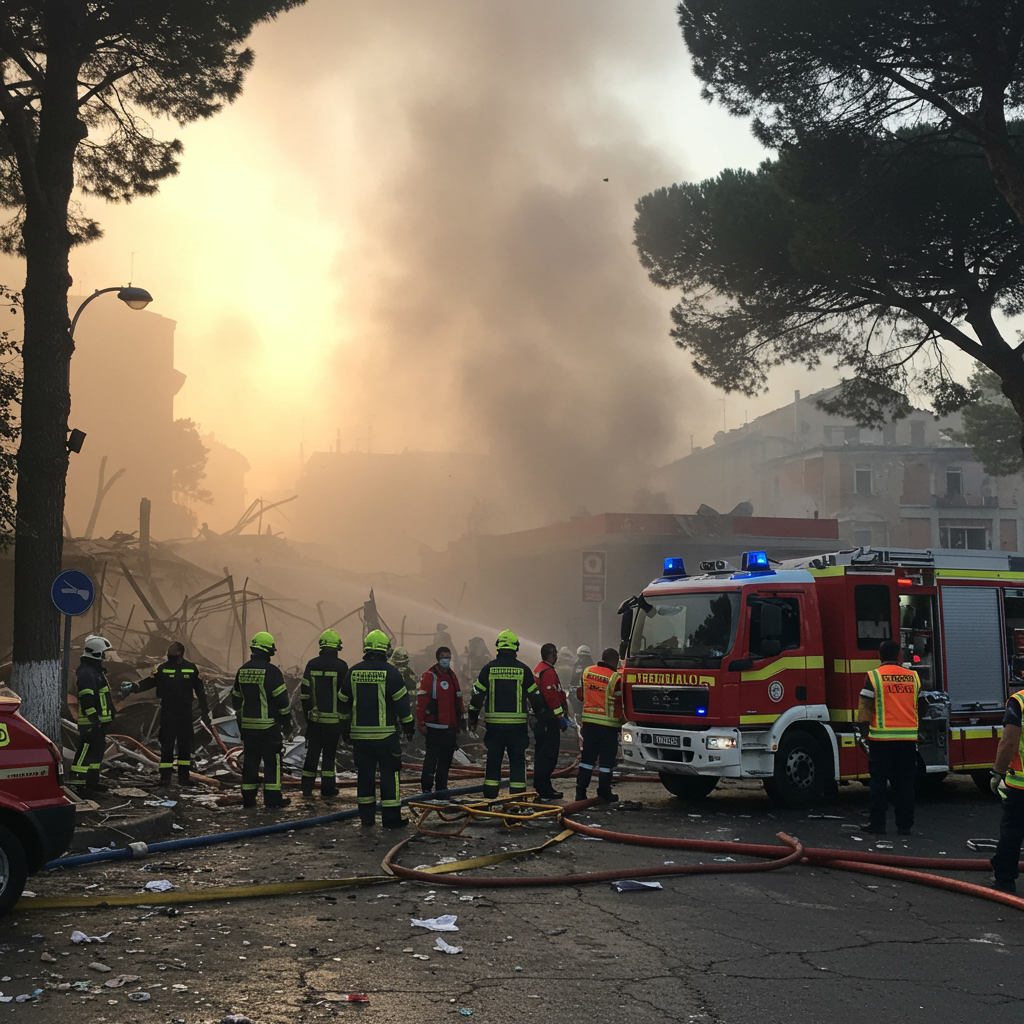
Gas station explosions are high-consequence industrial accidents primarily caused by the ignition of accumulated flammable vapors, equipment mechanical failures, or procedural errors during fuel transport and dispensing. Preventing these incidents relies on strict adherence to fire safety codes, automated monitoring systems, emergency shutoff switches, and proper operational procedures to protect human life and property.
The Physical Mechanics of Gas Station Explosions
To understand how a gas station explosion occurs, it is essential to analyze the chemical properties of motor fuels and the structural design of modern dispensing facilities. Gasoline, Liquefied Petroleum Gas (LPG), Compressed Natural Gas (CNG), and alternative fuels do not burn in their liquid state; rather, their volatile organic vapors mix with atmospheric oxygen to form highly combustible vapor clouds.
When these vapors collect within a specific concentration range—known as the flammable or explosive limits—any thermal, electrical, or friction-based ignition source can trigger a rapid combustion wave. If this combustion occurs in an open, unconfined area, it typically results in a flash fire or deflagration. However, if the vapor cloud accumulates inside an enclosed or semi-enclosed space, such as a convenience store structure, utility trench, or subterranean vault, the expanding gases build immense pressure, leading to a destructive explosion.
- The Combustion Triangle
- Fuel Vapors (Gasoline, LPG, CNG)
- Ignition Source (Static, Sparks, Heat)
- Oxygen (Atmospheric Air)
Flammability Limits and Vapor Density
The behavior of fuel vapors depends heavily on vapor pressure and vapor density relative to air:
- Gasoline Vapors: Gasoline has a lower explosive limit (LEL) of approximately 1.4% and an upper explosive limit (UEL) of 7.6% by volume in air. Because gasoline vapors are three to four times heavier than air, they sink into low-lying areas, drainage conduits, and fuel dispenser sumps, remaining undetected until an ignition source is introduced.
- Liquefied Petroleum Gas (LPG/Autogas): LPG consists mainly of propane and butane. It remains stored under pressure as a liquid. When released, it rapidly expands into a gas that is roughly 1.5 to 2 times heavier than air, forming dense, ground-hugging vapor clouds capable of traveling significant distances to distant ignition sources.
- Compressed Natural Gas (CNG) and Hydrogen: Unlike liquid fuels, CNG (methane) and hydrogen are lighter than air. Upon release, they rise and dissipate quickly in outdoor environments. However, if trapped beneath canopies or indoors, they create severe overhead explosion hazards.
The Mechanics of BLEVE (Boiling Liquid Expanding Vapor Explosion)
A Boiling Liquid Expanding Vapor Explosion (BLEVE) is one of the most catastrophic types of fuel station disasters. A BLEVE occurs when a pressurized storage vessel holding a liquefied gas—such as an LPG tank or a fuel delivery tanker—is exposed to intense external fire.
As radiant heat warms the exterior tank walls above the liquid level, the structural integrity of the steel container degrades. Simultaneously, the liquid fuel inside boils rapidly, dramatically increasing internal tank pressure. When the weakened metal shell can no longer withstand the internal force, the tank ruptures catastrophically. The sudden drop in pressure causes the remaining superheated liquid to flash instantly into gas, expanding by hundreds of times its volume and producing a powerful blast wave accompanied by a massive fireball.
Primary Root Causes of Fuel Station Fires and Explosions
Incidents involving fuel dispensing infrastructure rarely stem from a single mechanical fault. Instead, they usually result from a chain of contributing factors involving equipment failure, human operational errors, environmental conditions, or third-party impacts.
- Root Causes of Incidents
- Vapor Ignition
- Static Charge
- Defective Wiring
- Mechanical Failure
- Shear Valve Fault
- UST Integrity Loss
- Human Error
- Fuel Delivery
- Overfilling
- External Impact
- Vehicle Crash
- Vandalism
- Vapor Ignition
1. Static Electricity Discharge During Refueling
Static electricity poses a subtle but persistent hazard at the fuel dispenser. As vehicles travel, friction between the tires and the road surface generates electrostatic charges across the vehicle body. Similarly, an individual sliding across synthetic seat upholstery can accumulate thousands of volts of static potential.
If a driver returns to the fuel nozzle during dispensing and touches the nozzle before grounding themselves against the metal vehicle frame, a static spark can jump from their hand to the fuel neck. In the presence of gasoline vapors exiting the fuel tank, this small spark can instantly ignite a localized flash fire at the fill neck.
2. Failure of Emergency Shear Valves and Impact Collisions
Vehicle collisions with fuel pumps (dispensers) represent a common physical risk at retail stations. Modern stations install safety mechanisms called emergency shear valves (often referred to as impact valves) beneath each pump at island level.
These double-poppet valves are engineered to break cleanly at a pre-scored groove if a vehicle strikes the dispenser. Upon impact, internal springs instantly snap the valve closed, sealing off the underground pressurized fuel lines. If a shear valve fails to close due to corrosion, improper installation height, or lack of routine maintenance, pressurized fuel continues to spray onto hot engine components or live electrical equipment, leading to rapid ignition and massive fire spread.
3. Bulk Delivery Transfer and Tanker Offloading Errors
The transfer of liquid fuel from bulk tanker trucks to underground storage tanks (USTs) is one of the most risk-intensive operational phases at a gas station. Several specific failure modes occur during this process:
- Overfilling: Filling a UST beyond its safe capacity forces liquid fuel through vent lines or spill buckets, spilling flammable liquid across the station forecourt.
- Cross-Contamination and Static Incompatibilities: Unhooking hoses before pressure bleeds down, or failing to properly bond and ground the tanker truck to the underground tank prior to fluid discharge, allows static charges generated by high-velocity fluid flow to spark inside vapor-laden spaces.
- Vapor Recovery Disconnection: Disconnecting or disabling Stage I vapor recovery lines allows concentrated fuel vapors to vent at ground level rather than returning to the tanker compartment.
4. Underground Storage Tank (UST) and Piping Leaks
Underground storage tank systems consist of inner and outer containment shells, pressurized distribution pipes, and subterranean turbine pumps. Structural degradation over time—caused by soil corrosion, ground shifting, or physical damage—can create hidden leaks.
Escaping liquid fuel saturates surrounding soil and migrates through porous gravel beds, utility conduits, and basement walls. Because these leaks occur beneath the surface, vapors can accumulate silently in confined spaces over weeks or months until sparked by electrical switches, sump pumps, or building heating units.
Federal and International Safety Standards
To mitigate the risk of fires and explosions, commercial gas stations must comply with rigorous design codes, installation requirements, and operating standards set by regulatory agencies and standard-setting organizations.
NFPA 30A: Code for Motor Fuel Dispensing Facilities
Published by the National Fire Protection Association, NFPA 30A serves as the primary standard for fire safety at motor fuel dispensing facilities. Key provisions include:
- Emergency Electrical Disconnects: Stations must feature clearly labeled, easily accessible emergency shutoff switches located at least 20 feet (6 meters) but not more than 100 feet (30 meters) from dispensers. Actuating this switch instantly cuts power to all submerged pumps and dispenser electronics.
- Setback Distances: Minimum separation distances must be maintained between dispensers, aboveground storage tanks, lot lines, and permanent structures to prevent fire propagation.
- Electrical Area Classification: Electrical equipment installed within designated hazardous zones (Class I, Division 1 and Division 2 areas around pumps and UST vents) must be intrinsically safe and explosion-proof to prevent internal sparks from igniting external vapors.
EPA Underground Storage Tank (UST) Regulations
The U.S. Environmental Protection Agency (EPA) enforces strict technical mandates under 40 CFR Part 280 to prevent environmental contamination and subterranean vapor buildup:
- Secondary Containment: All newly installed storage tanks and piping must feature double-walled construction with an interstitial monitoring space to detect leaks before fuel escapes into the environment.
- Automatic Tank Gauging (ATG): Electronic ATG systems continuously measure liquid levels and water bottom layers, triggering automatic alarms if unaccounted fuel losses occur.
- Corrosion Protection: Steel UST systems must utilize cathodic protection systems or non-corrosive fiberglass-reinforced plastic construction to prevent structural pitting.
Technological Systems for Explosion Prevention
Modern fuel dispensing stations integrate multiple mechanical, electrical, and electronic safeguards designed to control vapors, detect leaks, and isolate fires automatically.
Gas Station Safety Matrix
| System | Primary Function | Mechanism |
|---|---|---|
| Stage I Recovery | Vapor Containment | Returns vapors to tanker during offloading |
| Stage II Recovery | Vapor Containment | Captures vehicle vapors during refueling |
| Emergency Shear Valve | Flow Interruption | Closes automatically upon mechanical impact |
| Automatic Tank Gauge (ATG) | Leak Detection | Electronic sensors detect interstitial fluid loss |
| Emergency Shutoff Device (ESD) | Power Isolation | Manually or automatically cuts pump power |
Vapor Recovery Infrastructure (Stage I and Stage II)
Vapor recovery systems protect both air quality and site safety by controlling hydrocarbon emissions:
- Stage I Vapor Recovery: Operates during UST bulk delivery. As fuel flows from the tanker into the underground tank, displaced hydrocarbon vapors inside the tank are pushed through a dedicated return hose back into the tanker's empty compartment. This creates a closed-loop system, preventing explosive vapors from venting into the atmosphere.
- Stage II Vapor Recovery: Built directly into individual refueling nozzles. Using vacuum-assist mechanisms or balanced rubber boots, Stage II systems draw vapors out of the motor vehicle's fuel tank as liquid enters, routing those vapors back into the underground storage facility.
Automatic Leak Detection (ALD) and Line Leak Detectors
Pressurized pipe systems running from subterranean turbine pumps to surface dispensers employ Automatic Line Leak Detectors (ALLDs). Mechanical or electronic line leak detectors continuously gauge pressure dynamics inside supply lines.
If a line suffers a rupture or pressure drop exceeding 3 gallons (11.4 liters) per hour, the mechanical leak detector restricts fuel flow to a trickle (less than 0.5 GPM) or the electronic detector trips an alarm and shuts off power to the submersible pump motor immediately.
Fuel Type Comparison and Hazard Profiles
Different fuels present distinct thermodynamic characteristics, ignition conditions, and explosion risks. Understanding these parameters helps station designers and emergency responders apply the correct risk management controls.
| Fuel Type | Storage State | Relative Vapor Density (Air = 1.0) | Lower Explosive Limit (LEL) | Autoignition Temperature | Primary Explosion Risk | Key Safety Hardware |
|---|---|---|---|---|---|---|
| Gasoline | Liquid (Atmospheric) | 3.0 – 4.0 (Heavier) | 1.4% | ~280°C (536°F) | Heavy vapor accumulation in low spaces | Shear valves, Stage I/II recovery, ESD |
| Diesel Fuel | Liquid (Atmospheric) | > 4.0 (Heavier) | 0.6% | ~210°C (410°F) | Low risk at ambient temperatures | Overfill protection, spill sumps |
| Liquefied Petroleum Gas (LPG) | Liquid (Under Pressure) | 1.5 – 2.0 (Heavier) | 2.1% | ~450°C (842°F) | Ground-level vapor cloud expansion & BLEVE | Excess flow valves, thermal relief valves |
| Compressed Natural Gas (CNG) | High-Pressure Gas | 0.55 (Lighter) | 5.0% | ~540°C (1,004°F) | Canopy vapor entrapment & high-pressure blast | Temperature-activated pressure relief devices (PRDs) |
| Hydrogen (H2) | High-Pressure Gas / Liquid | 0.07 (Much Lighter) | 4.0% | ~500°C (932°F) | Wide flammability range (4%-75%), rapid combustion | High-sensitivity flame sensors, rapid venting |
Emergency Response and Firefighting Tactics
When a fire or explosion occurs at a fuel dispensing facility, immediate tactical control relies on structured emergency response protocols executed by station staff and first responders.
Emergency Response Sequence
- Step 1: Isolate Power
- Press Emergency Shutoff Switch (ESD)
- Discontinue fuel delivery
- Step 2: Evacuate Site
- Clear minimum 300 ft radius
- Block site access
- Step 3: HAZMAT Response
- Apply Class B Foam
- Cool surrounding tanks
- Monitor lower explosive limits (LEL)
Immediate On-Site Actions for Station Personnel
- Activate Emergency Shutoff Devices (ESD): Station attendants or bystanders must hit the nearest red ESD button immediately. This de-energizes all submerged turbine pumps, stopping fuel flow throughout the facility.
- Evacuate the Hazard Zone: Clear all occupants from the forecourt and retail structures, moving upstream and crosswind to a safe distance of at least 300 feet (90 meters).
- Notify Emergency Services: Call emergency dispatchers, specifying the location, types of fuel involved (e.g., gasoline, LPG, diesel), and presence of active flames or structural damage.
- Deny Entry: Secure perimeter access points to prevent vehicles from entering the site forecourt.
Fire Service Tactical Considerations (HAZMAT Protocols)
Fire departments responding to gas station explosions deploy specialized Hazardous Materials (HAZMAT) strategies:
- Class B Firefighting Foams: Water alone is ineffective against liquid hydrocarbon fires because liquid fuel floats on top of water, spreading the flame. Firefighters apply Aqueous Film-Forming Foam (AFFF) or fluorine-free alcohol-resistant foams (AR-AFFF) to blanketing the liquid surface, suppressing vapor emissions and smothering the flames.
- Thermal Management and Tank Cooling: For fires involving LPG or aboveground vessels, emergency crews apply high-volume water streams to cool outer vessel walls. Preventing vessel steel from weakening lowers the risk of a secondary BLEVE event.
- Explosive Gas Monitoring: Responders utilize photoionization detectors (PIDs) and combustible gas indicators (CGIs) to continuously monitor Lower Explosive Limits (LEL) in nearby storm drains, basements, and utility vaults before declaring an area safe.
Legal Liability, Insurance, and Post-Incident Investigations
Determining legal responsibility following a gas station explosion requires detailed forensic investigation by government authorities, independent engineers, and insurance adjusters.
Conducting Forensic Investigations
Multi-agency teams assemble to analyze physical evidence, control software logs, and video surveillance:
- Regulatory Agencies: The Occupational Safety and Health Administration (OSHA), EPA, state fire marshals, and the Chemical Safety and Hazard Investigation Board (CSB) conduct investigations to identify regulatory violations.
- Physical Evidence Analysis: Investigators examine shear valves, ATG system logs, maintenance histories, fuel delivery records, and electrical control panels to determine whether mechanical component failures, operator negligence, or design defects caused the event.
Key Legal and Insurance Dimensions
Liability in a fuel station incident spans several legal domains:
- Commercial General Liability (CGL) & Environmental Impairment: Station operators must maintain comprehensive liability coverage for third-party bodily injury, structural destruction, and off-site environmental remediation resulting from fuel releases.
- Strict Liability vs. Negligence: In many legal jurisdictions, storing bulk hazardous materials like gasoline constitutes an "abnormally dangerous activity." Consequently, facility owners may face strict liability for damages regardless of whether intentional negligence occurred.
- Product Liability Actions: If forensic analysis proves that an equipment safeguard—such as a defective dispenser shear valve, automatic shutoff nozzle, or leak detection sensor—failed to function as designed by the manufacturer, injured parties and property owners may pursue product liability litigation against equipment makers.
Frequently Asked Questions
What is the most common cause of gas station fires during driver refueling?
Static electricity ignition is one of the leading causes of flash fires during consumer refueling. This typically happens when a driver re-enters their vehicle while fuel is dispensing, accumulates a static electric charge from the car seat, and then touches the metallic fuel nozzle near the vehicle's fill neck before discharging the static spark safely against the car's body frame.
What should you do immediately if a fire starts while you are fueling?
Never remove the nozzle from the vehicle's fill neck. Pulling the burning nozzle out can splash flaming liquid fuel onto your body, clothes, and the surrounding forecourt, accelerating the fire. Instead, back away immediately, inform other bystanders to evacuate, press the external Emergency Fuel Shutoff switch located on the station building or forecourt, and dial emergency services (911).
How do modern fuel dispensers automatically stop fuel flow during an accident?
Fuel dispensers feature emergency shear valves installed directly beneath the pump casing at ground level. If a vehicle collides with the pump dispenser, the mechanical impact breaks the valve along a pre-machined stress line, causing spring-loaded internal poppets to instantly snap shut and seal off the pressurized underground fuel supply pipe.
Are subterranean gasoline storage tanks capable of exploding underground?
Direct underground storage tank explosions are extremely rare because underground tanks lack the oxygen concentration needed to sustain rapid combustion inside the liquid container. However, if a underground tank leaks fuel into surrounding soil, utility lines, or empty interstitial spaces, those escaping fuel vapors can mix with air and detonate beneath pavement or inside adjoining buildings.
Who is legally responsible for damages caused by a fuel station explosion?
Legal responsibility depends on the forensic findings of official safety investigators. Fault may rest with the station owner or operator for improper maintenance or code non-compliance, a fuel delivery company for offloading errors, an equipment manufacturer for product defects, or a third-party driver whose vehicle collision initiated the event.
Essential Safety Checklist for Station Operators
To reduce explosion risks and maintain strict regulatory compliance, facility owners and site managers should follow this ongoing operational checklist:
- Daily System Checks: Inspect automatic tank gauge (ATG) displays for unexpected fluid loss, interstitial monitoring warnings, or system fault alerts.
- Weekly Physical Inspections: Visually check dispenser hoses, breakaways, and nozzles for cracking, physical wear, or active fuel leaks.
- Monthly Shear Valve Maintenance: Ensure emergency shear valves are securely anchored at the correct island surface height and free of rust or debris.
- Quarterly ESD Testing: Test emergency shutoff switches (ESD) to confirm they disconnect electrical power to all submersible turbine pumps immediately upon activation.
- Annual Regulatory Audits: Conduct comprehensive professional line leak detector tests, cathodic protection readings, and vapor recovery system integrity certifications in accordance with NFPA 30A and local environmental codes.