Owners of the 2015 Subaru Forester frequently report air conditioning failures caused by leaking condensers and faulty compressors. These issues typically manifest as blowing warm air or hissing noises from the dashboard. While Subaru issued a warranty extension for specific condenser leaks, many drivers still face significant out-of-pocket costs for compressor replacements and system recharges as these vehicles age.
The 2015 Subaru Forester remains a popular choice on the used car market due to its symmetrical all-wheel drive and safety ratings. However, as we move through 2026, a significant number of these vehicles are hitting the decade-old mark, revealing a pattern of air conditioning (AC) vulnerabilities that have frustrated owners for years. Understanding what drivers are seeing—and why these components fail—is essential for any current owner or prospective buyer.
The Most Common AC Failure Points in the 2015 Forester
When a 2015 Forester’s air conditioning stops blowing cold air, the culprit is rarely a simple blown fuse. Instead, drivers are seeing a recurring set of mechanical and structural failures that often require professional intervention.
The Condenser Leak (WUA-86 Warranty Extension)
The most notorious issue involves the AC condenser. The condenser is located at the front of the vehicle, just behind the grille, where it is responsible for cooling the high-pressure refrigerant. In the 2015 model, the original condensers were prone to developing pinhole leaks due to corrosion and manufacturing defects.
Subaru eventually acknowledged this through Technical Service Bulletin (TSB) 10-92-18R and a subsequent warranty extension (WUA-86). This extension covered the condenser for 10 years or unlimited miles for specific VIN sequences. As of 2026, many 2015 models are reaching the tail end of this 10-year window. Drivers report that even a microscopic leak in the condenser allows enough refrigerant to escape that the system’s low-pressure switch prevents the compressor from engaging to protect the hardware.
Compressor Clutch and Coil Failure
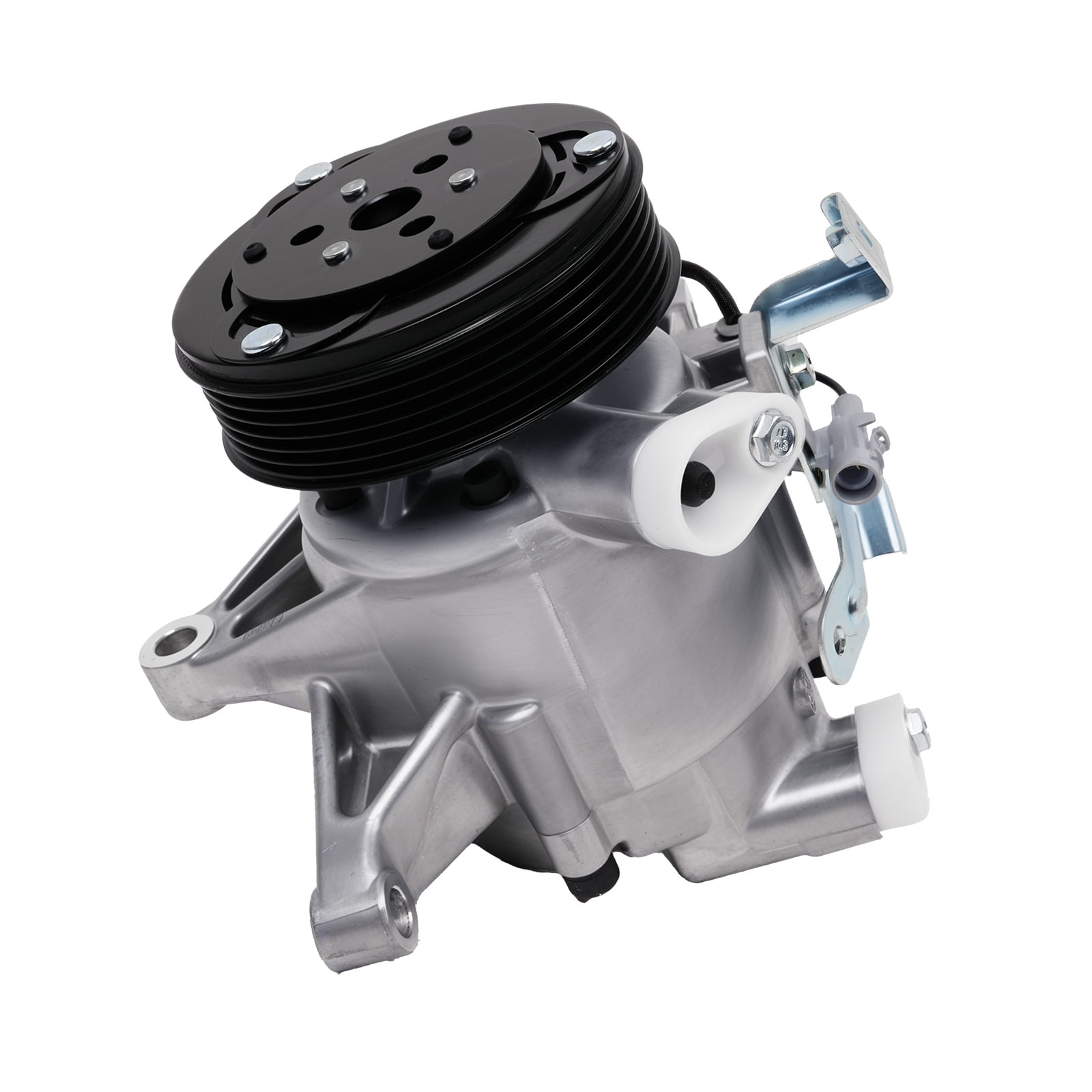
The AC compressor is the "heart" of the system. Drivers often report that their AC works for the first 10 to 15 minutes of a drive but then begins blowing warm air. This is a classic symptom of a failing electromagnetic compressor clutch or a weakened coil.
As the engine bay heats up, the air gap between the clutch plate and the pulley expands. If the magnetic coil is weak, it can no longer pull the plate in to engage the compressor. Some DIY-oriented owners have attempted to "shim" the clutch to close this gap, but this is often a temporary fix for a component that is ultimately nearing the end of its service life.
Evaporator Core Leaks
While less common than condenser leaks, evaporator core failures are significantly more expensive to repair. The evaporator is located deep inside the dashboard. When it leaks, drivers often report a faint, chemical "old sock" or sweet smell inside the cabin when the AC is first turned on. Because replacing this part requires the complete removal of the dashboard, labor costs often exceed the value of the part itself.
What Drivers Are Reporting: Common Symptoms
Recognizing the early warning signs of a failing AC system can prevent a total "black death" scenario—where a compressor explodes internally and sends metal shards throughout the entire system.
- The "Hissing" Sound: Many 2015 Forester drivers report a distinct hissing sound coming from the vents, similar to air escaping a balloon. This usually indicates that the refrigerant levels are low, and the expansion valve is struggling to regulate the pressure of the remaining gas.
- Intermittent Cooling: If the air is cold while driving at highway speeds but turns warm at a red light, it often points to a failing condenser fan or a condenser that is partially blocked or leaking.
- The "Clicking" Cycle: Drivers may hear the AC compressor clicking on and off rapidly (short-cycling). This happens when the system detects low pressure, attempts to start, and immediately shuts down to prevent damage.
- Visible Oil Spills: Refrigerant contains a specialized oil (PAG oil) to lubricate the compressor. Drivers or mechanics may see "wet" or oily spots on the condenser fins or near the compressor hose connections, which is a definitive sign of a leak.
Technical Specifications: Refrigerant and Oil
The 2015 Subaru Forester uses R-134a refrigerant. It is vital to note that while newer Subaru models (post-2017) transitioned to the more environmentally friendly but expensive R-1234yf refrigerant, the 2015 model remains on the older standard.
The total system capacity is approximately 17.6 ounces (0.5 kg). Because the system holds such a small volume of refrigerant, even a loss of 2 or 3 ounces can result in a total loss of cooling performance. This is why the pinhole leaks in the condenser are so impactful; there is very little "buffer" in the system.
Diagnosis: How to Confirm the Issue
If you are experiencing AC issues, the diagnostic process usually follows a specific hierarchy of complexity.
The UV Dye Test
Since most 2015 Forester AC problems stem from leaks, a UV dye test is the gold standard for diagnosis. A technician injects a fluorescent dye into the system along with a fresh charge of refrigerant. After running the AC for a few days, the car is inspected with a UV light. The dye will glow brightly at the site of the leak—usually the bottom corners of the condenser or the compressor shaft seal.
Manifold Gauge Readings
A technician will hook up a set of manifold gauges to the high-side and low-side ports.
- Low High-Side Pressure: Usually indicates a leak or a failing compressor.
- High Low-Side Pressure: Can indicate a failing internal valve within the compressor or a stuck expansion valve.
Static Pressure Check
Before even turning the car on, a technician will check the static pressure. If the gauges read zero, the system has a major breach. If it reads significantly below the ambient temperature's corresponding pressure, a slow leak is the likely culprit.
Repair Costs and Comparison Table (2026 Estimates)
Repairing a Subaru AC system in 2026 involves navigating both rising labor rates and the availability of OEM (Original Equipment Manufacturer) versus aftermarket parts.
| Component | Common Symptom | Estimated Cost (Parts & Labor) | Repair Difficulty |
|---|---|---|---|
| Condenser | Hissing, no cold air | $450 – $750 | Moderate |
| Compressor | Noisy operation, intermittent cold | $900 – $1,600 | Moderate/High |
| Evaporator Core | Chemical smell, slow leak | $1,200 – $2,200 | Very High (Dash removal) |
| Expansion Valve | Frozen lines, fluctuating air temp | $250 – $450 | Moderate |
| O-Rings/Seals | Visible oil at hose joints | $150 – $300 | Easy |
Note: Prices reflect 2026 market averages and can vary significantly by region and whether the work is performed at a dealership or an independent shop.
The Subaru Condenser Warranty (WUA-86) in 2026
For drivers of the 2015 Forester, the WUA-86 warranty extension has been a lifesaver, but it is not a blanket "fix-all." It is important to understand the limitations:
- Scope: It specifically covers the condenser. It does not cover the compressor, evaporator, or hoses unless those parts were damaged as a direct result of a covered condenser failure.
- Condition: The leak must be due to a manufacturing defect. If your condenser is leaking because a rock flew through the grille and punctured it (mechanical damage), the warranty generally will not cover it.
- Timeframe: As we are in 2026, the 10-year window for a 2015 Forester (likely sold in 2014 or 2015) is closing. If your vehicle’s "in-service date" was in early 2015, you may only have months or weeks of coverage remaining.
Troubleshooting: Why Won't My AC Turn On?
If your AC won't engage at all, follow these steps before heading to the mechanic:
- Check the Cabin Air Filter: A severely clogged filter can restrict airflow so much that the evaporator freezes, causing the system to shut down. 2015 Foresters are notorious for collecting debris in the filter housing.
- Inspect the Compressor Fuse: Locate the fuse box in the engine compartment. Check the "A/C MAG" fuse. If it’s blown, the compressor clutch cannot engage.
- Observe the Clutch: With the engine running and the AC set to "Max," look at the front of the compressor. The inner plate should be spinning with the pulley. If the pulley is spinning but the plate is stationary, you have an electrical or pressure issue.
- Verify Fan Operation: Both radiator fans should turn on when the AC is engaged. If they don't, the condenser cannot shed heat, and the system will over-pressurize and shut down.
Recommended Next Actions
If you are currently facing AC problems in your 2015 Subaru Forester, the first step is to verify your VIN with a Subaru dealership to check for any outstanding recalls or warranty extensions. Even if you are just outside the 10-year window, some dealerships may offer "goodwill" assistance if the vehicle has a documented history of dealer service.
If you are paying out of pocket, consider an independent Japanese-auto specialist. They are often more willing to replace just the compressor clutch rather than the entire compressor unit, which can save you several hundred dollars.
Finally, never use "leak-stop" cans found at auto parts stores. These products contain sealants that can clog the expansion valve and ruin the professional recovery equipment used by mechanics, often turning a $500 repair into a $2,000 disaster.
Frequently Asked Questions
Is there a recall for the 2015 Subaru Forester AC?
There is no safety recall, but there is a Warranty Extension (WUA-86). Recalls are typically reserved for safety-related issues (like airbags or brakes), whereas AC failures are considered "comfort" issues. However, the warranty extension serves a similar purpose by covering the cost of condenser replacements for up to 10 years.
Why is the 2015 Forester AC repair so expensive?
The cost is driven primarily by labor and the complexity of the Boxer engine layout. While the condenser is accessible, the evaporator requires a full dashboard teardown. Furthermore, the 2015 model's compressor is a high-duty cycle component that often fails internally, requiring a full system flush to ensure no debris remains.
Can I recharge the AC myself?
You can technically buy an R-134a recharge kit, but it is not recommended for this vehicle. Because the system capacity is so small (17.6 oz), it is very easy to overcharge it. Overcharging can blow out seals or "slug" the compressor (attempting to compress liquid refrigerant), which causes instant mechanical failure.
How do I know if my condenser leak is covered by Subaru?
The leak must occur at the points specified in TSB 10-92-18R, which are generally related to the manufacturing of the cooling fins and tubes. A dealership must perform a diagnostic test to confirm the leak is a defect and not caused by external road debris or an accident.
Does the 2015 Forester AC use the new R-1234yf refrigerant?
No, the 2015 Forester uses R-134a. This is a benefit for owners because R-134a is significantly cheaper and more widely available than the newer refrigerant used in 2017 and later Subaru models.