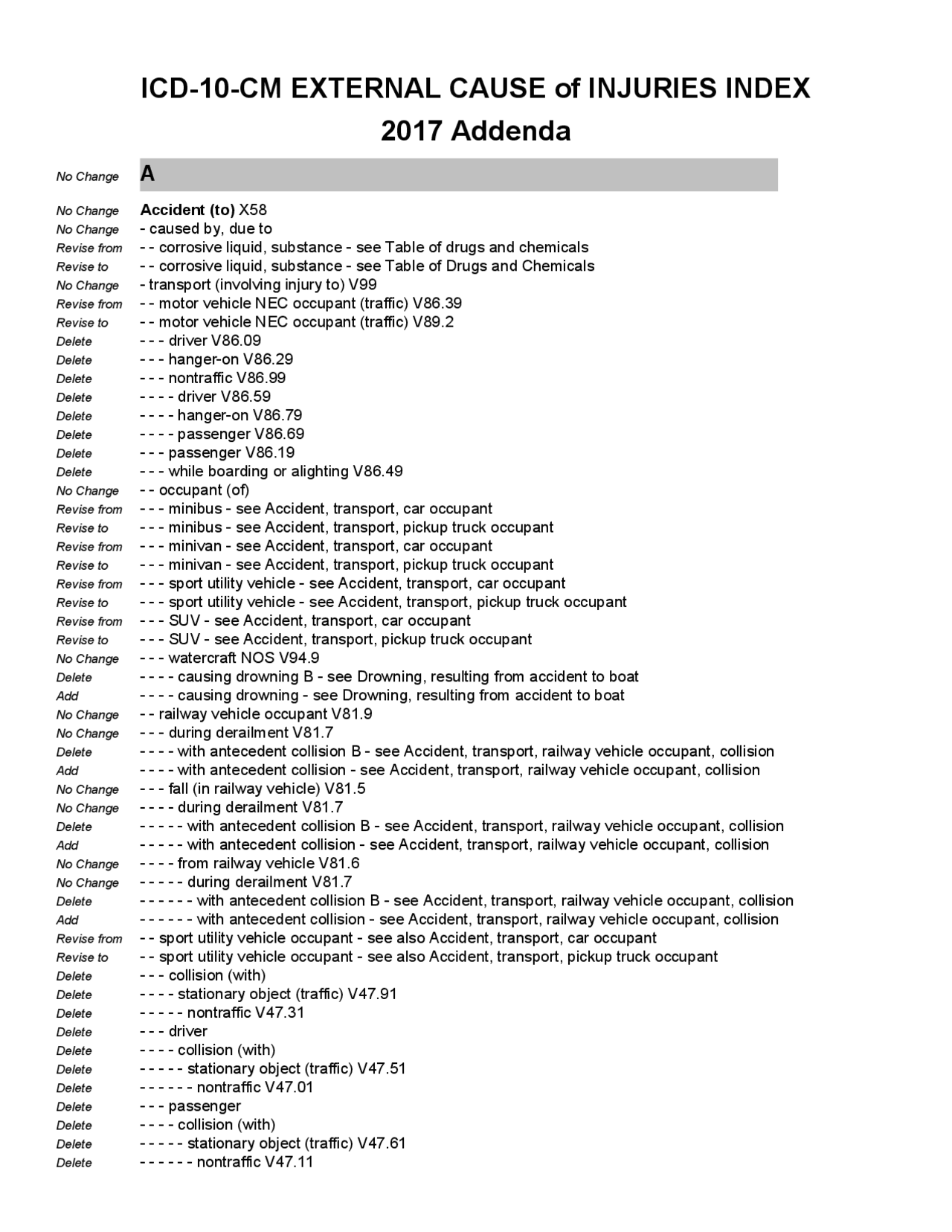
ICD-10 external cause codes (V00–Y99) are secondary diagnosis codes used to document the circumstances surrounding an injury, poisoning, or adverse effect. They identify the mechanism of injury, the intent, the location where the event occurred, and the activity the patient was performing, providing essential data for public health and insurance subrogation.
The Purpose and Utility of External Cause Coding
External cause codes, found in Chapter 20 of the ICD-10-CM (Clinical Modification) manual, serve a function distinct from traditional diagnosis codes. While a standard diagnosis code (such as an S-code for a fractured femur) describes the nature of the injury, the external cause code explains the "how" and "where" of the incident. As of 2026, these codes remain a critical component of medical documentation, though they are never used as principal or primary diagnoses.
The utility of these codes extends beyond the clinical setting. Public health agencies, such as the Centers for Disease Control and Prevention (CDC), use this data to track injury trends, such as increases in falls among the elderly or the prevalence of specific types of motor vehicle accidents. By analyzing these trends, policymakers can implement targeted safety interventions. For healthcare providers and facilities, accurate external cause coding is often a prerequisite for reimbursement, particularly when insurance companies need to determine if a third party—such as an auto insurer or workers' compensation program—is liable for the medical expenses.
Furthermore, these codes facilitate research into injury prevention. For instance, if a specific model of consumer product is frequently linked to a specific external cause code, regulatory bodies can use that aggregated data to initiate recalls or safety mandates. In the clinical environment, knowing the mechanism of injury—such as a high-velocity impact versus a low-level fall—helps clinicians anticipate potential complications that may not be immediately apparent on physical examination.
The Structural Hierarchy of Chapter 20
The ICD-10-CM external cause chapter is organized into several blocks that categorize the intent and the nature of the event. Understanding this hierarchy is essential for selecting the most specific code possible.
Transport Accidents (V00–V99)
This is the largest block and is subdivided based on the patient’s mode of transport and the counterpart involved in the accident. The codes distinguish between pedestrians, pedal cyclists, motorcyclists, and occupants of cars or heavy vehicles. They also specify the type of event, such as a collision with another vehicle, a non-collision accident (like a rollover), or an accident while boarding or alighting.
Other External Causes of Accidental Injury (W00–X58)
This section covers a vast array of accidental mechanisms. It includes:
- Falls (W00–W19): Distinguishing between falls on the same level, falls from one level to another (e.g., from a ladder or stairs), and falls from furniture.
- Exposure to Inanimate Mechanical Forces (W20–W49): Includes being struck by thrown objects, contact with power tools, or being caught in machinery.
- Exposure to Animate Mechanical Forces (W50–W64): Covers bites or strikes from animals (dogs, cats, insects) and accidental hits by other persons.
- Accidental Drowning and Submersion (W65–W74): Categorized by the body of water, such as a bathtub, swimming pool, or natural water.
- Exposure to Electric Current, Radiation, and Extreme Temperatures (W85–W99).
Intentional Self-Harm, Assault, and Event of Undetermined Intent (X71–Y33)
These codes are used when the injury is not accidental. Accurate documentation of intent is vital for legal and psychological follow-up.
- X71–X83: Intentional self-harm (suicide attempts).
- X92–Y09: Assault (homicidal intent or physical violence by another person).
- Y21–Y33: Events of undetermined intent, used when the documentation does not clearly state whether the injury was accidental or intentional.
The Role of the Seventh Character
One of the most technically demanding aspects of ICD-10-CM injury and external cause coding is the application of the seventh character. For most codes in Chapter 20, a seventh character must be assigned to indicate the phase of care.
- A – Initial Encounter: This character is used while the patient is receiving active treatment for the injury. This includes emergency department visits, surgical evaluation, and initial evaluation by a new specialist. Even if the patient has seen other providers, the encounter is "initial" as long as active treatment for the acute injury is ongoing.
- D – Subsequent Encounter: This is used for encounters after the patient has received active treatment and is now receiving routine care during the healing or recovery phase. Examples include cast changes, medication adjustments, or follow-up visits after a completed surgery.
- S – Sequela: This character is used for complications or conditions that arise as a direct result of an injury (e.g., a scar resulting from a burn). When using the "S" extension, the coder must report both the code for the current problem (the sequela) and the original injury code with the "S" character to show the cause-and-effect relationship.
Failure to include the seventh character where required results in an invalid code, which typically leads to immediate claim denial by payers.
Supplemental Codes: Place, Activity, and Status
To provide a complete picture of an injury event, coders often need to append three specific types of supplemental codes. These provide the context necessary for comprehensive data collection.
Place of Occurrence (Y92)
The Y92 category identifies where the injury happened. These codes are only reported on the initial encounter for treatment. They range from highly specific (e.g., Y92.011, the dining room of a single-family house) to broader locations (e.g., Y92.310, a basketball court). If the location is unknown or not documented, this code is omitted rather than guessed.
Activity (Y93)
Activity codes describe what the patient was doing when they were injured. This is distinct from their "status." For example, if a patient was injured while running, code Y93.01 (Walking, marching, and running) would be used. These codes are not used for injuries resulting from medical or surgical care. Like place of occurrence codes, activity codes are generally only used during the initial encounter.
External Cause Status (Y99)
The Y99 code indicates the relationship of the patient to the activity. It identifies whether the event was:
- Y99.0: A civilian activity done for income (employment).
- Y99.1: A military activity.
- Y99.2: A volunteer activity.
- Y99.8: Other external cause status (such as a hobby or leisure activity).
| Category | Code Range | Primary Focus | Mandatory? |
|---|---|---|---|
| Transport Accidents | V00–V99 | Vehicles, pedestrians, aircraft, watercraft. | Generally required by most states/payers. |
| Falls | W00–W19 | Mechanism of fall (ice, stairs, same level). | Crucial for elderly care and risk tracking. |
| Exposure/Forces | W20–W64 | Objects, animals, and machinery. | Essential for workers' comp claims. |
| Poisoning/Toxins | X40–X49 | Accidental drug overdose or chemical exposure. | High priority for public health tracking. |
| Place of Occurrence | Y92 | Location (home, street, work, farm). | Required on initial encounters. |
| Activity Codes | Y93 | What the person was doing (sports, chores). | Used to identify high-risk behaviors. |
Sequencing Rules and Guidelines
Proper sequencing is the hallmark of professional coding. In the context of injuries, the primary diagnosis code—the code describing the injury itself—must always be listed first. The external cause codes follow as secondary or tertiary codes.
If a patient presents with multiple injuries, the external cause code should follow the code for the most severe injury. However, there are specific "hierarchy of intent" rules. If an injury is caused by multiple external factors, the codes should be sequenced according to the following priority:
- Child or adult abuse.
- Terrorism events.
- Cataclysmic events (e.g., hurricanes, earthquakes).
- Transport accidents.
For example, if a patient is injured in a transport accident caused by a hurricane, the hurricane (cataclysmic event) code takes precedence over the transport accident code. This hierarchy ensures that the most significant underlying cause of a mass-casualty or high-impact event is captured primarily for statistical purposes.
Common Mistakes in External Cause Coding
Even experienced coders encounter pitfalls when navigating Chapter 20. Avoiding these common errors is essential for maintaining a clean billing cycle and accurate medical records.
- Using External Cause Codes as Primary: This is the most frequent error. These codes exist only to provide context and never represent the "reason for the encounter" in a diagnostic sense.
- Omitting the Seventh Character: Many coders forget that the V-Y codes require the A, D, or S extension just like the S and T injury codes.
- Confusing Activity with Status: A patient may be "active" (Y93) while at "work" (Y99.0). Both codes are often needed, but they are not interchangeable.
- Over-Coding Subsequent Encounters: While the injury code (e.g., S82.x) must carry the "D" character for subsequent visits, some facility guidelines suggest that the Y92 (place) and Y93 (activity) codes should only be used once—during the initial encounter. Repeatedly coding the "place" of a three-month-old injury on every follow-up visit can clutter the data.
- Vague Documentation: If the provider simply writes "fell," the coder cannot accurately assign a code beyond W19.9 (Unspecified fall). For maximum utility, documentation should specify if it was a fall from a height, a trip over an object, or a collapse due to a medical condition (the latter of which may not even be an external cause).
Mandatory vs. Voluntary Reporting in 2026
The requirement to report external cause codes varies by jurisdiction and payer. While the federal government (CMS) does not mandate external cause codes for all claims under the Health Insurance Portability and Accountability Act (HIPAA), many state legislatures have passed mandates requiring them for all injury-related hospital discharges.
In 2026, most major commercial payers and workers' compensation boards require these codes. They use them to trigger "subrogation" processes. If a code indicates a motor vehicle accident (V-code), the health insurer will automatically pause the claim to ask the patient if there is an auto insurance policy that should pay first. Providing these codes accurately on the initial claim can actually speed up the adjudication process by preventing unnecessary information requests later.
FAQs
Can an external cause code be used if the injury was not accidental?
Yes. Chapter 20 includes specific sections for intentional self-harm (X71–X83) and assault (X92–Y09). These codes are vital for identifying patterns of violence or mental health crises that require intervention beyond physical wound care.
How many external cause codes can be used on a single claim?
There is no hard limit on the number of external cause codes, provided they are relevant and supported by documentation. A typical comprehensive claim might include one code for the mechanism (e.g., a fall), one for the place (e.g., a construction site), one for the activity (e.g., climbing), and one for the status (e.g., at work).
What is the difference between an external cause code and a "Z-code"?
Z-codes (Factors influencing health status) are used for reasons other than injury or illness, such as screenings, vaccinations, or history of a disease. External cause codes (V-Y codes) are specifically for the circumstances of an injury or poisoning. They are fundamentally different categories of supplemental information.
Is the Y92 Place of Occurrence code required for every visit?
No. According to the ICD-10-CM Official Guidelines for Coding and Reporting, the place of occurrence code (Y92) is generally only reported on the initial encounter for treatment. Subsequent encounters for the same injury do not require the place of occurrence code to be repeated.
If a patient has an adverse reaction to a correctly prescribed drug, is that an external cause?
Yes. Adverse effects of drugs properly administered are coded using the T36–T50 range, but the external cause is captured using codes from the Y40–Y59 range. This distinguishes a "medical mishap" or side effect from an accidental poisoning or intentional overdose.
Final Recommendation for Medical Coders and Providers
To ensure compliance and maximize data accuracy in 2026, healthcare providers must prioritize detailed documentation of the "circumstances of injury" during the initial patient intake. Specifically, clinicians should note the mechanism (how it happened), the location (where it happened), and the intent (accidental vs. intentional). For coding professionals, the rigorous application of the seventh character (A, D, or S) is the most critical technical step to prevent claim denials. Regularly auditing injury claims to ensure that place (Y92) and status (Y99) codes are included on initial encounters will significantly improve the quality of clinical data and the efficiency of the revenue cycle.