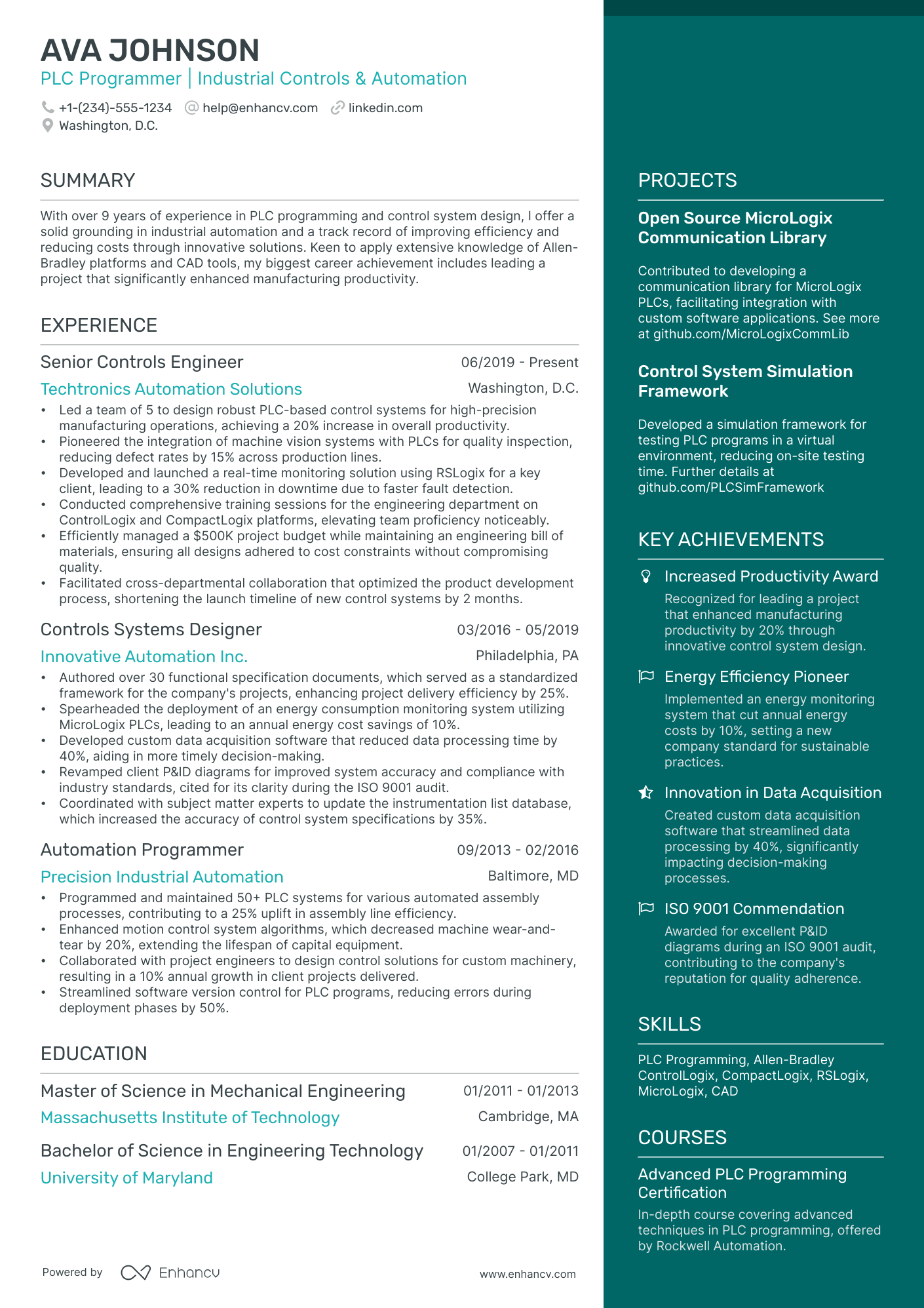
A programmer bio serves as your primary professional identity, acting as a bridge between your technical expertise and the people who need it. Whether you are aiming for a senior engineering role, consulting opportunities, or open-source contribution, an effective bio balances hard technical skills with clear communication, demonstrating not just what you code, but how you solve complex problems and collaborate within diverse technical ecosystems.
Defining the Purpose of Your Programmer Bio
A professional bio for a software developer is not simply a list of languages and frameworks. It is a marketing tool designed to establish credibility, set professional expectations, and facilitate networking. In 2026, the software industry is increasingly focused on the intersection of specialized domain knowledge and technical execution. Your bio must quickly answer three questions for a potential lead, recruiter, or collaborator: What technologies do you master? What business or technical problems do you solve? And, what value do you bring to a team?
Most programmers struggle to differentiate between a CV and a biography. A CV is a comprehensive inventory of your past, while a bio is an intentional narrative of your present and future direction. By identifying your specific niche—whether it is embedded systems, cloud-native architecture, or frontend interface design—you can tailor your language to attract the right audience.
Analyzing Your Target Audience and Platform
Before you begin writing, you must determine where this bio will live. A bio written for a corporate company's "Team" page requires a different tone and level of technical detail than one written for a personal portfolio site or a GitHub profile.
Platform-Specific Considerations
- Corporate Web Pages: Focus on your role within the organization, your team’s mission, and your capacity to handle high-level architectural challenges. Use formal, concise language.
- Personal Portfolio/Blog: This is where you can inject personality. Focus on your design philosophy, the types of projects you find intellectually stimulating, and your specific technical interests.
- GitHub/Open-Source Profiles: Emphasize your contributions, the ecosystems you support, and your willingness to collaborate. Technical precision is paramount here.
- Social Media/Professional Networks: Maintain a high-level summary that highlights current tech stacks and recent accomplishments to stay relevant in algorithmic searches.
Essential Components of a Strong Bio
To maximize impact, every bio should contain a consistent set of elements, regardless of the platform. These elements ensure that the reader understands your trajectory and your capability.
- The Hook (Headline): A one-sentence summary of your current professional focus.
- The Technical Stack: A concise overview of your primary languages, tools, and platforms.
- The Value Proposition: What impact have your contributions had? Think in terms of scale, performance, or team efficiency.
- The Human Element: A brief mention of professional interests, mentorship roles, or specific industry passions that humanize your technical expertise.
- The Call to Action (CTA): A subtle way for readers to contact you or view your work, such as a link to your portfolio or public repositories.
Structure and Tone: Achieving Technical Depth
The primary mistake developers make is over-complicating the technical jargon to the point of obfuscation. While you want to prove your expertise, you also need to ensure that the content remains accessible to non-technical stakeholders who may be involved in the hiring or contracting process.
Balancing Jargon and Clarity
Use industry-standard acronyms for primary technologies (e.g., AWS, React, Kubernetes) but avoid "alphabet soup"—listing every minor library or tool you have touched in the last decade. Instead, categorize your skills into thematic areas. For instance, instead of listing "Nginx, Apache, Traefik," you might say "Experienced in deploying and managing high-availability web servers and reverse proxies."
This approach demonstrates that you understand the underlying architectural principles rather than just the implementation details of specific tools. It positions you as an engineer who solves problems, not just a technician who installs software.
Table: Comparison of Bio Styles by Context
| Feature | Corporate / Team Page | Personal Portfolio | GitHub / Technical README |
|---|---|---|---|
| Primary Goal | Credibility & Alignment | Brand Differentiation | Collaboration & Utility |
| Tone | Formal & Professional | Creative & Personal | Direct & Technical |
| Jargon Usage | Industry-Standard | Balanced/Accessible | Deep & Specific |
| Key Metrics | Project outcomes/Scale | Innovation/Personal Projects | Contribution stats/Issues solved |
| Call to Action | LinkedIn Profile/Email | Contact Form/Portfolio | Link to Projects/Issues |
Avoiding Common Pitfalls
Many programmers fall into the trap of using buzzword-heavy language that fails to provide concrete meaning. Words like "Expert," "Guru," or "Ninja" are often viewed as red flags by experienced recruiters and senior engineers. These terms are subjective and impossible to quantify.
Instead, use verb-led descriptions of your work. Instead of saying "I am a Java expert," say "I have architected high-throughput microservices using Java and Spring Boot, optimizing system latency by 20%." This provides tangible evidence of your competence. Furthermore, avoid stating that you "know" a language; focus on what you have built with it. Knowledge is static; application is demonstrable.
Formatting and Visual Presentation
When presenting your bio on a website or digital document, structure matters as much as the text itself. In 2026, readability remains king. Use white space effectively, break long paragraphs into manageable chunks, and leverage bullet points for lists of technologies.
If you are including a profile photo, ensure it is high-resolution, professionally lit, and maintains a clean, modern aesthetic. In the tech industry, a photo that reflects your professional environment is generally preferred over overly formal business attire or low-quality snapshots.
The Evolution of Your Bio
A programmer bio is a living document. As you move from junior to senior roles, or as you pivot from one industry to another—such as moving from web development to machine learning engineering—your bio should reflect those changes. Review your bio every six months. Ask yourself if it still accurately represents the technology stack you use today and the problems you are interested in solving tomorrow. If your bio reflects a stack you haven't touched in two years, you are actively misrepresenting your current professional utility.
Drafting Your Bio: A Step-by-Step Approach
To begin crafting your bio, follow these steps to ensure you cover all necessary ground without succumbing to bloat:
- Drafting Phase: Write a stream-of-consciousness paragraph detailing your last three major projects. Focus on the "Why" (problem) and the "How" (technology).
- Synthesis Phase: Extract the common technical themes from your projects. These are your core competencies.
- Editing Phase: Condense your draft into the required length for your platform. Remove adjectives that don't add specific value.
- Verification Phase: Have a peer review your bio. Does it accurately reflect your personality and your technical prowess?
- Refinement Phase: Ensure the Call to Action is clear. If you want people to hire you for consulting, make the contact method unmistakable.
Related Questions and Expert Guidance
How long should a programmer bio be?
A bio should be long enough to be informative but short enough to be read in under 60 seconds. For a professional LinkedIn "About" section, 200–300 words is standard. For a website footer or small "Team" blurb, 50–100 words is optimal.
Should I mention soft skills?
Yes, but do not list them in a vacuum. Instead of saying "I am a good communicator," mention that you "lead cross-functional code reviews and mentor junior developers." Contextualize soft skills as professional assets.
Is it okay to list my personal interests?
Listing personal interests is highly platform-dependent. It works well on a personal portfolio to build rapport but is generally unnecessary for a corporate or GitHub profile unless those interests inform your coding (e.g., "I build data visualizations for ecological research").
How do I handle career gaps or pivots?
Focus on the transition. If you spent time learning a new language or contributing to open source during a gap, highlight that acquisition of skill. Frame the gap as a period of active development or intentional focus.
Should I mention my academic background?
Include your education if you are early in your career or if your degree is highly relevant to your specialization (e.g., a CS degree for low-level systems programming). For experienced developers, your project history almost always outweighs your formal education.
Final Action Recommendation
The most effective next step is to perform an audit of your current online presence. Choose your primary platform—typically your portfolio or your main professional social network—and rewrite your bio today using the "Why and How" framework described above. Ensure that at least one, and no more than two, calls to action are present. Once finished, verify that all links mentioned (such as your GitHub or portfolio URL) are active and correctly point to your latest work. A well-maintained bio is not just a summary of your past; it is a catalyst for your future career opportunities.