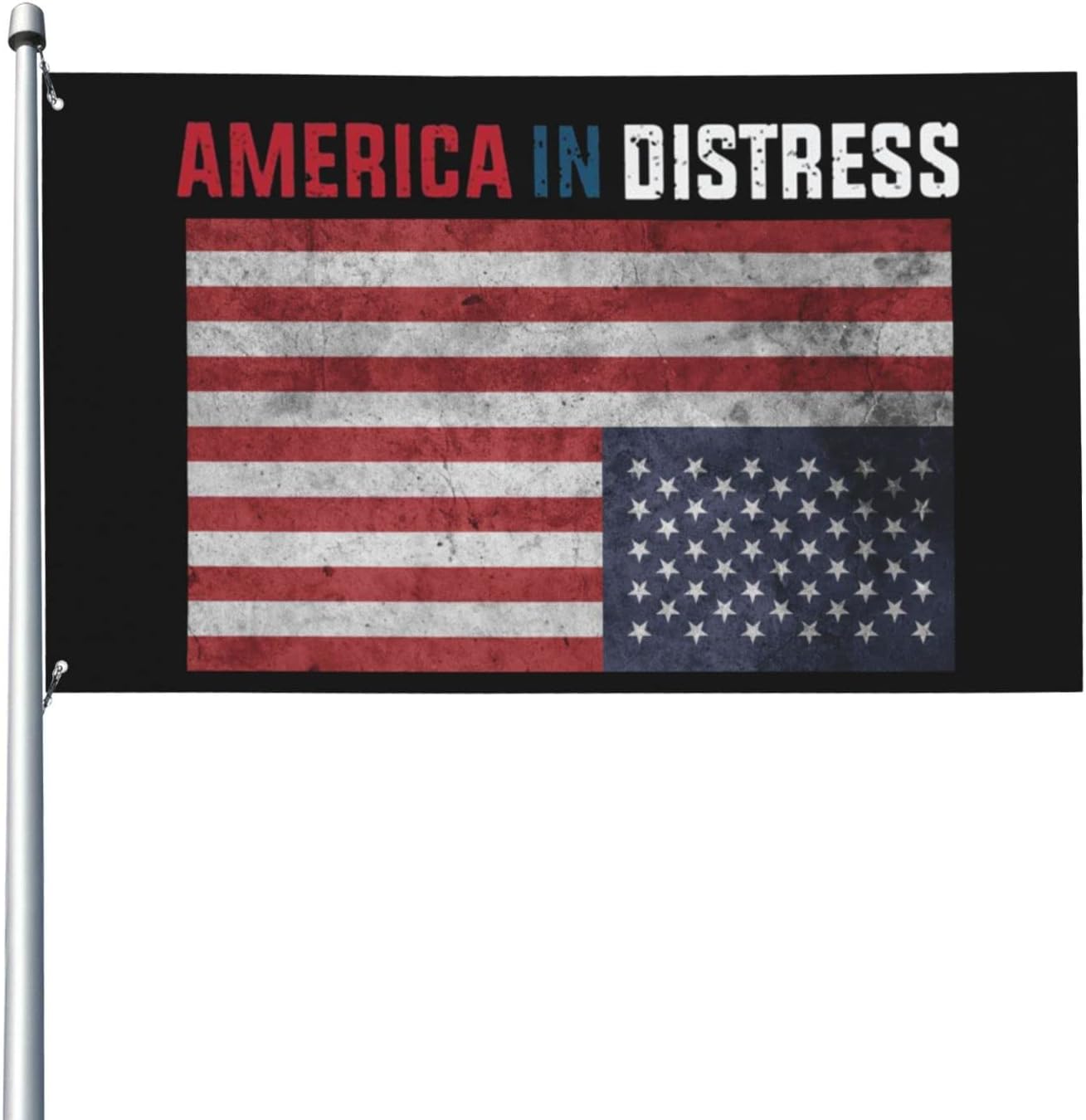
Flying the American flag in distress, traditionally signaled by hoisting it upside down, is an official communication reserved for instances of "dire distress in instances of extreme danger to life or property." While rooted in maritime and military history, the practice is governed by the United States Flag Code and protected by First Amendment rights.
The American flag is perhaps the most recognizable symbol of the United States, representing national sovereignty, history, and the collective values of its citizens. However, the manner in which the flag is displayed can change its meaning entirely. One of the most misunderstood and controversial methods of display is the "distress" signal. In recent years, leading up to 2026, the sight of an upside-down flag has moved from the decks of ships and military outposts into the front yards of suburban homes and the forefront of political rallies. To understand the complexities of the American flag in distress, one must look beyond the visual aesthetic and examine the legal statutes, historical precedents, and the evolving cultural landscape of American symbolism.
The Official Definition of Flag Distress
The primary authority on the proper display and use of the flag is the United States Flag Code, specifically Title 4, Chapter 1 of the U.S. Code. Section 8, titled "Respect for flag," provides the definitive instruction regarding the distress signal. Paragraph (a) states: "The flag should never be displayed with the union down, except as a signal of dire distress in instances of extreme danger to life or property."
Breaking Down the "Union Down" Position
In flag terminology, the "union" refers to the blue field containing the fifty stars. Under normal circumstances, the union is always positioned at the top left (the observer's left) when the flag is displayed horizontally or vertically against a wall. When flown from a staff, the union is at the peak.
To "distress" the flag, it is inverted so that the stars are at the bottom. This is a deliberate act that, within the context of the Flag Code, serves as a non-verbal SOS. The terminology used in the code—"dire distress" and "extreme danger"—is specific. It does not refer to personal dissatisfaction, economic hardship, or political disagreement. Historically, it was a literal call for immediate physical intervention.
The Scope of the U.S. Flag Code
It is important to understand that the U.S. Flag Code is a set of federal guidelines rather than a strictly enforceable criminal statute for civilians. While it uses the word "should" and "shall," the Supreme Court has ruled that the government cannot impose criminal penalties for "disrespectful" use of the flag by private citizens. However, for federal agencies, the military, and government installations, these rules are mandatory and strictly followed to maintain national decorum.
Historical Origins of the Upside-Down Flag
The practice of inverting a national ensign to signal distress did not originate with the United States. It is a long-standing maritime tradition used by sailors across the globe. Before the advent of modern radio communications, satellite phones, and GPS-enabled emergency beacons, visual signals were the only way for a ship in trouble to communicate with other vessels or coastal lookouts.
Maritime and Military Communication
In the age of sail, a ship that was taking on water, facing a mutiny, or suffering from a deadly outbreak of disease would invert its flag. Because the design of many national flags was asymmetrical, an upside-down flag was a jarring sight that could be easily spotted through a telescope from miles away.
For the United States, this tradition was adopted by the Navy and subsequently the Army. In a military context, inverting the flag over a fort or camp signaled that the position was about to be overrun or that the garrison was in desperate need of reinforcements. The "Union Down" signal was a high-priority communication that required an immediate response from any friendly unit that witnessed it.
Evolution into the 20th and 21st Centuries
As technology improved, the practical necessity of the upside-down flag for physical rescue diminished. However, the symbol remained in the collective consciousness. It began to transition from a literal "save our ship" signal to a metaphorical statement. During the Vietnam War era, some activists began using the inverted flag to symbolize what they perceived as a nation in a state of moral and political distress. This marked the beginning of the shift from a tactical signal to a tool of civil expression.
The Distinction Between Official Distress and Political Protest
In the current era of 2026, the most common reason a civilian flies an American flag in distress is not because their house is on fire or they are being held hostage. Instead, it is used as a form of political protest. This usage has created significant friction between traditionalists, veterans' groups, and political activists.
Symbolic Speech and the First Amendment
The legal right to fly the flag upside down as a protest is anchored in two landmark Supreme Court cases:
- Texas v. Johnson (1989): The Court ruled that burning the American flag is a form of "symbolic speech" protected by the First Amendment.
- United States v. Eichman (1990): The Court struck down the Flag Protection Act of 1989, reaffirming that the government cannot prohibit the expression of an idea simply because society finds the idea itself offensive or disagreeable.
Because flag burning—a more "extreme" form of desecration—is protected, the act of inverting the flag is also legally protected. When an individual flies the flag upside down to signal that they believe the country is headed in the wrong direction or that the government is failing its citizens, they are exercising their constitutional right to free speech, even if they are technically violating the etiquette of the U.S. Flag Code.
The Controversy of Misuse
Veterans and organizations like the American Legion and the Veterans of Foreign Wars (VFW) often take a firm stance against using the distress signal for political purposes. The argument is that by using the "Union Down" signal for non-emergency situations, the "cry for help" is diluted. If the signal becomes a common sight at political rallies, it loses its ability to function as a legitimate emergency communication. Furthermore, many see the inversion of the flag as an act of disrespect toward those who served under it.
How to Identify and Respond to a Flag in Distress
If you encounter an American flag being flown upside down, your response should depend on the context and the location. In 2026, where the symbol is frequently used in social media and public demonstrations, discernment is necessary.
Determining the Intent
- Residential Display: If a neighbor is flying an upside-down flag, it is most likely a political statement. However, if there are other signs of trouble—such as smoke, signs of a break-in, or if the resident is elderly or ill—it may be a genuine cry for help.
- Maritime Context: On the water, an upside-down flag should always be treated as a legitimate emergency. If you see a vessel with its ensign inverted, you should attempt to contact them via VHF radio (Channel 16) or notify the Coast Guard immediately.
- Official Buildings: It is extremely rare for a government building or military base to fly the flag upside down by accident. If this occurs, it is either a grave emergency or a significant error by the color guard.
Appropriate Actions
If you believe the flag is being used for a legitimate emergency, call 911 or local emergency services. If it is clear that the flag is being used as a protest, the most appropriate action for a concerned citizen who disagrees with the display is to engage in civil dialogue or simply ignore the display. Attempting to forcibly "correct" a neighbor's flag or removing it from their property can result in criminal charges for trespassing or theft.
Comparing Proper Flag Etiquette vs. Prohibited Actions
The U.S. Flag Code covers much more than just the distress signal. To understand the gravity of inverting the flag, it is helpful to compare it to other rules regarding flag respect.
| Feature/Action | Proper Etiquette (U.S. Flag Code) | Common Violations/Prohibitions |
|---|---|---|
| Position of the Union | Always at the top/peak (except in distress). | Flown at the bottom without an emergency. |
| Illumination | Must be illuminated if flown at night. | Left in total darkness after sunset. |
| Weather Conditions | Should not be displayed in inclement weather (unless it is an all-weather flag). | Left out in heavy storms or high winds. |
| Modification | No marks, insignia, or drawings should be added. | Adding political logos, text, or changing colors. |
| Disposal | Should be destroyed in a dignified way, preferably by burning. | Thrown in the trash or left to rot. |
| Contact with Ground | Should never touch anything beneath it (ground, floor, water). | Used as a floor covering or dragging on the ground. |
| Apparel/Usage | Should not be used as clothing, bedding, or drapery. | Printed on napkins, paper plates, or athletic uniforms. |
Common Misconceptions
There are several myths surrounding the American flag and the distress signal that persist in 2026.
Myth 1: Flying the Flag Upside Down is Illegal
As established by the Supreme Court, it is not a crime for a civilian to fly the flag upside down. While it violates the federal guidelines of the Flag Code, there are no penalties, fines, or jail time associated with the act for private citizens.
Myth 2: The Flag Must Always Be Burned if it Touches the Ground
The Flag Code states that the flag should not touch the ground, but it does not mandate immediate destruction if it happens accidentally. If a flag touches the ground, it should be cleaned—by hand or dry cleaning—and returned to its display. It only needs to be "retired" (burned) when it is no longer a fitting emblem for display due to wear, tear, or staining.
Myth 3: Only the Military Can Use the Distress Signal
While the military has specific protocols for it, any American citizen or vessel can use the "Union Down" signal if they are in a life-threatening situation and have no other means of calling for help.
Psychological and Societal Impact
The power of the American flag in distress lies in its ability to provoke a visceral reaction. For many, the sight of an inverted flag feels like an attack on their identity. This is because the flag is a "condensation symbol"—a single image that packs a multitude of meanings, emotions, and historical weight.
When the flag is inverted, it signals that the "natural order" has been flipped. For a protester, this is the point: they feel the nation’s values have been inverted. For the observer, it often feels like a betrayal of the unity the flag is supposed to represent. This tension is why the distress signal remains one of the most potent forms of visual communication in American life.
Troubleshooting Flag Display Issues
Sometimes, a flag may appear to be in distress when it is actually just poorly displayed. If you are responsible for a flag display, ensure you are avoiding these common technical errors:
- Grommet Misalignment: If you are using a flag with grommets on a vertical pole, ensure the top grommet is securely fastened to the halyard first. If the flag is accidentally clipped at the bottom first, it may flip during hoisting.
- Sleeve Flags: For flags that slide onto a pole via a sleeve, ensure the union is at the end of the sleeve that will be at the top of the pole.
- Twisting: In high winds, a flag can wrap around the pole or its own halyard. Using "no-tangle" rings or a rotating pole can prevent the flag from bunching up and appearing improperly oriented.
Final Recommendation
If you are considering flying the American flag in distress, it is vital to weigh the intent against the potential for misunderstanding. If you are in a genuine life-threatening emergency, the "Union Down" signal is a valid, though rarely used, tool for seeking help. However, if your intent is political expression, be aware that while your right to do so is legally protected, the act is widely viewed as a violation of sacred etiquette. For those who wish to show concern for the nation without inverting the flag, alternative methods—such as flying the flag at half-staff (only when directed by a governor or the President) or using traditional protest signs—may communicate the message more clearly without the stigma of desecration.
FAQs
Can I be arrested for flying an upside-down American flag on my private property?
No, you cannot be arrested for this. Under the First Amendment, flying the flag upside down is considered protected symbolic speech. While it violates the U.S. Flag Code (Title 4, Section 8), the Code is a set of guidelines and does not carry criminal penalties for private citizens. Police cannot force you to take it down unless it poses a physical safety hazard (e.g., blocking traffic views).
Does flying the flag upside down actually bring help in an emergency?
In modern times, it is an unreliable way to summon emergency services. Most people today associate an upside-down flag with political protest rather than a physical emergency. If you are in danger, you should use a phone to call 911, use a flare, or use a specialized emergency beacon (like an EPIRB on a boat). The flag signal should only be a last resort when all other communications have failed.
What should I do if I see a neighbor's flag is upside down by accident?
If you believe it was an accident—perhaps the flag is tangled or the neighbor is not home—the best approach is a polite, private conversation. You might say, "I noticed your flag slipped and is hanging upside down; I wanted to let you know in case you wanted to fix it." Most people appreciate the heads-up to avoid unintentional controversy.
Is it okay to fly the flag upside down if I disagree with a Supreme Court ruling?
Legally, yes, you have the right to do so. Ethically and according to the Flag Code, no. The Flag Code specifies that the distress signal is for "extreme danger to life or property," not for expressing disagreement with government policy or judicial decisions. Many believe that using it for political reasons undermines the signal's importance for actual emergencies.
How do I properly retire a flag that has been flown in distress?
The "distress" position does not damage the flag or make it "unclean." If you wish to stop displaying it in distress, simply flip it back to its proper orientation. If the flag is worn out or tattered from being flown, the proper way to retire it is by burning it in a dignified ceremony. Many local VFW or American Legion posts have collection boxes for flags that need to be retired.