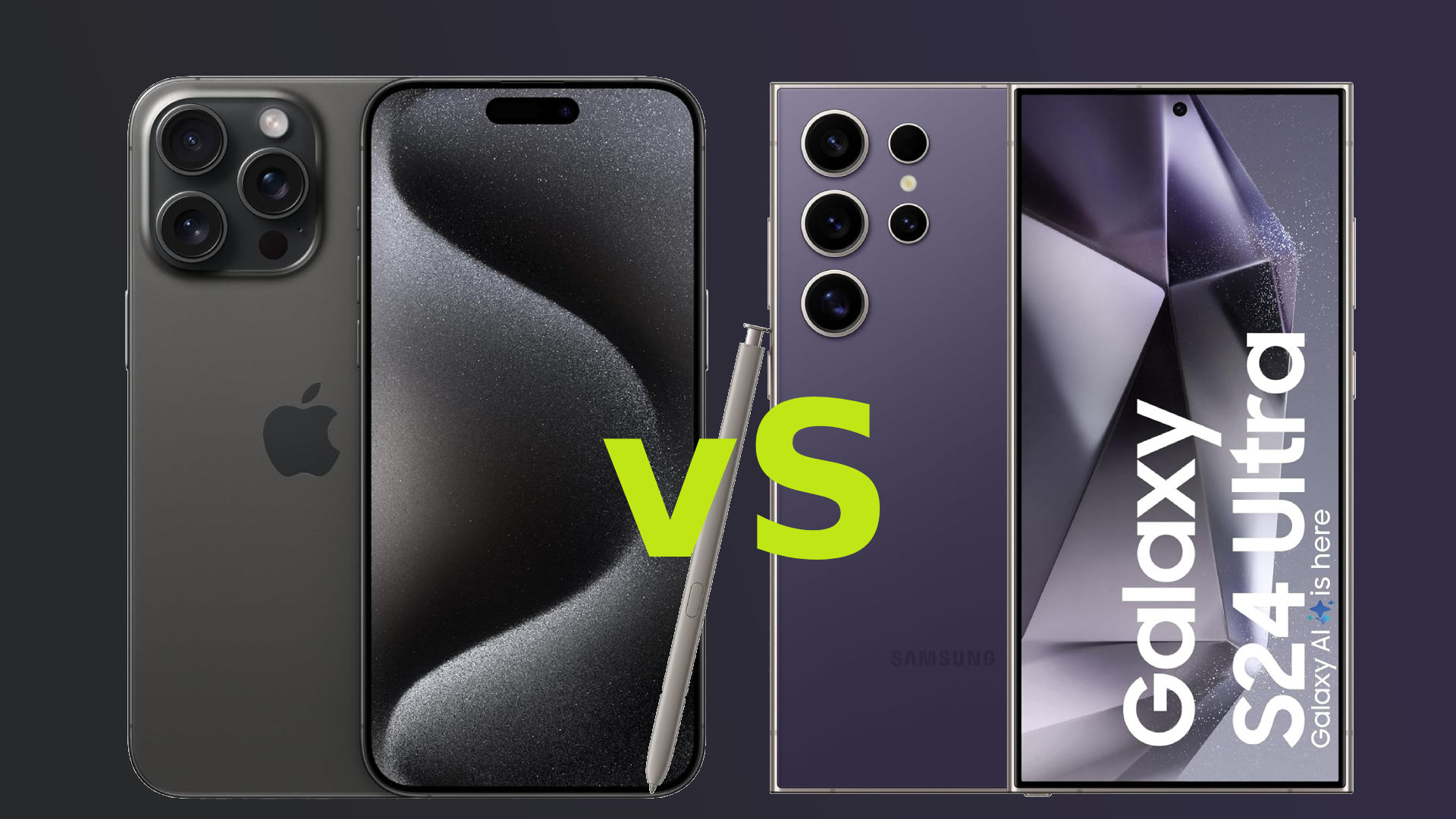
As of 2026, Apple Inc. maintains a significantly higher net worth than Samsung, with a market capitalization exceeding $3.6 trillion. While Samsung Electronics remains a global powerhouse with a valuation near $420 billion, Apple’s dominance in high-margin services and consumer hardware creates a valuation gap of over $3 trillion between the two tech titans.
Defining Net Worth in the Corporate Landscape
When discussing the "net worth" of global entities like Apple and Samsung, it is essential to distinguish between different financial metrics. In the corporate world, net worth is most commonly interpreted as Market Capitalization—the total value of all a company's shares of stock. However, a more traditional accounting definition refers to Shareholders' Equity, which is the total assets of the company minus its total liabilities.
For Apple, the market capitalization reflects investor confidence in future earnings and the strength of its ecosystem. For Samsung, the conversation is slightly more complex because "Samsung" usually refers to Samsung Electronics, the flagship subsidiary of the much larger Samsung Group. The Samsung Group is a South Korean chaebol (conglomerate) comprising dozens of affiliated businesses, including heavy industry, insurance, and biopharmaceuticals. To provide a fair comparison, financial analysts typically weigh Apple against Samsung Electronics, though even when considering the entire Samsung Group, Apple remains the more valuable entity by a wide margin.
Market Capitalization: The Trillion-Dollar Divide
In the current 2026 fiscal environment, Apple continues to occupy a tier shared only by a handful of other "Magnificent" tech giants. Apple’s market cap has fluctuated between $3.4 trillion and $3.8 trillion over the past year, driven by the integration of advanced artificial intelligence into its "Apple Intelligence" suite and the continued growth of its Services division.
Samsung Electronics, while being the most valuable company in South Korea and a dominant force in the global semiconductor and smartphone markets, carries a market capitalization that generally sits between $380 billion and $450 billion. This massive disparity is not necessarily a reflection of Samsung’s lack of productivity, but rather a difference in how the market values their respective business models.
Investors often apply a higher price-to-earnings (P/E) ratio to Apple. This is because Apple controls its entire ecosystem—hardware, software, and services—which leads to high customer retention and recurring revenue. Samsung, conversely, operates in more cyclical and capital-intensive industries, such as memory chip manufacturing and display panel production. These sectors are prone to "boom and bust" cycles, which often lead to more conservative valuations from global investors.
Revenue Streams and Profitability
To understand why Apple’s net worth is so much higher, one must look at the quality of their earnings. Apple’s revenue model has shifted significantly over the last decade. While the iPhone remains its primary engine, the Services segment—including the App Store, iCloud, Apple Music, and Apple Pay—now generates billions in high-margin revenue.
Apple’s Margin Advantage
Apple’s hardware products often command a "premium" price point, allowing for gross margins that frequently exceed 40%. When combined with the Services segment, where margins can exceed 70%, Apple produces an incredible amount of free cash flow. In 2025, Apple reported an annual net income surpassing $100 billion, a figure that few companies in history have ever reached. This level of profitability allows Apple to engage in massive share buyback programs, which further inflates its stock price and market capitalization.
Samsung’s Diversified Volume
Samsung Electronics follows a different path. It is a vertically integrated manufacturer. It doesn't just sell phones; it sells the screens, memory chips, and processors that go into its own phones—and its competitors' phones (including Apple’s). Samsung often generates higher total unit volume than Apple, especially in the smartphone market where it offers devices at every price point, from the budget Galaxy A-series to the premium Galaxy Z Fold.
However, manufacturing is expensive. Building a state-of-the-art semiconductor fabrication plant (a "fab") costs tens of billions of dollars. These high capital expenditures (CapEx) mean that while Samsung’s revenue is massive—often rivaling Apple’s total top-line numbers—its net profit margins are typically lower, often hovering between 10% and 15% depending on the health of the global memory chip market.
Comparative Financial Metrics 2026
The following table outlines the estimated financial standing of Apple Inc. versus Samsung Electronics based on the most recent 2025-2026 fiscal reporting periods.
| Metric | Apple Inc. (Estimated 2026) | Samsung Electronics (Estimated 2026) |
|---|---|---|
| Market Capitalization | $3.65 Trillion | $425 Billion |
| Annual Revenue | $410 Billion | $245 Billion |
| Net Income (Profit) | $105 Billion | $28 Billion |
| Total Assets | $380 Billion | $360 Billion |
| Total Liabilities | $310 Billion | $95 Billion |
| Shareholders' Equity | $70 Billion | $265 Billion |
| Primary Revenue Driver | iPhone & Services | Semiconductors & Smartphones |
Note: Data represents consolidated estimates for the 2026 fiscal timeframe. Apple’s lower Shareholders' Equity compared to Samsung is a result of its aggressive share buyback strategy and dividend payments.
Asset Bases: Physical vs. Intellectual Property
A fascinating point of comparison is the physical "net worth" or book value of these companies. If you were to liquidate both companies tomorrow, the results might surprise you. Samsung Electronics actually has a higher book value (Shareholders' Equity) than Apple.
Samsung owns a staggering amount of physical infrastructure. This includes some of the world's most advanced manufacturing facilities in Pyeongtaek and Giheung, South Korea, as well as plants in Vietnam, the United States, and China. Samsung is a "maker" in the most literal sense. Its balance sheet is heavy with property, plant, and equipment (PP&E).
Apple, by contrast, operates a "fab-less" or "asset-light" model for its size. Apple designs its own chips (Apple Silicon) and develops its software, but it outsources the actual assembly and much of the component manufacturing to partners like Foxconn and TSMC. Apple’s value is locked in its Intellectual Property (IP), its brand equity, and its massive cash reserves. For years, Apple held one of the largest cash piles of any non-financial corporation, though it has recently reduced this by returning capital to shareholders.
The Samsung Group Conglomerate Factor
When people search for "Samsung's net worth," they are often referring to the entire Samsung Group. If we look beyond just the Electronics division, the scale of the Samsung organization is immense.
- Samsung Life Insurance: One of the largest insurance providers in Asia.
- Samsung C&T: Involved in construction, fashion, and resort management (they built the Burj Khalifa).
- Samsung Heavy Industries: One of the world’s largest shipbuilders.
- Samsung Biologics: A major player in the contract development and manufacturing (CDMO) of medicines.
Even if you aggregate the market values of all listed Samsung subsidiaries, the total "Samsung Group" market cap would still likely fall under $700 billion. While this makes it one of the most powerful economic forces on earth—representing nearly 20% of South Korea’s GDP—it still pales in comparison to Apple’s $3.6 trillion valuation. The concentration of wealth and investor interest in US-based big tech remains a defining characteristic of the 2026 global economy.
Strategic Outlook and Future Valuation
As we look further into 2026, several factors will dictate whether the gap between Apple and Samsung narrows or widens.
The AI Transformation
Apple’s "net worth" is currently buoyed by the expectation that AI will trigger a multi-year "supercycle" of hardware upgrades. If users feel they must have the latest iPhone to access advanced local AI processing, Apple’s revenue and stock price will likely continue to climb. Apple’s move into spatial computing with the Vision Pro line also represents a long-term play for the "next" computing platform.
The Semiconductor Cycle
Samsung’s valuation is heavily tied to the demand for High Bandwidth Memory (HBM) and AI chips. As the primary supplier of memory for AI data centers, Samsung is positioned to benefit from the global AI build-out. If Samsung can maintain a lead in chip manufacturing technology (moving toward 2nm and 1.4nm processes), it may see a significant re-rating of its stock, potentially pushing its market cap toward the $600 billion mark.
Regulatory Challenges
Both companies face headwinds. Apple is under constant scrutiny from the EU’s Digital Markets Act (DMA) and the US Department of Justice regarding its App Store policies and ecosystem lock-in. Adverse rulings could impact its high-margin Services revenue. Samsung faces geopolitical risks, particularly regarding the stability of the Korean peninsula and the ongoing "chip wars" between the US and China, which affect its manufacturing and export strategies.
Common Mistakes in Comparing Net Worth
One of the most frequent errors in comparing these two is looking at Revenue as a proxy for Value. It is possible for a company to have $200 billion in revenue and be worth less than a company with $50 billion in revenue. This happens when the $50 billion company has much higher profit margins and a faster growth rate.
Another mistake is ignoring Currency Exchange Rates. Samsung’s primary listing is on the Korea Exchange (KRX) in Korean Won. Fluctuations in the USD/KRW exchange rate can make Samsung appear "worth" more or less in US dollars, even if the company's performance remains stable. Apple, listed on the NASDAQ in US dollars, does not face this valuation volatility in its home market.
Frequently Asked Questions
Which company is more profitable, Apple or Samsung?
Apple is significantly more profitable. In recent fiscal years, Apple's net income has often been three to four times higher than that of Samsung Electronics. This is due to Apple's premium pricing strategy and high-margin services, compared to Samsung's focus on high-volume manufacturing and commodities like memory chips.
Does Samsung own Apple?
No. While Samsung is a major supplier for Apple—providing components like OLED displays and certain types of memory—they are entirely separate corporate entities and fierce competitors in the consumer electronics market.
Is Samsung bigger than Apple in terms of employees?
Yes, Samsung Electronics typically employs more people than Apple. Samsung has a massive global workforce of over 270,000 employees, largely due to its extensive in-house manufacturing plants. Apple employs approximately 160,000 people, as it relies more heavily on third-party contractors for assembly.
Why is Apple’s market cap so much higher than Samsung's?
Apple's higher valuation is driven by its high profit margins, consistent growth in services, and a loyal customer base that creates an ecosystem "moat." Investors are willing to pay a premium for Apple's stock because of its massive cash flow and the perceived stability of its brand.
How much of the South Korean economy is Samsung?
The Samsung Group is estimated to account for roughly 15% to 20% of South Korea's total GDP. It is the dominant economic force in the country, whereas Apple, while massive, represents a smaller percentage of the much larger and more diversified United States economy.
Summary of the Comparison
The "net worth" of Apple vs. Samsung reveals a tale of two different business philosophies. Apple is the king of Equity Value, leveraging a powerful brand and ecosystem to achieve a multi-trillion dollar market cap that is currently unmatched in the tech world. Samsung is the king of Industrial Scale, maintaining a massive physical asset base and a dominant position in the global supply chain that makes it indispensable to the entire electronics industry.
For those tracking these numbers in 2026, the primary takeaway is that while Samsung may "make" more of the world's technology, Apple "owns" the most valuable relationship with the high-end consumer. This distinction ensures that Apple remains the wealthier entity in terms of market valuation for the foreseeable future.