Angel Torres survives the events of Jordan Peele’s 2022 film Nope. During the climactic battle against the predatory aerial entity known as Jean Jacket, Angel is nearly consumed. However, he instinctively wraps himself in barbed wire and a heavy tarp, which prevents the creature from digesting him. He is last seen alive, though injured, in the film's final moments.
The survival of Angel Torres (played by Brandon Perea) is one of the most critical turning points in the third act of Nope. While many secondary characters in Jordan Peele’s filmography serve as cautionary tales or victims of the central "spectacle," Angel breaks the mold. As a Fry’s Electronics employee turned amateur ufologist, Angel provides the technical backbone for the Haywood siblings’ mission. Understanding his fate requires a deep dive into the biological mechanics of the "Jean Jacket" entity and the specific tactical decisions Angel made during the film's "Star Lasso Experience" aftermath.
The Role of Angel Torres in the Haywood Ranch Incident
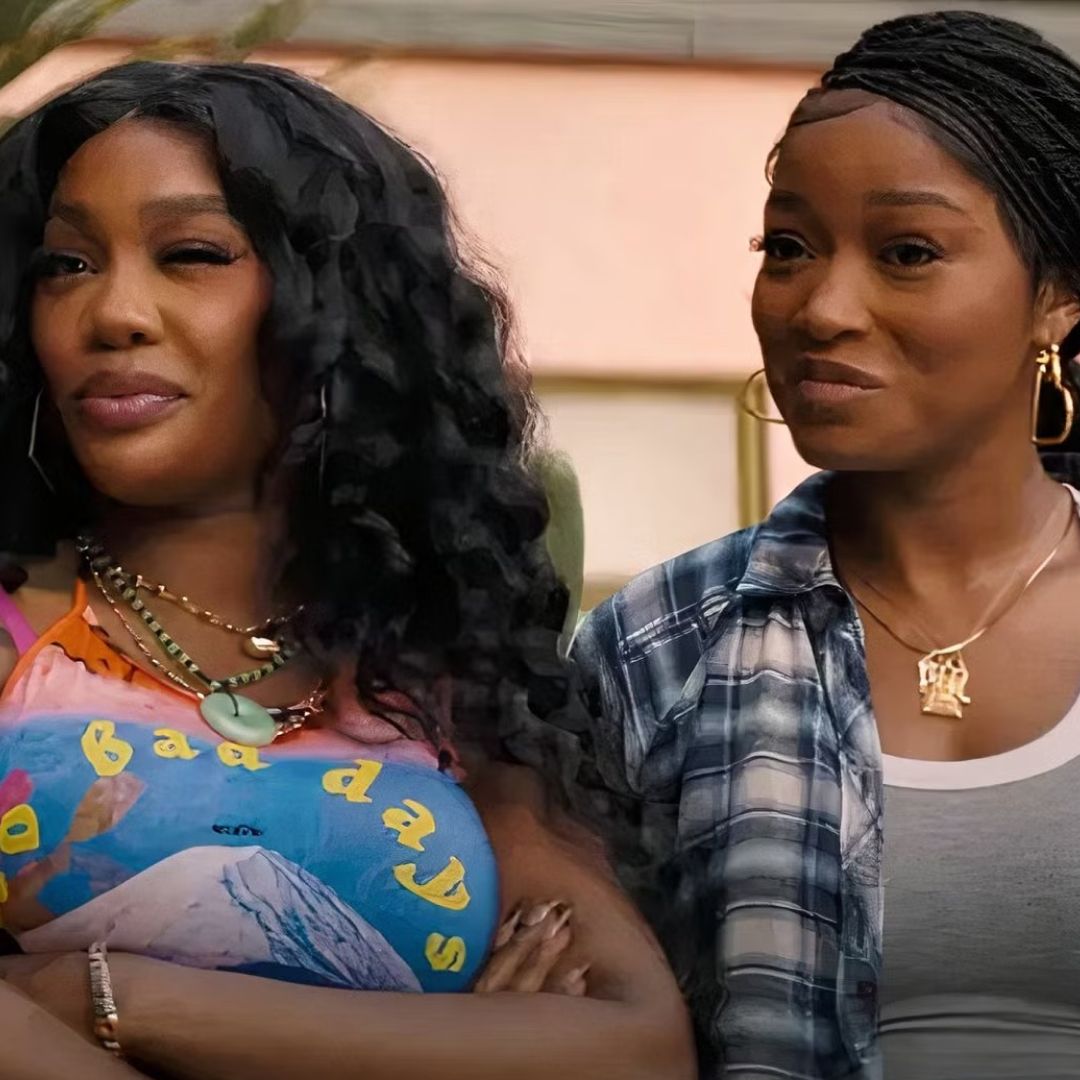
Angel initially enters the narrative as a comedic foil—a cynical retail worker mourning a recent breakup. However, his character quickly evolves into an essential strategist. Unlike OJ Haywood (Daniel Kaluuya), who understands the entity through the lens of animal behavior, or Emerald Haywood (Keke Palmer), who views it as a "money shot" opportunity, Angel views the situation through the lens of surveillance and technical verification.
His contribution to the team is not merely providing cameras; he is the one who identifies the "stationary cloud." This observation confirms that the UFO is not a craft, but a living predator hiding in plain sight. By the year 2026, film analysts often cite Angel as the "audience surrogate"—the person who is obsessed with the phenomenon but lacks the generational trauma of the Haywood family. His survival is significant because it represents the triumph of preparedness and adaptability over the hubris displayed by other characters like Ricky "Jupe" Park.
The Final Confrontation: Breaking Down the "Suction" Scene
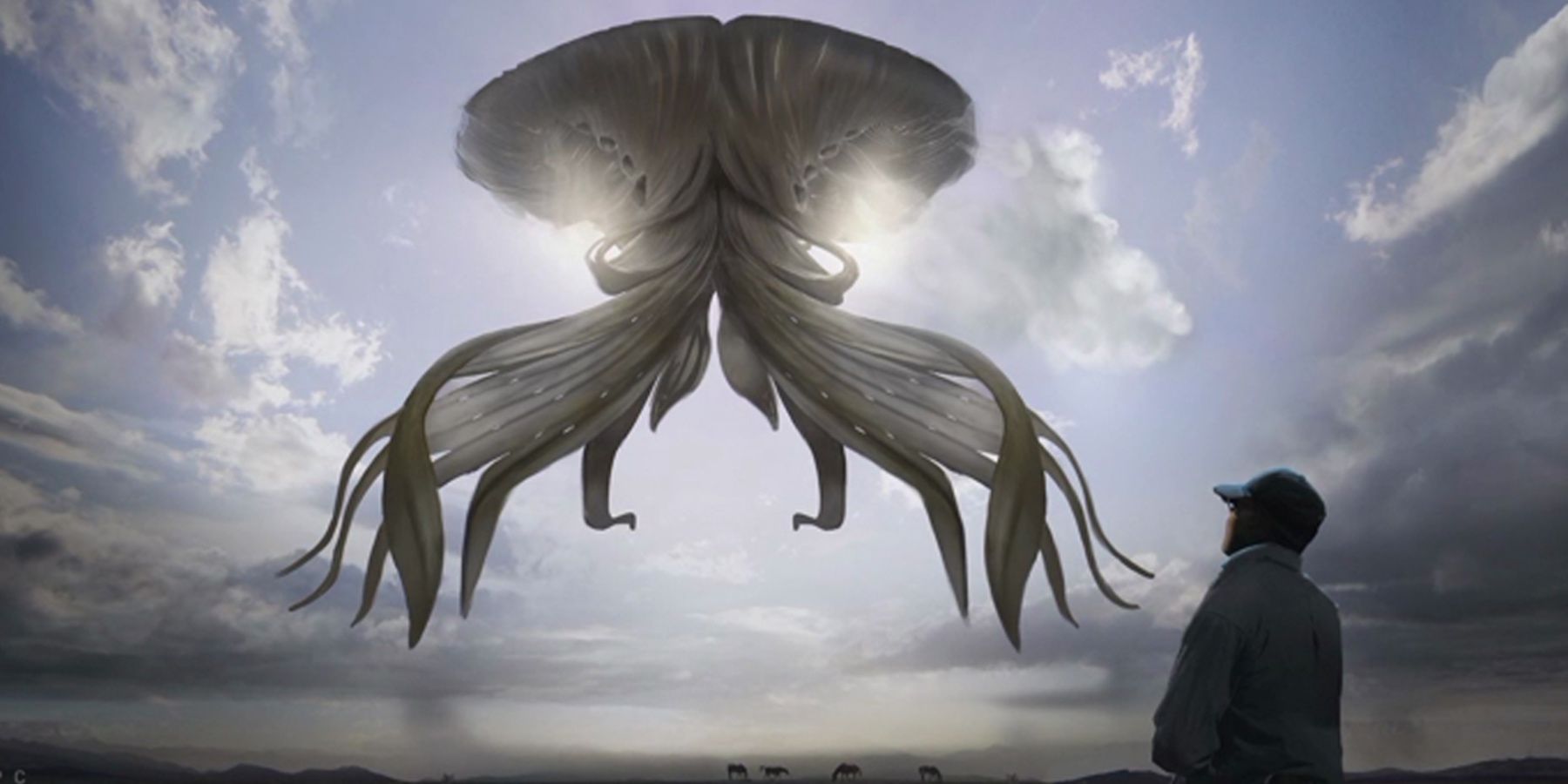
The sequence involving Angel’s near-death experience occurs during the final attempt to capture "the Oprah shot." As Jean Jacket (the creature’s name, borrowed from a horse the Haywoods once owned) shifts into its final, jellyfish-like "unfolded" form, it becomes more aggressive and less discriminating in its feeding habits.
When Jean Jacket descends upon the ranch, Angel finds himself separated from the main group. The creature utilizes a localized vacuum-like suction to draw prey into its digestive tract. As the wind speeds increase and the creature looms directly overhead, Angel is lifted from the ground. In a moment of high-tension improvisation, he grabs hold of a large plastic tarp and a coil of barbed wire nearby.
The Physics of the Survival Tactic
Jean Jacket is a biological organism, not a mechanical ship. Its interior is composed of flexible, fabric-like membranes that rely on rhythmic contractions to move prey toward a central digestive core. When Angel wraps himself in the tarp and barbed wire, he creates a "pill" that the creature cannot swallow.
The barbed wire serves two purposes:
- Structural Rigidity: It prevents the tarp from collapsing under the pressure of the creature's internal membranes.
- Biological Irritant: The sharp points of the wire puncture the creature's sensitive internal lining.
Because the creature's internal anatomy is optimized for soft tissue (horses and humans), the introduction of inorganic, sharp metal causes a rejection reflex. Just as a human might cough up something sharp, Jean Jacket is forced to expel Angel before he reaches the upper digestive chamber.
Why Jean Jacket Spat Angel Out
To understand why Angel survived when the entire audience of the Star Lasso Experience perished, one must look at the creature’s biology, often referred to by fans and supplementary materials as Ocularis Terrenus. Jean Jacket is an apex predator that relies on "eye contact" as a trigger for aggression. It views anything looking directly at it as a threat or a prime target.
When the Star Lasso audience was consumed, they were in a state of rapturous looking. They were "spectators." In contrast, by the final act, Angel has learned the rules of the game. He avoids direct eye contact and uses the tarp as a physical barrier between his gaze and the creature's "eye" (the green, square-shaped aperture).
Furthermore, Jean Jacket is shown throughout the film to have a sensitive digestive system. Earlier in the movie, it "vomits" blood and inorganic debris (like keys and coins) onto the Haywood house after consuming Jupe’s audience. The sheer volume of inorganic material Angel introduced into the creature’s mouth—specifically the barbed wire—made him an unviable meal.
| Character | Method of Encounter | Outcome | Reason for Result |
|---|---|---|---|
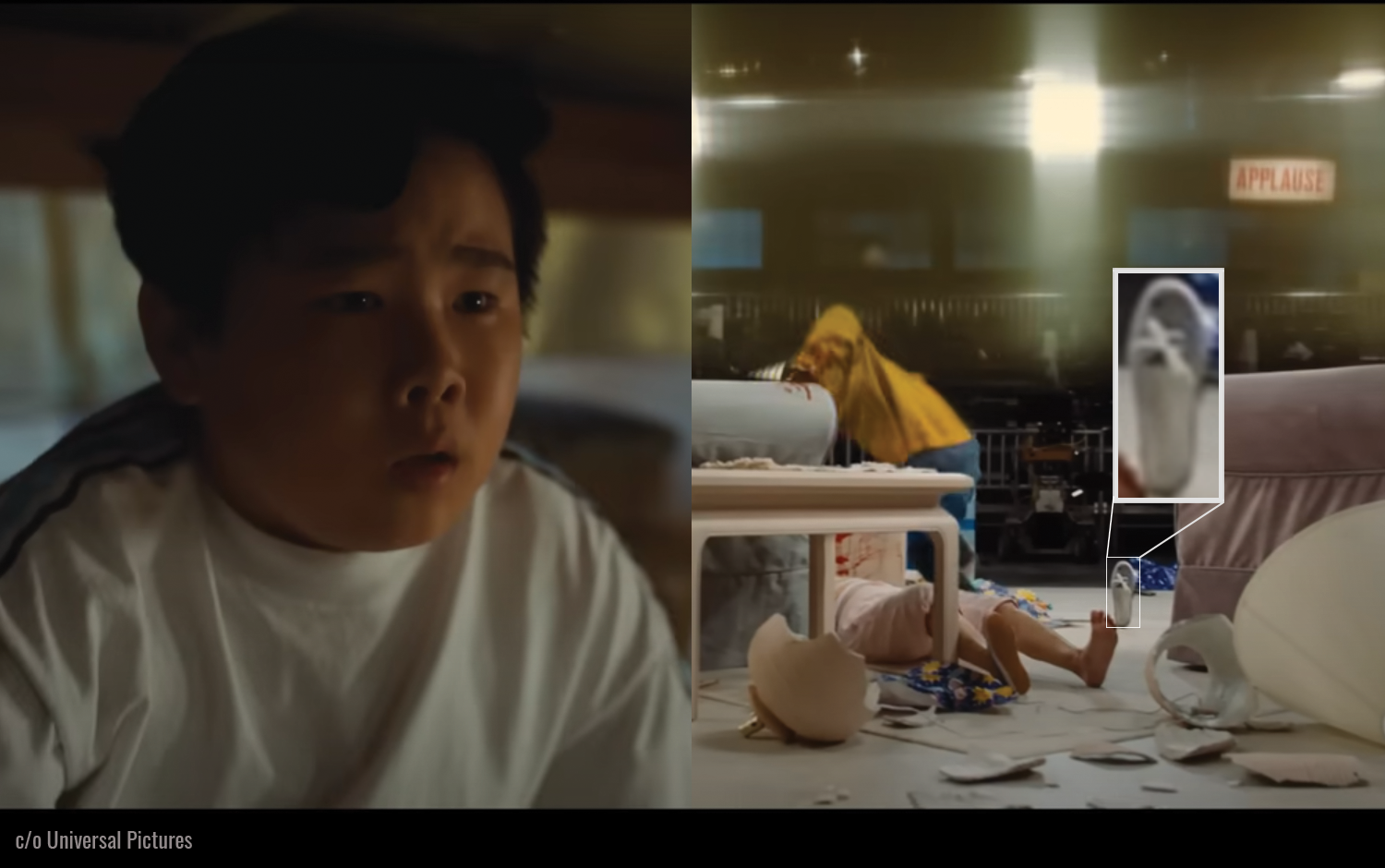
| Ricky "Jupe" Park | Planned Spectacle | Deceased | Attempted to tame a predator; maintained eye contact. |
| Antlers Holst | Cinematic Obsession | Deceased | Sacrificed himself for the "perfect shot" into the creature's mouth. |
| Angel Torres | Accidental Suction | Survived | Used barbed wire and tarp to trigger rejection reflex. |
| OJ Haywood | Strategic Evasion | Survived | Treated the creature as a wild animal; avoided eye contact. |
| Emerald Haywood | Tactical Combat | Survived | Used the "Giant Jupe" balloon to kill the creature. |
The Significance of Angel’s Survival in Jordan Peele’s Narrative
Jordan Peele’s Nope is a critique of the "spectacle"—the human urge to turn tragedy, nature, and the unknown into entertainment. Angel’s survival is a narrative pivot. He begins as someone who wants to "see" the phenomenon to satisfy his curiosity, but he survives by literally wrapping himself in a shroud and refusing to be part of the show.
In the final shots of the film, after Emerald successfully uses the "Giant Jupe" balloon to destroy Jean Jacket, we see Angel lying on the hillside. He is tangled in the wire and tarp, looking exhausted and battered. This visual choice is deliberate. It shows that survival in the face of such an entity isn't clean or heroic; it is messy, painful, and involves being "discarded" by the very thing you were obsessed with.
By 2026, critics have noted that Angel’s arc mirrors the experience of modern digital workers—those who facilitate the spectacle (tech support, surveillance) but are ultimately disposable to the "monsters" of industry and media. His survival is a rare moment of a "technician" outlasting the "performers."
Technical Analysis of the Barbed Wire Strategy
The specific type of wire Angel uses appears to be standard galvanized steel barbed wire, often used for livestock fencing. In the context of the Haywood Ranch, which was a horse training facility, this material was readily available.
From a technical standpoint, the survival can be broken down into three stages:
- The Binding: Angel creates a high-friction surface. The creature’s internal membranes use cilia-like movements or muscular contractions to move objects. Smooth surfaces move easily; barbed, jagged surfaces do not.
- The Inflammation: Upon entering the creature's mouth, the wire causes immediate trauma to the "aperture." This likely caused Jean Jacket to lose its suction seal, as the pain triggered a muscular spasm.
- The Ejection: The creature’s primary defense mechanism when encountering non-organic material is expulsion. We see this earlier with the plastic "decoy" horse. Angel essentially turned himself into a "plastic horse" by using the tarp.
Common Misconceptions About Angel's Death
Despite the visual evidence, some viewers initially believed Angel died during the suction sequence. This confusion often stems from the chaotic editing of the final battle. However, Peele provides clear confirmation of his status:
- The Hillside Frame: After Jean Jacket explodes, the camera pans across the landscape. We see a clear shot of Angel sitting up, breathing, and looking toward the wreckage of the balloon.
- The Narrative Parallels: Angel’s survival is necessary to balance the film's "survivor" theme. Just as OJ survives by understanding the animal, Angel survives by understanding the "trap."
- The "Gordy’s Home" Connection: The film opens with the survivor of a different tragedy (the chimp attack). Survival in Nope is reserved for those who respect the boundaries of the predator. Angel, despite his fear, respects the power of the entity enough to hide from its "stomach."
The Legacy of the Character in 2026
As we look back on Nope from the perspective of 2026, Angel Torres remains one of the most discussed characters in the "Peele-verse." The performance by Brandon Perea is credited with bringing a grounded, human element to a high-concept sci-fi horror film. Originally, the character of Angel was written as a much older, more "grumpy" individual. Perea’s interpretation—a young man looking for a conspiracy to give his life meaning—added a layer of vulnerability that makes his survival feel more earned.
The "Angel’s fate" discussion has also sparked real-world interest in the "biological UFO" theory. While Jean Jacket is a fictional creation, the logic used to explain Angel's survival—using inorganic irritants against a biological predator—is grounded in basic ecological principles.
Frequently Asked Questions
1. Was Angel supposed to die in the original script? There are reports that earlier drafts of the script were more ambiguous regarding the supporting cast. However, Brandon Perea has stated in interviews that he campaigned for his character to survive, arguing that Angel’s tech-savviness and growth deserved a payoff. Jordan Peele ultimately agreed, filming the definitive survival shot.
2. How did the tarp help Angel survive? The tarp acted as a buffer. Without it, the barbed wire would have shredded Angel’s own skin while he was being constricted by the creature. The tarp created a protective "shell," allowing the wire to point outward toward the predator while keeping Angel relatively shielded inside.
3. Did Angel get the "Oprah shot"? Technically, no. Angel was responsible for the digital surveillance, but most of the electronics were fried by the creature’s EMP (Electromagnetic Pulse) effect. The final, successful photo was taken by Emerald using the analog "Winkin' Frogs" camera at Jupiter's Claim.
4. What happened to Angel after the film ended? While the film doesn't show his life post-incident, it is implied that he, OJ, and Emerald are the only witnesses to the true nature of the Agua Dulce entity. Given his character's nature, it is likely he continued his interest in the paranormal, albeit with a much deeper respect for the dangers involved.
5. Why didn't the creature just chew Angel? Jean Jacket does not appear to have teeth in the traditional sense. It is an "engulfer." It swallows prey whole and uses internal pressure and possibly digestive enzymes to break down organic matter. This is why the barbed wire was so effective—the creature had no way to "chew" around it or break it down.
6. Is Angel’s survival a plot hole? No. The film establishes early on that the creature cannot handle inorganic material (the nickel, the keys, the plastic horse). Angel’s survival is the logical conclusion of this established biological rule. It is a "payoff" for the audience paying attention to the creature's dietary restrictions.
Final Recommendation for Viewers
To fully appreciate the mechanics of Angel's survival, a re-watch of the "Star Lasso Experience" scene (where Jupe and the crowd are taken) is recommended. Pay close attention to the sound design inside the creature; you can hear the screams of the victims being crushed. Then, compare this to the scene where Angel is taken. The difference in sound and the visual of the barbed wire highlights how his "suit of armor" changed the dynamic of the consumption process. For those interested in the creature design, looking into the work of the film's scientific consultant, Robert Turk, provides further insight into how a "biological UFO" would realistically function and why it would be vulnerable to something as simple as a coil of wire.