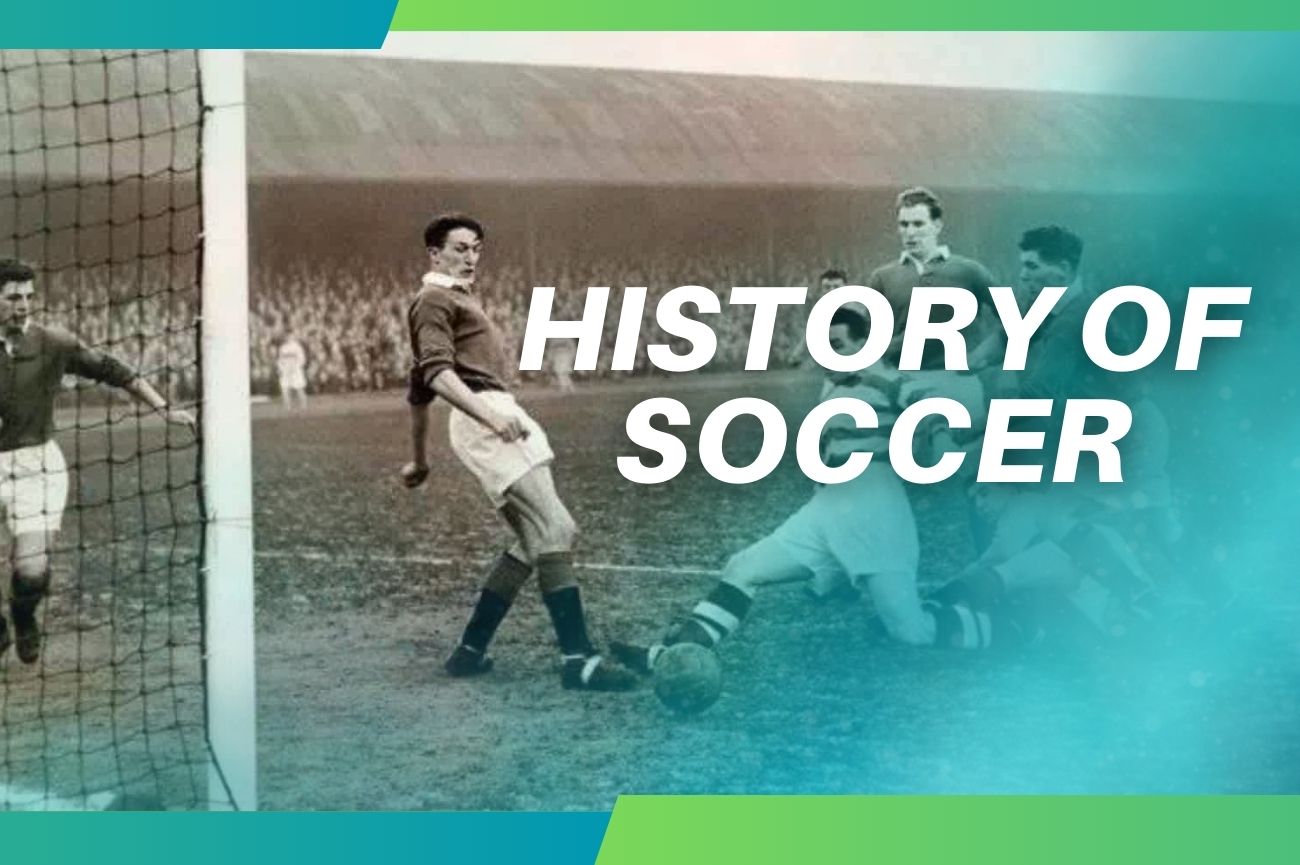
American soccer history and its modern landscape represent a journey from ethnic enclave sports to a multi-billion-dollar industry. Currently, in 2026, the United States stands as a global soccer hub, bolstered by the infrastructure of Major League Soccer (MLS), the dominance of the Women’s National Team, and the massive cultural catalyst of hosting the 2026 FIFA World Cup.
The Early Roots: From Colonial Games to the First Golden Age
While often perceived as a "new" sport in the American consciousness, soccer—or association football—has roots in the United States dating back to the mid-19th century. The Oneida Football Club, established in Boston in 1862, is widely regarded as the first organized football club in the country. During this era, various forms of "football" were played across Northeastern universities, eventually diverging into the gridiron game and the association game we recognize today.
The late 19th and early 20th centuries saw soccer flourish in industrial centers. Immigrant communities from Scotland, England, and Ireland brought their passion for the game to factory towns in New Jersey, Pennsylvania, and Massachusetts. This led to the formation of the American Soccer League (ASL) in 1921. For a brief period in the 1920s, the ASL was arguably the second-most popular professional sports league in the United States, occasionally outdrawing baseball in certain Northeastern corridors. Teams like Bethlehem Steel FC and the Fall River Marksmen became legendary, often recruiting top-tier talent from Europe with competitive wages.
However, this "Golden Age" collapsed due to a combination of the Great Depression and the "Soccer Wars"—a bitter jurisdictional conflict between the ASL and the United States Football Association (now USSF). The infighting marginalized the sport just as American football and baseball were consolidating their cultural hold. By the 1930s, soccer had retreated into ethnic niches, where it would remain for decades.
The NASL Era: Glamour, Excess, and the Pelé Effect
After decades of obscurity, punctuated only by the United States’ miraculous 1-0 victory over England in the 1950 World Cup, the sport sought a professional resurgence in the late 1960s. The North American Soccer League (NASL) was founded in 1968, but it struggled for relevance until the New York Cosmos signed the legendary Pelé in 1975.
Pelé’s arrival was a transformative moment in American soccer history. It proved that the American public would embrace the sport if it were presented as a high-glamour spectacle. Other aging stars followed, including Franz Beckenbauer, Johan Cruyff, and George Best. Attendance soared, culminating in the "Cosmos Era," where crowds of over 70,000 regularly packed Giants Stadium.
Despite the hype, the NASL was fundamentally unstable. The league lacked a grassroots foundation and relied on expensive international stars rather than developing domestic talent. Over-expansion and the absence of a lucrative television contract led to a rapid financial collapse. The NASL folded in 1984, leaving the U.S. without a top-flight outdoor professional league. The sport survived primarily through the popularity of the Major Indoor Soccer League (MISL) and the persistent growth of youth participation.
The 1994 World Cup and the Birth of MLS
The modern landscape of American soccer was forged during the bid for the 1994 FIFA World Cup. FIFA awarded the tournament to the United States on the condition that the country establish a professional outdoor league. The 1994 World Cup remains the most financially successful tournament in FIFA history, shattering attendance records and proving that soccer had a massive, if latent, audience in America.
Major League Soccer (MLS) launched in 1996 with ten teams. The early years were precarious; the league lost hundreds of millions of dollars and nearly folded in 2001. A critical pivot occurred when the league committed to building soccer-specific stadiums, beginning with Columbus Crew Stadium (now Historic Crew Stadium). This move allowed teams to control revenue streams and create authentic atmospheres.
The signing of David Beckham by the LA Galaxy in 2007 introduced the "Designated Player Rule," allowing clubs to sign world-class talent outside the salary cap. This sparked an era of unprecedented expansion. By 2026, the league has grown to 30 teams, featuring modern infrastructure and a sophisticated youth academy system that finally addresses the developmental gaps of the NASL era.
The Modern Landscape: 2026 and the Professional Pyramid
In 2026, the American soccer ecosystem is more complex and integrated than ever before. It is no longer just about MLS; it is a multi-tiered professional pyramid that provides pathways for players at all levels.
The Professional Tiers
The United Soccer League (USL) has evolved into a robust organization, managing the USL Championship (Division II) and USL League One (Division III). These leagues have brought professional soccer to mid-sized markets like Louisville, New Mexico, and Sacramento, fostering deep-seated local rivalries. The introduction of promotion and relegation discussions—while still contentious—indicates the maturing of the competitive landscape.
The Women’s Game
The United States has long been the global leader in women’s soccer. The success of the U.S. Women’s National Team (USWNT), with multiple World Cup titles, provided the foundation for the National Women’s Soccer League (NWSL). Founded in 2013, the NWSL has achieved a level of stability that eluded its predecessors (WUSA and WPS). In 2026, the NWSL is recognized as one of the premier women’s leagues in the world, characterized by high investment, rising valuations of franchises, and a dedicated fan base.
Comparison of Major Eras in American Soccer
| Feature | ASL Era (1920s) | NASL Era (1970s) | MLS Era (2026) |
|---|---|---|---|
| Primary Driver | Industrial/Ethnic Communities | High-Profile Global Stars | Diversified Ownership & Infrastructure |
| Infrastructure | Multi-purpose/Baseball parks | Large NFL Stadiums | Soccer-Specific Stadiums |
| Talent Source | British Isles Immigrants | Aging International Legends | Global Scouting & Homegrown Academies |
| Financial Model | Factory/Company Funding | Private Investors/High Risk | Single-Entity/Managed Growth |
| Media Reach | Local Newspapers | Limited National TV | Global Streaming (Apple TV+) |
The Impact of the 2026 FIFA World Cup
The 2026 FIFA World Cup, co-hosted by the United States, Canada, and Mexico, represents the single most significant event in the modern landscape. Unlike 1994, which was about introducing the sport, 2026 is about cementing soccer as a primary pillar of American culture.
The tournament has necessitated massive investments in stadium infrastructure and transportation across host cities like Atlanta, Dallas, and Seattle. More importantly, it has acted as a commercial catalyst. Corporate sponsorships and grassroots funding have surged, with a focus on making the sport more accessible in "pay-to-play" environments. The cultural footprint of the 2026 World Cup is expected to leave a legacy of increased participation and a permanent shift in how domestic media covers the sport.
Youth Development and the Academy Shift
One of the most significant changes in American soccer history is the shift from "pay-to-play" youth clubs to professional academies. For decades, the U.S. failed to produce world-class talent because the best coaching was locked behind high tuition fees.
Beginning in the late 2000s, MLS mandated that its clubs operate youth academies. Many of these are now "fully funded," meaning the clubs cover the costs for elite prospects. This has resulted in a "Golden Generation" of American players—such as Christian Pulisic, Weston McKennie, and Gio Reyna—who developed in professional environments before moving to top European leagues. In 2026, the focus has shifted toward the USL also adopting this academy model, ensuring that talent identification occurs in every corner of the country, not just in MLS markets.
Cultural Integration and the Modern Fan Base
The modern landscape is defined by a unique fan culture that blends European and Latin American traditions with American sports sensibilities. "Supporter Groups" have become the heartbeat of the American game, known for elaborate "tifo" displays (large-scale choreographed banners) and constant chanting.
Digital media and streaming have played a crucial role in this integration. The 10-year partnership between MLS and Apple TV, which began in 2023, eliminated local blackouts and provided a centralized hub for fans. This model has been closely watched by other global leagues as a blueprint for modern sports broadcasting. Furthermore, the arrival of Lionel Messi in 2023 acted as a bridge, bringing millions of new eyes to the domestic league and elevating the "quality of play" perception worldwide.
Common Challenges and Structural Hurdles
Despite the growth, the American soccer landscape faces several ongoing challenges:
- The Pyramid Structure: The lack of traditional promotion and relegation between MLS and the lower divisions remains a point of debate. Critics argue it stifles competition, while owners argue the closed system is necessary to protect massive capital investments.
- Market Saturation: As the number of professional teams grows, leagues must ensure they are not diluting the talent pool or overextending the fan base's discretionary spending.
- Accessibility: While academies are improving, the majority of youth soccer in America still operates on a pay-to-play basis, which disproportionately excludes low-income and minority communities.
- The Calendar Conflict: The American soccer season (Spring to Autumn) runs counter to the traditional European calendar (Autumn to Spring). This creates challenges for international transfer windows and player rest.
FAQ: Understanding the American Soccer Context
Why is the sport called "soccer" in America but "football" elsewhere?
The term "soccer" originated in England as a slang abbreviation for "Association Football" (to distinguish it from "Rugby Football"). While the UK eventually moved back to using "football," the U.S., Australia, and other nations with their own forms of football retained the term "soccer" to avoid confusion.
How does the 2026 World Cup differ from the 1994 World Cup?
The 1994 tournament was a proof-of-concept aimed at showing soccer could survive in America. The 2026 tournament is a victory lap for a sport that is already established, featuring 48 teams instead of 24 and utilizing existing world-class infrastructure rather than temporary solutions.
Is MLS considered a top league globally in 2026?
MLS is generally ranked within the top 10 to 15 leagues in the world. While it may not yet match the quality of the English Premier League or Spain’s La Liga, its infrastructure, financial stability, and attendance figures surpass many established European and South American top flights.
What is the role of the USL in the modern landscape?
The USL provides professional soccer to markets that MLS does not reach. It serves as a vital secondary tier for player development and has pioneered structural changes, such as the creation of a dedicated women's professional league (USL Super League) to compete with or complement the NWSL.
Has the U.S. solved its youth development issues?
Progress has been significant, particularly with the rise of free professional academies. However, the geographic size of the U.S. makes scouting difficult, and the collegiate system (NCAA), while still producing talent, is increasingly viewed as an antiquated pathway for elite professionals compared to the academy-to-pro model.
Next Steps for Fans and Investors
To fully engage with the modern American soccer landscape, observers should look beyond the national teams. Attending a local USL or NWSL match provides a clearer picture of the sport's grassroots health than watching high-profile international friendlies. For those interested in the business side, monitoring the post-2026 World Cup "bounce" in league valuations and participation rates will be critical for understanding the sport's trajectory toward 2030 and beyond.