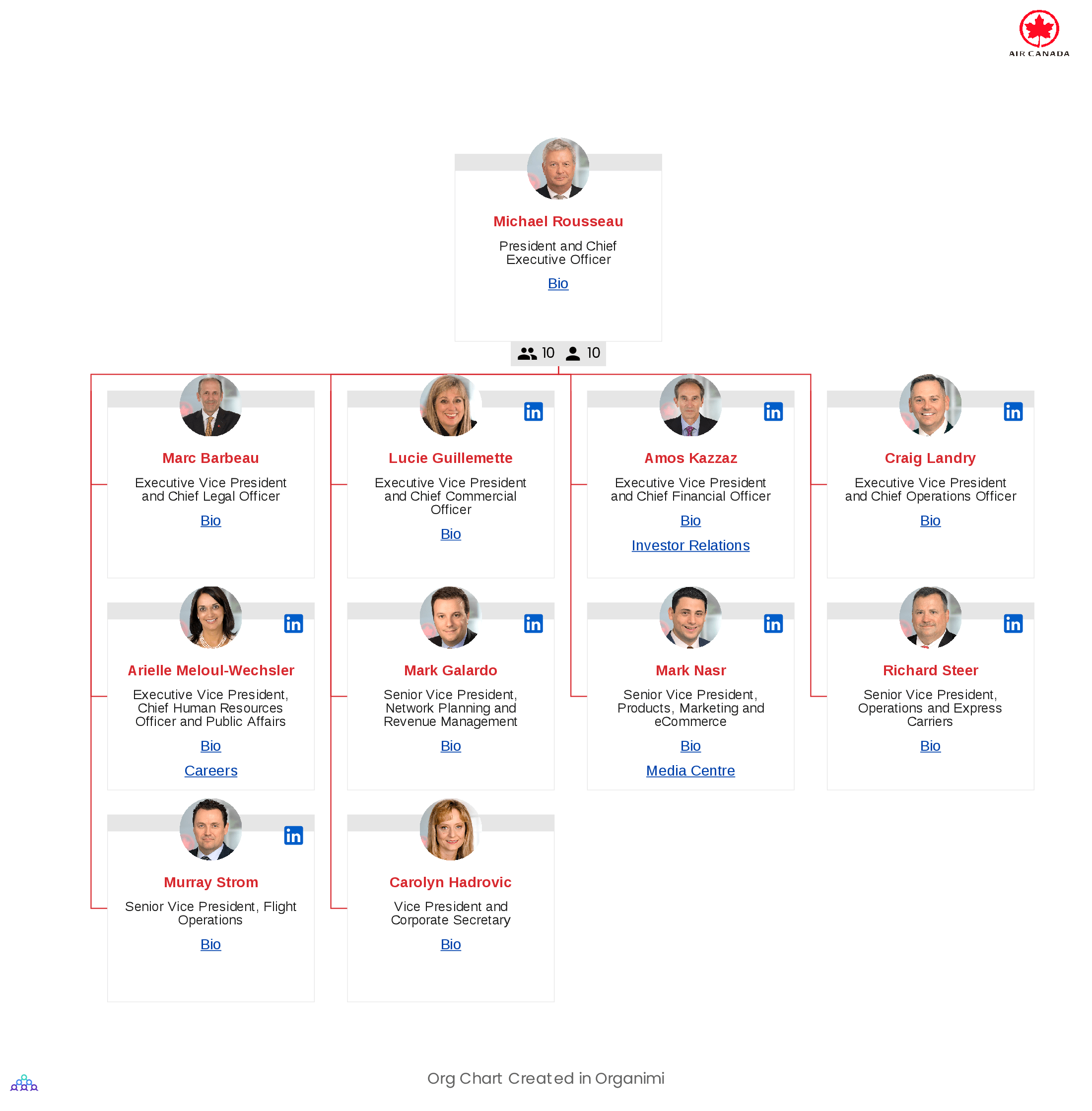
The leadership shift at Air Canada, primarily defined by Michael Rousseau’s transition to CEO in 2021, moved the airline from a period of aggressive global expansion to one of operational discipline and financial stability. By 2026, this shift has prioritized fleet modernization, debt reduction, and a revamped digital loyalty ecosystem.
The Evolution of Leadership: From Rovinescu to Rousseau
The transition in leadership at Canada’s largest airline represents more than just a change in the executive suite; it marks a fundamental shift in corporate philosophy. Calin Rovinescu, who led Air Canada from 2009 to 2021, is widely credited with saving the airline from the brink of bankruptcy and transforming it into a global powerhouse. His era was defined by "The Expansion"—launching Air Canada Rouge, expanding into deep international markets, and reclaiming the Aeroplan brand.
When Michael Rousseau assumed the role of President and Chief Executive Officer in February 2021, the context had changed dramatically. Having previously served as the Chief Financial Officer (CFO) and Deputy CEO, Rousseau was the architect of the airline’s financial fortress during the pre-pandemic years. His appointment signaled to shareholders that the "New Air Canada" would prioritize stability, capital allocation, and internal efficiency as it navigated the complex post-pandemic landscape.
By 2026, the industry has observed that Rousseau’s tenure is characterized by "Operational Pragmatism." Where Rovinescu was the visionary expander, Rousseau has been the disciplined optimizer. This shift was necessary to address the staggering debt loads taken on during the 2020-2022 period and to meet the evolving demands of a travel market that now values reliability and sustainability over sheer network size.
Strategic Pillars of the Rousseau Era
Under the "Rise Higher" strategic framework, the leadership shift has focused on four distinct pillars that define Air Canada’s operations in 2026. This framework was designed to move the company beyond the recovery phase and into a sustainable growth phase that balances profitability with customer experience.
Operational Excellence and Reliability
One of the primary criticisms during the early 2020s was the volatility of airline operations. In response, the leadership shift prioritized "operationalizing" technology. This included significant investments in Artificial Intelligence (AI) for flight scheduling and crew management. By 2026, Air Canada has implemented predictive maintenance systems that have reduced unplanned aircraft groundings by a measurable margin.
The focus on reliability also involved a reorganization of the ground handling and hub operations at Pearson International (YYZ) and Montreal-Trudeau (YUL). Under Rousseau’s direction, the airline moved away from a "growth-at-all-costs" scheduling model toward a "buffered" schedule that allows for greater recovery during weather-related or technical disruptions.
Financial Stewardship and Debt Deleveraging
Coming from a CFO background, Rousseau’s primary mission was to repair the balance sheet. Between 2021 and 2026, Air Canada focused on paying down the high-interest debt accrued during the global travel shutdown. This was achieved through a disciplined approach to capital expenditure (CAPEX) and a focus on high-margin revenue streams, such as premium economy cabins and the cargo division.
The leadership shift also saw a move toward "Asset Light" thinking in certain non-core areas while doubling down on the ownership of strategic assets, such as the Airbus A220 fleet, which offers superior unit economics on North American routes.
Modernizing the Fleet for a Sustainable Future
A significant tangible result of the leadership shift is the specific composition of Air Canada’s fleet in 2026. The transition has seen a strategic pivot toward aircraft that offer versatility and lower carbon footprints.
- The Airbus A321XLR Integration: A cornerstone of the current leadership's strategy has been the deployment of the A321XLR. This aircraft allows Air Canada to serve "long-thin" routes—transatlantic destinations that don't require a full wide-body Boeing 787 but are too far for standard narrow-body jets. This has allowed for a shift in leadership strategy where the airline can offer more point-to-point international service from secondary Canadian hubs.
- The Boeing 787-10 Dreamliner: To complement the existing 787-8 and 787-9 models, the leadership authorized the addition of the 787-10. This aircraft serves the high-demand "trunk" routes with better fuel efficiency per seat, directly supporting the airline's goal of reaching net-zero emissions by 2050.
- The A220-300 Backbone: The shift toward the Montreal-built Airbus A220 has been a hallmark of the Rousseau era. By 2026, the A220 has become the workhorse of the domestic and transborder network, providing a quiet, fuel-efficient, and passenger-friendly experience that replaces older, less efficient E190s and A319s.
| Feature | Rovinescu Era (Pre-2021) | Rousseau Era (2021-2026) |
|---|---|---|
| Primary Goal | Global Expansion & Brand Rebirth | Operational Stability & Efficiency |
| Fleet Focus | Wide-body International Growth | Narrow-body Versatility & Sustainability |
| Financial Strategy | Rebuilding Equity & Acquisitions | Debt Deleveraging & Cash Flow Optimization |
| Loyalty Focus | Re-acquiring Aeroplan | Deep Integration & Personalization |
| Key Competition | Global Legacy Carriers | Domestic Low-Cost & Transborder Rivals |
Navigating Labor Relations and Human Capital
Perhaps the most challenging aspect of the leadership shift has been the management of labor relations. Following the high-stakes pilot negotiations of 2024, the leadership had to pivot from a defensive stance to a collaborative one. The "shift" here involved recognizing that operational reliability is impossible without a motivated and well-compensated workforce.
In 2026, Air Canada’s leadership has implemented more robust "Employee Value Propositions" (EVP) aimed at retaining talent in a highly competitive global aviation market. This includes enhanced training programs for the next generation of pilots and maintenance engineers, addressing the systemic labor shortages that plagued the industry in the mid-2020s.
The leadership has also had to navigate the cultural shift within the organization. Moving from a crisis-management mindset (2020-2022) to a forward-looking, innovation-led culture (2023-2026) required a change in internal communication strategies, emphasizing transparency and shared success.
The Digital Transformation and Aeroplan’s Role
Under the current leadership, Aeroplan has evolved from a simple frequent flyer program into a powerful data and financial engine. This shift was critical for diversifying Air Canada’s revenue. By 2026, the integration of the loyalty program with retail partners and financial institutions has created a "sticky" ecosystem that protects the airline during periods of lower travel demand.
Digital transformation has also touched the passenger experience. The leadership shift prioritized the "Contactless Journey," investing in biometric boarding and enhanced mobile app functionality. In 2026, travelers can manage almost every aspect of their journey—from baggage tracking to real-time rebooking—without needing to speak to a gate agent. This shift not only improves the customer experience but also aligns with the CEO’s goal of reducing operational overhead.
Comparative Analysis of Market Positioning
In 2026, Air Canada faces a different competitive landscape than it did five years ago. The leadership shift has been a response to three main competitive pressures:
- The Rise of Porter Airlines: Porter’s aggressive expansion into the jet market with the E195-E2 forced Air Canada to defend its domestic "premium" stronghold. Rousseau’s response was not to engage in a price war but to leverage Air Canada’s global network and the Aeroplan ecosystem, which Porter cannot easily replicate.
- WestJet’s Strategic Pivot: As WestJet refocused its efforts on Western Canada, Air Canada’s leadership saw an opportunity to solidify its dominance in the Eastern triangle (Toronto-Montreal-Ottawa) and on transatlantic routes.
- The Low-Cost Carrier (LCC) Surge: With players like Flair and others fluctuating in the market, Air Canada’s leadership stayed the course on being a "Full-Service" carrier, avoiding the temptation to strip down the core brand to compete on base fares alone.
Sustaining the Net-Zero Ambition
The leadership shift has also been defined by an increased accountability toward Environmental, Social, and Governance (ESG) targets. In 2026, the airline is no longer just "reporting" on carbon offsets; it is actively integrating Sustainable Aviation Fuel (SAF) into its daily operations at major hubs.
Michael Rousseau’s leadership has overseen the investment in Heart Aerospace’s ES-30 electric-hybrid aircraft, which are slated for regional routes. While these are still in the early stages of operational integration by 2026, the commitment to these technologies demonstrates a shift from a purely reactive environmental stance to a proactive investment in future tech.
Troubleshooting Operational Challenges in 2026
Despite the strategic successes, the leadership must constantly troubleshoot issues that arise from being a global carrier in a volatile world.
- Supply Chain Delays: Continued delays in aircraft parts and new deliveries from Boeing and Airbus have required the leadership to be flexible with fleet retirement dates. The shift in 2026 has been toward "Life Extension" programs for certain mid-life aircraft to maintain capacity.
- Geopolitical Sensitivity: With shifts in global trade and travel restrictions, the CEO must frequently re-evaluate the profitability of routes to Asia and Eastern Europe. The leadership shift has resulted in a "Modular Network" approach, where capacity can be shifted between regions with higher agility than in the past.
- Infrastructure Constraints: As Canadian airports reach capacity, the leadership has had to work closely with government bodies to advocate for infrastructure improvements, particularly at Pearson International, to ensure the airline’s growth isn't throttled by ground-level inefficiencies.
FAQ
Who is the current CEO of Air Canada in 2026? Michael Rousseau continues to serve as the President and CEO of Air Canada. He took the helm in February 2021, succeeding Calin Rovinescu. His leadership is focused on operational excellence, financial health, and digital innovation.
How has the leadership shift affected Air Canada’s stock price? By 2026, the stock has generally reflected the airline's successful deleveraging and return to consistent profitability. While aviation stocks remain volatile due to external factors like fuel prices, Rousseau’s focus on the balance sheet has provided a more stable valuation floor compared to the pre-2021 era.
What is the "Rise Higher" strategy mentioned by the leadership? "Rise Higher" is the strategic blueprint implemented under Michael Rousseau’s tenure. It focuses on four key areas: elevating the customer experience, fostering a culture of care for employees, demonstrating environmental responsibility, and maintaining financial discipline to ensure long-term sustainability.
Did the leadership change impact Air Canada’s regional services? Yes. The leadership shift saw a move toward using the Airbus A220 and hybrid-electric partnerships (like Heart Aerospace) to modernize regional travel. This has allowed the airline to maintain connectivity across Canada while improving the unit costs of these shorter routes.
How does Air Canada’s leadership view competition from low-cost carriers in 2026? The leadership has maintained a "premium and network" strategy. Rather than competing solely on price, they leverage the Aeroplan loyalty program, extensive lounge networks, and global connectivity to attract high-value business and leisure travelers who prioritize the end-to-end experience.
What role does sustainability play in the current leadership's vision? Sustainability is a core pillar. The leadership has committed to net-zero emissions by 2050, with interim 2030 targets. This involves multi-billion dollar investments in new fuel-efficient aircraft, the procurement of Sustainable Aviation Fuel (SAF), and exploring electric-hybrid technology for short-haul flights.
Practical Recommendation for Stakeholders
For investors and industry observers, the key action in 2026 is to monitor Available Seat Mile (ASM) efficiency and debt-to-equity ratios. The current leadership shift has prioritized these metrics over pure revenue growth. If you are a corporate traveler or loyalty member, the "shift" means you should expect a more digitized, self-service-oriented journey, but one backed by a more robust and reliable operational core. The next phase of leadership will likely involve even deeper integration of AI in customer service and further expansion of the international network as the balance sheet finally reaches its optimal "fortress" state.
For more information on the current executive leadership and their strategic goals, visit the Air Canada Investor Relations portal or review the latest IATA Industry Performance Reports for context on how the airline compares to its global peers.