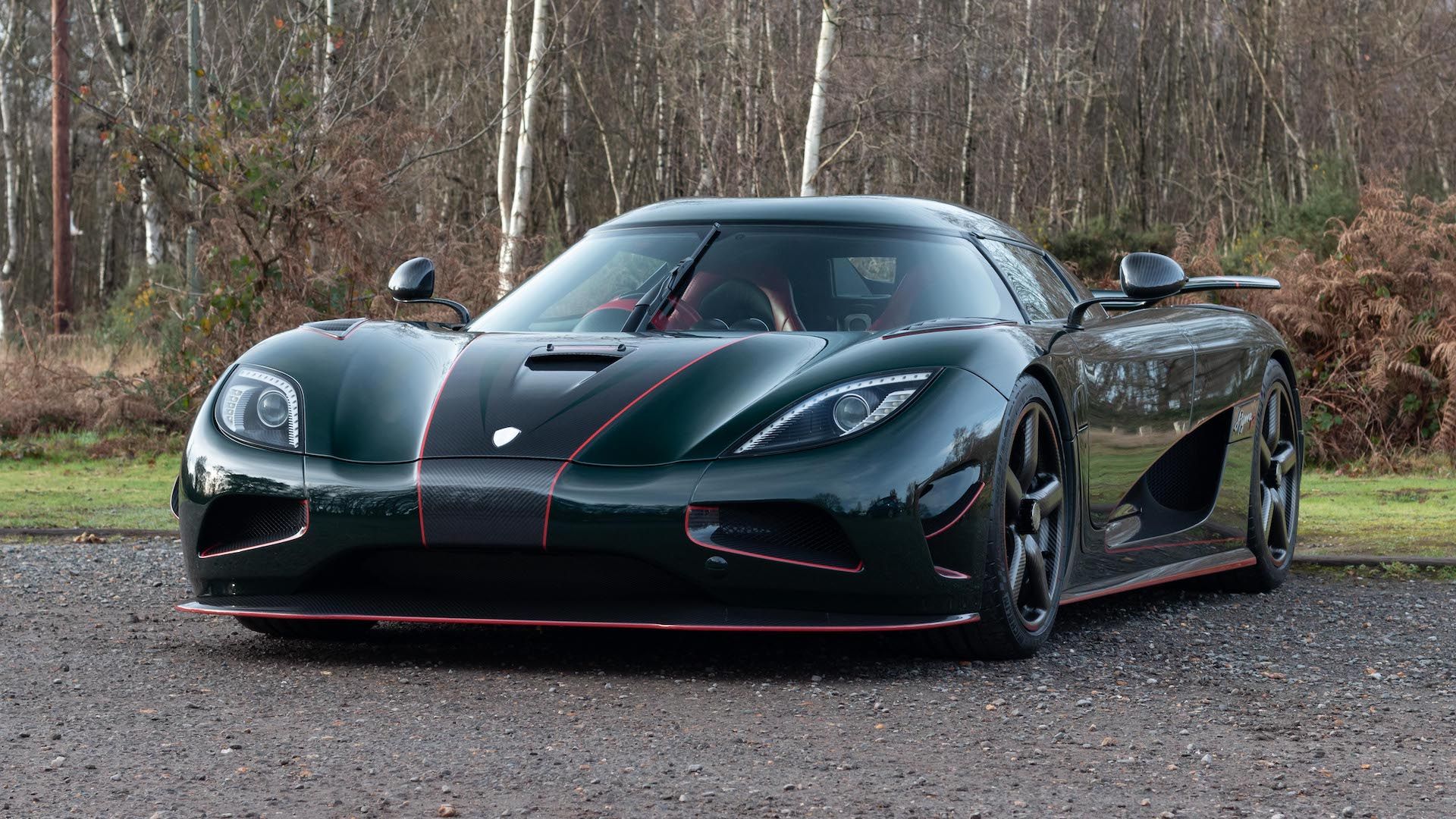
The Koenigsegg Agera R features a theoretical top speed of 273 mph (440 km/h), though it is often electronically limited to 233 mph for safety. Compared to its peers, it remains a benchmark for power-to-weight efficiency, utilizing a 1,140 hp twin-turbo V8 that thrives on E85 biofuel.
The Engineering Philosophy of the Agera R
To understand the Agera R top speed compared for performance lovers, one must first look at the unique engineering philosophy of Christian von Koenigsegg. Unlike mass-market manufacturers, Koenigsegg focuses on extreme lightweight construction and mechanical efficiency. The Agera R, produced between 2011 and 2014, was designed to be the ultimate expression of the Agera platform, specifically optimized for high-speed stability and power delivery.
The heart of the machine is a 5.0-liter twin-turbocharged V8 engine. While many manufacturers were moving toward heavy hybrid systems or massive W16 engines during this era, Koenigsegg stuck to a compact, high-output V8. This engine is unique because it lacks a traditional flywheel, using a small-diameter twin-plate clutch instead. This reduces rotational inertia, allowing the engine to rev with incredible urgency, which is a critical factor when pushing past the 200 mph barrier where aerodynamic drag becomes the primary adversary.
Aerodynamics play a pivotal role in the Agera R's high-speed performance. It features an active rear wing that adjusts its angle based on speed and wind resistance. Unlike hydraulic systems that add significant weight, Koenigsegg’s wing uses the pressure of the air hitting it to adjust its pitch. This "passive-active" system ensures that as the car approaches its 273 mph theoretical limit, it maintains the precise amount of downforce needed for stability without creating excessive drag that would cap its top-end potential.
Fueling the Speed: The E85 Advantage
For performance lovers, the Agera R is most famous for its "green" credentials—not because it is an economy car, but because it utilizes E85 biofuel to reach its maximum potential. When running on standard 95 octane gasoline, the engine produces roughly 940 to 960 horsepower. However, when switched to E85 (85% ethanol), the higher octane rating and cooling properties of the fuel allow the turbos to run higher boost pressures, bumping the output to 1,140 horsepower and 885 lb-ft of torque.
This flex-fuel capability is a major differentiator when comparing the Agera R to its rivals. Ethanol has a higher latent heat of vaporization, meaning it cools the intake charge more effectively than gasoline. For a car attempting to reach speeds north of 250 mph, managing heat is the greatest challenge. By using the fuel itself as a cooling agent, the Agera R can maintain peak performance for longer durations without the ECU pulling back timing to protect the engine from overheating.
Agera R vs. Bugatti Veyron Super Sport: The Battle of Philosophies
When discussing the Agera R top speed compared for performance lovers, the most frequent comparison is with the Bugatti Veyron Super Sport. In the early 2010s, these two cars represented the absolute pinnacle of automotive achievement, but they achieved their goals through diametrically opposed methods.
The Bugatti Veyron Super Sport utilized a massive 8.0-liter W16 engine with four turbochargers, producing 1,200 horsepower. It was a masterpiece of luxury and brute force, weighing nearly 4,200 pounds (1,900 kg). Its top speed was officially recorded at 267.8 mph. The Bugatti's stability came from its sheer mass and sophisticated all-wheel-drive system, making it feel planted and refined even at extreme velocities.
In contrast, the Agera R weighed only about 3,163 pounds (1,435 kg). This 1,000-pound weight advantage gave the Koenigsegg a superior power-to-weight ratio. While the Bugatti required a specialized "Top Speed Key" to lower the car and prepare it for a run, the Agera R was designed to be a more raw, visceral experience. In a straight-line sprint, the Bugatti often had the advantage in traction due to AWD, but once both cars were moving, the Agera R’s lower mass allowed it to accelerate with more ferocity in the higher gear ranges.
Comparative Performance Metrics
To truly appreciate where the Agera R stands, we must look at the data. The following table compares the Agera R with its primary historical rivals and its successor, providing context for its place in the hypercar hierarchy.
| Vehicle | Engine Type | Peak Horsepower (E85/Max) | Curb Weight (kg) | Top Speed (Claimed/Tested) |
|---|---|---|---|---|
| Koenigsegg Agera R | 5.0L V8 Twin-Turbo | 1,140 hp | 1,435 kg | 273 mph (Theoretical) |
| Bugatti Veyron SS | 8.0L W16 Quad-Turbo | 1,200 hp | 1,888 kg | 267.8 mph (Verified) |
| Hennessey Venom GT | 7.0L V8 Twin-Turbo | 1,244 hp | 1,244 kg | 270.49 mph (Verified) |
| SSC Ultimate Aero | 6.3L V8 Twin-Turbo | 1,183 hp | 1,247 kg | 256.14 mph (Verified) |
| Koenigsegg Agera RS | 5.0L V8 Twin-Turbo | 1,341 hp | 1,395 kg | 277.8 mph (Verified) |
As of 2026, the Agera RS (the R's successor) remains one of the fastest production cars ever verified on a public road, but the Agera R laid the groundwork. The Agera R was the first to prove that Koenigsegg’s V8 could reliably handle the thermal loads required to challenge Bugatti's dominance.
Mechanical Components and High-Speed Stability
Speed is useless if the car cannot stay on the road. For the Agera R, stability at 250+ mph is handled by a combination of the Triplex rear suspension and bespoke tires.
The Triplex suspension consists of a third, horizontal shock absorber connecting the two rear wheels. This setup allows the car to maintain a level stance under heavy acceleration (preventing "squat") without compromising the independent movement of the wheels over bumps. At the speeds the Agera R is capable of, even a small undulation in the road can become a major safety hazard. The Triplex system ensures the rear tires maintain a consistent contact patch, which is vital for both traction and aerodynamic consistency.
Furthermore, the tires are a critical limiting factor for any car in this class. Koenigsegg worked closely with Michelin to ensure the Pilot Sport Cup 2 tires could withstand the centrifugal forces generated at 440 km/h. At these speeds, the tires are rotating so fast that they want to pull themselves apart from the rim. The Agera R’s hollow carbon fiber wheels (Aircore technology) also reduce unsprung mass, allowing the suspension to react faster to changes in the road surface, which is essential for maintaining control at the limit.
The Agera R vs. Hennessey Venom GT
The Hennessey Venom GT is another significant rival when looking at the Agera R top speed compared for performance lovers. While the Bugatti was the "establishment," Hennessey and Koenigsegg were the "disruptors."
The Venom GT was essentially a heavily modified Lotus chassis with a twin-turbocharged GM-sourced V8. It was incredibly light and possessed a power-to-weight ratio of one horsepower per kilogram. In 2014, it recorded a speed of 270.49 mph at the Kennedy Space Center.
The primary difference between the Agera R and the Venom GT lies in engineering sophistication. The Venom GT was a "tuner" car taken to its absolute extreme—it lacked many of the advanced electronic stability systems and luxury appointments found in the Agera R. The Koenigsegg was a ground-up bespoke creation, featuring a carbon-fiber monocoque with a stiffness of 65,000 Nm/degree. This rigidity is why the Agera R feels more cohesive at high speeds compared to many modified competitors; the chassis does not flex, allowing the aerodynamics and suspension to work in perfect harmony.
Practical Limitations: Tires and Runway Length
While the theoretical top speed of the Agera R is 273 mph, very few owners will ever see those numbers. There are two primary reasons: tires and real estate.
Even in 2026, tire technology remains a bottleneck for hypercars. While Michelin has made strides, the heat generated by friction and the internal stress of the rubber at 270 mph means that a sustained run at top speed is only safe for a very limited window of time. Most Agera Rs were delivered with an electronic speed limiter set to 233 mph (375 km/h). To unlock the full potential, a specialized team and a specific set of fresh tires are generally required.
Secondly, reaching 273 mph requires an immense amount of space. The Agera R needs miles of flat, straight tarmac to accelerate from 200 mph to its peak. Unlike the Bugatti, which was tested at the private Ehra-Lessien track with its 5.4-mile straight, Koenigsegg often had to rely on public road closures or airfields. This lack of access to specialized testing facilities is why the Agera R's theoretical top speed remained "theoretical" for so long, while its successor, the Agera RS, finally proved the platform's capability on a closed highway in Nevada.
Legacy and Value in 2026
In 2026, the Koenigsegg Agera R has transitioned from a contemporary performance monster to a legendary collector's piece. For performance lovers, it represents the last of the "analog-feeling" hypercars before the industry shifted heavily toward hybrid powertrains and heavy battery packs.
The Agera R’s value has skyrocketed not just because of its top speed, but because of its rarity and the purity of its driving experience. It remains one of the few cars in the world that can legitimately challenge the 250 mph barrier while still being road-legal and utilizing a removable hardtop. The fact that it can achieve these feats using environmentally conscious E85 fuel adds a layer of modern relevance that few 15-year-old hypercars can claim.
Frequently Asked Questions
1. What is the official top speed record for the Koenigsegg Agera R?The Agera R has a theoretical top speed of 273 mph (440 km/h). While it set several world records for acceleration, such as 0-300-0 km/h in just 21.19 seconds, its top speed was never officially verified by Guinness in the same way as the Bugatti Veyron Super Sport. Its successor, the Agera RS, later officially hit 277.8 mph.
2. Can the Agera R run on regular pump gas?Yes, the Agera R features a sophisticated engine management system that can detect the ethanol content in the fuel. It can run on 95 octane pump gas, but the power output drops from 1,140 hp to approximately 960 hp. To achieve the top speeds performance lovers expect, E85 is required.
3. How does the Agera R compare to the newer Koenigsegg Jesko?The Jesko is the spiritual successor to the Agera line. While the Agera R was a pioneer, the Jesko features a 5.0L V8 producing up to 1,600 hp on E85 and uses a 9-speed Light Speed Transmission (LST). The Jesko Absolut is designed to surpass 300 mph, making it significantly faster than the Agera R.
4. Why is the Agera R top speed often limited to 233 mph?The 233 mph (375 km/h) limit is primarily for tire safety. At speeds above 240 mph, the heat and centrifugal force applied to the tires increase exponentially. Koenigsegg limits the car electronically to protect the driver, though this limiter can be removed for authorized high-speed events at appropriate venues.
5. How many Agera R units were produced?Koenigsegg produced only 18 units of the Agera R between 2011 and 2014. This extreme rarity contributes to its high resale value and its status as a "holy grail" for automotive performance lovers.
Recommendations for Performance Enthusiasts
If you are analyzing the Agera R top speed compared for performance lovers, the key takeaway is that the Agera R is a car defined by its power-to-weight ratio and fuel flexibility. For those looking to experience this level of performance today, look for events such as "Vmax200" or private track days at Ehra-Lessien if available.
When comparing hypercars, do not focus solely on the top speed number. Consider the 0-300-0 km/h time, as this metric tests acceleration, high-speed stability, and braking performance simultaneously—areas where the Agera R genuinely excelled over the heavier Bugatti Veyron. For collectors, the Agera R remains a superior choice for those who value mechanical purity and Swedish innovation over the sheer refinement and mass of the Volkswagen-era Bugattis.