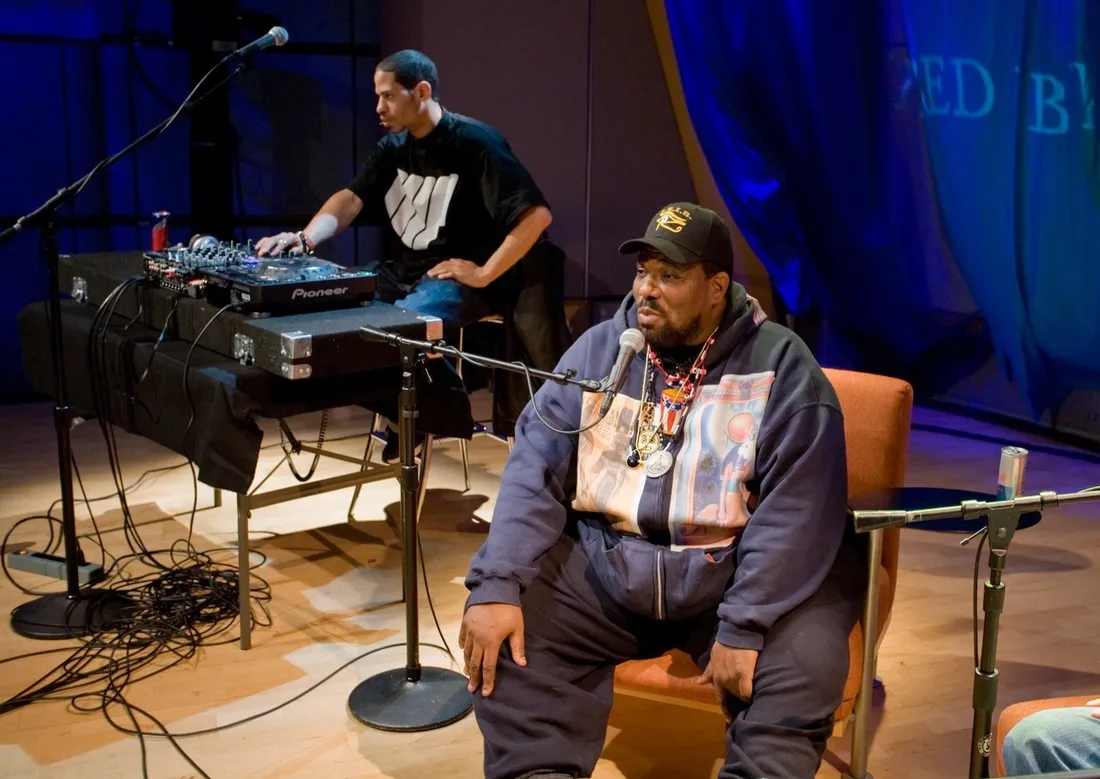
Afrika Bambaataa and the Universal Zulu Nation are the foundational architects of Hip-Hop culture, credited with shifting South Bronx gang energy into a global movement of art and peace. Established in 1973, they defined the core elements of the culture—DJing, MCing, Breaking, and Graffiti—while promoting a philosophy of social unity and "Knowledge of Self."
The Genesis of the Zulu Nation: From Street Gangs to Social Movement
In the early 1970s, the South Bronx was a landscape of urban decay, economic abandonment, and rampant gang warfare. Among the most powerful of these groups were the Black Spades, a gang that commanded significant territory and influence. Kevin Donovan, who would later take the name Afrika Bambaataa Aasim, rose through the ranks of the Black Spades to become a warlord. However, a series of transformative events, including a trip to Africa and the death of a close friend in a police encounter, prompted a radical shift in his perspective.
Bambaataa envisioned a way to redirect the aggressive energy of the youth toward creative expression. On November 12, 1973, he formed the Universal Zulu Nation. The organization was named after the Zulu people of South Africa, inspired specifically by their fierce resistance against colonial forces as depicted in the 1964 film Zulu. Bambaataa’s goal was to create an "organization" rather than a "gang," emphasizing a community-based approach to peace, love, unity, and having fun.
The transition was not instantaneous. It required a systematic rebranding of the street aesthetic. The Zulu Nation began hosting parties at the Bronx River Community Center, where the soundtrack was no longer just the popular disco of the era, but a curated selection of "breakbeats"—the rhythmic sections of funk and rock records that prompted people to dance. By providing a safe space for these gatherings, the Zulu Nation effectively declared a truce among local factions, replacing physical combat with competitive dancing (breaking) and verbal sparring (MCing).
The Five Elements and the Philosophy of "Knowledge"
While many observers view Hip-Hop as a purely musical or artistic genre, the Universal Zulu Nation established it as a comprehensive lifestyle and philosophical system. Central to this system are the Five Elements of Hip-Hop. While most are familiar with the artistic components, the fifth element is often considered the most critical by Zulu members.
- DJing (Turntablism): The manipulation of records to create new soundscapes.
- MCing (Rapping): The rhythmic delivery of rhymes and wordplay.
- Breaking (B-boying/B-girling): The athletic and acrobatic style of street dance.
- Graffiti (Writing): The visual art and calligraphy of the urban environment.
- Knowledge: The social, historical, and spiritual awareness required to sustain the culture.
The inclusion of "Knowledge" was a deliberate move to ensure that Hip-Hop did not become a shallow commercial product. The Zulu Nation taught that without an understanding of history—specifically African and African-American history—the artistic elements would lose their power to liberate the community. This philosophy was codified in documents such as the "15 Beliefs" and the "Infinite Lessons," which blended elements of various religious and spiritual traditions to promote self-reliance and community uplift.
Musical Innovation: The Birth of Electro-Funk
As a DJ, Afrika Bambaataa was known as the "Master of Records." His ability to find obscure tracks from diverse genres—including rock, calypso, and European electronic music—earned him a legendary reputation. In 1982, Bambaataa and his group, the Soulsonic Force, released "Planet Rock." This single would change the course of music history.
"Planet Rock" was a revolutionary fusion of the Roland TR-808 drum machine's synthetic beats and the melodic structures of the German electronic band Kraftwerk (specifically "Trans-Europe Express" and "Numbers"). This track effectively birthed the genre of Electro-funk, which would later influence techno, house, and the Miami Bass sound.
The success of "Planet Rock" and subsequent hits like "Looking for the Perfect Beat" proved that Hip-Hop was not a localized New York fad. It demonstrated a high level of technical sophistication and a willingness to embrace futuristic technology, contrasting with the gritty, sample-heavy "boom bap" sound that would dominate the late 80s and early 90s.
The Global Expansion of the Zulu Nation
By the mid-1980s, the Universal Zulu Nation began to expand far beyond the borders of the Bronx. Bambaataa toured Europe and Japan, establishing "chapters" of the organization in various countries. This expansion was unique because it didn't just export music; it exported a social structure.
In France, for example, the Zulu Nation became a vital tool for youth in the banlieues (suburbs), providing a framework for social identity and artistic expression among immigrant communities. These international chapters remained connected to the New York headquarters, adhering to the same principles of peace and unity while adapting the culture to their local contexts.
| Feature | The Early Era (1973–1982) | The Global Era (1983–2010s) | The Modern Era (2016–2026) |
|---|---|---|---|
| Primary Goal | Gang truce and community safety. | International expansion and cultural preservation. | Reform, reorganization, and accountability. |
| Key Location | South Bronx (Bronx River Houses). | Global (Europe, Asia, Africa). | Decentralized / Virtual presence. |
| Musical Focus | Breakbeats and early rapping. | Electro-funk and diverse regional styles. | Archival preservation and independent media. |
| Leadership | Afrika Bambaataa (Centralized). | Regional Kings/Queens and Bambaataa. | Council-based and chapter-led. |
Controversies and the 2016 Reorganization
The legacy of Afrika Bambaataa and the Universal Zulu Nation took a significant and painful turn in 2016. Several men, led by activist Ronald Savage, came forward with serious allegations of sexual abuse against Bambaataa, dating back to the 1970s and 80s. These allegations sent shockwaves through the Hip-Hop community, as Bambaataa had been revered as a patriarchal figure and moral guide for decades.
Bambaataa denied the allegations, but the resulting fallout led to a period of intense internal turmoil for the Zulu Nation. The organization faced criticism not only for the alleged actions of its founder but for a perceived culture of silence that allowed such behavior to go unchecked.
In the years following 2016, and continuing into the present day of 2026, the Universal Zulu Nation underwent a massive reorganization. Most chapters officially distanced themselves from Bambaataa. In many regions, the leadership was dissolved and replaced by councils focused on transparency and victim advocacy. This period marked a difficult transition from a "cult of personality" surrounding a single founder to a decentralized movement focused on the original principles of Hip-Hop culture.
The Cultural Impact and 50+ Years of History
Despite the controversies surrounding its founder, the impact of the Universal Zulu Nation on global culture is undeniable. It provided the blueprint for how marginalized communities could leverage art to create social infrastructure. In 2026, we look back at more than half a century of influence where the "Zulu" brand remains synonymous with the "Old School" ethics of Hip-Hop.
The organization’s role in preserving the history of the culture has been its most enduring success. Many of the archives, interviews, and historical records that define our understanding of early Hip-Hop exist because the Zulu Nation prioritized "Knowledge of Self." They turned a street subculture into an academic and historical subject, paving the way for Hip-Hop’s inclusion in institutions like the Smithsonian and Cornell University.
Current Requirements for Participation and Membership
For those looking to engage with the Zulu Nation in 2026, the process has become more formalized and localized. The organization typically operates through regional chapters rather than a singular global intake.
- Chapter Verification: Prospective members must identify a legitimate, active chapter in their region. Since the 2016 reorganization, many unofficial or "splinter" groups exist, making verification through long-standing members essential.
- Knowledge Requirements: Entry often requires a period of study. This includes learning the history of the five elements and the specific social contributions of the organization.
- Community Service: Most active chapters require members to participate in local community outreach, adhering to the original mission of social uplift.
- Conduct Codes: Modern chapters have implemented strict codes of conduct and "Zero Tolerance" policies regarding abuse or exploitation, a direct response to the leadership failures of the past.
Frequently Asked Questions
Did Afrika Bambaataa invent Hip-Hop?
While Bambaataa is one of the "Holy Trinity" of Hip-Hop founders (alongside DJ Kool Herc and Grandmaster Flash), he did not invent it alone. DJ Kool Herc is credited with the "First Party" in August 1973, while Bambaataa is credited with defining Hip-Hop as a unified culture and giving it its name and philosophical structure.
Is the Universal Zulu Nation still active in 2026?
Yes, the organization remains active, though its structure is significantly different than it was in the 20th century. It operates as a decentralized network of chapters focused on cultural preservation, social justice, and providing resources for youth in urban environments.
What is the significance of the year 1973?
1973 is considered the birth year of Hip-Hop. It marks both DJ Kool Herc’s foundational party at 1520 Sedgwick Avenue and the formal establishment of the Universal Zulu Nation by Afrika Bambaataa.
How did the Zulu Nation influence graffiti?
Before the Zulu Nation, graffiti was often seen as simple vandalism or gang marking. Bambaataa and the organization embraced "writers" as artists, integrating graffiti as one of the four original pillars. This helped transition graffiti into a recognized form of public art and galleries.
What happened to Afrika Bambaataa after the allegations?
Following the 2016 allegations, Bambaataa was effectively removed from the leadership of the Universal Zulu Nation. He has remained largely out of the public eye, and the organization has spent the last decade restructuring to operate independently of his influence.
Next Steps for Researchers and Enthusiasts
To truly understand the depth of Afrika Bambaataa and the Zulu Nation's impact, one should look beyond the music. Engaging with original archives and oral histories is essential for a complete picture.
- Visit the Cornell University Hip Hop Collection: This is one of the most comprehensive archives of Zulu Nation flyers, records, and documents.
- Support Local Hip-Hop Education: Many former Zulu members now run non-profits focused on teaching the "Five Elements" to the next generation.
- Study the "Electro" Era: Listen to the discography of the Soulsonic Force to understand the technical evolution of music production.
- Practice Critical History: Acknowledge both the revolutionary social work of the organization and the serious nature of the controversies to maintain a balanced, factual perspective on Hip-Hop’s development.