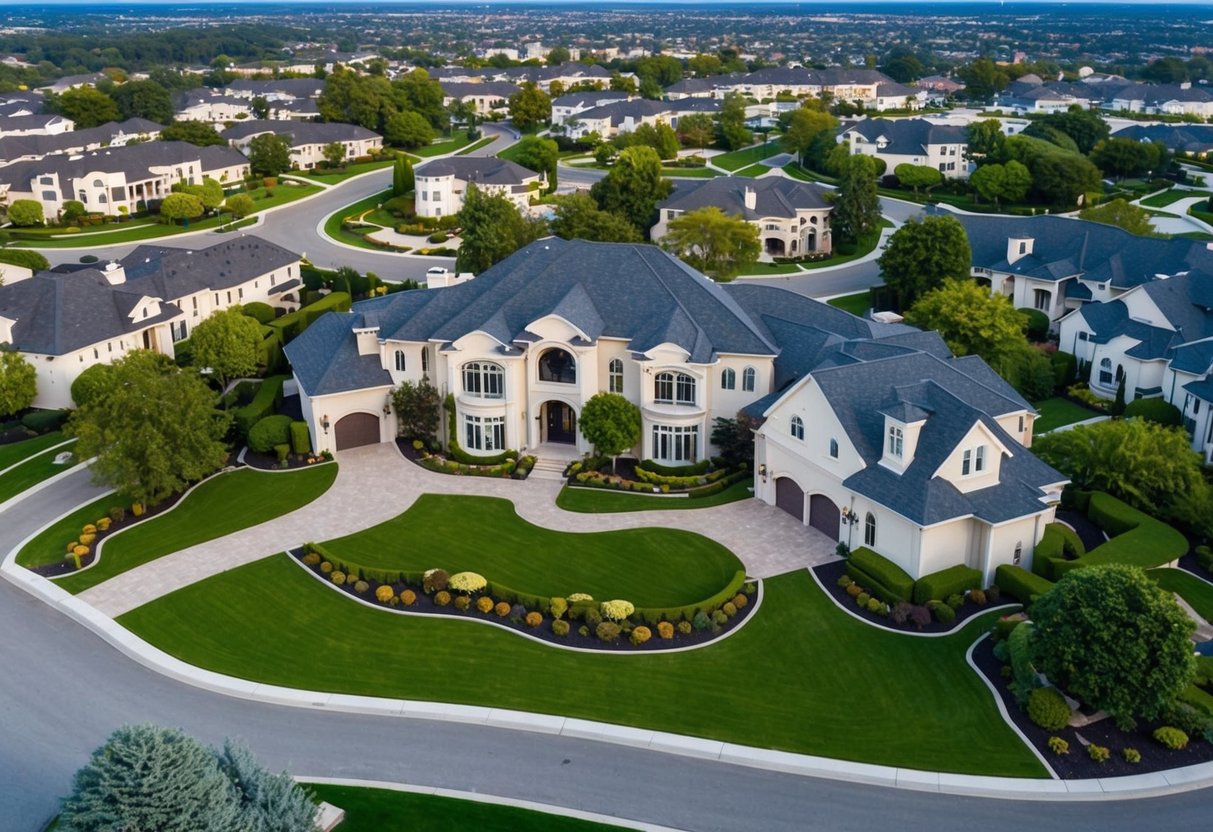
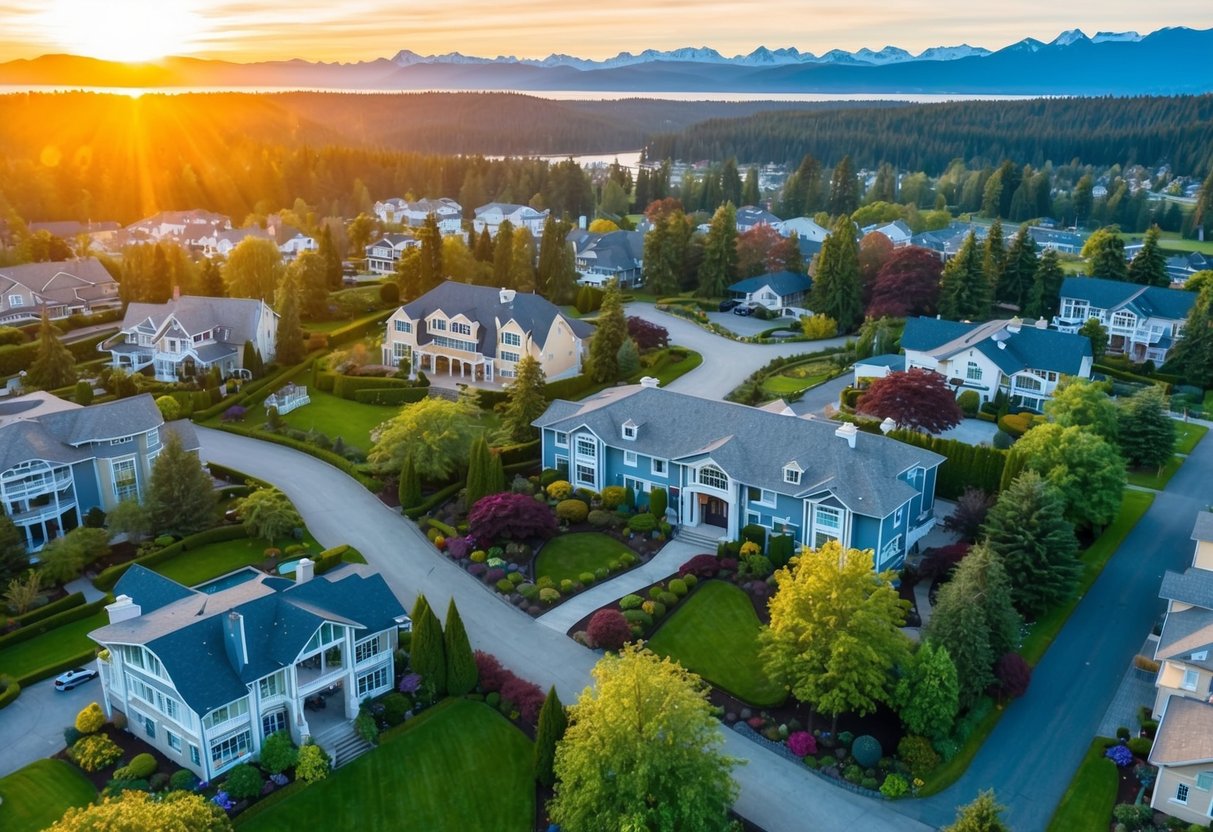
Affluent neighborhoods in the United States are defined by exceptionally high median household incomes, elevated property values, and significant concentrations of private wealth. Concentrated primarily near major economic hubs, tech corridors, and coastal regions, these exclusive communities—such as Atherton, California; Scarsdale, New York; and Fisher Island, Florida—offer prime real estate, top-rated schools, and high security.
Metrics of Wealth: How Affluence Is Measured in American Neighborhoods
Evaluating neighborhood affluence requires looking beyond single-dimensional metrics like headline real estate listing prices. Economists, urban planners, and real estate analysts evaluate wealth through a combination of federal statistical data, local tax filings, property valuation indices, and household liquidity markers.
Understanding these measurement frameworks helps clarify why certain zip codes consistently rank at the top of national wealth indices while others fluctuate based on short-term market dynamics.
- Neighborhood Affluence Evaluation Model
- Household Income (Census ACS / IRS AGI)
- Asset Wealth / Net Worth (Real Estate & Equities)
- Real Estate Valuation (Price per Sq. Ft. & Assessed Value)
Median Household Income vs. Average Adjusted Gross Income (AGI)
The U.S. Census Bureau tracks income statistics through its American Community Survey (ACS). However, Census income data caps top-coded household income figures (typically at $250,000 in public summary tables), which can obscure the upper boundary of extreme wealth.
To gain a clearer picture of ultra-high-net-worth (UHNW) enclaves, analysts examine Adjusted Gross Income (AGI) data published by the Internal Revenue Service Statistics of Income division. While median household income measures the midpoint of earned wages and standard returns, AGI captures capital gains, dividend yields, corporate distributions, and executive compensation.
In elite communities, AGI per tax return often exceeds several million dollars, far outpacing local wage metrics.
Property Valuations and Price Per Square Foot
Real estate metrics provide a direct, real-time indicator of localized wealth. Analysts track two primary housing metrics:
- Median Home Value: The baseline cost of residential entry into a given municipality or zip code.
- Price per Square Foot: A metric that accounts for variance in lot size and structure square footage, isolating land valuation efficiency.
In top-tier markets like Silicon Valley or coastal Miami, price per square foot frequently exceeds $1,500 to $3,000. High land values usually reflect severe geographic or zoning constraints, strong localized demand, and high replacement costs for luxury construction.
Concentrated Net Worth and Capital Allocation
Beyond income and housing, true neighborhood affluence involves accumulated net worth, including equity portfolios, private equity holdings, business ownership, and real estate assets. High concentrations of liquid wealth allow these communities to sustain private amenities, high municipal bond ratings, independent police or security services, and private educational institutions.
Top Affluent Neighborhoods Across the United States
Wealth in the United States is distributed unevenly across geographic regions, shaped by primary economic drivers such as technology, global finance, energy, media, and venture capital. Below is a detailed breakdown of the country's most affluent enclaves, organized by regional wealth corridor.
| U.S. Regional Wealth Corridors | Communities |
|---|---|
| Pacific & Silicon Valley | Atherton, CA | Hillsborough, CA | Bel Air, CA |
| East Coast Finance | Scarsdale, NY | Greenwich, CT | Short Hills, NJ |
| Sunbelt & Southeast | Fisher Island, FL | Palm Beach, FL | Park Cities, TX |
| Mountain West | Paradise Valley, AZ | Cherry Hills Village, CO |
Pacific Coast & Silicon Valley
The expansion of the technology sector over the past three decades has established Northern California as home to some of the highest concentrations of residential wealth in the world.
Atherton, California (San Mateo County)
Located between San Francisco and San Jose in the heart of Silicon Valley, Atherton consistently ranks among the most expensive zip codes (94027) in the United States.
- Economic Drivers: Venture capital, big-tech executive compensation, early-stage equity liquidity events.
- Characteristics: Minimum one-acre lot zoning across most of the town, dense perimeter landscaping, absence of commercial zoning, and extreme privacy.
- Real Estate Profile: Gated estates featuring custom architectural designs, smart-home automation, and detached guest houses.
Hillsborough, California (San Mateo County)
Situated closer to San Francisco, Hillsborough is an incorporated town characterized by hilly terrain, historic estates, and strict municipal building codes.
- Economic Drivers: Executive leadership in software, enterprise technology, and private equity.
- Characteristics: No commercial zoning; strict municipal rules restrict multi-family housing, public sidewalk construction, and commercial signage to preserve a quiet residential environment.
Bel Air and Brentwood, California (Los Angeles County)
Located on the Westside of Los Angeles along the Santa Monica Mountains, these neighborhoods represent the epicenter of Southern California wealth.
- Economic Drivers: Entertainment, media management, international trade, real estate development, and private asset management.
- Characteristics: Terraced hillside lots, private security patrols, proximity to elite private schools, and expansive views of the Los Angeles basin.
East Coast Suburban and Coastal Corridors
The financial, legal, and corporate headquarters of New York City anchor a dense network of high-income suburban communities across New York, Connecticut, and New Jersey.
Scarsdale, New York (Westchester County)
Located roughly 20 miles north of Midtown Manhattan, Scarsdale is a suburban village known for its Tudor-style architecture and top-ranking public school district.
- Economic Drivers: Investment banking, hedge fund management, corporate law, and private medical practices.
- Characteristics: Direct commuter rail access to Grand Central Terminal, high local property taxes that support municipal infrastructure, and historic preservation districts.
Greenwich, Connecticut (Fairfield County)
Greenwich serves as a major hub for the global hedge fund and financial management industries, offering proximity to Manhattan alongside favorable state income tax structures relative to neighboring New York.
- Economic Drivers: Global asset management, equity trading, multi-family office funds, and executive corporate roles.
- Characteristics: Distinct sub-neighborhoods ranging from coastal enclaves (Belle Haven) to equestrian backcountry estates featuring multi-acre footprints.
Short Hills, New Jersey (Essex County)
Located within Millburn Township, Short Hills is an affluent commuter community known for large parcel sizes, historic homes, and access to Manhattan's financial district.
- Economic Drivers: Pharmaceutical executives, Wall Street leaders, and legal partners.
- Characteristics: Quiet residential streets, expansive nature reserves, and access to premier regional shopping and private clubs.
Sunbelt & Southeastern Hotspots
Driven by favorable state income tax structures and population shifts toward warmer climates, the Sunbelt features several fast-growing wealthy communities.
- Sunbelt Wealth Drivers
- Florida Enclaves (Fisher Island, Palm Beach)
- Zero State Income Tax
- Waterfront Real Estate
- International Capital
- Texas Enclaves (Highland Park, Westlake)
- Corporate Relocations
- Energy & Private Equity
- High Local Lot Sizes
- Florida Enclaves (Fisher Island, Palm Beach)
Fisher Island, Florida (Miami-Dade County)
Accessible exclusively by private ferry, helicopter, or yacht, Fisher Island (ZIP 33109) reports some of the highest average gross incomes per tax return in the United States.
- Economic Drivers: International capital, real estate development, private equity, and wealth migration from Northern tax jurisdictions.
- Characteristics: Ultra-secure perimeter access, private beaches, a private golf course, deep-water marinas, and dedicated resident concierge services.
Palm Beach, Florida (Palm Beach County)
A long-established barrier island enclave, Palm Beach features historic Mediterranean Revival architecture, high-end retail along Worth Avenue, and oceanfront compounds.
- Economic Drivers: Family wealth management, hedge funds, real estate, and consumer brands.
- Characteristics: Strict architectural oversight by local preservation boards, high-density private security, and extensive waterfront properties.
Highland Park and University Park, Texas (Dallas County)
Collectively referred to as the "Park Cities," these independent municipalities are completely surrounded by the city of Dallas.
- Economic Drivers: Energy production, commercial real estate development, private equity, and corporate relocations.
- Characteristics: Independent school districts, dedicated police and fire departments, tree-lined streets, and high parkland-to-resident ratios.
Mountain West & Southwest Enclaves
The Mountain West and Southwest combine scenic topography, large estate sites, and low-density land planning.
Paradise Valley, Arizona (Maricopa County)
Situated between Phoenix and Scottsdale, Paradise Valley is an exclusive residential enclave dominated by Mummy Mountain, Camelback Mountain, and Piestewa Peak.
- Economic Drivers: Commercial real estate, national retail chains, professional athletics, and technology investments.
- Characteristics: Minimum one-acre zoning laws, minimal street lighting to preserve dark skies, and custom desert-modern estate designs.
Cherry Hills Village, Colorado (Arapahoe County)
Located south of downtown Denver, Cherry Hills Village offers large residential lots, country club amenities, and mountain views.
- Economic Drivers: Telecommunications, natural resource development, venture capital, and professional sports management.
- Characteristics: Trail networks for equestrian and pedestrian use, gated communities, and strict restrictions on commercial development.
Comparative Data of Premier Wealth Hubs
The table below outlines key operational, economic, and real estate attributes across primary U.S. affluent communities. Baseline home values and economic drivers reflect aggregated real estate assessment trends and regional industry concentrations.
| Neighborhood / Municipality | Metro Area | Primary Economic Drivers | Key Land-Use & Zoning Attributes | Est. Median Property Value Benchmark |
|---|---|---|---|---|
| Atherton, CA | San Francisco Bay Area | Tech Executives, Venture Capital | 1-Acre Minimum Lots, No Commercial Zoning | $7,500,000+ |
| Fisher Island, FL | Miami Metro | Asset Mgmt, International Wealth | Private Ferry Access, High-Rise Condos/Estates | $5,500,000+ |
| Scarsdale, NY | New York City Metro | Financial Services, Corporate Law | Historic Preservation, High Taxes/Public Infrastructure | $1,600,000+ |
| Greenwich, CT | New York City Metro | Hedge Funds, Private Equity | Waterfront & Backcountry Parcels, Low Tax relative to NY | $2,200,000+ |
| Highland Park, TX | Dallas Metro | Energy, Commercial Real Estate | Independent Municipal Services, Strict Building Standards | $2,500,000+ |
| Paradise Valley, AZ | Phoenix Metro | Real Estate Development, Executive Management | 1-Acre Minimum Lots, Dark-Sky Lighting Codes | $3,100,000+ |
| Cherry Hills Village, CO | Denver Metro | Telecom, Venture Capital, Energy | Trail Systems, Large Acreage, Gated Compounds | $2,800,000+ |
| Short Hills, NJ | New York City Metro | Investment Banking, Pharmaceuticals | Direct Rail Commute, Wooded Suburban Lots | $1,800,000+ |
Factors Driving Wealth Concentration in Specific Enclaves
The long-term stability of affluent neighborhoods depends on several structural factors. These variables protect residential property values during broader real estate downturns.
- Structural Wealth Drivers
- Zoning Constraints: Prevents Supply Dilution
- Public/Private Schools: Sustains Buyer Demand
- Tax Policy Structures: Drives Capital Mobility
- Municipal Autonomy: Preserves Service Quality
Proximity to Key Economic Hubs
Affluent neighborhoods are rarely isolated from commercial engines. They are typically situated within a 30- to 60-minute commute of financial districts, tech hubs, or medical centers.
For example, Atherton's location near Sand Hill Road—the center of American venture capital—allows executives to balance private residential life with convenient business travel.
Zoning Regulations and Land-Use Restrictions
Strict municipal zoning laws protect property values by limiting housing density:
- Minimum Lot Requirements: Mandating one- to four-acre minimum lot sizes prevents high-density subdividing and limits modern housing stock growth.
- Commercial Exclusions: Banning retail, industrial, and multi-family zoning preserves quiet residential environments.
- Height and Setback Limitations: Restricting building heights and requiring deep front/side setbacks protects privacy and views.
Educational Infrastructure
Educational options strongly drive luxury real estate demand. Affluent neighborhoods typically offer two distinct educational advantages:
- Top-Performing Public School Districts: Supported by localized property tax bases, districts like Scarsdale Union Free School District or Highland Park Independent School District offer small class sizes, modern facilities, and high academic outcomes.
- Proximity to Elite Private Schools: Communities in West Los Angeles, Greenwich, and South Florida sit near private preparatory academies, attracting families willing to pay premium prices for location access.
Municipal Autonomy and Services
Independent municipal governance allows wealthy communities to manage their own public safety, road maintenance, and parks departments. Municipalities like Highland Park, Texas, or Hillsborough, California, run independent police and fire services, resulting in faster emergency response times and higher security than larger surrounding cities can offer.
Financial, Tax, and Governance Considerations for High-Net-Worth Buyers
Purchasing real estate in an affluent neighborhood involves navigating complex financial structures, municipal tax codes, and regulatory landscapes.
- High-Net-Worth Property Buyer
- State & Local Tax (SALT) Analysis: Impact of $10,000 Federal Cap
- Local Municipal Property Tax Rate: Assessment Ratio vs. Millage Rate
- Environmental Risk Assessment: Flood, Wildfire, & Windstorm Coverage
- Governance Rules & HOAs: Architectural & Rental Restrictions
Property Taxes and State Income Tax Dynamics
Local tax policy heavily influences high-net-worth real estate decisions:
- State and Local Tax (SALT) Deductions: Federal tax law caps SALT deductions at $10,000. In high-property-tax states like New York, New Jersey, and Illinois, annual property tax bills on luxury homes frequently exceed $50,000–$100,000, creating a non-deductible ongoing carrying cost.
- State Income Tax Distinctions: States like Florida, Texas, Nevada, and Washington charge zero state personal income tax. This policy difference encourages high earners to relocate from states like California (where top marginal income tax rates reach double digits) to zero-income-tax jurisdictions, boosting luxury home demand in places like Palm Beach and Dallas.
Homeowners Associations (HOAs) and Historic Overlay Districts
Many elite enclaves enforce strict neighborhood rules through mandatory HOAs or historic preservation commissions. Buyers should carefully review standard covenants, conditions, and restrictions (CC&Rs):
- Architectural Oversight: Exterior renovations, paints, roof materials, and landscaping changes often require approval from design review boards.
- Leasing Restrictions: Many luxury enclaves ban short-term rentals entirely or mandate minimum lease terms of 6 to 12 months.
- Historical Overlay Limitations: In historic communities like Scarsdale or Palm Beach, tearing down existing structures or altering original facades may be strictly prohibited by local historical boards.
Insurance and Risk Mitigation
High-value homes increasingly face challenging insurance underwriting requirements:
- Coastal and Storm Risks: Barrier islands like Fisher Island and Palm Beach require specialized windstorm, ocean flood, and hurricane protection policies.
- Wildfire Exposure: California hillside neighborhoods (such as Bel Air or northern Silicon Valley foothill properties) often require specialized fire insurance coverage through excess and surplus line carriers.
- Rebuilding Costs: Standard replacement-cost metrics usually fail to capture the high labor and material expenses associated with custom artisan finishes, requiring specialized high-net-worth insurance policies.
For detailed guidelines on property risk assessment and federal flood zones, home buyers can consult official tools from the Federal Emergency Management Agency (FEMA).
Frequently Asked Questions
What officially defines an affluent neighborhood in the United States?
An affluent neighborhood is typically defined by median household income figures that significantly exceed national averages (often top-decile earnings above $200,000–$250,000 per year), median real estate values in the multi-million-dollar range, high concentrations of residents with advanced degrees, and strong local property tax bases that fund high-quality public infrastructure and services.
Which U.S. neighborhood has the highest average income?
According to IRS tax data analyzing Average Adjusted Gross Income (AGI) per tax return, Fisher Island, Florida (ZIP 33109) consistently ranks among the highest in the nation. The island's concentration of corporate leaders, international investors, and asset managers results in average annual tax return incomes that frequently exceed several million dollars per household.
How does state tax policy impact luxury real estate values?
State income tax policies influence where high-net-worth individuals buy homes. States with no personal income tax (such as Florida, Texas, and Nevada) attract top earners migrating from high-tax states (such as New York, California, and New Jersey). This migration pattern directly supports luxury real estate values and sparks new high-end construction in Sunbelt markets.
Why do many wealthy enclaves maintain strict single-family zoning?
Strict single-family zoning laws allow municipalities to preserve low residential density, protect open space, maintain historic aesthetic standards, and manage local traffic volumes. By restricting multi-family housing developments and commercial construction, these towns maintain high land values, limited housing supply, and strong privacy for residents.
Are public schools in affluent neighborhoods comparable to private schools?
In many top-tier suburban communities—such as Scarsdale, New York; Highland Park, Texas; and Millburn/Short Hills, New Jersey—the public school districts receive substantial funding from local property taxes. These districts often offer academic programs, advanced coursework, athletic facilities, and college matriculation rates that rival elite private independent schools.
Strategic Guidance for Prospective Buyers and Investors
Navigating real estate transactions in top-tier U.S. neighborhoods requires careful strategic planning. Prospective buyers should take concrete steps to evaluate high-end properties effectively:
- Conduct a Dual Income-and-Asset Tax Review: Work with a Certified Public Accountant (CPA) or tax attorney to model total carrying costs. Account for state income tax exposure, local property tax assessment rates, and federal SALT cap limits before selecting a target state or municipality.
- Evaluate Municipal Zoning Covenants: Before submitting an offer on a property intended for major renovation or redevelopment, review the local municipality's municipal code, setback requirements, lot coverage limits, and design review board policies.
- Secure Comprehensive Insurance Quotes Early: Engage a high-net-worth specialized insurance broker early in the process to assess coverage availability, local hazard risks (wildfire, flood, windstorm), and required home security systems.
- Assess Off-Market Deal Structures: In exclusive enclaves like Atherton, Palm Beach, or Bel Air, a significant percentage of real estate sales occur off-market via private pocket listings. Partner with hyper-local real estate brokerages that maintain direct networks within the neighborhood.