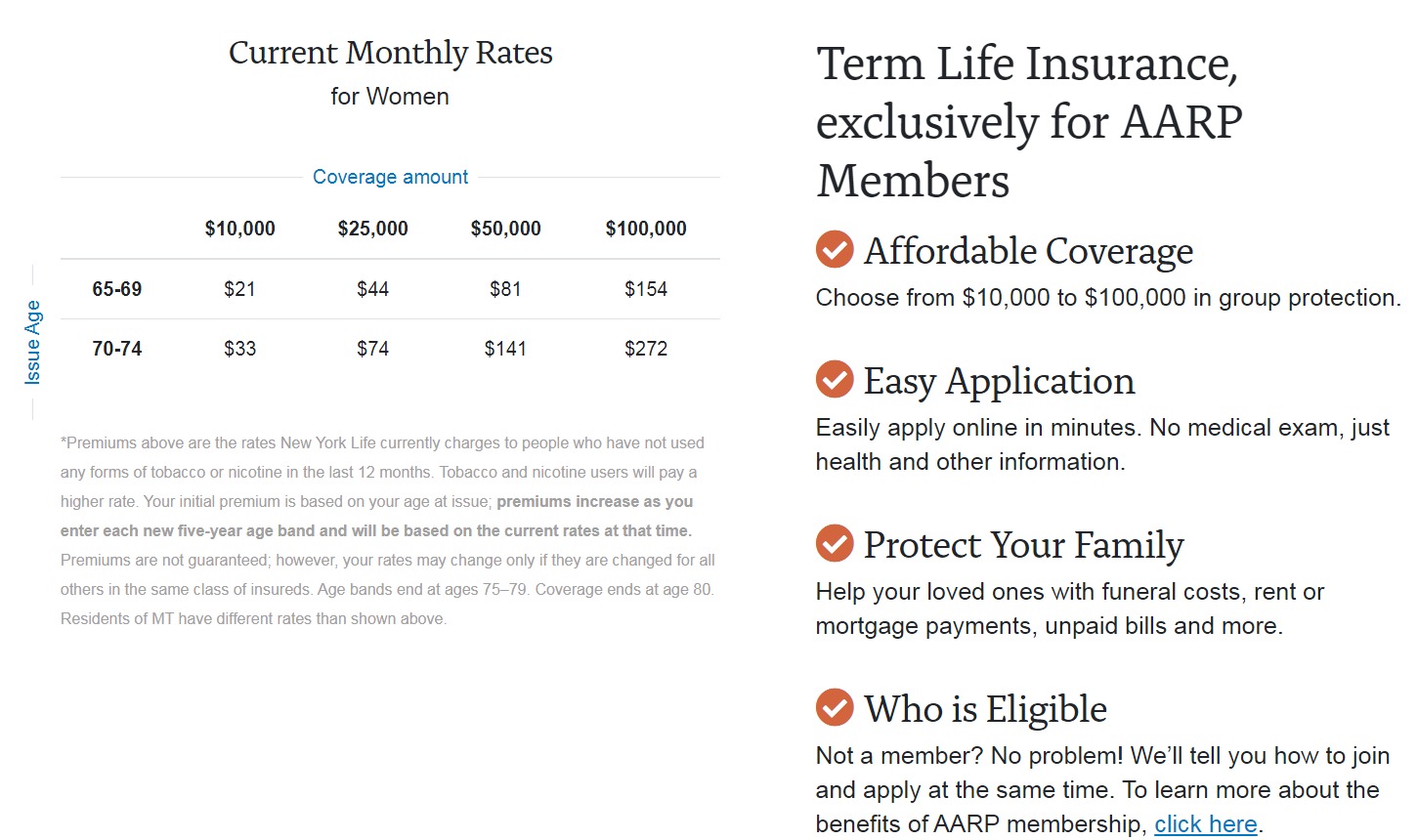
AARP offers life insurance policies exclusively to its members through a long-standing partnership with the New York Life Insurance Company. These programs are specifically designed for individuals aged 50 to 80, providing options such as term life, permanent whole life, and guaranteed acceptance coverage without the requirement of a medical exam for most applicants.
The AARP Life Insurance Program is one of the most recognized financial products for seniors in 2026. However, a common point of confusion for many consumers is the relationship between the organization and the insurance itself. AARP is not an insurance company; it is a non-profit interest group. The policies are underwritten, issued, and managed by New York Life Insurance Company, one of the oldest and largest mutual life insurers in the United States. This distinction is vital for policyholders to understand, as all claims, premium payments, and customer service inquiries are handled by New York Life’s dedicated AARP operations.
The Strategic Partnership Between AARP and New York Life
The partnership between AARP and New York Life has existed for decades, built on the premise of providing accessible, "simplified issue" insurance for older adults. In the insurance industry, simplified issue means that the application process is streamlined, often bypassing the traditional medical exam (which involves blood work and physicals) in favor of a brief health questionnaire.
By 2026, this program has evolved to leverage digital health records to speed up approvals, but the core mission remains the same: offering financial protection to a demographic that might find traditional underwritten policies too expensive or difficult to qualify for due to age-related health conditions. For AARP members, the primary benefit is the "strength in numbers" that the association provides, allowing for specialized policy features that cater specifically to the needs of retirees and those planning for end-of-life expenses.
Core Policy Options Available to Members
AARP members generally choose from three primary types of life insurance. Selecting the right one depends on your health status, your financial goals, and how much you are willing to pay in monthly premiums.
1. AARP Term Life Insurance
Term life insurance provides coverage for a specific period. With the AARP program, this coverage is "level-premium" for five-year increments. This means your rates stay the same for five years but will increase as you enter a new age bracket (e.g., moving from the 60-64 bracket to the 65-69 bracket).
- Coverage Limits: Typically ranges from $10,000 to $100,000, though some members may qualify for up to $150,000 depending on current offerings.
- Duration: The policy generally can be renewed until the insured reaches age 80.
- Suitability: This is best for members who still have significant financial obligations, such as a mortgage or children’s tuition, that will eventually go away. It provides the highest amount of coverage for the lowest initial cost.
2. AARP Permanent Whole Life Insurance
Unlike term insurance, permanent whole life does not expire as long as premiums are paid. It also builds cash value over time, which the policyholder can borrow against if needed.
- Coverage Limits: Usually capped at $50,000.
- Premiums: The rates are "locked in" at the age you apply. They will never increase regardless of your age or changes in health.
- Suitability: This is designed primarily for "final expenses," such as funeral costs, small outstanding debts, or leaving a modest legacy for grandchildren. Because it lasts for your entire life, the premiums are higher than term insurance for the same death benefit amount.
3. AARP Guaranteed Acceptance Life Insurance
This is a specific type of permanent life insurance where "no" is not an answer. There are no health questions and no medical exams. If you are an AARP member within the eligible age range, you cannot be turned down.
- Graded Death Benefit: This is the most critical technical detail of a guaranteed acceptance policy. If the insured dies from natural causes within the first two years of the policy, the beneficiaries do not receive the full death benefit. Instead, they receive the premiums paid plus interest (usually 10%). After the two-year "waiting period," the full benefit is active.
- Coverage Limits: Typically lower than other plans, often maxing out at $25,000.
- Suitability: This is a "last resort" policy for individuals with serious chronic illnesses or terminal diagnoses who cannot qualify for any other type of life insurance.
Eligibility and Membership Prerequisites
To apply for any of these policies, you must first be an active member of AARP. Membership is open to anyone age 50 or older, with an annual fee that is relatively nominal (usually around $16 per year in 2026).
- Age Requirements: For Term Life, the typical application age is 50 to 74. For Permanent Life and Guaranteed Acceptance, the age range is 50 to 80.
- Spousal Coverage: Spouses of AARP members are also eligible to apply for coverage, often even if they are younger than 50 (typically starting at age 45 for some products).
- Residency: Policies are available in all 50 U.S. states, though specific policy language and riders may vary slightly based on state insurance regulations (particularly in New York and Washington state).
The Application and Underwriting Process
One of the main reasons AARP has a life insurance policy that remains popular is the ease of application. In 2026, the process is predominantly digital, though paper applications are still accepted.
Simplified Underwriting
For the Term and Permanent Whole Life products, New York Life uses "simplified underwriting." This involves a series of health questions on the application. These questions typically ask about:
- Recent hospitalizations or surgeries.
- Chronic conditions like heart disease, cancer, or diabetes.
- Consultations with medical specialists.
Because there is no physical exam, New York Life offsets the risk by checking the Medical Information Bureau (MIB) and prescription drug databases. If your prescription history shows medications for a condition you didn't disclose, your application may be delayed or denied.
Accelerated Death Benefits
A standard feature in many AARP policies is the Accelerated Death Benefit. If a policyholder is diagnosed with a terminal illness and has a life expectancy of 12 to 24 months (depending on state law), they can access a portion of the death benefit while they are still alive. This money can be used for medical bills, hospice care, or any other personal expenses.
Detailed Comparison of AARP Life Insurance Products
| Feature | Term Life | Permanent (Whole) Life | Guaranteed Acceptance |
|---|---|---|---|
| Max Benefit | $100,000 - $150,000 | $50,000 | $25,000 |
| Premium Structure | Increases every 5 years | Fixed for life | Fixed for life |
| Cash Value | No | Yes | Yes |
| Medical Questions | Yes (Simplified) | Yes (Simplified) | None |
| Waiting Period | None (Immediate) | None (Immediate) | 2 Years (Graded) |
| Target Use | Mortgages, Income Replacement | Funeral, Final Expenses | Final Expenses for ill applicants |
Cost Considerations and Premium Factors
The cost of an AARP life insurance policy is determined by several factors, primarily your age at the time of application, your gender, and your tobacco usage. Because these policies do not require a full medical exam, the rates are often slightly higher than "fully underwritten" policies for someone in perfect health.
For example, a healthy 55-year-old might find a cheaper policy elsewhere if they are willing to undergo a blood draw and physical. However, for a 65-year-old with managed high blood pressure, the AARP rates through New York Life are often very competitive because the "simplified" pool groups them with a broader range of health profiles.
Note on Tobacco: Tobacco users will pay significantly higher premiums across all product lines. In 2026, this includes not just traditional cigarettes but often "alternative" nicotine products as well, depending on the underwriting guidelines of New York Life at the time of application.
Pros and Cons of the AARP Program
Advantages
- Brand Stability: New York Life is a highly rated company (A++ from A.M. Best) with massive financial reserves, ensuring that claims will be paid.
- Convenience: The lack of a medical exam is a major draw for seniors who want to avoid the hassle of doctor appointments and needles.
- Portability: Unlike employer-sponsored life insurance, you own this policy. If you move or change jobs (if working past 65), the coverage stays with you.
- Member Advocacy: AARP provides a layer of consumer oversight, ensuring the products meet the specific ethical standards the organization sets for its partners.
Disadvantages
- Lower Coverage Caps: If you need $1 million in coverage, AARP is not the right choice. Their limits are designed for mid-to-late life needs, not massive estate planning.
- Cost for the Very Healthy: Those in excellent health can often find lower premiums through a fully underwritten policy from other providers like Northwestern Mutual or State Farm.
- Age Limits on Term: The fact that term insurance ends at age 80 can be a "cliff" for some. If you outlive the policy, you have no coverage and have spent years paying premiums.
How to Manage Your Policy and File a Claim
Managing an AARP life insurance policy is handled through the New York Life member portal. Policyholders can update beneficiaries, change their payment methods, and even take out loans against the cash value of their permanent policies online.
The Claims Process
When a policyholder passes away, the beneficiary must contact New York Life directly. The process generally requires:
- A certified copy of the death certificate.
- The original policy document (though this can often be waived if the digital record is clear).
- A completed claim form from the beneficiary.
New York Life is known for a relatively efficient claims process, often processing payments within 7 to 10 business days once all documentation is received. This speed is crucial for families needing to cover immediate funeral costs.
Common Mistakes to Avoid
- Letting Term Policies Lapse: Many members buy term insurance because it is cheap, but they don't realize the price will jump every five years. It is important to project these costs into your future budget.
- Misunderstanding Guaranteed Acceptance: Some people buy guaranteed acceptance because they think "no medical exam" means "better deal." In reality, if you are healthy enough to answer the few questions on the Permanent Life application, you should always do that instead, as it avoids the two-year waiting period.
- Ignoring the Free-Look Period: New York Life provides a 30-day "free-look" period. If you receive your policy and realize it’s not what you expected, you can cancel it within the first 30 days for a full refund of any premiums paid.
Frequently Asked Questions
Can I keep my AARP life insurance if I cancel my AARP membership?
Generally, no. You must maintain an active AARP membership to keep the policy in force. If your membership lapses, New York Life may provide a grace period, but eventually, the policy could be terminated. It is best to set your AARP membership to auto-renew to avoid this risk.
Does AARP life insurance have a "cash value" I can withdraw?
Only the Permanent Whole Life and Guaranteed Acceptance policies build cash value. Term life insurance does not have any savings component; it is purely a death benefit. Cash value grows slowly in the early years of the policy as it is used to offset the higher cost of insurance in later years.
What happens if I move to a different state?
Your coverage is portable and will remain in effect regardless of where you move within the United States. However, you should notify New York Life of your change of address to ensure you receive premium notices and that your beneficiary information remains current.
Are the benefits from AARP life insurance taxable?
In most cases, life insurance death benefits are paid to beneficiaries income-tax-free. However, if the death benefit is paid into an estate, it may be subject to estate taxes if the total estate value exceeds federal or state thresholds. Consult a tax professional for specific advice regarding your estate.
Is there a medical exam for the $100,000 term policy?
Usually, no. Most AARP policies are issued based on your answers to health questions and a review of your medical records. However, New York Life reserves the right to request additional information if the health questions or MIB report reveal conflicting information.
Final Recommendation
If you are an AARP member seeking a straightforward, moderate amount of life insurance to cover final expenses or provide a small safety net for your spouse, the AARP Life Insurance Program from New York Life is a reliable and reputable option. It is particularly valuable for those who wish to avoid medical exams or those with minor health issues that might complicate a traditional insurance application. However, if you are in excellent health or require more than $150,000 in coverage, you should compare these rates with fully underwritten policies from other top-tier insurers to ensure you are getting the best value for your premiums in 2026.