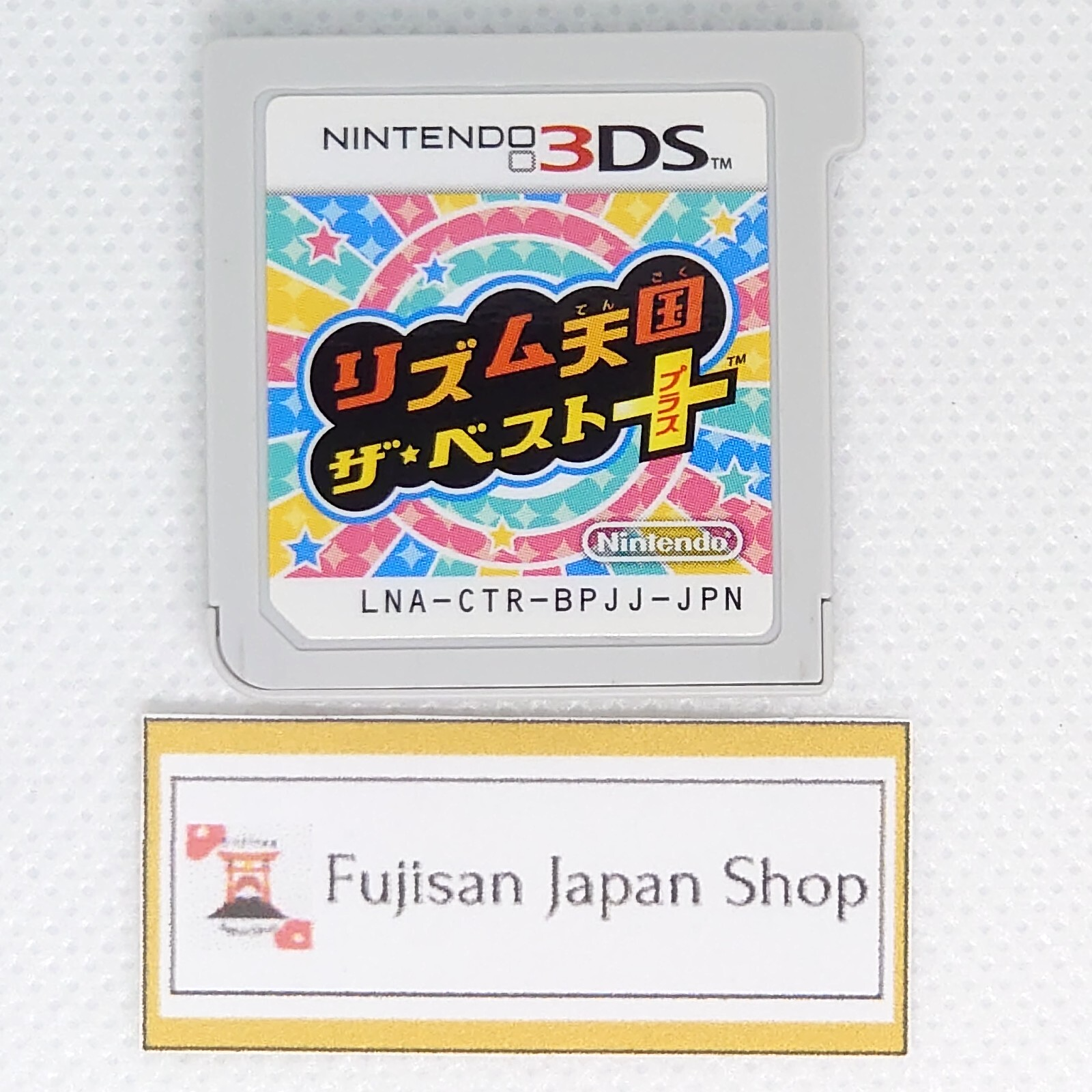
Nintendo’s 3DS family of handheld consoles introduced a strict regional locking system that prevented users from playing software purchased outside their home geographical territory. This restriction meant that Japanese, North American, and European game cards and digital titles were mutually incompatible with systems from other regions unless specific modifications were made.
Understanding the Nintendo 3DS region-locking mechanism involves examining hardware-level security, system software architecture, and the distinctions between physical game cards and digital purchases. While the Nintendo Switch transitioned to a region-free model, the 3DS generation remained firmly partitioned, impacting collectors, importers, and international players for the entirety of the console's commercial lifespan.
The Foundations of Console Region Locking
Region locking is a digital rights management (DRM) strategy utilized by hardware manufacturers to control content distribution, pricing, and release schedules across different global markets. Historically, television standards (such as NTSC in North America and Japan versus PAL in Europe) physically dictated video game compatibility. However, even as digital displays rendered these analog differences obsolete, companies maintained regional boundaries for business reasons.
For the Nintendo 3DS family—which includes the original 3DS, 3DS XL, Nintendo 2DS, New 3DS, New 3DS XL, and New 2DS XL—region locking was implemented as an absolute barrier. A system purchased in Kyoto, Japan, would reject a physical cartridge bought in New York or London.
This enforcement occurred through a handshake protocol between the game cartridge's internal integrated circuit and the console's security processor. If the regional metadata embedded in the software header did not match the console's internal region code, the system refused to execute the code, returning an error message and halting the software launch sequence.
Why Nintendo Implemented Regional Restrictions on the 3DS
Nintendo defended its use of region locking on handheld hardware by citing several operational and market-specific factors. Unlike home consoles, which remained stationary in living rooms, handheld systems were designed for global travel, making cross-border software acquisition a more prominent consumer desire. Despite this, Nintendo relied on a framework of localized justifications:
- Localization and Rating Compliance: Different regions feature distinct regulatory bodies (such as the ESRB in North America, PEGI in Europe, and CERO in Japan) that mandate specific content adjustments, translations, and age ratings.
- Release Schedule Management: Games were frequently staggered across global territories by months or even years. Region locks prevented consumers from bypassing local release dates by importing versions from overseas.
- Price Discrimination and Market Protection: Regional economies varied significantly. Locking hardware and software ensured that currency fluctuations and localized pricing strategies could not be easily exploited by cross-border arbitrage.
How the 3DS Region Lock Operates Across Software Types
The restriction mechanism did not affect all software equally. Both physical media and digital channels handled regional boundaries through distinct technical layers within the operating system.
Physical Game Cartridges
Physical Nintendo 3DS game cards contain an integrated flash memory chip and a unique header containing cryptographic signatures and regional flags. When inserted into a 3DS system, the console reads this header before loading any game data.
- The Match Requirement: The region code encoded on the cartridge must match the region code permanently burned into the 3DS motherboard during manufacturing.
- Backward Compatibility Exception: Interestingly, physical Nintendo DS (NDS) cartridges—predecessors to the 3DS—were largely region-free when played on standard Nintendo DS hardware. However, when played on a Nintendo 3DS, most NDS games remained region-free, except for titles that utilized specific DSi-enhanced features or regional Wi-Fi locking protocols.
Digital Titles and the Nintendo eShop
Digital purchases tied to the Nintendo eShop were even more rigidly bound to regional hardware than physical cartridges.
- The eShop Lock: A North American 3DS could only access the North American Nintendo eShop. Attempting to log in with a foreign account was structurally impossible through standard system settings.
- Currency and Payment Restrictions: Even if an international user managed to access an eShop from another region, local payment processors typically required credit cards or bank accounts issued within that specific territory, effectively halting unauthorized foreign purchases.
- System Transfers: Moving a user profile and its associated digital purchases to a new console required both systems to belong to the exact same regional classification.
Comparing Regional Restrictions Across Handheld Generations
Nintendo's approach to region locking evolved significantly over successive hardware generations. Reviewing this trajectory highlights how the 3DS functioned as the final stronghold of strict regional partitioning before the industry shifted toward open ecosystems.
| Console Family | Region Lock Status | Physical Media Compatibility | Digital / eShop Access |
|---|---|---|---|
| Game Boy / Color | Region-Free | Universal across all global territories | N/A (Digital distribution did not exist) |
| Game Boy Advance | Region-Free | Universal across all global territories | N/A |
| Nintendo DS / Lite / DSi | Generally Region-Free (Minor exceptions) | NDS games worked globally; DSi had minor regional blocks | Region-locked to local DSi Shop iterations |
| Nintendo 3DS Family | Strictly Region-Locked | Locked strictly to console manufacturing region | Locked strictly to local eShop territory |
| Nintendo Switch | Region-Free | Universal across all global territories | Accessible via foreign account creation |
Impact on Consumers, Collectors, and Importers
The strict implementation of region locking created notable hurdles for international enthusiasts. For fans of niche genres, Japanese role-playing games (JRPGs), or titles that never received a Western localization, playing foreign software required purchasing dedicated hardware from that specific region.
The Import Dilemma
For dedicated collectors and import gamers, the 3DS generation necessitated owning multiple consoles to experience complete software libraries. A player living in Europe who wanted to experience region-exclusive titles like Project X Zone 2 variants or specific Dragon Quest iterations had to acquire a Japanese or North American 3DS system.
Furthermore, power supply differences, warranty invalidation, and language barriers added friction to importing foreign hardware. While the system software supported multiple languages in rare instances, the vast majority of Japanese software omitted English text and audio entirely, requiring fluent comprehension or fan translation guides to navigate.
Technical Workarounds and Modifications
As the official lifecycle of the Nintendo 3DS wound down and digital storefronts began closing, the community developed software-based modifications to bypass hardware restrictions.
Custom Firmware (CFW) and Luma3DS
The most prevalent method for removing the 3DS region lock involves installing custom firmware, most notably Luma3DS, via exploits like seedminer or safecerhax. By modifying the system's NAND memory, users can patch the system kernel to ignore regional checks entirely.
- Region Free Functionality: Once custom firmware is active, the 3DS can execute physical game cards and digital titles from any region without hardware errors.
- Signature Checks: CFW patches signature verification checks, allowing the system to run homebrew applications, translations, and out-of-region software seamlessly.
Note: Modifying system software carries inherent risks, including the potential for bricking the console if instructions are not followed precisely, and violates Nintendo's original terms of service.
Frequently Asked Questions
Can a North American 3DS play European games?
No. Out of the box, a North American 3DS system is hardcoded to reject physical cartridges and digital software originating from Europe (PAL region) or Japan. The system checks the internal metadata of the software against its own region code and halts execution if they do not match.
Are Nintendo DS games also region-locked on the 3DS?
Generally, no. Original Nintendo DS (NDS) cartridges remain region-free when played on a 3DS system. However, a small subset of DSi-enhanced games and titles featuring specific regional network locking protocols may still refuse to boot across regional boundaries.
Did Nintendo ever remove the region lock via a software update?
No. Unlike some competitors who relaxed regional restrictions late in a console's life cycle, Nintendo maintained the 3DS region lock from its launch in 2011 until the final discontinuation of hardware production. Official removal was only achieved by users via aftermarket software modifications.
How does region locking affect DLC and updates?
Downloadable content (DLC) and software updates are strictly tied to the region of the game software, not just the console. If you manage to run a Japanese game cartridge on a modified system, you must obtain updates and DLC from the Japanese eShop region, as cross-region DLC is fundamentally incompatible.
Why did Nintendo abandon region locking on the Nintendo Switch?
Following the 3DS generation, consumer feedback, globalized digital distribution models, and shifts in software development practices prompted Nintendo to adopt a region-free architecture for the Nintendo Switch, aligning with contemporary industry standards.
Final Recommendations for 3DS Owners
If you are looking to explore out-of-region software libraries on the Nintendo 3DS, evaluate your technical comfort level and objectives carefully. For standard users, purchasing hardware matching your local geographic territory remains the most straightforward path to ensure seamless access to local physical libraries and standard eShop services. If cross-region compatibility is a strict requirement for your collection, researching community-developed software modifications is the primary avenue utilized by enthusiasts to bypass these historic hardware limitations.