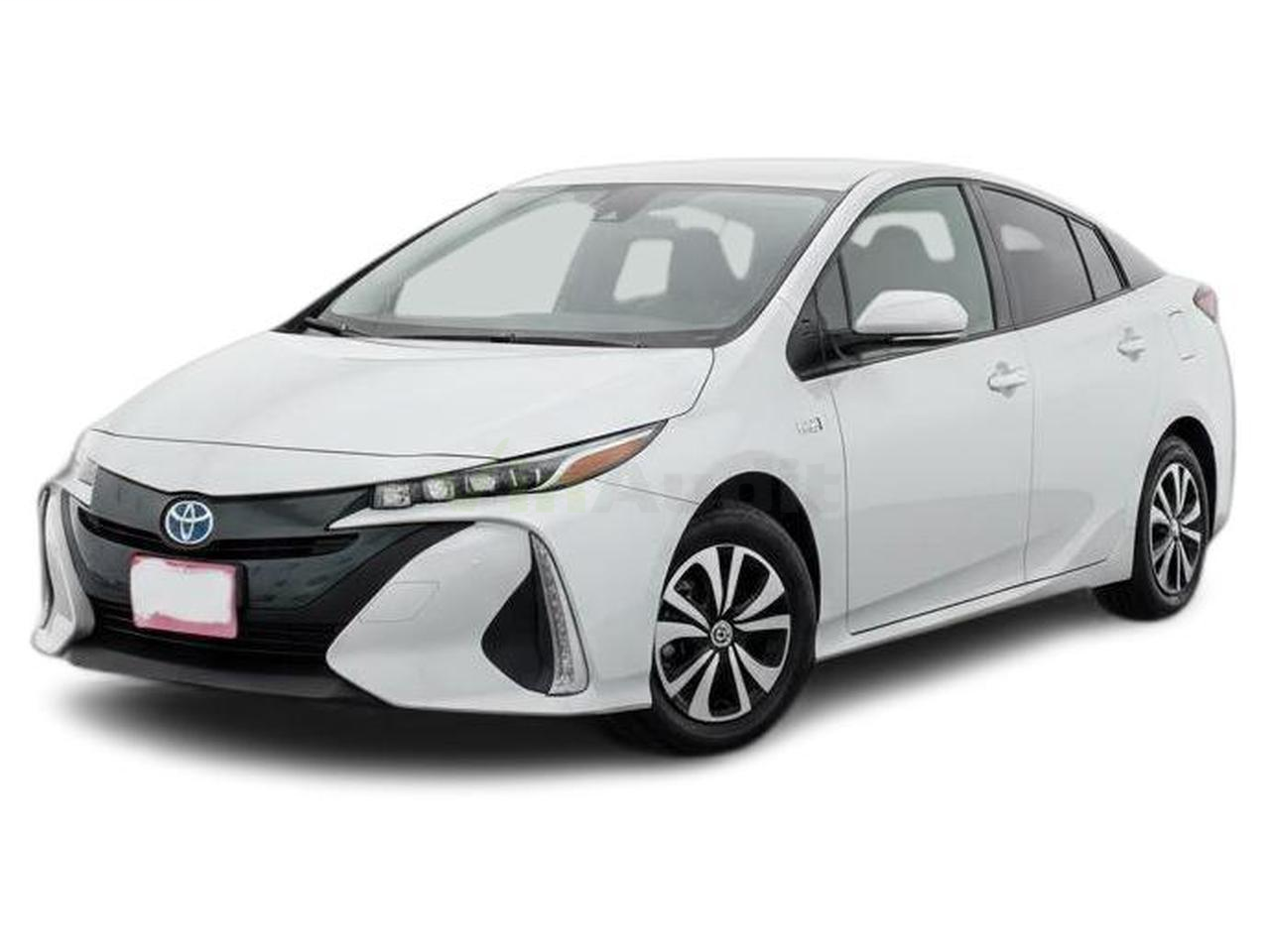
The 2018 Toyota Prius launched with an original Manufacturer’s Suggested Retail Price (MSRP) ranging from $23,475 for the base Prius One trim to $30,565 for the fully loaded Prius Four Touring. Original sticker prices were shaped by standardized active safety technology, powertrain manufacturing costs, federal fleet compliance regulations, and state-level emissions mandates that continue to influence used market values and warranty eligibility.
| Trim Level | Original MSRP |
|---|---|
| Prius One (Base Fleet) | $23,475 |
| Prius Two (Standard Entry) | $24,685 |
| Prius Two Eco (Efficiency Leader) | $25,165 |
| Prius Three (Mid-Tier Tech) | $26,735 |
| Prius Three Touring (Sport/Mid) | $28,115 |
| Prius Four (Premium Tech) | $29,685 |
| Prius Four Touring (Top-Spec Sport) | $30,565 |
Original 2018 Toyota Prius Pricing Architecture & Trim Structure
When Toyota released the 2018 Prius—the third model year of the fourth-generation (XW50) platform—it utilized the Toyota New Global Architecture (TNGA-K) platform. This platform delivered a lower center of gravity, a double-wishbone rear suspension, and significantly improved structural rigidity over previous generations. Toyota structured the 2018 lineup across seven distinct trim levels to capture a wide economic spectrum, from price-sensitive commuter buyers to technology-focused early adopters.
The table below outlines the original base MSRPs (excluding the original $885 to $895 delivery, processing, and handling fee), core powertrain configurations, and key feature escalations across the 2018 model family.
2018 Toyota Prius Trim Pricing and Technical Specifications
| Trim Level | Original Base MSRP (2018) | Powertrain & High-Voltage Battery Type | Key Standard Equipment & Trim Highlights | Estimated 2026 Used Market Value |
|---|---|---|---|---|
| Prius One | $23,475 | 1.8L 4-Cyl Hybrid / NiMH Battery | Toyota Safety Sense P (TSS-P), Bi-LED Headlights, 6.1-inch Entune Touchscreen | $11,500 – $13,500 |
| Prius Two | $24,685 | 1.8L 4-Cyl Hybrid / NiMH Battery | Cruise Control, 60/40 Split Folding Rear Seats, Digital Gauge Cluster | $12,500 – $14,500 |
| Prius Two Eco | $25,165 | 1.8L 4-Cyl Hybrid / Lithium-Ion Battery | Inflation Kit (No Spare Tire), Low Rolling Resistance Tires, Ultra-High Efficiency Tuning | $13,000 – $15,000 |
| Prius Three | $26,735 | 1.8L 4-Cyl Hybrid / Lithium-Ion Battery | Qi Wireless Phone Charging, Entune Premium Audio w/ Navigation, SofTex Steering Wheel | $13,500 – $15,500 |
| Prius Three Touring | $28,115 | 1.8L 4-Cyl Hybrid / Lithium-Ion Battery | 17-inch Alloy Wheels, SofTex Synthetic Leather Seats, Integrated Fog Lights, Rear Bumper Accent | $14,000 – $16,500 |
| Prius Four | $29,685 | 1.8L 4-Cyl Hybrid / Lithium-Ion Battery | Blind Spot Monitor (BSM), Rear Cross-Traffic Alert (RCTA), Heated Front Seats, Rain-Sensing Wipers | $14,500 – $17,000 |
| Prius Four Touring | $30,565 | 1.8L 4-Cyl Hybrid / Lithium-Ion Battery | 17-inch Alloy Wheels, SofTex Trim, Rain-Sensing Wipers, Full Active Safety Suite + Touring Trim Accents | $15,500 – $18,000 |
Engineering Drivers Behind the Tiered Pricing
The price spread of over $7,000 between the entry-level Prius One and the Prius Four Touring was governed by two main technical choices: interior convenience packages and battery chemistry.
Lower-tier models (Prius One and Prius Two) were equipped with a traditional Nickel-Metal Hydride (NiMH) battery pack. NiMH technology was heavier and slightly less energy-dense, but it offered lower production costs and proven thermal endurance in cold climates.
Higher trims (starting with the Prius Two Eco up through the Prius Four Touring) utilized a Lithium-Ion (Li-ion) battery pack. Li-ion technology reduced high-voltage battery weight by roughly 35 pounds while delivering superior charge acceptance and discharge rates. This battery upgrade was a primary reason the Prius Two Eco achieved an EPA rating of 58 MPG City / 53 MPG Highway, compared to the standard model's 54 MPG City / 50 MPG Highway rating according to official testing hosted on FuelEconomy.gov.
Every 2018 Prius featured Toyota Safety Sense P (TSS-P) as standard equipment. Including Pre-Collision System with Pedestrian Detection, Lane Departure Alert with Steering Assist, Automatic High Beams, and Full-Speed Range Dynamic Radar Cruise Control across all trims allowed Toyota to market the base model as a high-safety vehicle without forcing buyers to pay extra for essential driver assistance.
The Policy Drivers Behind the Original Sticker Price
The original MSRP of the 2018 Toyota Prius was not calculated solely based on manufacturing bill-of-materials and retail profit margins. Federal fuel economy mandates, regional zero-emission policies, and corporate regulatory compliance strategies played direct roles in how Toyota priced and positioned the vehicle.
- CAFE Standards: Subsidized Base MSRP to generate high-volume fleet credit
- CARB Certification: Extended 10-Yr/150k Mi Warranty in participating states
- IRA Section 25E: Up to $4,000 Used Clean Vehicle Credit (Prius Prime only)
1. Corporate Average Fuel Economy (CAFE) Compliance Strategies
Automakers selling vehicles in the United States must meet strict overall fleet fuel efficiency averages enforced by the National Highway Traffic Safety Administration (NHTSA). High-efficiency hybrid sales generate fleet credits that offset the lower fuel economy of profit-heavy trucks and large SUVs.
Toyota intentionally capped the base MSRP of the 2018 Prius One and Prius Two below $25,000 to maintain high sales volumes. By absorbing portion of the hybrid powertrain's production costs on entry trims, Toyota avoided millions of dollars in federal CAFE non-compliance penalties, effectively using its high-margin truck lineup to subsidize the retail price of its primary hybrid.
2. CARB Mandates and Regional Warranty Policy Impacts
State-level emissions mandates established by the California Air Resources Board (CARB) created a split in the financial valuation of the 2018 Prius depending on where the vehicle was originally sold and registered.
Under CARB regulations—adopted by California and over a dozen other states (including New York, Massachusetts, Vermont, Oregon, and Washington)—the 2018 Prius was certified under Super Ultra Low Emission Vehicle (SULEV20) or Partial Zero Emission Vehicle (PZEV) standards. To meet these standards, Toyota was legally required to extend the factory hybrid component and battery warranty:
- Non-CARB States: Standard Factory Hybrid Warranty was 8 years / 100,000 miles.
- CARB States: Mandated Factory Hybrid Warranty was extended to 10 years / 150,000 miles.
This policy difference impacts used vehicle values. A 2018 Prius originally purchased and registered in a CARB state retains factory high-voltage battery protection until 2028 or 150,000 miles. Conversely, identical 2018 models in non-CARB states reach the end of their 8-year factory battery warranty coverage. As a result, CARB-compliant vehicles command a regional price premium on the secondary market.
3. Federal Tax Credits: Standard Prius vs. Prius Prime
A common point of confusion among buyers is whether the standard 2018 Toyota Prius (HEV) qualified for federal EV tax incentives.
When purchased new, the standard 2018 Prius did not qualify for the original Internal Revenue Code (IRC) Section 30D Plug-In Electric Drive Motor Vehicle Credit because it lacked a plug-in charging port and a battery pack meeting the minimum 4 kWh capacity threshold. Buyers seeking federal tax relief had to step up to the 2018 Toyota Prius Prime—a Plug-In Hybrid Electric Vehicle (PHEV) featuring an 8.8 kWh battery—which qualified for a federal tax credit of up to $4,502 at launch.
The policy landscape evolved under the Inflation Reduction Act of 2022. The IRC Section 25E Used Clean Vehicle Credit, managed by the Internal Revenue Service, provides up to a $4,000 tax credit (or 30% of the sale price, whichever is lower) on eligible pre-owned alternative fuel vehicles purchased through a licensed dealer.
- Standard 2018 Prius (HEV): Ineligible for the used clean vehicle tax credit because it cannot be charged externally.
- 2018 Prius Prime (PHEV): Eligible for the Section 25E used credit, provided the resale purchase price is under $25,000, the buyer meets adjusted gross income (AGI) caps, and the transaction occurs through a licensed automotive dealership.
Secondary Market Dynamics & Residual Value Performance
The original 2018 MSRP provided a platform for depreciation models, but real-world macroeconomic shifts disrupted normal vehicle depreciation curves. Supply chain shortages, volatile fuel pricing, and rising consumer interest in reliable transportation altered standard resale value trajectories.
- 2018 Launch MSRP: $24,685
- 3-Year Val (2021): $19,200
- 5-Year Val (2023): $17,500
- Current Val (2026): $13,500
Residual Value Retention Factors
Under normal automotive depreciation profiles, a mass-market compact car retains roughly 35% to 40% of its original MSRP after eight years. The 2018 Toyota Prius outperforms these averages, holding between 48% and 55% of its original MSRP depending on trim, mileage, and battery health.
Several core engineering factors contribute to this above-average value retention:
- eCVT Reliability: Unlike conventional automatic transmissions with multi-clutch assemblies or push-belt CVTs prone to wear, Toyota’s electronic Continuously Variable Transmission (eCVT) relies on a planetary gearset with two brushless electric motor-generators (MG1 and MG2). With zero mechanical gear-shifting mechanisms, mechanical failure rates remain low over long distances.
- Reduced Mechanical Wear: The Atkinson-cycle 1.8-liter engine (2ZR-FXE) operates in tandem with electric assist, reducing internal thermal stress and engine wear per vehicle mile driven compared to non-hybrid powerplants.
- Regenerative Braking Longevity: Regenerative braking handles the majority of low- to mid-speed deceleration, capturing kinetic energy to recharge the high-voltage pack. Friction brake pads and rotors frequently last past 100,000 miles before requiring replacement, reducing recurring maintenance costs.
Total Cost of Ownership (TCO) & Pre-Purchase Technical Guidance
Evaluating a 2018 Toyota Prius requires looking beyond sticker price and resale value to assess Total Cost of Ownership (TCO). Fuel expenditures, scheduled hybrid system inspections, and potential battery reconditioning costs dictate long-term ownership economics.
- High-Voltage Battery Health Check (OBD-II delta voltage monitoring)
- Inverter Cooling System Fluid Integrity & Pump Operation Check
- Brake Actuator & ABS Module Pressure Cycle Test
- Underbody Aerodynamic Shield Inspection
- Emission Control Label Verification (CARB vs. Non-CARB Compliance Status)
1. Fuel Economics Analysis
The 2018 Prius Eco trim delivers an EPA-estimated combined fuel economy of 56 MPG, while standard trims achieve 52 MPG combined. Assuming an average annual driving distance of 12,000 miles and a national fuel price baseline of $3.50 per gallon:
$$\text{Standard Prius Annual Fuel Cost} = \left(\frac{12,000 \text{ miles}}{52 \text{ MPG}}\right) \times $3.50 = $807.69$$
$$\text{Non-Hybrid Compact (30 MPG Combined) Annual Fuel Cost} = \left(\frac{12,000 \text{ miles}}{30 \text{ MPG}}\right) \times $3.50 = $1,400.00$$
This fuel efficiency yields an annual fuel savings of approximately $592 compared to a standard gas-powered vehicle, compounding into thousands of dollars in savings over an extended ownership period.
2. High-Voltage Battery Diagnostic Procedures
When evaluating a 2018 Prius on the used market, verifying high-voltage (HV) battery health is critical. The pack consists of individual module blocks wired in series. As the battery ages, internal resistance increases, and voltage variances widen between module blocks.
- Diagnostic Step 1: Connect an OBD-II diagnostic scanner capable of reading live Toyota hybrid data blocks (or use specialized diagnostic applications such as Dr. Prius).
- Diagnostic Step 2: Monitor Block Voltage Deltas under heavy electric load (e.g., full throttle acceleration in Power Mode or AC running at maximum output). A healthy battery pack displays a block voltage delta of less than 0.2 Volts. A delta exceeding 0.5 Volts indicates module imbalance and impending pack degradation.
- Diagnostic Step 3: Inspect the hybrid battery cooling fan intake screen located beside the rear passenger seats. Dust, pet hair, and debris clogging this intake cause thermal buildup in the battery module, accelerating capacity loss and triggering premature cell failure.
3. Inverter Coolant and Inverter Health
The 2018 Prius utilizes a dual-circuit cooling system: one circuit for the internal combustion engine and a dedicated secondary circuit for the power control unit (inverter/converter). The inverter coolant should be inspected for clarity and level. The electric inverter coolant pump must be verified for active fluid circulation inside the inverter reservoir when the vehicle is in "READY" mode.
Frequently Asked Questions
What was the original base MSRP of the 2018 Toyota Prius when it was released?
The base 2018 Toyota Prius One had an original base MSRP of $23,475. The core consumer model, the Prius Two, started at $24,685, while the top-tier Prius Four Touring started at $30,565. These prices excluded destination and handling fees, which added approximately $885 to $895 at launch.
Did the 2018 Toyota Prius qualify for federal EV tax credits when new?
No, the standard hybrid 2018 Toyota Prius (HEV) did not qualify for federal clean vehicle tax credits when new because it lacks plug-in capability and an external charging port. Only the plug-in hybrid variant, the 2018 Toyota Prius Prime, qualified for a federal tax credit (up to $4,502) under original IRC Section 30D rules.
How does CARB state status impact a used 2018 Toyota Prius in 2026?
Vehicles originally sold and registered in CARB-compliant states (such as California, New York, and Massachusetts) received a state-mandated 10-year / 150,000-mile high-voltage hybrid battery warranty. Non-CARB vehicles received an 8-year / 100,000-mile warranty. In 2026, CARB-state 2018 models may still have active factory battery coverage through 2028 or 150,000 miles, making them more valuable on the secondary market.
What is the primary difference between the battery types in 2018 Prius trims?
The Prius One and Prius Two trims used a conventional Nickel-Metal Hydride (NiMH) battery pack. The Prius Two Eco, Three, Three Touring, Four, and Four Touring trims used a lighter, more energy-dense Lithium-Ion (Li-ion) battery pack. The Li-ion pack reduced curb weight and helped higher trims reach up to 58 MPG city / 53 MPG highway.
Can I claim a federal tax credit when buying a used 2018 Toyota Prius today?
You cannot claim a federal used clean vehicle tax credit on a standard 2018 Toyota Prius (HEV). However, if you purchase a 2018 Toyota Prius Prime (PHEV) from a licensed automotive dealership for under $25,000, you may qualify for the IRC Section 25E Used Clean Vehicle Credit of up to $4,000, provided you meet IRS income qualification guidelines.
Final Recommendation & Next Actions
For prospective used vehicle buyers, the 2018 Toyota Prius remains a benchmark for reliability and total cost of ownership. The standard safety equipment in Toyota Safety Sense P makes even the base Prius Two a practical daily commuter, while the Prius Two Eco and Prius Three offer the ideal balance of fuel efficiency and updated infotainment features.
Before finalizing a purchase:
- Run a VIN check to confirm where the vehicle was originally purchased to determine if it carries 10-year/150,000-mile CARB hybrid warranty coverage.
- Perform an OBD-II diagnostic scan to check high-voltage battery cell block voltage deltas and internal resistance.
- If targeting federal tax credits, restrict your search to dealership-listed Prius Prime (PHEV) models priced under $25,000 to utilize the Section 25E Used Clean Vehicle Credit.