The 2009 MTV Video Music Awards moment involving Taylor Swift and Kanye West stands as one of the most defining interruptions in live television history. When Kanye West stormed the stage to protest Taylor Swift's Best Female Video win over Beyoncé, it triggered a massive cultural ripple effect, accelerated Swift's mainstream ascent, and permanently altered the trajectory of modern pop culture and celebrity public relations.
Setting the Stage: The 2009 MTV Video Music Awards Landscape
Held on September 13, 2009, at Radio City Music Hall in New York City, the MTV Video Music Awards (VMAs) were known for unpredictable live moments, but few anticipated the historic collision that would occur during the broadcast. Hosted by comedian Russell Brand, the ceremony featured performances from top-tier artists like Lady Gaga, Beyoncé, Pink, and Jay-Z.
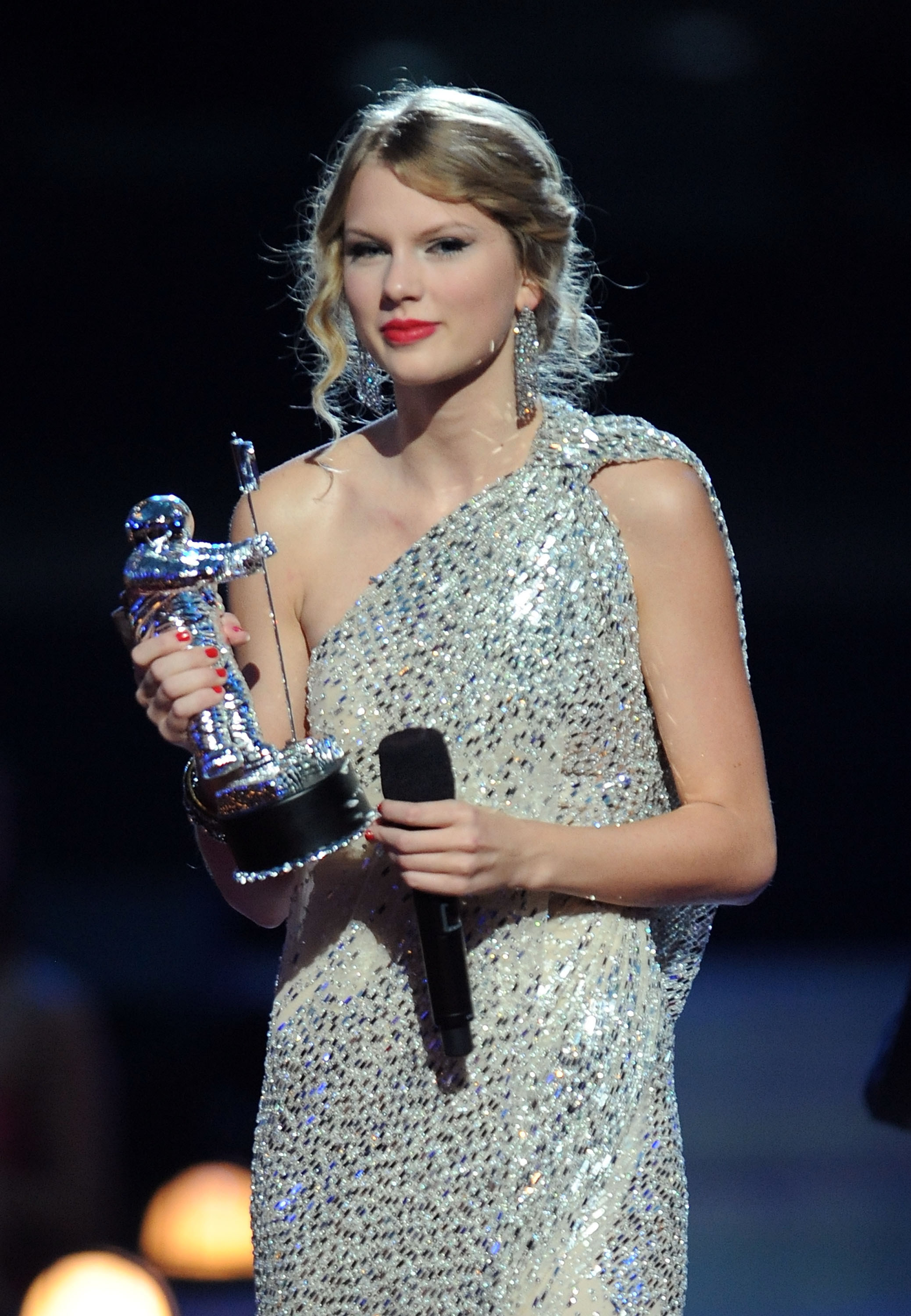
The category of Best Female Video was fiercely competitive. The nominees included Lady Gaga for "Poker Face," Katy Perry for "Hot n Cold," Kelly Clarkson for "My Life Would Suck Without You," Pink for "So What," Beyoncé for "Single Ladies (Put a Ring on It)," and a nineteen-year-old Taylor Swift for "You Belong with Me." When Swift’s name was announced as the winner, she became the first country music artist to win a VMA, marking a monumental crossover milestone for the young singer-songwriter.
As Swift walked up to the stage to accept her Moonman trophy and deliver her acceptance speech, the celebratory atmosphere shifted abruptly.
The Incident: Kanye West's Stage Intrusion
Midway through Swift’s expression of gratitude, rapper Kanye West walked onto the stage, uninvited and unexpected. He approached the podium, gently took the microphone from Swift's hand, and delivered a declaration that immediately echoed across the auditorium and living rooms worldwide:
"Yo Taylor, I’m really happy for you, I’mma let you finish, but Beyoncé had one of the best videos of all time! One of the best videos of all time!"
West then handed the microphone back, shrugged, flashed a dismissive gesture, and walked off the stage. Swift, visibly stunned, stood frozen at the podium, her acceptance speech cut short. The audience gasped, and boos immediately rained down inside Radio City Music Hall.
Beyoncé, sitting in the audience, looked mortified by the interruption. Later in the evening, when Beyoncé won the coveted Video of the Year award for "Single Ladies," she demonstrated grace under pressure by calling Swift back up to the stage to finish her moment, allowing the young country star to have her celebratory speech uninterrupted.
Immediate Aftermath and Public Outcry
The fallout from the incident was swift and unrelenting. Within minutes, social media platforms—then dominated by Twitter and early Facebook integration—lit up with millions of reactions, turning the interruption into one of the earliest viral phenomena of the social media era.
Mainstream media outlets seized on the breach of etiquette immediately. Pundits, entertainment journalists, and fellow celebrities weighed in within hours of the broadcast. The reaction was almost universally condemning of West's behavior, viewing it as unprovoked, disrespectful to a teenage artist, and disruptive to a live broadcast.
Political figures even weighed in unexpectedly. President Barack Obama, during an off-the-record interview with CNBC that was accidentally leaked, called West a "jackass" for his actions. While the comment was a private remark caught on a hot mic, its public release underscored the magnitude of the cultural disruption.
West attempted to defend his position on his blog later that night, writing in capital letters that he was fighting for artistry and that Beyoncé's video deserved the win. However, public pressure mounted quickly, leading West to issue a formal televised apology on The Jay Leno Show days later, admitting that his behavior was rude and that he had hurt someone who didn't deserve it.
Long-Term Cultural Impact on Taylor Swift's Career
For Taylor Swift, the 2009 VMA moment served as an unintended catalyst that propelled her from a successful crossover country star into a global pop phenomenon. The sympathy she received transformed public perception, framing her as an underdog who maintained poise and dignity under intense public humiliation.
| Phase | Pre-2009 VMAs | Post-2009 VMAs |
|---|---|---|
| Musical Identity | Dominantly country music crossover artist | Expanding toward mainstream pop and global mainstream appeal |
| Public Narrative | Rising teenage prodigy in Nashville | Empathetic pop culture icon and relatable underdog |
| Media Scrutiny | Moderate, genre-specific industry focus | Intense, constant tabloid and mainstream spotlight |
| Commercial Reach | High domestic sales, emerging international audience | Exploding global superstardom and record-breaking album cycles |
Instead of derailing her momentum, the incident became a foundational narrative thread in Swift’s career. She channeled her experiences into her songwriting, famously addressing the event and Kanye West's subsequent apologies and interactions years later. The resilience she displayed at nineteen established a professional baseline that shaped her brand of authenticity and emotional transparency with her fan base.
The Broader Repercussions for Kanye West
For Kanye West, the incident marked a significant turning point in his public image and relationship with the media. Although he was already known for outspokenness and occasional award-show outbursts—such as storming out of the 2006 MTV Europe Music Awards when he lost Best Hip Hop—the VMA intrusion crossed a line for mainstream audiences.
West retreated from the public eye for a period, spending time in Hawaii where he focused intensely on music production. This introspective exile directly yielded his critically acclaimed 2010 album, My Beautiful Dark Twisted Fantasy, an artistic masterpiece widely interpreted as a complex meditation on fame, ego, public backlash, and redemption.
While the incident temporarily alienated sponsors and mainstream award committees, it also cemented West’s status as a disruptive, polarizing cultural force whose artistic output continually eclipsed industry norms and social expectations.
Frequently Asked Questions
Why did Kanye West interrupt Taylor Swift at the 2009 VMAs?
Kanye West believed that Beyoncé’s music video for "Single Ladies (Put a Ring on It)" was vastly superior to Taylor Swift's "You Belong with Me" and felt that MTV's award selection overlooked superior artistic achievement in favor of commercial trends.
How did Beyoncé react to the incident?
Beyoncé was visibly shocked and embarrassed when the interruption occurred. Later in the evening, after winning Video of the Year, she invited Taylor Swift back onto the stage during her own acceptance speech to let Swift have her moment in the spotlight.
Did Taylor Swift and Kanye West ever reconcile?
The relationship between Swift and West remained deeply complicated for years. While there appeared to be moments of public truce—such as Swift presenting West with the Video Vanguard Award at the 2015 VMAs—subsequent disputes over lyrics in West's 2016 song "Famous" reignited intense public feuds between the two camps.
How did the 2009 incident impact social media?
The event occurred during the formative years of real-time social media commentary. It generated record-breaking tweet volumes per second for Twitter at the time, establishing live-tweeting and instant viral outrage as standard components of major televised entertainment events.
Conclusion and Legacy
The 2009 MTV VMAs moment transcended standard pop culture gossip to become a defining historical marker of the 21st-century entertainment landscape. By juxtaposing raw ambition, unscripted emotion, and the nascent power of viral media, the incident permanently altered the career trajectories of both Taylor Swift and Kanye West. Understanding this pivotal night requires looking past the shock value to recognize how a nineteen-year-old artist's poise under pressure helped forge an enduring legacy of resilience in the modern music industry.