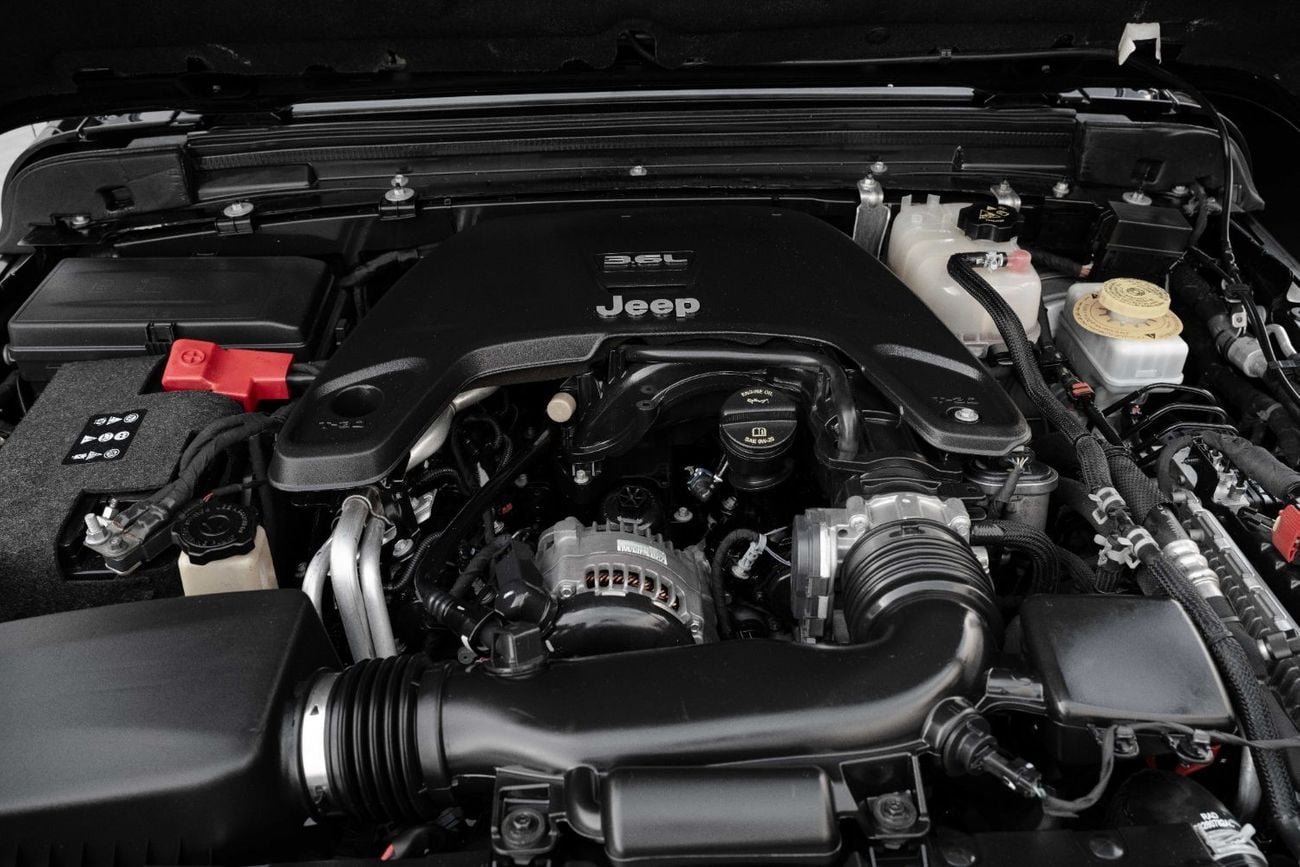
Diagnostic Trouble Code P0117 on a Jeep Wrangler indicates that the Powertrain Control Module has detected an abnormally low voltage signal from the Engine Coolant Temperature sensor circuit. This fault typically triggers the check engine light and can cause cooling fan issues, hard starting, or poor fuel economy, requiring systematic diagnostic steps to resolve.
Understanding Diagnostic Trouble Code P0117 in Jeep Wranglers
When you turn the key in your Jeep Wrangler, the vehicle relies on an intricate network of sensors to monitor internal conditions and keep the engine operating efficiently. Among these sensors, the Engine Coolant Temperature (ECT) sensor plays a pivotal role.
DTC P0117 is a generic powertrain code that stands for "Engine Coolant Temperature Sensor 1 Circuit Low." In practical terms, this means the Powertrain Control Module (PCM) has received an electrical signal from the ECT sensor indicating a temperature higher than the maximum threshold, or more commonly, an electrical short that drops the return voltage near zero. Because voltage is inversely proportional to resistance in a negative temperature coefficient (NTC) thermistor, a low voltage reading tricks the computer into thinking the engine is running at an impossibly high temperature—or it registers an open/short fault in the wiring harness.
Jeep Wranglers across various generations—from the classic 4.0L inline-six TJ models to the modern 3.6L Pentastar V6 JK and JL generations—rely heavily on accurate coolant data. When this code sets, the computer enters a fail-safe or "limp" mode. It may default to a pre-programmed coolant temperature value (typically around 185°F or 85°C) to allow the vehicle to be driven safely to a repair facility, but this compromise often results in suboptimal performance, erratic idle behavior, and potentially compromised emissions control systems.
Technical Specifications and Circuit Operation of the ECT Sensor
To diagnose and repair a P0117 code effectively, it is essential to understand how the sensor circuit functions within the Jeep Wrangler electrical architecture.
The ECT sensor is typically a thermistor—a variable resistor whose internal resistance changes inversely with temperature. As the engine warms up, the coolant absorbs heat, causing the internal resistance of the thermistor to drop. The PCM supplies a reference voltage (usually 5 volts) to the sensor through a signal wire and measures the returning voltage drop.
[PCM (5V Reference)] ---> [Signal Wire] ---> [ECT Sensor (Thermistor)] ---> [Ground] | [Monitored Voltage Drop]
Normal Operating Parameters
- Cold Engine: High resistance, high return voltage (approx. 3.0 to 4.5 volts).
- Warm Operating Engine (195°F–210°F): Moderate resistance, moderate return voltage (approx. 1.0 to 2.0 volts).
- Overheated Engine: Low resistance, low return voltage (below 0.5 volts).
When a P0117 code is triggered, the PCM detects a voltage that remains persistently below approximately 0.2 to 0.5 volts for a specified duration (usually a few seconds of continuous operation), even when the engine is stone cold. This points directly to either an internal electrical short-to-ground in the sensor, a pinched or frayed signal wire touching bare metal, or an internal failure within the PCM logic circuit itself (though PCM failure is rare).
Common Symptoms of Code P0117 in a Jeep Wrangler
Because the PCM relies on the ECT sensor for fueling calculations, ignition timing, and transmission shift points, a failure in this circuit manifests through several noticeable symptoms during daily driving. Recognizing these signs helps confirm that the issue is related to the temperature monitoring system rather than an unrelated mechanical failure.
- Check Engine Light: The most immediate and consistent indicator. The PCM illuminates the malfunction indicator lamp (MIL) as soon as the low voltage condition is confirmed over consecutive drive cycles.
- Cooling Fan Running Constantly: Because a low voltage signal can mimic an extreme overheat condition, the PCM will often command the electric radiator cooling fan to run on high speed continuously, even immediately upon a cold startup.
- Extended Crank Time or Hard Starting: When the engine is cold, the PCM uses the ECT data to inject a richer fuel mixture. If the computer believes the engine is already boiling hot due to the low voltage signal, it will provide a lean startup mixture, making the Jeep difficult to start on cold mornings.
- Black Smoke or Fuel Odor: Conversely, if the fault is intermittent, the sudden shifting of perceived temperatures can cause the injectors to flood the combustion chambers with excess fuel.
- Poor Fuel Economy: Operating in a persistent fail-safe mode prevents the engine from achieving closed-loop optimization, leading to noticeable increases in fuel consumption.
- Rough Idling and Hesitation: Transmission shift points and idle air control strategies rely heavily on stable coolant data. Hesitation during acceleration is common.
Root Causes of Jeep Wrangler P0117
Pinpointing the exact cause of the fault requires moving beyond the symptoms and examining the components that make up the sensor circuit. Several distinct mechanical and electrical issues can trigger this specific trouble code on a Jeep Wrangler.
1. Defective Engine Coolant Temperature Sensor
The most common culprit is the ECT sensor itself. Over years of thermal cycling, vibration, and exposure to corrosive coolant, the internal thermistor can fail, developing an internal short-to-ground. When this happens, the electrical resistance drops to near zero, dragging the signal voltage down and tripping the P0117 code.
2. Damaged Wiring Harness or Compromised Connectors
Jeep Wranglers are frequently subjected to off-road environments, moisture, mud, and extreme engine bay heat. The wiring harness leading to the ECT sensor can rub against metal brackets, become melted against the exhaust manifold or cylinder head, or suffer from corrosion inside the electrical connector plug. A pinched signal wire touching ground will instantly pull the sensor voltage to zero.
3. Coolant Leaks and Low Coolant Levels
If the cooling system has a severe leak and the coolant level drops below the physical height of the ECT sensor, the sensor will be surrounded by air pocket vapor rather than liquid coolant. Air transfers heat much slower than liquid, which can lead to erratic readings, thermal shock, and sensor distortion that triggers electrical faults.
4. Thermostat Failures
While a stuck-open or stuck-closed thermostat more commonly triggers codes like P0128, severe thermal discrepancies can occasionally confuse the monitoring logic if combined with a sluggish sensor response. However, a purely electrical code like P0117 heavily implicates the sensor or its circuit rather than the mechanical thermostat.
Step-by-Step Diagnostic Procedure
Diagnosing a P0117 code on a Jeep Wrangler requires a digital multimeter (DMM), an OBD2 scanner capable of reading live data streams, and basic hand tools. Follow this systematic approach to isolate the root cause before replacing parts blindly.
| Step | Action Item | Target Measurement / Observation | Interpretation |
|---|---|---|---|
| 1 | Scan and Record | Read all stored and pending codes. | Confirm P0117 is active and check for companion codes (e.g., P0118). |
| 2 | Live Data Check | Monitor ECT parameter with a scan tool on a cold engine. | If temp reads 250°F+ on a cold engine, the circuit is shorted. |
| 3 | Visual Inspection | Inspect the sensor, connector pins, and wiring loom. | Look for corrosion, green crust, melted wire insulation, or chaffing. |
| 4 | Voltage Test | Backprobe the signal wire with the harness disconnected. | PCM should supply approximately 5.0V reference voltage. |
| 5 | Sensor Resistance | Measure resistance across sensor pins with a DMM. | Compare resistance against a temperature-resistance chart for accuracy. |
Detailed Execution of Diagnostic Steps
Step 1: Visual and Physical Inspection
Locate the ECT sensor on your specific Jeep Wrangler engine. On the older 4.0L inline-six engines, the sensor is typically located near the thermostat housing at the front of the intake manifold. On modern 3.6L Pentastar V6 engines, the sensor is located near the oil cooler housing / thermostat assembly underneath the upper intake plenum. Disconnect the electrical connector and inspect the pins for coolant intrusion, corrosion, or pushed-out terminals.
Step 2: Testing Reference Voltage
Turn the ignition key to the ON position without starting the engine. Disconnect the wiring harness plug from the ECT sensor. Using a digital multimeter set to DC volts, place the black probe on a reliable engine ground and the red probe into the signal wire terminal inside the harness connector.
- Expected result: You should read approximately 4.8 to 5.0 volts.
- If 0V: There is an open circuit or short in the wiring leading back to the PCM, or the PCM driver is damaged.
Step 3: Checking for Short-to-Ground
With the sensor disconnected and the key ON, check your multimeter reading on the signal pin. If the voltage reads zero despite the sensor being unplugged, the signal wire is shorted directly to chassis ground somewhere along the engine harness. Trace the harness back from the sensor to identify chafing points against the engine block or metal brackets.
Step 4: Testing Sensor Resistance
Disconnect the sensor and use your multimeter set to the ohms ($\Omega$) scale. Measure the resistance across the two sensor terminals while the engine is cold, and note the ambient temperature. Consult a factory service manual resistance chart for your specific Jeep model year. If the meter reads zero ohms (continuity to ground) or infinite ohms (open circuit), the sensor is internally faulted and must be replaced.
Repairing and Replacing the ECT Sensor
Once the faulty component has been identified, executing the repair requires attention to detail to ensure long-term reliability in off-road and daily driving conditions.
Required Tools and Supplies
- Replacement Engine Coolant Temperature Sensor (OEM Mopar or high-quality equivalent recommended)
- Shallow socket set and ratchet
- Thread sealant or Teflon tape (if specified by the manufacturer for the specific sensor threads)
- Catch pan and fresh coolant (if coolant loss is expected during removal)
- Electrical contact cleaner
- Dielectric grease
Replacement Procedure
- Relieve System Pressure: Ensure the engine is completely cold to avoid severe scalding from pressurized hot coolant. Remove the coolant reservoir cap if necessary to relieve any residual pressure.
- Drain Partial Coolant (If Necessary): Depending on the engine configuration, you may need to drain a small amount of coolant from the radiator petcock so the level drops below the sensor port. On some engines, the sensor sits high enough that only a few drops will escape.
- Disconnect the Battery: Always disconnect the negative battery cable before performing electrical work on the engine harness to prevent accidental short circuits.
- Remove the Old Sensor: Unplug the electrical connector. Carefully unscrew the old ECT sensor using the appropriate socket. Be careful not to crack the plastic housing or surrounding fittings.
- Install the New Sensor: Clean the mounting threads on the engine block or thermostat housing. Wrap new thread sealant tape sparingly around the threads (if non-O-ring style) and thread the new sensor in hand-tight before torquing it to factory specifications. Avoid overtightening.
- Inspect and Protect Connector: Spray the wiring harness connector with electrical contact cleaner, let it dry, and apply a small dab of dielectric grease to the interior terminals to prevent future moisture intrusion and corrosion. Plug the connector firmly into the new sensor until the locking tab clicks.
- Refill and Bleed Cooling System: Top off the coolant recovery reservoir and radiator with the manufacturer-specified coolant mixture (HOAT or OAT depending on your Wrangler year). Bleed any trapped air from the cooling system according to factory procedures to prevent overheating.
Verification and Clearing Diagnostic Trouble Codes
After completing the physical repair, you must clear the stored codes and verify that the system operates within normal parameters.
- Clear Codes: Connect your OBD2 scan tool to the diagnostic port under the dashboard and execute the command to clear all trouble codes.
- Perform Cold Start Test: Ensure the engine is completely cold. Start the vehicle while monitoring live data streams on your scan tool, specifically tracking the Engine Coolant Temperature parameter.
- Verify Temperature Progression: Watch the temperature rise steadily from ambient temperature up to normal operating temperature (typically 195°F–210°F). The temperature should climb smoothly without sudden erratic jumps or freezing at artificial maximums.
- Check Cooling Fan Behavior: Confirm that the electric cooling fan does not run immediately upon a cold startup, but instead engages normally once the coolant reaches the manufacturer-specified activation threshold (usually around 217°F–226°F depending on A/C status and engine load).
- Drive Cycle Verification: Take the Jeep Wrangler for a 15-minute test drive combining stop-and-go city driving and sustained highway speeds. Verify that the check engine light remains off and that no pending fault codes return.
Frequently Asked Questions
Can I drive my Jeep Wrangler with a P0117 code active?
You can drive short distances in an emergency, but it is not recommended for extended periods. Operating in fail-safe mode can cause rich fuel conditions that foul spark plugs, damage the catalytic converter over time, and cause the cooling fan to run continuously, which can eventually burn out the fan motor or relay.
Where is the coolant temperature sensor located on a 3.6L Pentastar Jeep Wrangler?
On 3.6L Pentastar V6 engines found in JK (2012–2018) and JL (2018–present) Wranglers, the ECT sensor is typically mounted near the thermostat housing assembly underneath the upper intake manifold plenum, close to the oil filter adapter housing. Accessing it may require removing the plastic engine cover and the air intake resonator box.
Is code P0117 caused by a bad thermostat?
Generally, no. A bad thermostat usually causes codes like P0128 (Coolant Temperature Below Thermostat Regulating Temperature). Code P0117 is specifically an electrical circuit low voltage fault, meaning the electrical path or the sensor itself has failed, rather than the mechanical opening and closing of the thermostat valve.
What is the difference between P0117 and P0118?
Code P0117 indicates an ECT Circuit Low (voltage too low, resistance too low, or short-to-ground), while code P0118 indicates an ECT Circuit High (voltage too high, resistance too high, or an open circuit/disconnected sensor).
Conclusion and Next Actions
Diagnosing and repairing a P0117 diagnostic trouble code on a Jeep Wrangler is a straightforward mechanical and electrical task when approached methodically. By understanding the electrical relationship between the PCM reference voltage and the ECT sensor thermistor, you can quickly differentiate between a failed sensor, damaged wiring, or a cooling system issue. Start with a thorough visual inspection of the harness and connector, verify the reference voltage with a multimeter, and replace the sensor using quality components to restore your Wrangler's engine performance, fuel efficiency, and reliable cooling operation.