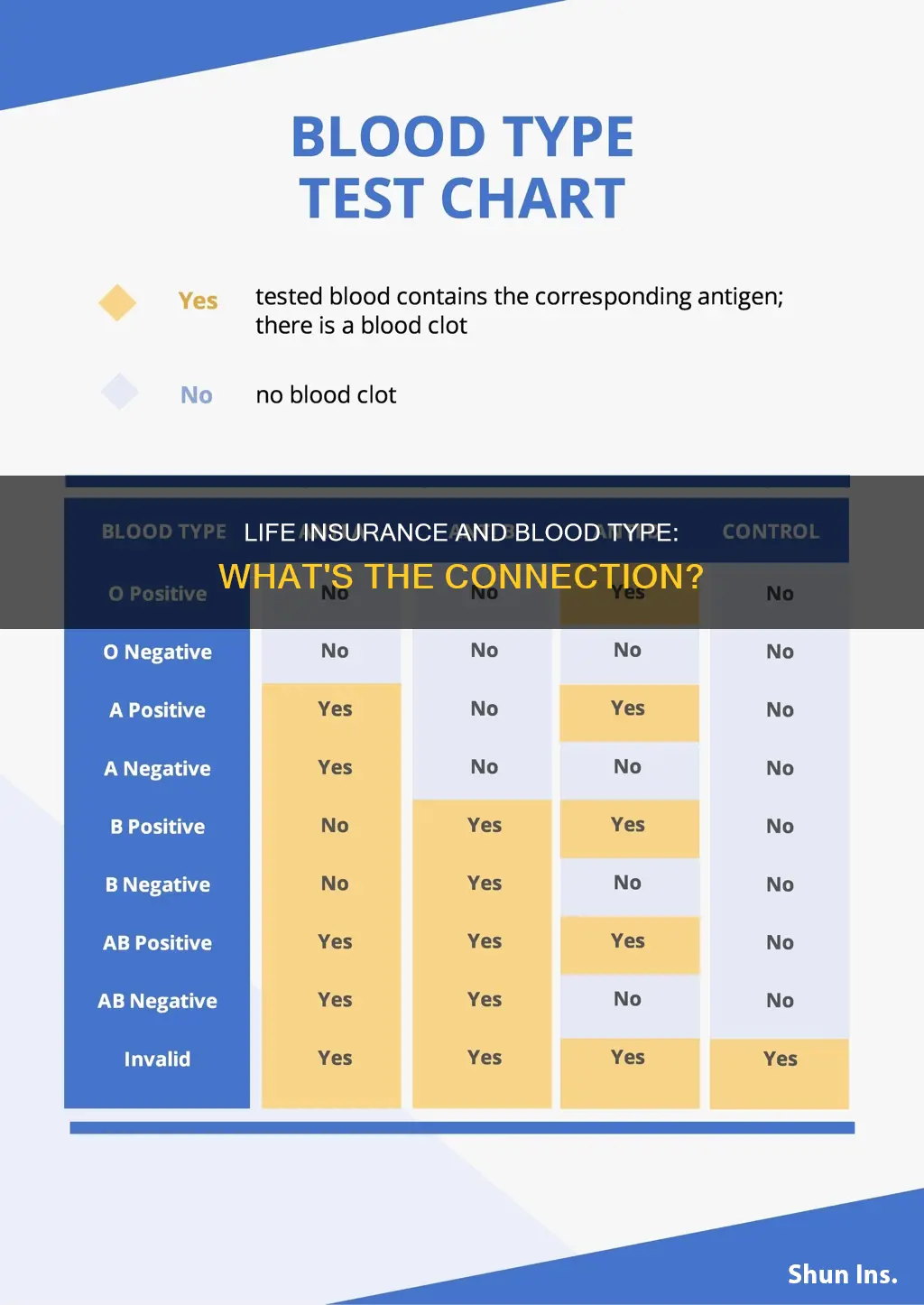
Blood types are not typically listed on life insurance policies. While a life insurance company may require a blood draw during the underwriting process, they are looking for specific health markers—such as cholesterol levels, blood sugar, and evidence of nicotine or drug use—rather than your ABO blood group. Your blood type does not influence your mortality risk in the eyes of most actuarial tables used in 2026.
When you apply for life insurance, the process can feel invasive and medically exhaustive. Between the stacks of paperwork and the paramedical exam, it is natural to assume that every detail of your biology, including your blood type, is being recorded and filed away. However, there is a distinct difference between the medical data collected for risk assessment and the information that actually appears on your final policy document.
Why Blood Type Is Absent from Your Policy
A life insurance policy is a legal contract between the policyholder and the insurance carrier. Its primary purpose is to outline the terms of coverage, the death benefit, the beneficiaries, and the premium obligations. Because blood type has no bearing on the legal validity of the contract or the calculation of the premium, it is almost never included in the document.
In the world of actuarial science, insurers focus on "material facts"—information that would change the insurer’s decision to offer coverage or the price at which they offer it. As of 2026, standard underwriting guidelines do not view blood type as a material fact. Whether you are Type O-negative or AB-positive, your statistical likelihood of passing away during the policy term remains largely unchanged by that single factor alone.
Furthermore, a life insurance policy is not a medical ID card. In an emergency, first responders and hospital staff do not look at a patient’s life insurance paperwork to determine their blood type for a transfusion; they perform their own "type and cross-match" tests to ensure accuracy and patient safety.
The Underwriting Process: What Are They Really Testing?
If you undergo a fully underwritten life insurance application, you will likely meet with a paramedical professional who collects blood and urine samples. While it may seem like they are "typing" your blood, the laboratory analysis is actually screening for a variety of biomarkers that indicate chronic disease or lifestyle risks.
The Standard Lab Panel
In 2026, insurance labs focus on the following categories of data:
- Cardiovascular Health: Insurers measure Total Cholesterol, HDL (good cholesterol), LDL (bad cholesterol), and Triglycerides. High levels of LDL or low levels of HDL suggest an increased risk of heart disease or stroke.
- Blood Sugar and Diabetes: The Hemoglobin A1c (HbA1c) test is a staple of life insurance underwriting. It provides an average of your blood sugar over the past two to three months, making it much harder to "cheat" than a simple glucose test.
- Kidney and Liver Function: Levels of Creatinine and Blood Urea Nitrogen (BUN) help determine how well your kidneys are functioning. Liver enzymes like GGT (Gamma-Glutamyl Transferase), AST, and ALT are checked to screen for heavy alcohol consumption or liver disease.
- Infectious Diseases: Standard panels include screenings for HIV, Hepatitis B, and Hepatitis C.
- Cotinine and Substance Use: To determine your "smoker" or "non-smoker" status, labs test for cotinine, a byproduct of nicotine. They also screen for illicit substances and certain prescription medications that might indicate underlying health issues.
Blood Type vs. Underwriting Markers
To understand why blood type is ignored while these other factors are scrutinized, consider the following comparison:
| Data Point | Is it on the Policy? | Used for Pricing? | Reason for Inclusion/Exclusion |
|---|---|---|---|
| Blood Type (ABO/Rh) | No | No | No direct correlation with mortality risk in standard actuarial models. |
| Cholesterol (Ratio) | No | Yes | High ratios are linked to cardiovascular events and premature death. |
| HbA1c (A1c) | No | Yes | Indicates diabetes management and long-term metabolic health. |
| Cotinine (Nicotine) | Often (as "Smoker") | Yes | Tobacco use is one of the highest risk factors for life expectancy. |
| HIV/Infectious Disease | No | Yes (Eligibility) | Determines basic eligibility for standard coverage. |
The Role of the Attending Physician Statement (APS)
While your blood type isn't on the policy, it might exist within the "underwriting file" maintained by the insurance company. If the insurer requests an Attending Physician Statement (APS) from your primary care doctor, they receive your full medical history.
Your medical records likely contain your blood type if you have ever had surgery, donated blood, or been pregnant. When the underwriter reviews these records, they are looking for diagnoses, treatment histories, and hospitalizations. They will see your blood type in the records, but they will effectively "look past" it unless it is associated with a specific hematological disorder, such as hemophilia or certain types of anemia. In those cases, it is the disorder—not the blood type—that impacts the insurance decision.
Why Blood Type Doesn't Affect Your Premiums
Some scientific studies have suggested minor correlations between blood type and certain health risks. For example, some research indicates that people with Type A blood may have a slightly higher risk of stomach cancer, or that those with Type O blood might have a lower risk of blood clots.
However, life insurance companies generally do not use these correlations for two main reasons:
- Statistical Significance: The increased risk associated with a blood type is often marginal compared to lifestyle factors like BMI, blood pressure, and smoking. Actuaries prefer to base rates on factors that have a high degree of predictive certainty.
- Regulation and Ethics: Insurance regulators often prevent companies from using genetic or immutable biological traits that are not clearly linked to mortality. Since you cannot change your blood type, and the risk it poses is debatable and small, using it for pricing could be seen as discriminatory or scientifically unsound.
Where Your Medical Information Is Stored: The MIB
Even though your blood type isn't on your policy, the results of your insurance medical exam are often recorded with the MIB (formerly known as the Medical Information Bureau). The MIB is a member-owned association of insurance companies that functions similarly to a credit bureau, but for medical and lifestyle data.
When you apply for a policy in 2026, the insurer queries the MIB to see if you have applied for insurance elsewhere and if any significant "codes" were reported. These codes represent medical conditions like hypertension or diabetes. Since blood type is not a "condition," there isn't even a standard MIB code for it. This further reinforces the fact that the industry does not prioritize blood group data.
Accelerated Underwriting and the Shift Away from Blood Samples
In 2026, the trend in the life insurance industry is toward accelerated underwriting (AU). This process uses Big Data, artificial intelligence, and digital health records to approve applicants without requiring a physical medical exam or a blood draw.
If you apply for an AU policy, the insurance company will never know your blood type because they aren't taking your blood. Instead, they look at:
- Prescription Drug Databases: To see what medications you have been prescribed.
- MVR (Motor Vehicle Records): To check for DUIs or reckless driving.
- Credit-based Insurance Scores: To predict longevity and reliability.
- Electronic Health Records (EHR): Direct digital access to your doctor's notes.
In this modern framework, blood type is even less relevant than it was in the past. The industry is moving toward "non-invasive" data gathering, focusing on how you live your life rather than the specific proteins on your red blood cells.
Common Misconceptions About Policies and Medical Data
"I need my policy to show my blood type for emergency use."
As mentioned, life insurance policies are not medical documents. If you are concerned about medical professionals knowing your blood type, you should use a medical alert bracelet, carry a donor card in your wallet, or ensure the "Medical ID" feature is set up on your smartphone. These are the sources doctors check during a crisis.
"If I change my blood type (via bone marrow transplant), do I need to notify my insurer?"
No. A change in blood type resulting from a medical procedure like a bone marrow transplant is rare and would be part of a much larger medical event (such as treating leukemia). While you might need to disclose the underlying medical condition (the cancer and the transplant), the change in blood type itself is irrelevant to the policy’s standing.
"Will my blood type be used for 'DNA Life Insurance'?"
Genetic testing in life insurance is a highly regulated and controversial area. While some niche products might look at genetic markers for specific hereditary diseases, standard life insurance carriers in 2026 are generally prohibited from using genetic testing—which would include detailed blood analysis—to deny coverage or raise rates under various consumer protection laws.
Summary of Where to Find Your Blood Type
If you were hoping to find your blood type on your life insurance policy because you've forgotten it, you will likely be disappointed. Instead of looking at your insurance paperwork, try these more reliable sources:
- Your Primary Care Portal: Most doctors use digital portals (like MyChart) where lab results are stored.
- Blood Donation Records: If you have ever donated to the Red Cross or a local blood bank, they will have your type on file.
- Birth Certificate (Sometimes): In some jurisdictions, blood type was recorded at birth, though this is less common now.
- At-Home Test Kits: You can purchase inexpensive ABO typing kits at most pharmacies or online.
FAQ
1. Is my blood type requested on the initial life insurance application?
No. Standard life insurance applications ask for your height, weight, date of birth, and medical history, but they do not include a field for blood type. The insurer is interested in "risk factors," and blood type is not considered a risk factor in 2026 underwriting standards.
2. If the insurance company draws my blood, can I ask them for my blood type?
Typically, the laboratory (such as ExamOne or APPS) will provide you with a copy of your lab results as a courtesy. However, since the insurer does not pay for blood typing, the lab report will show your cholesterol, glucose, and liver enzymes, but it will usually not show your blood type unless you specifically requested and paid for that addition (which is rarely an option in the standard insurance workflow).
3. Does blood type affect the cost of life insurance for rare types like AB-Negative?
No. The rarity of a blood type has no impact on life insurance premiums. Premiums are based on the likelihood of death during the policy term. There is no actuarial evidence suggesting that people with rare blood types have shorter lifespans than those with common ones.
4. Why did the paramedic take so much blood if they aren't checking my type?
The volume of blood collected is needed to run multiple tests across different machines. One vial might be used for chemistry (kidney/liver), another for hematology (cell counts), and another for virology (HIV/Hepatitis). Each of these tests requires a specific amount of serum or plasma to ensure an accurate reading.
5. Can a life insurance claim be denied if the blood type on the autopsy doesn't match the policy?
A life insurance claim cannot be denied based on blood type because blood type is not a requirement for the application. Claims are generally only denied for "material misrepresentation" (lying about a health condition) or if the cause of death is excluded (like suicide within the first two years of the policy). Since you didn't have to provide your blood type to get the policy, it cannot be used to invalidate a claim.
Final Recommendation
If you are reviewing your life insurance policy, focus your attention on the Benefit Amount, Premium Schedule, and Beneficiary Designations. These are the elements that ensure your family is protected. If you specifically need to know your blood type for medical reasons, contact your healthcare provider or visit a local blood donation center. Your life insurance policy is a financial safety net, not a medical record, and its contents are designed to reflect your financial obligations rather than your specific blood chemistry.