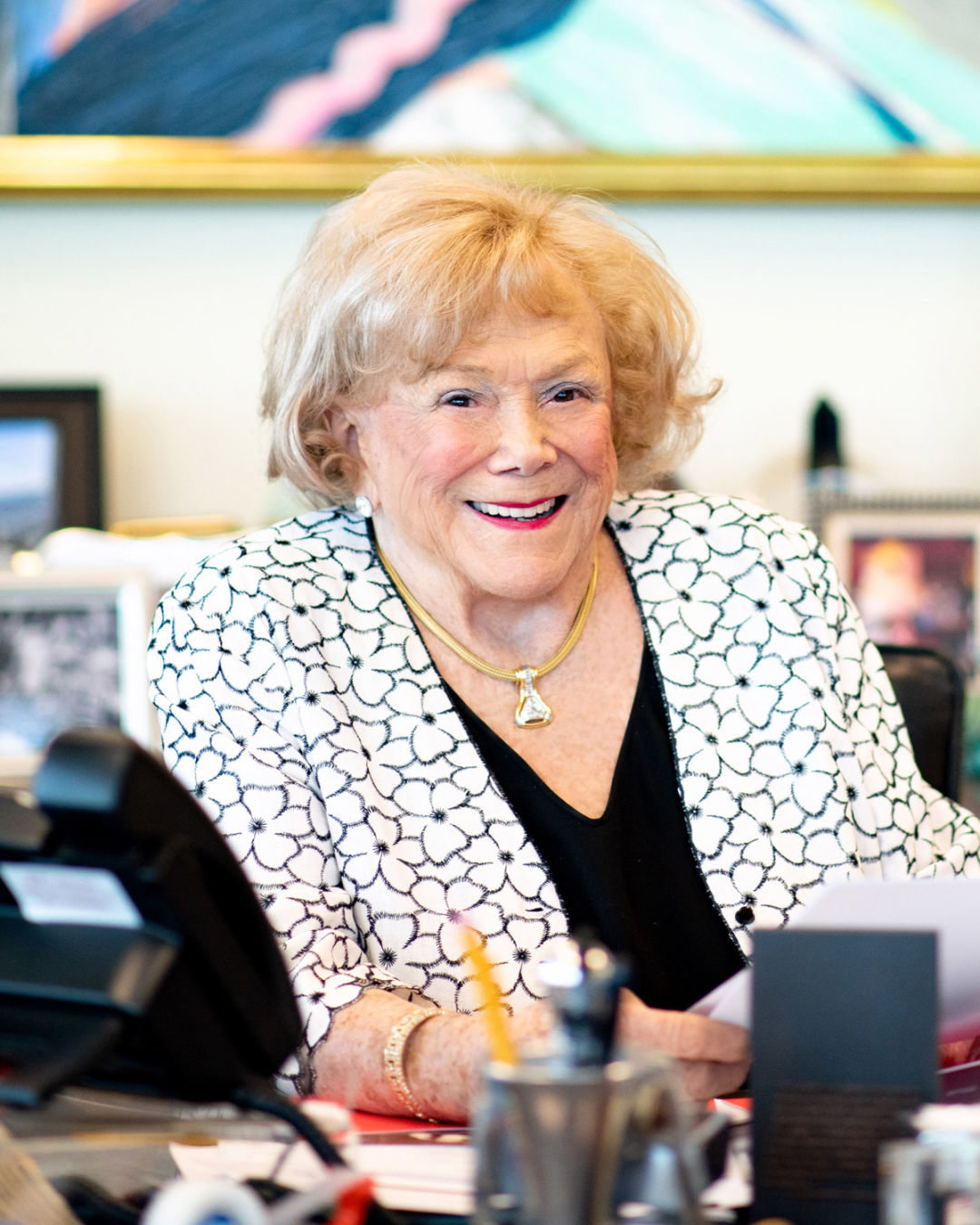
Arlene Schnitzer’s net worth at the time of her passing in 2020 was a reflection of her role as the matriarch of one of the Pacific Northwest’s most successful real estate empires. Part of a family fortune estimated in the multi-billion dollar range, her wealth was primarily anchored in Schnitzer Properties (formerly Harsch Investment Properties) and a world-class private art collection.
The Foundations of the Schnitzer Family Wealth
To understand Arlene Schnitzer’s net worth, one must look at the synergistic partnership she shared with her husband, Harold Schnitzer. While Harold was the primary architect of the family’s real estate dominance, Arlene was the cultural engine that translated that financial success into civic influence and a vast portfolio of tangible assets, specifically in the fine arts.
Harsch Investment Properties (Schnitzer Properties)
Founded in 1950 by Harold Schnitzer, Harsch Investment Properties began as a small venture focusing on the acquisition of distressed or undervalued warehouses and industrial spaces in Portland, Oregon. Over seven decades, this company evolved into a regional powerhouse. By 2026, the entity—now operating as Schnitzer Properties—manages a massive portfolio of industrial, office, retail, and multi-family properties across the Western United States.
The wealth generated by this entity is the primary source of the Schnitzer estate. Unlike publicly traded REITs (Real Estate Investment Trusts), the company remained a private family office. This private structure means that while exact "net worth" figures are not public record, the valuation of the real estate holdings is widely understood by industry analysts to be in the billions. Arlene Schnitzer, as the primary beneficiary of the family trusts following Harold's death in 2011, held a significant controlling interest in these assets.
The Art Collection as an Asset Class
Arlene Schnitzer was not merely a passive recipient of real estate dividends; she was a professional gallerist and a strategic collector. In 1961, she founded the Fountain Gallery of Art in Portland. This was a pivotal moment for her personal net worth because it allowed her to acquire Northwest art before the region’s market matured.
Her collection included thousands of works, many of which appreciated significantly over fifty years. When assessing the Schnitzer net worth, the art collection is often treated as a secondary pillar. While much of this was donated to the Portland Art Museum (including a landmark $10 million gift in 2020 alongside works of art), the residual value held within the family foundations remains substantial.
Estimating the Schnitzer Estate Valuation
While Arlene Schnitzer was often described as a billionaire in regional media, the technical breakdown of her net worth involves differentiating between personal liquidity, real estate equity, and foundation assets.
In the high-net-worth space, "net worth" often refers to the total equity of controlled entities. For the Schnitzer family, this includes:
| Asset Category | Description | Estimated Impact on Net Worth |
|---|---|---|
| Real Estate Equity | Ownership of over 28 million square feet of commercial space in 2026. | High (Billions) |
| Fine Art Portfolio | Thousands of pieces of Northwest and contemporary art. | Medium (Tens of Millions) |
| The CARE Foundation | The Arlene and Harold Schnitzer CARE Foundation assets. | High (Endowment value) |
| Cash and Equivalents | Liquidity from decades of commercial rent and property sales. | Moderate |
Real Estate Diversification
The resilience of Arlene Schnitzer's wealth came from the geographical and sectoral diversification of Schnitzer Properties. The company owns properties in:
- Portland, Oregon: Corporate headquarters and historical core holdings.
- Seattle, Washington: High-value industrial and tech-corridor spaces.
- Las Vegas, Nevada: Extensive industrial and retail holdings.
- San Diego and the Bay Area, California: Diversified commercial portfolios.
This diversification meant that even during economic downturns, the family’s net worth remained insulated, as a slump in one sector (like office space) was often offset by growth in another (like suburban industrial warehouses).
The Legacy of Philanthropy and Asset Distribution
A significant portion of Arlene Schnitzer’s net worth was systematically redistributed through philanthropy before and after her death. This is a common strategy for estates of this magnitude, serving both to fulfill civic duties and to manage estate tax liabilities.
The $10 Million Legacy Gift
In 2020, shortly before her death, Arlene Schnitzer made a monumental $10 million donation to the Portland Art Museum. This was not an isolated event but part of a lifelong pattern of wealth distribution. Over her lifetime, it is estimated that the Schnitzers donated more than $150 million to various causes, including:
- Oregon Health & Science University (OHSU): Funding for the Schnitzer Diabetes Health Center.
- Portland State University: Significant contributions to the urban campus.
- The Arlene Schnitzer Concert Hall: Renaming and renovating the historic Paramount Theatre.
These donations, while reducing the "on-paper" personal net worth of Arlene Schnitzer, increased the social capital and enduring influence of the family name. In 2026, the "Schnitzer" brand in the Pacific Northwest is inextricably linked to the region’s cultural infrastructure.
Management Under Jordan Schnitzer
Following Arlene’s passing, the management of the family’s wealth transitioned to her son, Jordan Schnitzer. Jordan has significantly expanded the family’s real estate footprint while also formalizing the family’s art-related philanthropy through the Jordan Schnitzer Family Foundation.
The transition of wealth from Arlene to Jordan was managed through complex trust structures designed to preserve the business’s continuity. As of 2026, the company continues to acquire properties, suggesting that the "Schnitzer wealth" has not only been preserved but is actively growing in the post-Arlene era.
The Role of Private Trusts
Most individuals with a net worth exceeding $100 million utilize irrevocable trusts and family limited partnerships. Arlene Schnitzer’s estate likely utilized these vehicles to:
- Minimize federal and state estate taxes.
- Provide a structured framework for charitable giving.
- Protect the core real estate business from being liquidated to pay death taxes.
Economic Impact and Market Perception
In the context of 2026, Arlene Schnitzer’s net worth is viewed through the lens of institutional stability. Unlike the volatile wealth of tech founders, the Schnitzer fortune was built on the "old money" principles of tangible land ownership and long-term lease agreements.
Industrial Real Estate Trends
Since 2020, the value of industrial real estate—a core component of the Schnitzer portfolio—has seen a marked increase due to the continued expansion of e-commerce logistics. Because Arlene Schnitzer’s estate retained these assets, the valuation of the family office has likely outperformed broader market indices over the last six years.
Civic and Cultural Value
Beyond the balance sheet, Arlene Schnitzer’s "worth" to the city of Portland and the state of Oregon is measured in the institutions she supported. The Arlene Schnitzer Concert Hall and the Portland Art Museum's Center for Northwest Art are the physical manifestations of a net worth that was successfully converted into public utility.
Common Misconceptions About the Schnitzer Fortune
There is often confusion between the two major "Schnitzer" families in Oregon. It is important to distinguish the wealth of Arlene and Harold Schnitzer from that of the Schnitzer Steel family (founded by Sam Schnitzer). While related, the two business empires are distinct entities.
- Arlene’s Side: Focused on Harsch Investment Properties/Schnitzer Properties and fine arts.
- The Steel Side: Focused on scrap metal recycling and global steel manufacturing.
Arlene Schnitzer’s net worth was entirely independent of the public performance of Schnitzer Steel Industries, Inc. Her wealth was rooted in the private equity of commercial real estate and a massive private collection of physical assets.
Frequently Asked Questions
What was Arlene Schnitzer's primary source of wealth?
Arlene Schnitzer’s wealth primarily came from her ownership stake in Schnitzer Properties (formerly Harsch Investment Properties), a massive real estate firm founded by her husband, Harold Schnitzer. Additionally, she was a successful gallerist and art collector, owning a portfolio of Northwest art valued in the millions.
Who inherited Arlene Schnitzer's estate?
The majority of Arlene Schnitzer’s estate, including the management of Schnitzer Properties and the family's art foundations, was passed to her son, Jordan Schnitzer. Significant portions were also bequeathed to the Arlene and Harold Schnitzer CARE Foundation and various cultural institutions in Portland.
Is the Schnitzer family still considered billionaires in 2026?
Yes. Based on the valuation of their commercial real estate portfolio—which encompasses over 28 million square feet—and their extensive art holdings, the Schnitzer family remains among the wealthiest in the United States, with an estimated net worth comfortably in the multi-billion dollar range.
How much did Arlene Schnitzer donate to the Portland Art Museum?
Throughout her life and in her final bequest, Arlene Schnitzer donated tens of millions of dollars to the Portland Art Museum. Her most notable single gift was a $10 million donation in 2020, which was accompanied by a significant collection of Northwest art.
What is the Arlene Schnitzer Concert Hall?
The Arlene Schnitzer Concert Hall is a major performing arts center in Portland, Oregon. Originally a vaudeville house called the Paramount Theatre, it was renamed in honor of Arlene Schnitzer following a massive donation from her and Harold that saved the venue from potential demolition and funded its restoration.
Final Summary and Expert Insight
Arlene Schnitzer’s net worth was a unique fusion of mid-century real estate savvy and a visionary approach to art as both a cultural and financial asset. In 2026, her financial legacy is categorized not by a single stagnant number, but by the ongoing success of Schnitzer Properties and the thriving cultural institutions she funded.
For those looking to understand the mechanics of such an estate, the key takeaway is diversification into tangible assets. By anchoring their wealth in industrial land and blue-chip regional art, the Schnitzer family created a "recession-proof" fortune that transitioned seamlessly across generations. If you are researching this topic for philanthropic or financial benchmarking purposes, it is recommended to monitor the annual reports of the Jordan Schnitzer Family Foundation, as these provide the most transparent view into the current distribution and management of the Schnitzer legacy.