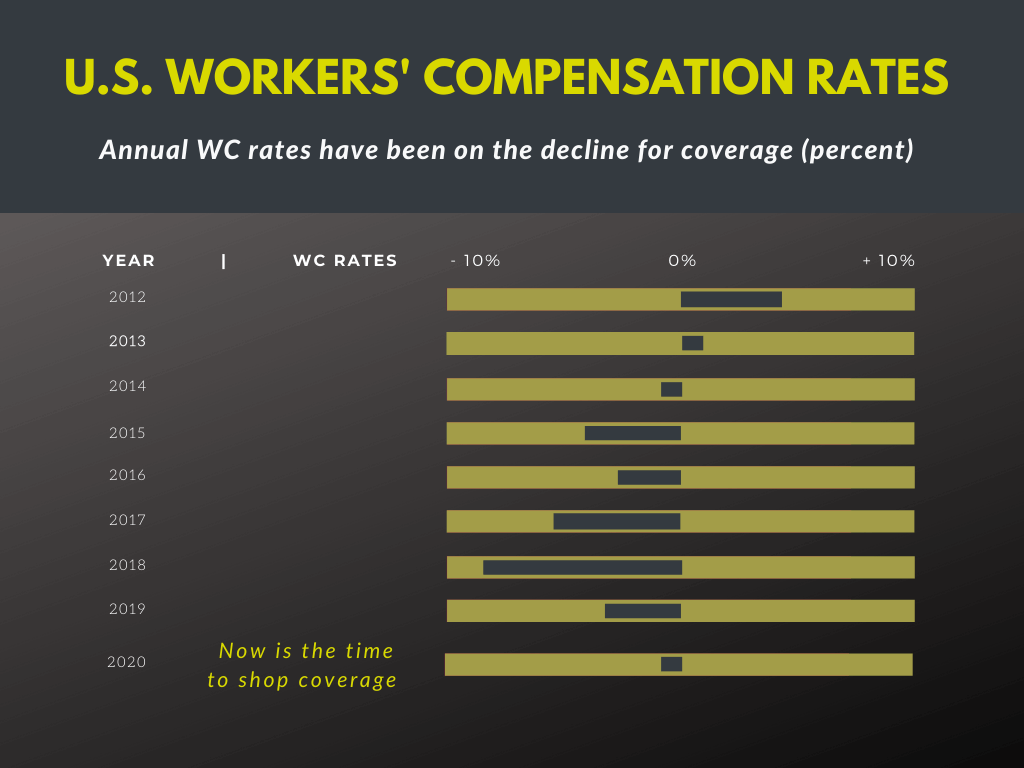
Arkansas workers’ compensation insurance rates are determined by a combination of NCCI-recommended loss costs and individual carrier loss cost multipliers. In 2026, Arkansas continues to offer some of the most competitive rates in the Southeast, with premiums influenced primarily by an employer’s industry classification, total annual payroll, and historical safety record (Experience Modification Factor).
Understanding the Structure of Arkansas Workers’ Comp Pricing
To navigate the landscape of workers' compensation in Arkansas, one must first understand how the state regulates and calculates these costs. Arkansas is a "loss cost" state. This means that the National Council on Compensation Insurance (NCCI) analyzes historical claim data across hundreds of industrial classifications to determine the "pure premium" or the actual cost of medical care and lost wages for injured workers.
However, the NCCI advisory rate is not the final price an employer pays. Insurance carriers in Arkansas take these base loss costs and apply their own "Loss Cost Multiplier" (LCM). This multiplier accounts for the insurer's overhead, marketing, commissions, and profit margins. Because different carriers have different operating efficiencies and risk appetites, the final rate for the exact same job code can vary significantly between insurance companies.
In 2026, the Arkansas insurance market remains robust, with dozens of private carriers competing for business. This competition generally keeps the LCMs stable, but employers must still shop their coverage annually to ensure their carrier’s multiplier remains competitive relative to the broader market.
Mandatory Requirements and Exemptions in Arkansas
Before evaluating rates, a business must determine if it is legally required to carry coverage. Under Arkansas Code Annotated § 11-9-402, most employers with three or more employees must provide workers' compensation insurance.
The "Three or More" Rule
The count of three employees includes full-time, part-time, and seasonal workers. It also generally includes corporate officers unless they specifically opt out through formal filing with the Arkansas Workers’ Compensation Commission (AWCC). However, there are critical exceptions to this rule that can impact whether a small business needs to budget for insurance:
- Contractors: If you are a contractor in the construction industry, you may be required to carry coverage even if you have fewer than three employees, especially if you are working for a general contractor who mandates coverage to avoid their own liability.
- Employment Categories: Certain industries are exempt from the mandatory coverage threshold regardless of employee count. These typically include agricultural farm labor, domestic servants in private homes, and certain non-profit organizations or religious institutions.
- Sole Proprietors and Partners: By default, sole proprietors and partners are not considered employees and are not covered under a standard policy. However, they can choose to "elect in" to coverage if they wish to have the same protection as their employees.
How Class Codes Drive Your Premium
The single largest factor in determining your Arkansas workers' compensation insurance rate is the NCCI Classification Code. Every job function is assigned a four-digit code that reflects the inherent risk of that position.
For example, a clerical office worker (Class Code 8810) has a significantly lower risk of injury than a roofing contractor (Class Code 5551). Consequently, the rate per $100 of payroll for a roofer might be twenty times higher than that of an accountant.
In 2026, Arkansas continues to see a divergence in rates between high-hazard industries and the service sector. While medical costs—a major component of loss costs—have seen inflationary pressure, advancements in workplace safety and "Return to Work" programs in Arkansas have helped mitigate drastic rate hikes in many sectors. Employers should ensure their employees are classified correctly; misclassification is a common error that can lead to either overpaying for coverage or facing heavy penalties and back-premiums during a year-end audit.
The Impact of the Experience Modification Factor (E-Mod)
While class codes set the baseline, the Experience Modification Factor (E-Mod) is the tool used to reward safe employers and penalize those with frequent claims. The E-Mod is a numerical representation of how an employer's claim history compares to other businesses in the same industry.
- 1.0 Rating: This is the industry average. If your E-Mod is 1.0, you pay the standard manual rate.
- Below 1.0 (e.g., 0.85): This is known as a "credit" mod. It indicates a better-than-average safety record, resulting in a 15% discount on the premium.
- Above 1.0 (e.g., 1.25): This is a "debit" mod. It indicates a higher frequency or severity of claims, resulting in a 25% surcharge on the premium.
In Arkansas, the E-Mod calculation generally looks at the three previous years of data, excluding the most recent expiring year. For 2026 policies, the calculation would typically look at claims from 2022, 2023, and 2024. Because "frequency breeds severity," a business with ten small claims will often have a worse E-Mod than a business with one large claim of the same total dollar value. This makes consistent safety training and minor injury management critical for controlling long-term insurance costs.
Arkansas Workers' Compensation Rate Estimations by Industry (2026)
The following table provides estimated rates per $100 of payroll for common industries in Arkansas. These figures represent an average across multiple carriers and are based on a neutral E-Mod of 1.0.
| NCCI Class Code | Industry Description | Estimated Rate (per $100 Payroll) | Risk Profile |
|---|---|---|---|
| 8810 | Clerical Office Employees | $0.12 – $0.18 | Very Low |
| 8017 | Retail Stores (NOC) | $1.10 – $1.65 | Moderate |
| 9015 | Building Operation / Janitorial | $2.50 – $3.40 | Moderate-High |
| 3632 | Machine Shop | $1.90 – $2.75 | Moderate |
| 5403 | Carpentry (Construction) | $6.50 – $9.00 | High |
| 7219 | Trucking (Local/Long Haul) | $7.00 – $11.50 | Very High |
| 8832 | Physician & Clerical | $0.35 – $0.55 | Low |
| 9082 | Restaurant / Food Service | $1.05 – $1.45 | Moderate |
Note: These rates are estimates for the 2026 calendar year and are subject to individual carrier underwriting and the Arkansas Assigned Risk Pool surcharges where applicable.
Strategies to Lower Your Workers' Comp Costs in Arkansas
Managing workers' compensation costs is an active process. Businesses that treat insurance as a "set it and forget it" expense often leave thousands of dollars on the table.
Implementing a Safety Program
The Arkansas Department of Labor and the AWCC offer resources for establishing safety committees. In many cases, having a documented safety program can qualify an employer for discretionary "schedule credits"—additional discounts offered by carriers (sometimes up to 25%) for businesses that demonstrate superior management and safety protocols.
Formal Return-to-Work (RTW) Programs
The longer a worker stays off the job, the more expensive a claim becomes. Arkansas law encourages employers to offer "light duty" or modified work. By bringing an employee back to the workplace in a limited capacity, the employer reduces the "indemnity" (lost wage) portion of the claim, which is a major factor in the E-Mod calculation.
Accuracy in the Annual Audit
At the end of every policy term, the insurance carrier will perform an audit to ensure the estimated payroll matches the actual payroll. Employers should:
- Exclude Overtime Premium: You only pay workers' comp on the "straight time" portion of pay. The extra "half" in time-and-a-half is generally exempt.
- Verify Subcontractors: Always collect Certificates of Insurance (COIs) from every subcontractor. If a sub does not have their own coverage, the Arkansas auditor will charge you for their payroll as if they were your employee.
- Severance Pay: Severance payments are typically not included in the payroll base for workers' comp premium calculations.
The Role of the Arkansas Workers’ Compensation Commission (AWCC)
The AWCC is the state agency responsible for supervising the administration of the Arkansas Workers' Compensation Law. While they do not set the rates directly—that is the purview of the Arkansas Insurance Department and the NCCI—they do regulate the benefits paid to injured workers.
Changes in state law regarding maximum weekly benefits can indirectly affect rates. For 2026, the maximum disability benefits are adjusted based on the state average weekly wage. If the state legislature or the AWCC increases these benefit caps, NCCI will likely adjust the advisory loss costs upward in the following filing cycle to account for the increased liability of carriers.
Private Market vs. the Arkansas Assigned Risk Pool
Most Arkansas businesses obtain coverage through the "voluntary market," where private carriers choose to take on the risk. However, high-risk businesses or those with a poor claim history may be unable to find a private carrier willing to write a policy.
In these cases, the business enters the Arkansas Assigned Risk Pool. This is the market of last resort. While it guarantees that every business can get coverage, the rates in the pool are typically higher than the voluntary market. Furthermore, pool policies rarely offer the same level of flexible payment plans or discretionary credits available through private insurers. If a business is in the pool, its primary goal should be to improve its safety record and E-Mod to eventually transition back to the voluntary market.
Frequently Asked Questions
Does Arkansas workers' comp cover remote employees?
Yes. If an employee is hired by an Arkansas-based company and performs their duties from a home office within the state, they must be covered. If the employee works from a different state, you may need to add an "Other States" endorsement to your policy to comply with the laws of the employee's physical location.
What happens if I fail to carry workers' comp insurance in Arkansas?
The penalties are severe. Under Arkansas law, the AWCC can issue a "Stop Work" order, effectively shutting down your business until coverage is obtained. Additionally, the business can face fines of up to $10,000 and may be held personally liable for all medical costs and lost wages of an injured worker—effectively removing the "exclusive remedy" protection that insurance provides.
Are corporate officers required to be included in the payroll?
By default, yes. However, in Arkansas, corporate officers can choose to exclude themselves from coverage by filing a Form AR-P with the AWCC. This removes their payroll from the premium calculation but also means they cannot collect benefits if they are injured on the job.
How often do NCCI loss costs change in Arkansas?
NCCI typically files for rate adjustments annually. These filings are reviewed by the Arkansas Insurance Commissioner. Over the last decade, Arkansas has frequently seen mid-to-low single-digit decreases or minor increases, reflecting a relatively stable and healthy insurance environment.
Recommendation for 2026
For Arkansas business owners in 2026, the best course of action is to perform a comprehensive classification review. With the shifting nature of work and the integration of technology in traditional roles, many job descriptions have evolved. Ensuring your staff is correctly categorized under the most accurate NCCI code remains the most effective way to prevent overpaying. Furthermore, given the competitive nature of the 2026 Arkansas market, obtaining at least three quotes from different carriers—ideally those that specialize in your specific industry—is essential to securing the lowest available Loss Cost Multiplier.