Arkansas workers’ compensation law recognizes three primary categories of compensable injuries: specific traumatic incidents, rapid repetitive motion injuries, and gradual onset back injuries. To qualify for benefits in 2026, an injury must be supported by objective medical findings and occur while the employee is performing "employment services." Subjective reports of pain alone are insufficient to establish a claim under the Arkansas Workers’ Compensation Act.
Navigating the Arkansas workers' compensation system requires a granular understanding of how the state classifies different types of physical and mental harm. Arkansas remains one of the stricter jurisdictions in the United States regarding what constitutes a "compensable injury." The burden of proof rests heavily on the employee to demonstrate that the workplace environment or a specific work task was the "major cause" of the disability or need for medical treatment.
The Foundation of Arkansas Injury Claims: Objective Medical Findings
Before examining specific injury types, it is critical to understand the legal threshold for all claims in Arkansas. Under Arkansas Code § 11-9-102, an injury is only compensable if it is established by objective medical findings.
Objective medical findings are those that cannot be manipulated by the patient. This includes observations made by a physician during an examination, such as:
- Visible bruising or swelling.
- Lacerations or hematomas.
- Results from diagnostic imaging like X-rays, MRIs, or CT scans showing structural damage.
- Muscle spasms observed by a physician.
- Reduced range of motion that is measured and verified through clinical testing.
If a worker reports debilitating back pain but their MRI is "clean" and the doctor observes no physical signs of injury, the claim will likely be denied. Arkansas law explicitly states that "pain or some other form of subjective indication" does not satisfy the requirement for objective medical evidence.
1. Specific Traumatic Incident Injuries
The most common category of workers' compensation claims involves injuries caused by a specific incident. These are identifiable by time and place of occurrence. In 2026, these remain the most straightforward claims to file, provided the accident was witnessed or reported immediately.
Characteristics of Traumatic Incidents
A traumatic incident is a sudden, unforeseen event. Common examples in Arkansas industries—ranging from poultry processing to timber and logistics—include:
- Slips, Trips, and Falls: Falling from a ladder at a construction site or slipping on a wet floor in a warehouse.
- Struck-By Accidents: Being hit by a falling object or moving machinery (e.g., a forklift).
- Crush Injuries: Limbs caught in industrial equipment or heavy doors.
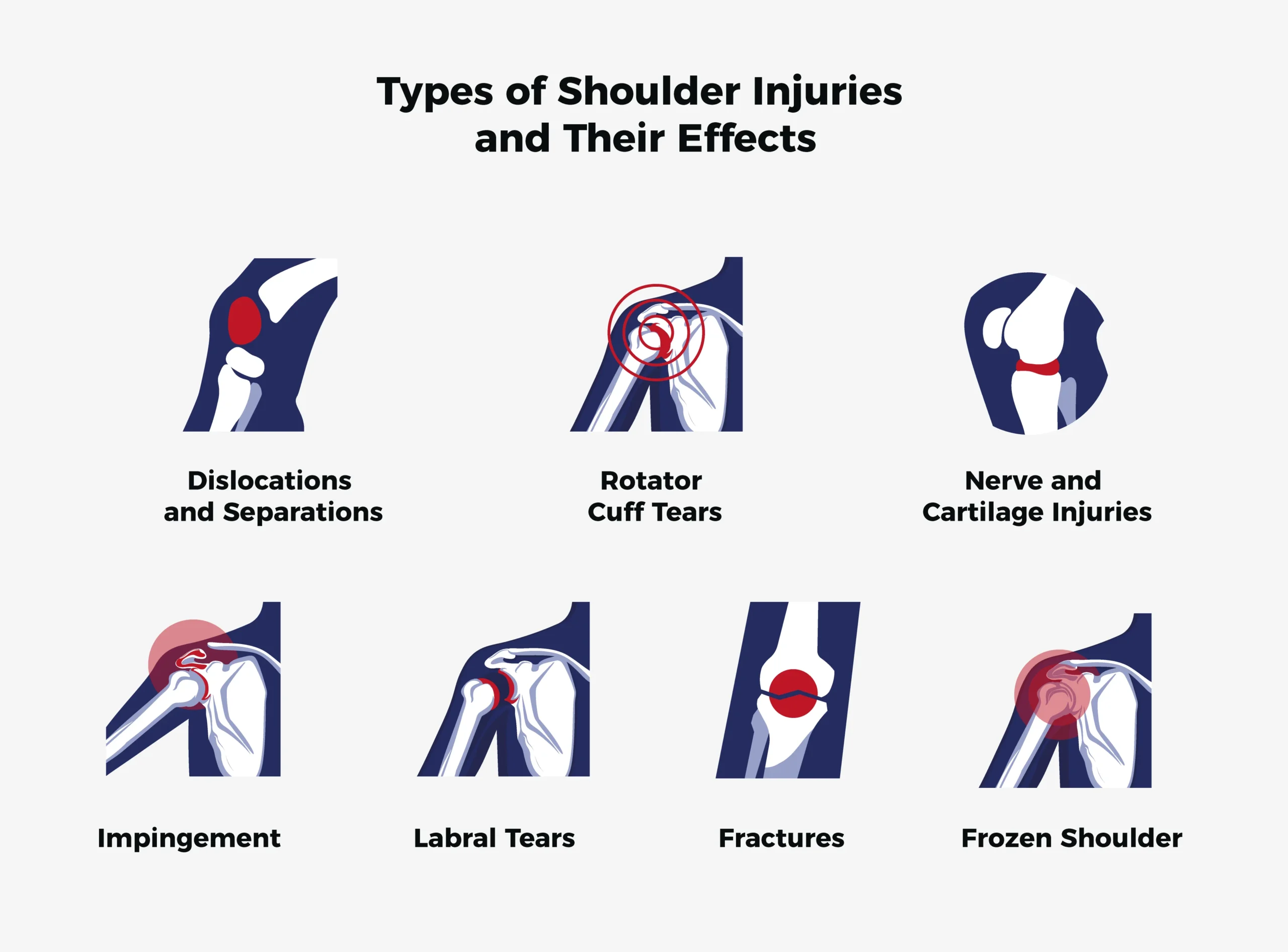
- Acute Overexertion: A sudden "pop" in a shoulder while lifting a heavy crate.
The "Employment Services" Requirement
For a traumatic injury to be compensable, the worker must have been performing employment services at the exact moment of the injury. Arkansas courts have interpreted this strictly. For instance, an injury sustained while walking to the breakroom or participating in an unrequired company softball game may be denied because the worker was not actively furthering the employer's interests.
2. Rapid Repetitive Motion Injuries
Arkansas law provides coverage for injuries that are not caused by a single event but develop over time due to repetitive tasks. However, the legal standard for these is significantly higher than for traumatic injuries.
The "Rapid and Repetitive" Standard
To qualify, the motion must be both "rapid" and "repetitive." Arkansas courts have not established a specific "strokes per minute" threshold, but the movement must involve a high degree of speed and frequency.
- Carpal Tunnel Syndrome (CTS): This is the most frequently cited repetitive motion injury. Arkansas law specifically classifies CTS as a repetitive motion injury, which slightly lowers the burden compared to other gradual onset conditions, but it still requires objective findings (usually an EMG or Nerve Conduction Study).
- Trigger Finger and Tendonitis: These may be compensable if the worker’s duties involve constant, fast manipulation of tools or materials.
The "Major Cause" Rule
For repetitive motion injuries, the work tasks must be the major cause (more than 50% of the cause) of the disability or need for treatment. If a worker has a pre-existing condition, such as diabetes or rheumatoid arthritis, that contributes significantly to their carpal tunnel, the claim may be contested by the insurance carrier.
3. Gradual Onset Back Injuries
Back injuries that occur over time are treated as a distinct category in Arkansas. Unlike other repetitive motion injuries, a gradual onset back injury does not necessarily have to meet the "rapid" movement requirement, but it must still be caused by work-related activities.
These injuries often affect workers in the shipping and healthcare sectors who engage in constant lifting, bending, and twisting. Because the spine naturally degenerates with age, Arkansas workers' compensation insurers frequently argue that gradual back pain is the result of aging or "normal wear and tear" rather than employment. To succeed, the claimant must provide medical evidence showing that the work environment accelerated or caused a specific physiological change in the spine, such as a herniated disc.
4. Occupational Diseases and Exposure
Arkansas Code Title 11, Chapter 9, Subchapter 6 governs occupational diseases. These are illnesses or conditions that result from the nature of the employment and are not common to the general public.
| Injury/Disease Type | Description | Common Proof Requirements |
|---|---|---|
| Asbestosis/Silicosis | Lung diseases caused by inhaling mineral fibers or dust. | History of exposure + specific lung function tests/imaging. |
| Occupational Hearing Loss | Loss of hearing due to prolonged exposure to high-decibel noise. | Audiograms showing specific frequency patterns of loss. |
| Chemical Sensitivity | Respiratory or skin reactions to industrial chemicals. | Allergy testing and documentation of workplace toxin levels. |
| Radiation Illness | Damage from exposure to ionizing radiation. | Dosimeter records and specific blood markers. |
Burden of Proof for Disease
The "clear and convincing evidence" standard often applies to occupational diseases in Arkansas, which is a higher burden than the "preponderance of evidence" standard used for traumatic injuries. The worker must show that the disease is a direct result of their specific workplace exposure and not a condition prevalent in the general community.
5. Mental and Stress-Related Injuries
Arkansas has some of the most restrictive laws in the country regarding mental health claims. In 2026, a mental injury or illness is not compensable unless it is caused by a physical injury to the body.
Physical-Mental Rule
If a worker witnesses a traumatic event (such as a fatal accident involving a co-worker) but is not physically harmed themselves, they generally cannot receive workers' compensation for Post-Traumatic Stress Disorder (PTSD) or emotional distress. However, if the worker suffers a physical injury (e.g., a broken arm) and develops depression or anxiety as a direct result of that physical trauma, the mental health treatment may be covered.
Exceptions for First Responders
There are limited statutory exceptions for certain first responders (police, fire, EMS) who may be able to claim PTSD benefits without a preceding physical injury, provided the stressor was extraordinary and documented. For the average worker, however, the physical-injury requirement remains a firm barrier.
6. Hernias: A Special Category of Injury
Arkansas law (A.C.A. § 11-9-523) imposes very strict, specific requirements for hernia claims. Because hernias can occur during non-work activities, the state requires the following five elements to be proven for a hernia to be compensable:
- The occurrence of the hernia was sudden.
- It was accompanied by severe pain.
- The pain caused the employee to cease work immediately.
- The physical distress was such that the attendance of a licensed physician was required within 72 hours.
- The hernia did not exist prior to the injury.
Missing any of these criteria—specifically the 72-hour medical attention rule—is a common reason for claim denial in Arkansas.
Non-Compensable Injuries and Exclusions
Not every injury that happens at work is covered. Arkansas law explicitly excludes several scenarios from coverage:
Alcohol and Drug Use
If an injury is substantially occasioned by the use of alcohol, illegal drugs, or the prescription of a drug not taken according to a physician's orders, it is non-compensable. In Arkansas, if a post-accident drug test is positive, there is a rebuttable presumption that the injury was caused by the impairment. The burden shifts to the worker to prove that the drugs or alcohol did not cause the accident.
Horseplay and Intentional Acts
Injuries resulting from "horseplay" (joking around or fighting) are generally not covered unless the injured party was an innocent bystander. Similarly, if a worker intentionally injures themselves to collect benefits, the claim is fraudulent and denied.
Pre-existing Conditions and Aggravation
Arkansas law allows for the "aggravation" of a pre-existing condition, but only if the workplace injury causes a new physical change supported by objective findings. If the workplace event merely increases the level of pain from a previous injury without changing the underlying physical condition, it is usually not compensable.
Summary of Injury Categories and Legal Standards
| Category | Primary Standard | Key Requirement |
|---|---|---|
| Traumatic Injury | Preponderance of Evidence | Must be during "employment services." |
| Repetitive Motion | Major Cause (>50%) | Must be "rapid" and "repetitive." |
| Back Injury | Objective Findings | Gradual onset is allowed for the back only. |
| Mental Injury | Physical Link | Must stem from a compensable physical injury. |
| Hernia | Five-Point Statutory Test | Must seek medical care within 72 hours. |
Frequently Asked Questions
What if my injury is just "wear and tear"?
In Arkansas, general wear and tear is rarely compensable unless it meets the strict definitions of a rapid repetitive motion injury or a gradual onset back injury. You must be able to point to specific work activities that caused a measurable physical change in your body.
Does Arkansas cover "aggravation" of a previous injury?
Yes, but with caveats. An aggravation is treated as a new injury. It must be caused by a specific workplace event or task and must result in a new, distinct physical change documented by objective medical findings (like a new tear on an MRI).
Can I get workers' comp for a heart attack at work?
Heart attacks and strokes are compensable in Arkansas only if the exertion of the work necessary to precipitate the attack was "extraordinary and unusual" in comparison to the employee's usual work in the course of the employment. Alternatively, it must be shown that some unusual and unpredicted incident occurred.
What should I do if my injury type is denied by the insurance carrier?
If your claim is denied, you have the right to request a hearing before an Administrative Law Judge (ALJ) at the Arkansas Workers’ Compensation Commission. Many denials are based on the "objective findings" rule, and legal representation is often necessary to successfully challenge these medical interpretations.
Are there specific deadlines for different injury types?
Regardless of the injury type, you should report the incident to your employer immediately. Arkansas law generally requires notice to the employer "at once." Failure to provide notice can result in a denial of benefits for the period prior to the notice. The formal statute of limitations for filing a claim with the AWCC is generally two years from the date of the injury.
Next Steps for Injured Arkansas Workers
If you have sustained any of the injury types described above, your first priority is to report the injury in writing to your supervisor and request medical treatment. Under Arkansas law, the employer generally has the right to choose the initial treating physician.
Ensure that you clearly describe the physical sensations and the specific task you were performing to your doctor, as their notes will form the "objective medical findings" necessary to secure your benefits. If your injury falls into a complex category like repetitive motion or gradual back onset, consulting with a legal professional specializing in Arkansas workers' compensation is recommended to ensure your claim meets the 2026 statutory requirements.