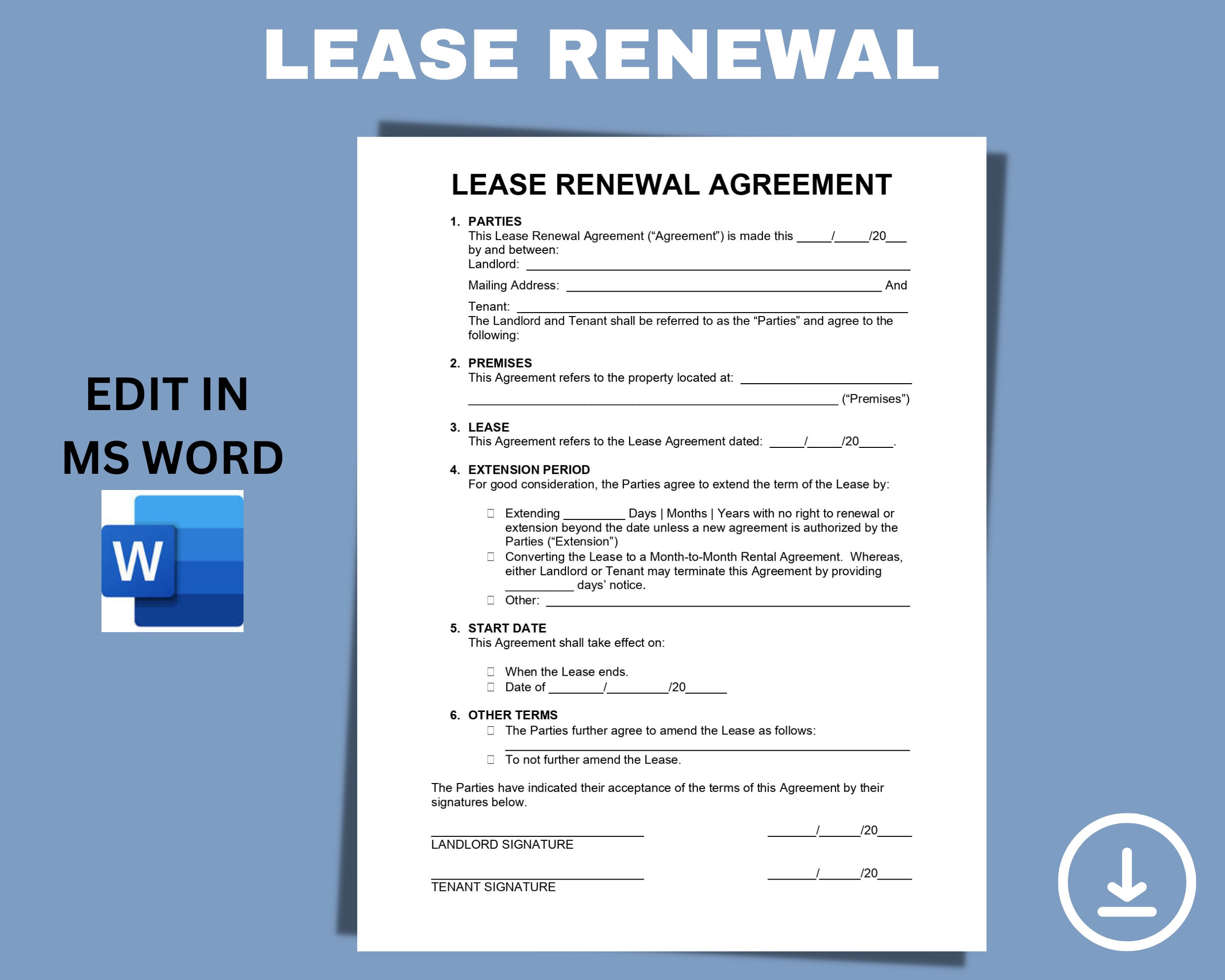
The Apartment Owners Association of California (AOAUSA) provides standardized residential lease renewal documentation to facilitate clear, legally compliant transitions between lease cycles. Property owners and managers use these forms to update terms, adjust rental rates, and reaffirm occupancy agreements, ensuring that both landlord and tenant remain protected under evolving state and local regulatory frameworks.
Understanding the Role of AOAUSA Lease Renewal Forms
When a residential lease term nears its expiration, landlords must decide whether to transition the tenancy into a month-to-month agreement or execute a new fixed-term lease. The AOAUSA lease renewal forms are designed to streamline this process, acting as an addendum or a formal renewal contract that modifies or extends the original rental agreement.
These documents are essential because they provide a record of intent. By formalizing a renewal, a landlord establishes a paper trail that documents the tenant’s acceptance of new terms, such as increased rent—provided those increases comply with the California Tenant Protection Act of 2019 (AB 1482) or local rent control ordinances—and updated house rules. Utilizing a standardized form minimizes the risk of ambiguity that often leads to litigation regarding notice periods, security deposits, or unauthorized modifications to the lease structure.
Accessing and Utilizing Official Documentation
The primary source for these documents is the official AOAUSA website, which hosts a library of standardized forms for members. While the inquiry often specifies a "2024 PDF," it is crucial to recognize that legal forms in California are subject to frequent updates due to legislative changes at the state level. If a 2024 version is archived, it may no longer reflect the mandatory disclosures required for subsequent years.
To retrieve the most current version, landlords should:
- Log into the AOAUSA member portal using verified credentials.
- Navigate to the "Forms" or "Document Library" section.
- Search for "Lease Renewal" or "Notice of Rent Increase/Lease Renewal."
- Download the document in PDF format to ensure compatibility with electronic signature platforms or for print-and-sign procedures.
It is strongly advised against relying on third-party websites that claim to offer "AOAUSA forms" for free, as these versions may be outdated, contain errors, or fail to include the specific state-mandated disclosures required for California properties.
Prerequisites for Executing a Renewal
Before drafting or sending a renewal form, a property owner must ensure they have satisfied all preliminary legal requirements. In California, these requirements are strict and failure to comply can render a renewal agreement unenforceable.
Compliance with State Rent Control
Under AB 1482, if the property is subject to statewide rent caps, the landlord must ensure the proposed rent increase does not exceed the allowed percentage (typically 5% plus the percentage change in the cost of living, capped at a maximum of 10%). Documentation of this calculation should be kept in the tenant’s file.
Notice Requirements
In accordance with California Civil Code, if a landlord intends to increase rent by more than 10% within a 12-month period, they must provide at least 90 days’ written notice. For increases of 10% or less, 30 days’ notice is standard for month-to-month tenancies, though specific terms in an existing lease may dictate longer periods.
Disclosure Updates
Renewals are an opportune time to ensure all property disclosures—such as those regarding mold, lead-based paint, or bedbug information—are up to date. If any of these conditions have changed, or if state law has mandated new disclosures since the original lease signing, these must be included as part of the renewal packet.
Comparison of Renewal Approaches
Choosing the right approach depends on the landlord's long-term strategy and the stability of the current tenant.
| Approach | Typical Duration | Best Used For | Primary Benefit |
|---|---|---|---|
| Fixed-Term Renewal | 12 Months | Tenants with stable history | Guaranteed income stability |
| Month-to-Month | Ongoing | Flexible property strategy | Ease of termination/adjustment |
| Modified Lease | Negotiable | Changing building rules | Updating operational policies |
A fixed-term renewal is generally preferred by property managers seeking to minimize vacancy turnover costs, while month-to-month arrangements provide the landlord with the flexibility to sell the property or reclaim the unit for personal use, subject to local "just cause" eviction laws.
Practical Steps for Implementation
Once the AOAUSA renewal form has been sourced and the terms have been verified for compliance, the following steps should be taken to ensure legal validity:
- Internal Review: Verify that the tenant’s name, property address, and current security deposit amount match the original lease records.
- Drafting the Terms: Explicitly state the new rental amount, the duration of the renewal, and any changes to the original contract, such as pet policies or parking assignments.
- Communication: Provide the tenant with sufficient time to review the document. It is considered good practice to send the renewal offer at least 60 days before the existing lease expires.
- Execution: Ensure all adult tenants listed on the original lease sign the renewal. For digital signatures, use platforms that provide a Certificate of Completion to verify the identity of the signer and the time of signing.
- Storage: Keep a signed copy in the property’s physical and digital files for the duration of the tenancy and for at least three years thereafter to satisfy potential audit or dispute requirements.
Common Pitfalls and Troubleshooting
One of the most common mistakes is attempting to apply a renewal form to a property that is subject to strict local rent control ordinances (such as those in Los Angeles, San Francisco, or Santa Monica) without first verifying that the renewal terms align with the local board's specific requirements. Local ordinances often override state defaults.
Another frequent issue arises when a landlord attempts to include "new" house rules that conflict with the original lease terms. If a landlord wishes to implement a new policy, such as a "no smoking" rule that was not present in the original agreement, it should be presented as a formal addendum to the renewal, and the tenant should be given the opportunity to review it carefully. If the tenant refuses the new terms, the landlord must be prepared to fall back on the original contract or negotiate further.
Finally, ensure the document is legible. If printing, use black ink and ensure the margins are clear. If using an electronic version, confirm that the PDF is "fillable" and that all fields are properly mapped to prevent data corruption when the tenant enters their information.
Essential Legal Protections
While AOAUSA provides robust, attorney-drafted forms, these documents serve as a baseline. Property owners should be aware that no form replaces the need for a basic understanding of California’s landlord-tenant laws. The relationship between a landlord and tenant is governed by the California Civil Code, which is subject to annual legislative updates.
If you are unsure whether a specific form applies to your property—particularly if your property is a multi-family dwelling with historical rent-controlled status—it is advisable to consult with a qualified real estate attorney. Using an official form improperly is often more detrimental than not using a formal renewal process at all, as it can be interpreted as an attempt to circumvent legal disclosures.
Frequently Asked Questions
Does a lease renewal automatically include the same terms as the original lease? Generally, yes, unless specific changes are documented in the renewal agreement. However, if the law has changed since the original signing (e.g., new disclosure requirements for water-efficient fixtures), the landlord is responsible for ensuring the renewal reflects these legal updates.
What happens if the tenant refuses to sign the renewal? If a tenant refuses to sign a renewal but remains in the unit after the lease term expires, the tenancy typically converts to a month-to-month agreement by default under the original terms. Landlords should check their local jurisdiction's laws, as some areas have specific rules about what constitutes a legal "holdover" tenancy.
Can I increase the security deposit with a renewal? In most cases, no. California law limits the total security deposit a landlord can hold (usually two months' rent for unfurnished units, three for furnished). If you are already at the legal maximum, you cannot increase the deposit upon renewal.
Is an electronic signature valid on AOAUSA forms? Yes, California recognizes electronic signatures under the Uniform Electronic Transactions Act (UETA), provided the signing process is secure and the intent of the parties is clear. Ensure your platform provides a secure audit trail.
Do I need a new form every year? Yes, it is best practice to execute a new renewal agreement for each term. This provides a clear, updated record for both parties and allows for the adjustment of rent and terms in accordance with market conditions and legal changes.
Final Recommendation
To effectively manage your lease renewals, prioritize the use of the most recent templates provided directly through your AOAUSA membership account rather than searching for standalone PDF files from previous years. Always verify your property’s status regarding local rent control ordinances before finalizing any rent increases or term modifications. By maintaining an organized, updated file of these documents, you protect your investment and ensure a transparent relationship with your tenants.