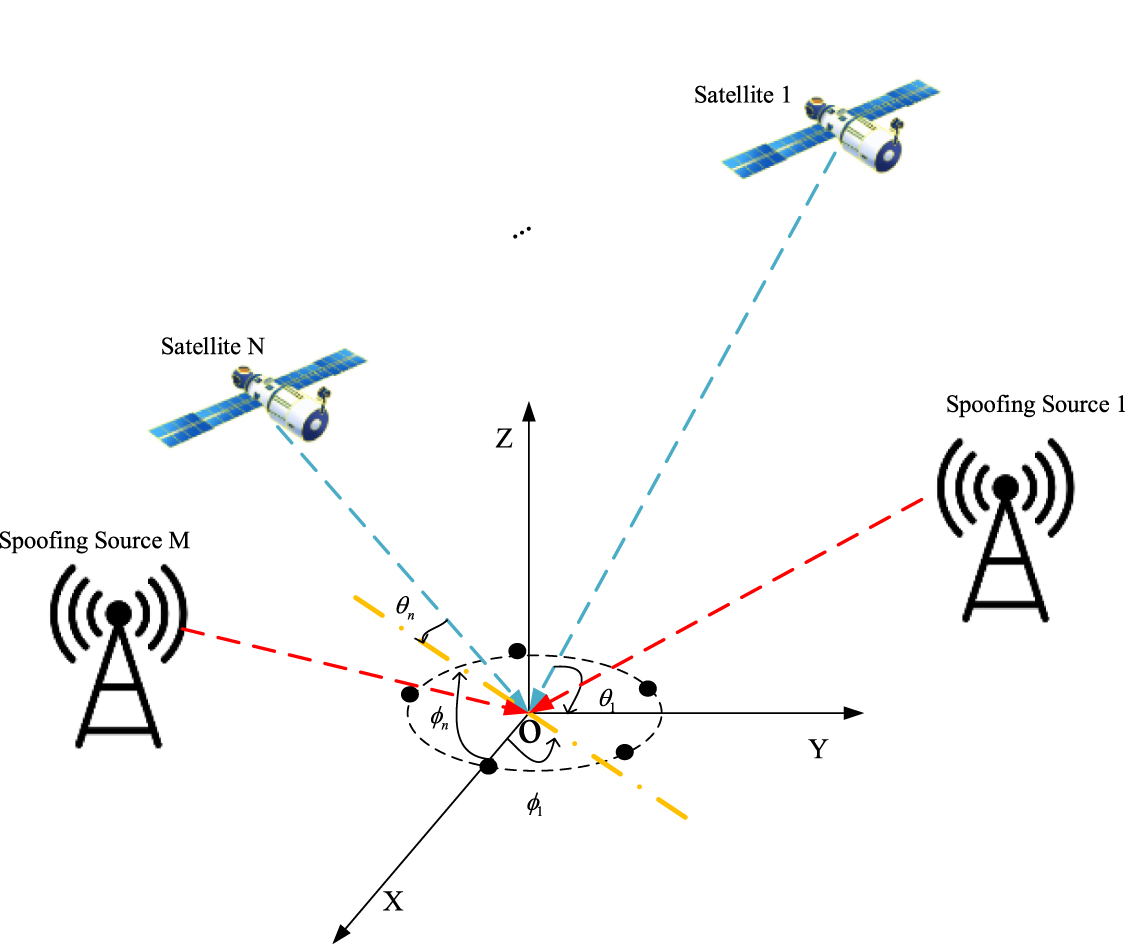
Anti-spoofing in network communications refers to the technical strategies and protocols used to verify the authenticity of a sender's identity, primarily by validating the source address of data packets or messages. These measures prevent attackers from masquerading as trusted entities to bypass access controls, conduct man-in-the-middle attacks, or launch distributed denial-of-service (DDoS) campaigns.
To secure a network in 2026, administrators must deploy a multi-layered defense strategy that spans the Link Layer (Layer 2) through the Application Layer (Layer 7). This guide examines the technical implementation, operational requirements, and strategic necessity of anti-spoofing mechanisms in contemporary infrastructure.
The Technical Anatomy of Spoofing Attacks
Before implementing defenses, it is critical to understand the mechanics of the threat. Spoofing occurs when a malicious actor modifies the header of a packet or the metadata of a communication to hide their true identity or to impersonate another computer system. In traditional IP spoofing, the attacker changes the "Source IP" field in an IP packet. Since the Internet Protocol (IP) was originally designed for connectivity rather than inherent security, standard routers historically focused on the destination address for forwarding decisions, often ignoring whether the source address was legitimate for that specific entry point.
Beyond simple IP masquerading, spoofing manifests in several forms:
- ARP Spoofing: At the Link Layer, attackers send falsified Address Resolution Protocol (ARP) messages to link their MAC address with the IP address of a legitimate server or gateway.
- DNS Spoofing: Attackers introduce corrupt Domain Name System (DNS) cache data to redirect traffic from a legitimate site to a malicious IP.
- Email Spoofing: Forging the "From" address in email headers to facilitate phishing or business email compromise (BEC).
In 2026, the stakes for anti-spoofing are higher than ever. With the proliferation of high-speed IoT devices and expanded 6G environments, unverified source addresses enable massive reflective DDoS attacks that can overwhelm even the most robust cloud scrubbing services.
Network Layer Defenses: Ingress Filtering and BCP 38
The foundation of network-level anti-spoofing is Ingress Filtering. This involves a network's edge devices (routers and firewalls) checking the source IP of incoming packets to ensure they belong to a valid range for that specific interface.
BCP 38 and BCP 84
Best Current Practice 38 (BCP 38), an IETF standard, is the primary guideline for preventing IP source address spoofing. It dictates that Internet Service Providers (ISPs) and enterprise network operators should discard packets that enter their network from a customer if the source address is not assigned to that customer. BCP 84 expands this to multi-homed networks.
Implementation of BCP 38 is a shared responsibility. If a single large network fails to implement ingress filtering, it becomes a potential "launchpad" for spoofed traffic that can impact the entire global internet.
Unicast Reverse Path Forwarding (uRPF)
The most common technical realization of ingress filtering is uRPF. uRPF works by checking the routing table in reverse. When a router receives a packet, it looks at the source IP and checks its Routing Information Base (RIB). If the router would not use that same interface to send a packet to that source IP, the packet is deemed suspicious.
- Strict Mode: The packet must be received on the interface that the router would use to reach the source address. This is highly effective but can cause issues in environments with asymmetric routing (where traffic enters and leaves via different paths).
- Loose Mode: The router only checks if a route to the source IP exists in the routing table, regardless of which interface it arrived on. This is less restrictive and helps mitigate DDoS attacks while remaining compatible with complex routing topologies.
Securing the Local Area Network (Layer 2)
Within an internal network, attackers often use spoofing to perform Man-in-the-Middle (MitM) attacks. Protecting the local segment requires hardware-level features on managed switches.
DHCP Snooping
DHCP Snooping is a security feature that acts as a firewall between untrusted hosts and trusted DHCP servers. The switch builds and maintains a DHCP Snooping Binding Database. This database contains the MAC address, IP address, lease time, binding type, VLAN number, and interface information for every non-trusted port.
By knowing exactly which IP is assigned to which MAC on which physical port, the switch can drop any packet that claims to be from an IP/MAC pair that doesn't match the database. This is a prerequisite for more advanced features like Dynamic ARP Inspection.
Dynamic ARP Inspection (DAI)
DAI uses the information from the DHCP Snooping database to intercept, log, and discard ARP packets with invalid IP-to-MAC address bindings. Without DAI, an attacker can "poison" the ARP cache of other devices on the network, telling them that the "Gateway IP" is located at the "Attacker's MAC Address." By enforcing DAI, the switch ensures that only legitimate ARP responses are broadcasted, effectively neutralizing internal MitM attempts.
IP Source Guard (IPSG)
IPSG prevents IP spoofing by creating a temporary security ACL on a per-port basis. It filters traffic based on the source IP address. If a packet arrives on a port with a source IP that does not match the DHCP Snooping binding or a static IP source entry, the switch drops the packet. This ensures that a user on Port 1 cannot "borrow" the IP address of a user on Port 5.
Application Layer Anti-Spoofing: Email Integrity
Email remains the most common vector for identity spoofing. In 2026, the industry has largely converged on a "Trinity" of protocols to ensure sender authenticity.
- SPF (Sender Policy Framework): A DNS record that lists the specific IP addresses and domains authorized to send mail on behalf of your domain. Receiving servers check this list; if the sender isn't on it, the mail may be flagged.
- DKIM (DomainKeys Identified Mail): Adds a cryptographic signature to the email header. The receiving server uses the sender's public key (published in DNS) to verify that the email was actually sent by the domain owner and wasn't altered in transit.
- DMARC (Domain-based Message Authentication, Reporting, and Conformance): The "policy layer" that ties SPF and DKIM together. DMARC tells the receiving server what to do if SPF or DKIM fails (e.g.,
p=quarantineorp=reject). It also provides a feedback loop, allowing domain owners to see who is sending mail using their domain.
In 2026, most major email providers have transitioned to a default "Reject" stance for domains without valid DMARC records, making these protocols no longer optional for legitimate business communications.
Anti-Spoofing Technology Comparison
The following table summarizes the primary anti-spoofing technologies across different network layers:
| Technology | Layer | Primary Target | Mechanism | Use Case |
|---|---|---|---|---|
| uRPF (Strict) | Layer 3 | IP Spoofing | Reverse routing table lookup | Enterprise edge, single-homed ISPs |
| uRPF (Loose) | Layer 3 | DDoS Mitigation | Verifies route existence | Multi-homed networks, core routing |
| DHCP Snooping | Layer 2 | Rogue DHCP Servers | Builds IP-to-MAC binding table | Campus LANs, office environments |
| DAI | Layer 2 | ARP Poisoning | Validates ARP packets against DHCP table | Internal MitM prevention |
| DMARC | Layer 7 | Email/Brand Spoofing | SPF/DKIM policy enforcement | Public domain identity protection |
| SAVI | Layer 2/3 | IPv6 Address Spoofing | Source Address Validation Improvement | IPv6-heavy IoT and cloud environments |
Advanced Evolution: SAVI and Zero Trust
As we move deeper into 2026, the transition to IPv6 has necessitated new standards. Source Address Validation Improvement (SAVI) is designed to provide robust anti-spoofing for IPv6 networks. Unlike IPv4, where DHCP is the primary assignment method, IPv6 often uses Stateless Address Autoconfiguration (SLAAC). SAVI monitors the neighbor discovery protocol to bind IP addresses to specific ports, providing a standardized way to prevent address theft in the more complex IPv6 landscape.
Furthermore, the rise of Zero Trust Architecture (ZTA) has changed the philosophy of anti-spoofing. In a Zero Trust environment, the network no longer trusts a packet simply because it has a "correct" source IP. Instead, every request is verified based on:
- Identity: Cryptographic credentials (mTLS).
- Context: Device health, geographic location, and time of day.
- Least Privilege: Access is granted only to the specific resource requested.
While Zero Trust does not replace traditional anti-spoofing (which remains vital for preventing network-level congestion and DDoS), it adds a critical layer of defense that makes spoofing an IP address insufficient for a successful breach.
Common Implementation Mistakes
Despite the availability of these tools, misconfigurations often leave networks vulnerable. One of the most common errors is failing to update ACLs (Access Control Lists) as the network grows. Static ACLs are "brittle"; if a new subnet is added but the anti-spoofing ACL at the edge isn't updated, legitimate traffic will be dropped.
Another mistake is the "monitoring-only" trap. Many administrators deploy DMARC or uRPF in monitoring mode (to avoid breaking things) but never transition to active enforcement. In a 2026 threat environment, monitoring without enforcement is essentially an open invitation to sophisticated attackers who can bypass detection in minutes.
Finally, overlooking Internal Spoofing is a major oversight. Many organizations focus heavily on the perimeter while leaving the internal LAN completely open to ARP or IP spoofing. If an attacker gains access to a single low-security IoT device on the floor, they can spoof the gateway and intercept all internal traffic if DAI and DHCP Snooping are not enabled.
Frequently Asked Questions
Does anti-spoofing impact network performance?
Modern networking hardware (ASICs) is designed to perform uRPF, DHCP Snooping, and DAI at "line rate," meaning there is virtually no latency added to packet processing. However, on older or entry-level software-based routers, enabling strict uRPF can increase CPU load. In 2026, performance impact is rarely a valid reason to skip these protections.
Can VPNs prevent IP spoofing?
VPNs protect data in transit through encryption and provide a verified identity for the tunnel endpoint. However, they do not prevent spoofing at the network infrastructure level. An attacker can still send spoofed packets to the VPN gateway itself. VPNs are a tool for confidentiality, while anti-spoofing is a tool for infrastructure integrity.
Why is BCP 38 not implemented by every ISP?
Implementing BCP 38 requires operational overhead and can sometimes lead to support calls if customers use complex, non-standard routing setups. While most Tier 1 providers and modern ISPs have adopted it, some smaller or legacy providers still lack these filters, which is why spoofed DDoS attacks remain a global threat.
How does anti-spoofing work in cloud environments?
Cloud providers like AWS, Azure, and Google Cloud implement anti-spoofing at the hypervisor level (Layer 2/3). They essentially use a proprietary version of IP Source Guard to ensure that a virtual machine can only send packets using the IP address assigned to it by the cloud orchestration layer. This makes traditional IP spoofing nearly impossible within a modern public cloud VPC.
Is IPv6 more or less vulnerable to spoofing?
IPv6 is technically more complex to protect due to features like "Privacy Extensions" (where addresses change frequently) and SLAAC. However, protocols like SAVI and the inherent requirement for IPSec support in the original IPv6 specification provide more robust tools for anti-spoofing than were originally available for IPv4.
Final Recommendations for 2026
To achieve a resilient posture against spoofing, organizations should prioritize the following actions:
- Enable uRPF in Loose Mode at the Edge: This provides a strong baseline against incoming spoofed traffic without the risks associated with asymmetric routing.
- Harden the LAN: Deploy DHCP Snooping and Dynamic ARP Inspection on all access-layer switches to prevent lateral movement and internal MitM attacks.
- Enforce DMARC
p=reject: Move beyond monitoring for your email domains. Use a phased rollout to ensure all legitimate third-party senders are authorized before locking down the policy. - Join the MANRS Initiative: For ISPs and enterprise BGP speakers, joining the Mutually Agreed Norms for Routing Security (MANRS) provides a framework for collaborative anti-spoofing and routing integrity.
- Audit Regularly: Use automated tools to attempt spoofed packet injection from different segments of your network to verify that your filters are actually dropping unauthorized traffic.