Annual renewable term (ART) life insurance provides death benefit coverage that expires and renews every twelve months. Unlike level-term policies, ART rates increase annually based on your attained age. While it offers the lowest initial entry cost, the premiums rise significantly over time, making it ideal for short-term coverage gaps.
The Fundamental Structure of Annual Renewable Term Insurance
Annual renewable term (ART), often referred to as yearly renewable term (YRT), is a form of life insurance where the contract is technically a series of successive one-year terms. In the insurance landscape of 2026, ART remains a specialized tool used primarily by individuals who need immediate protection but expect their needs to change within a very short window.
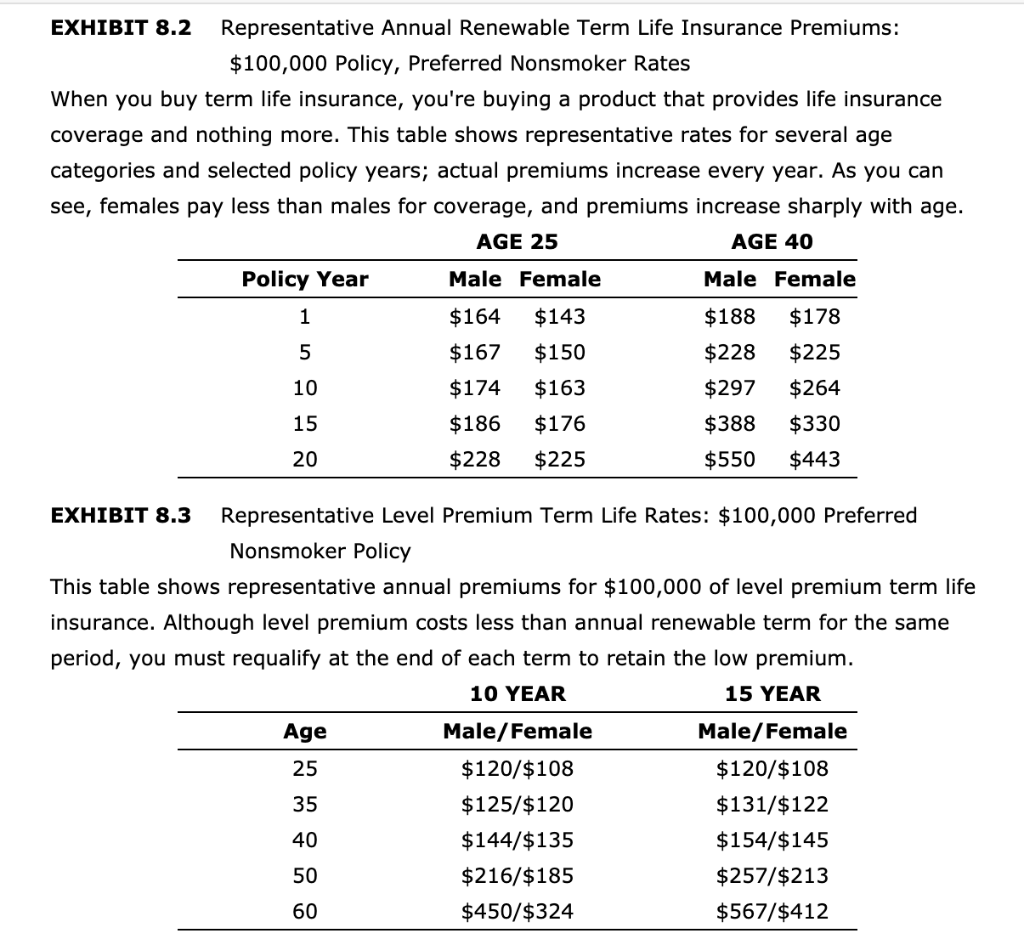
The defining characteristic of ART is its premium structure. When you purchase a policy, you are essentially buying a one-year "slice" of mortality protection. Because the statistical probability of death increases with every year of age, the insurance carrier adjusts the rate upward at each renewal. This is known as attained age pricing. In contrast to level-term insurance, where the insurer averages the cost over 10, 20, or 30 years to keep the payment the same, ART reflects the true cost of insurance for your specific age during that specific year.
Most ART policies are "guaranteed renewable." This means that as long as you pay the premium, the insurance company cannot cancel your coverage or require a new medical exam, regardless of changes in your health. This protection is vital because it ensures that even if you develop a chronic condition during the policy year, you can maintain coverage for the following year—albeit at a higher price.
How Annual Renewable Term Rates Are Calculated
To understand why ART rates fluctuate the way they do, it is necessary to look at the actuarial math behind the scenes. In 2026, insurance companies utilize sophisticated mortality tables (such as the 2017 Commissioners Standard Ordinary or CSO tables, adapted for modern longevity trends) to determine the "cost of insurance."
Mortality Risk and Age
The primary driver of the premium is the mortality rate for your specific demographic. For a 30-year-old, the statistical likelihood of dying within the next twelve months is extremely low. Therefore, the "pure cost" of that death benefit is minimal. However, as that individual reaches 40, 50, and 60, the curve of the mortality table steepens. The annual increase in premium is not linear; it is exponential. While the jump from age 30 to 31 might be a few cents per thousand dollars of coverage, the jump from age 59 to 60 could be substantial.
Expense Loads and Policy Fees
Beyond the pure mortality cost, ART rates include "expense loads." These are the costs the insurer incurs to administer the policy, pay commissions, and maintain their digital infrastructure. Most policies also include a flat "policy fee"—often ranging from $50 to $100 annually—which stays constant regardless of the death benefit amount. This fee makes ART less cost-effective for very small death benefits, as the fee represents a larger percentage of the total premium.
Interest Rate Assumptions
In 2026, macroeconomic conditions and the prevailing interest rate environment still influence how insurers price their products. Because ART policies do not build cash value and premiums are spent almost immediately on mortality costs, they are less sensitive to interest rates than Whole Life or Universal Life products. However, insurers still factor in the "time value of money" for the premiums they hold during the policy year.
The "Crossover Point": ART vs. Level Term Insurance
When evaluating ART rates, the most important technical concept for a consumer to understand is the crossover point. This is the moment in time when the cumulative premiums paid for an ART policy exceed the cumulative premiums that would have been paid for a level-term policy.
If you only need insurance for two or three years, ART is almost always the cheapest option because you aren't "overpaying" in the early years to subsidize the cost of the later years (which is how level-term works). However, if you keep an ART policy for 10 years, you will likely find that by year 7 or 8, your annual ART premium is significantly higher than a locked-in 10-year level-term rate would have been.
Cost Comparison Scenario (2026 Estimates)
Example: A 35-year-old non-smoker seeking $500,000 in coverage.
| Policy Year | Age | ART Annual Premium (Estimated) | 10-Year Level Term Premium (Fixed) |
|---|---|---|---|
| 1 | 35 | $185 | $290 |
| 2 | 36 | $205 | $290 |
| 3 | 37 | $230 | $290 |
| 4 | 38 | $265 | $290 |
| 5 | 39 | $310 | $290 |
| 6 | 40 | $370 | $290 |
| 7 | 41 | $445 | $290 |
| 8 | 42 | $535 | $290 |
| 9 | 43 | $650 | $290 |
| 10 | 44 | $790 | $290 |
| Total Cost | -- | $3,985 | $2,900 |
In this scenario, the ART policy starts $105 cheaper than the level-term policy. However, the "crossover" occurs in Year 5. By Year 10, the total cost of the ART policy is over $1,000 higher than the level-term alternative. This illustrates why ART is a tactical, short-term financial instrument rather than a long-term strategy.
Initial Underwriting and the "Re-entry" Concept
While ART premiums increase every year based on age, your health status at the time of application determines your rating class (e.g., Preferred Best, Standard, or Substandard). This rating class stays with you for the life of the policy.
However, some ART products are "Re-entry Term" policies. These allow the policyholder to undergo a new medical exam after a certain period (usually 5 or 10 years) to prove they are still in good health. If the policyholder passes, the insurer may reset the premiums to a lower "select" rate table. If the policyholder's health has declined, they remain on the "ultimate" rate table, which features higher annual increases. In 2026, re-entry ART is less common than it was a decade ago, but it remains an option for those who are confident in their long-term health trajectory.
Strategic Use Cases for Annual Renewable Term
Why would someone choose a policy where the rates go up every year? There are several specific financial scenarios where the ART rate structure is advantageous.
1. Bridging the Gap Between Jobs
If an individual leaves a job that provided group life insurance and is waiting for benefits to kick in at a new firm, an ART policy provides a low-cost bridge. Since the coverage is only needed for a few months, paying the "Year 1" ART rate is more efficient than committing to a long-term policy with higher initial premiums.
2. Short-Term Debt Obligations
Small business owners often use ART to cover short-term liabilities. For example, if a business takes out a 2-year bridge loan for equipment, the owner might purchase an ART policy to cover the loan balance. Since the debt will be retired quickly, there is no need to pay for a 10-year level-term policy.
3. Improving Health and Future Re-application
A person who has recently quit smoking or is in the process of losing significant weight might use an ART policy as a "placeholder." Insurance companies typically require you to be tobacco-free for at least 12 to 24 months before granting non-smoker rates. An individual can carry ART at the "smoker" rate for one year, and then apply for a long-term level policy once they qualify for the better rating class.
4. Maximizing Initial Death Benefit on a Budget
If a family has an extreme need for a high death benefit (e.g., $2 million) but has very little current cash flow, ART allows them to secure that full $2 million immediately for the lowest possible out-of-pocket cost in Year 1. This "buys time" until their income increases, at which point they can convert the policy to a level-term or permanent product.
Conversion Privileges and ART
One of the most valuable features often embedded in ART policies is the conversion rider. Even though the ART rates eventually become prohibitively expensive, most carriers allow the policyholder to convert the term coverage into a permanent policy (like Whole Life or Universal Life) without a medical exam.
In 2026, most conversion windows for ART are limited. For instance, a policy might allow conversion only during the first five or ten years, or until the insured reaches age 65. Understanding the specific conversion rules of your ART policy is crucial. If you develop a health condition that makes you uninsurable elsewhere, the ability to convert your ART policy—even as the rates rise—ensures you can maintain some form of permanent protection for your beneficiaries.
Common Pitfalls and Rate Misconceptions
Many consumers mistake ART for "Group Life" insurance offered through employers. While group life often uses an ART-like structure (where rates jump every 5 years), individual ART policies are different because they are fully underwritten at the start.
Another common mistake is ignoring the Maximum Guaranteed Premium. Every ART policy includes a contract schedule showing two sets of rates: the "Current" rate (what the company expects to charge) and the "Guaranteed Maximum" rate (the highest they are legally allowed to charge). While insurers rarely charge the maximum, in times of extreme economic instability or high mortality events, they reserve the right to increase rates up to that ceiling. Always review the guaranteed table to understand your "worst-case scenario" costs.
FAQs About Annual Renewable Term Rates
How often do ART rates increase?
ART rates increase once every year, typically on the anniversary of the policy's effective date. The new premium is based on your age at the time of renewal. Unlike other insurance products where premiums might change based on the company's performance, ART increases are primarily scheduled based on the aging process.
Is ART cheaper than Level Term insurance?
ART is cheaper than level-term insurance in the initial years (usually years 1 through 4). Because the insurer does not have to account for the higher mortality risk you will pose ten or twenty years in the future, they can offer a very low entry price. However, over a long duration, level-term insurance is almost always more cost-effective.
Can I cancel an ART policy at any time?
Yes. ART policies are essentially 12-month contracts. You can cancel at any time by stopping premium payments or notifying the carrier. There are no "surrender charges" or penalties for canceling an ART policy because it does not accumulate cash value.
Do I need a medical exam for ART?
For an individual ART policy, you generally must undergo full medical underwriting at the beginning to establish your initial rate and rating class. However, once the policy is issued, you do not need further exams to renew it each year, even as the rates increase.
What happens to my ART rates if I get sick?
Your rates will continue to follow the pre-determined "attained age" schedule regardless of your health. Because the policy is "guaranteed renewable," the insurance company cannot move you to a higher risk category or increase your specific rates just because you were diagnosed with an illness. Your premium will only increase because you got one year older.
Is there a maximum age for renewing ART?
Most insurance companies set a maximum age for ART renewals, typically between age 70 and 95. At this "expiry age," the policy terminates, and you can no longer renew the coverage. If you still need life insurance at that point, you would need to have converted the policy to a permanent product earlier.
Practical Recommendation
If you find yourself in a transitional period—such as starting a business, switching careers, or paying down a short-term debt—Annual Renewable Term insurance offers the most capital-efficient way to protect your beneficiaries. However, the rising rate structure makes it a "ticking clock."
To manage ART rates effectively, set a hard deadline for when you will either drop the coverage or convert it to a level-term or permanent policy. If you anticipate needing coverage for more than five years, skip the ART option and lock in a 10-year level-term policy today. The peace of mind provided by a fixed payment usually outweighs the small initial savings of an annual renewable structure.