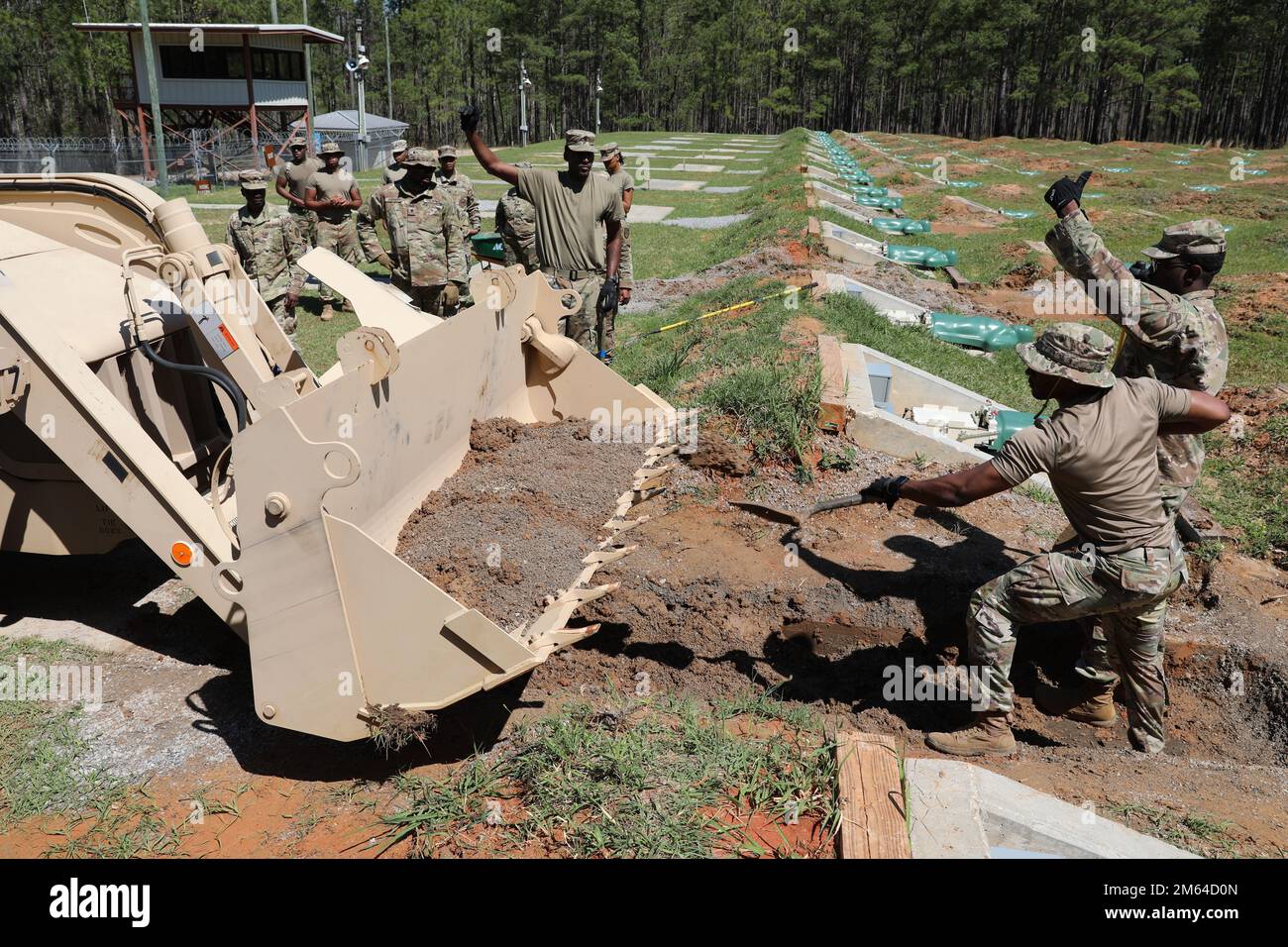
National Guard Annual Training (AT) is a mandatory 15-day period of active duty training conducted once per fiscal year to ensure unit readiness and individual proficiency. Governed by Title 32 of the U.S. Code, AT allows Soldiers and Airmen to practice their Military Occupational Specialties (MOS) in a collective, field, or garrison environment.
Understanding the Requirement: What is Annual Training?
Annual Training, commonly referred to as "AT," is the "two weeks a year" portion of the well-known National Guard recruitment slogan. While the Guard commitment is often simplified to "one weekend a month, two weeks a year," the reality of modern military service in 2026 often demands more. However, the 15-day AT remains the baseline statutory requirement for a "satisfactory year" of service, which counts toward retirement and maintains the member's status in the Selected Reserve.
Under 32 U.S.C. § 502, National Guard members are required to participate in training at least 15 days each year. This training is distinct from the monthly Inactive Duty Training (IDT), also known as drill. While drill focuses on administrative tasks and short-duration training, AT is designed for "collective training"—exercises where entire companies, battalions, or wings work together to simulate real-world missions.
For many units, AT is the only time during the year when all members are present simultaneously for an extended duration. This allows for complex maneuvers, such as live-fire exercises, large-scale medical simulations, or multi-day flight operations that cannot be compressed into a 48-hour drill weekend. In 2026, with the military's increased focus on multi-domain operations, AT periods are frequently used to integrate cyber, electronic warfare, and traditional kinetic capabilities.
Duration and Scheduling of AT in 2026
While the statutory minimum is 15 days, the duration of Annual Training can vary based on the unit’s mission and the current phase of the Sustainable Readiness Model (SRM). Some units may undergo a 21-day or even a 29-day AT, especially if they are preparing for a scheduled deployment or a rotation at a Combat Training Center (CTC) like the National Training Center (NTC) at Fort Irwin or the Joint Readiness Training Center (JRTC) at Fort Johnson.
Scheduling typically follows the fiscal year (October 1 to September 30). Most units schedule their AT during the summer months (May through August) to accommodate students and educators within the ranks. However, units with specific seasonal missions—such as those specializing in mountain warfare or cold-weather operations—may conduct their AT in the winter.
In some cases, the National Guard allows for "Year-Round AT" or "Split AT." This is common in the Air National Guard or for specialized Army Guard staff elements. Instead of a single 15-day block, members may perform their training in smaller increments to support ongoing missions or to attend specific professional military education (PME) courses. This flexibility is vital for high-demand career fields where continuous support is more valuable than a single block of training.
Pay and Allowances During Annual Training
One of the primary concerns for Guard members is financial compensation during AT. Unlike monthly drills, where members receive "drill pay" (calculated as 1/30th of basic pay per training period), AT is paid as Active Duty Pay. This means you receive one day of basic pay for every day you are on AT orders.
Components of AT Compensation
The total compensation package for Annual Training in 2026 includes several distinct parts:
- Basic Pay: This is determined by your rank (E-1 through O-10) and your years of service. It is the same rate paid to Active Duty members.
- Basic Allowance for Housing (BAH): For AT periods of 29 days or fewer, members typically receive BAH Type II (Non-Locality), which is a fixed rate based on rank and dependency status, rather than the zip-code-based BAH received during long-term deployments.
- Basic Allowance for Subsistence (BAS): This is a daily food allowance. However, if the military provides meals (such as in a dining facility or through MREs), the cost of those meals is often deducted from the member's pay.
- Travel and Per Diem: If the AT location is outside the local commuting distance of the member’s home or armory, they are entitled to travel reimbursements through the Defense Travel System (DTS). This includes mileage for personally owned vehicles (POV) or government-funded airfare.
It is essential for members to verify their "Orders" before the training begins. The orders specify the start and end dates, the funding code, and the authorized travel expenses. In 2026, most units use automated systems to ensure pay is processed within 5 to 10 business days of the AT's conclusion, though delays can occur if the member's personnel file (iPERMS) is not up to date.
Detailed pay tables can be found on the Defense Finance and Accounting Service (DFAS) website, which provides the most current 2026 figures for all branches.
Employer Rights and USERRA Protections
The Uniformed Services Employment and Reemployment Rights Act (USERRA) is a federal law that protects National Guard members from workplace discrimination based on their military service. In 2026, these protections remain a cornerstone of the "Citizen-Soldier" model.
Key Protections Under USERRA:
- Job Restoration: Employers must allow you to return to the job you would have held had you not been away for military service (the "escalator principle").
- Health Insurance: If you are on AT for fewer than 31 days, your employer must maintain your health insurance coverage as if you had not left.
- No Requirement to Use Vacation Time: An employer cannot force a National Guard member to use their paid time off (PTO) or vacation days for Annual Training. However, the member can choose to use PTO if they wish to receive both their civilian and military pay simultaneously.
- Notice Requirements: To be protected by USERRA, the member must provide "reasonable notice" to their employer. While the law does not specify a timeframe, providing a copy of your military training calendar as soon as it is released is considered a best practice.
Employers who have questions about their obligations or who wish to support their Guard employees can find resources at the Employer Support of the Guard and Reserve (ESGR), a Department of Defense office that mediates between service members and civilian bosses.
Comparing IDT (Drill) vs. Annual Training (AT)
To understand the scope of AT, it is helpful to compare it to the standard monthly drill.
| Feature | Inactive Duty Training (IDT/Drill) | Annual Training (AT) |
|---|---|---|
| Duration | 2-4 days (MUTAs) | 15-29 consecutive days |
| Legal Authority | 32 U.S.C. § 502(a)(1) | 32 U.S.C. § 502(a)(2) |
| Pay Type | Drill Pay (Per period) | Active Duty Pay (Per day) |
| Retirement Points | 1 per MUTA (Max 2 per day) | 1 per day |
| Housing Allowance | Generally none | BAH Type II (RC/T) |
| Travel Pay | Rarely (Distance dependent) | Standard via DTS |
| Primary Focus | Admin, PMCS, Individual Tasks | Collective Training, Field Exercises |
Preparation and Readiness: What to Expect
Preparing for Annual Training requires more than just packing a rucksack. It involves administrative, medical, and logistical readiness.
Administrative and Medical Readiness
Before departing for AT, members must ensure they are "Green" on their Periodic Health Assessment (PHA) and dental exams. If a member has a "Red" medical status, they may be prohibited from participating in field training, which can negatively impact their career progression. In 2026, many units integrate these medical checks into the months leading up to AT to ensure 100% manning during the exercise.
Packing and Equipment
A standard AT packing list usually includes:
- Uniforms: Multiple sets of OCPs (Operational Camouflage Pattern) or branch-equivalent uniforms.
- Field Gear: Improved Outer Tactical Vest (IOTV), helmet, rucksack, and sleeping system.
- Personal Items: Toiletries, sufficient undergarments, and "comfort items" allowed by the unit Commander.
- Documentation: Copies of orders, military ID (CAC), and any specific certifications (e.g., driver’s license for military vehicles).
The Training Environment
The environment of AT can vary wildly. A combat engineer unit might spend 15 days in the woods at Fort Barfoot, Virginia, sleeping in tents and eating MREs. Conversely, a cyber unit might conduct their AT at a professional testing facility or a university lab, staying in hotels or barracks and working in air-conditioned environments. Regardless of the setting, the goal is the same: to reach a state of "Trained" (T) in the unit’s Mission Essential Task List (METL).
Logistics and the Defense Travel System (DTS)
For AT conducted away from the home station, the National Guard utilizes the Defense Travel System (DTS) to manage authorizations and vouchers. It is the responsibility of the individual member to ensure their DTS profile is updated with the correct banking information and a valid Government Travel Charge Card (GTCC).
The GTCC should be used for authorized expenses such as fuel for government vehicles, lodging (if not provided in barracks), and airfare. After the AT is completed, the member must file a "Travel Voucher" within five days. This voucher reconciles the expenses on the GTCC and ensures the member is reimbursed for out-of-pocket costs like mileage or per diem for meals not provided by the government. Failure to manage DTS properly is one of the most common causes of financial stress following an AT period.
Frequently Asked Questions
Can Annual Training be longer than 15 days?
Yes. Depending on the unit's mission and funding, AT can be extended. Units heading to a Combat Training Center (CTC) often have AT periods lasting 21 to 29 days. Any training exceeding 29 days may trigger different pay and benefit rules, such as full BAH (based on zip code) and the start of Family Separation Allowance if applicable.
What happens if I have a family emergency during AT?
The American Red Cross provides emergency communication services for the military. If a family emergency occurs, the Red Cross can verify the situation and notify the unit chain of command. Commanders have the authority to grant emergency leave or release a member from AT early, though this is handled on a case-by-case basis.
Do I get retirement points for Annual Training?
Yes. You receive one retirement point for every day of AT. These points are critical for calculating your future "non-regular" retirement pay, which National Guard members typically begin receiving at age 60 (or earlier based on qualifying active service).
Is AT the same as "Annual Muster"?
No. An Annual Muster is a very short (usually one day or less) requirement for members of the Individual Ready Reserve (IRR) to update their contact information and medical status. Annual Training is a 15-day active duty commitment for members of the Selected Reserve (those actively drilling).
Can I be excused from Annual Training?
Excusal from AT is rare and generally requires a significant justification, such as a severe medical issue, a family hardship, or a once-in-a-career civilian opportunity that cannot be rescheduled. Requests for "Constructive Credit" or an "Excused Absence" must be approved by the unit Commander, and the member may still be required to make up the training days at another time to achieve a satisfactory year for retirement.
Final Recommendation for Guard Members
To ensure a successful Annual Training in 2026, the most important action you can take is early communication. Notify your civilian employer of your AT dates at least 60 to 90 days in advance, even if you do not have the hard copy of your orders yet. Simultaneously, verify your medical and administrative status in the months leading up to the training. A "Green" status in all categories ensures that you can focus on your mission-essential training rather than spending your time in the field resolving paperwork or medical readiness issues.