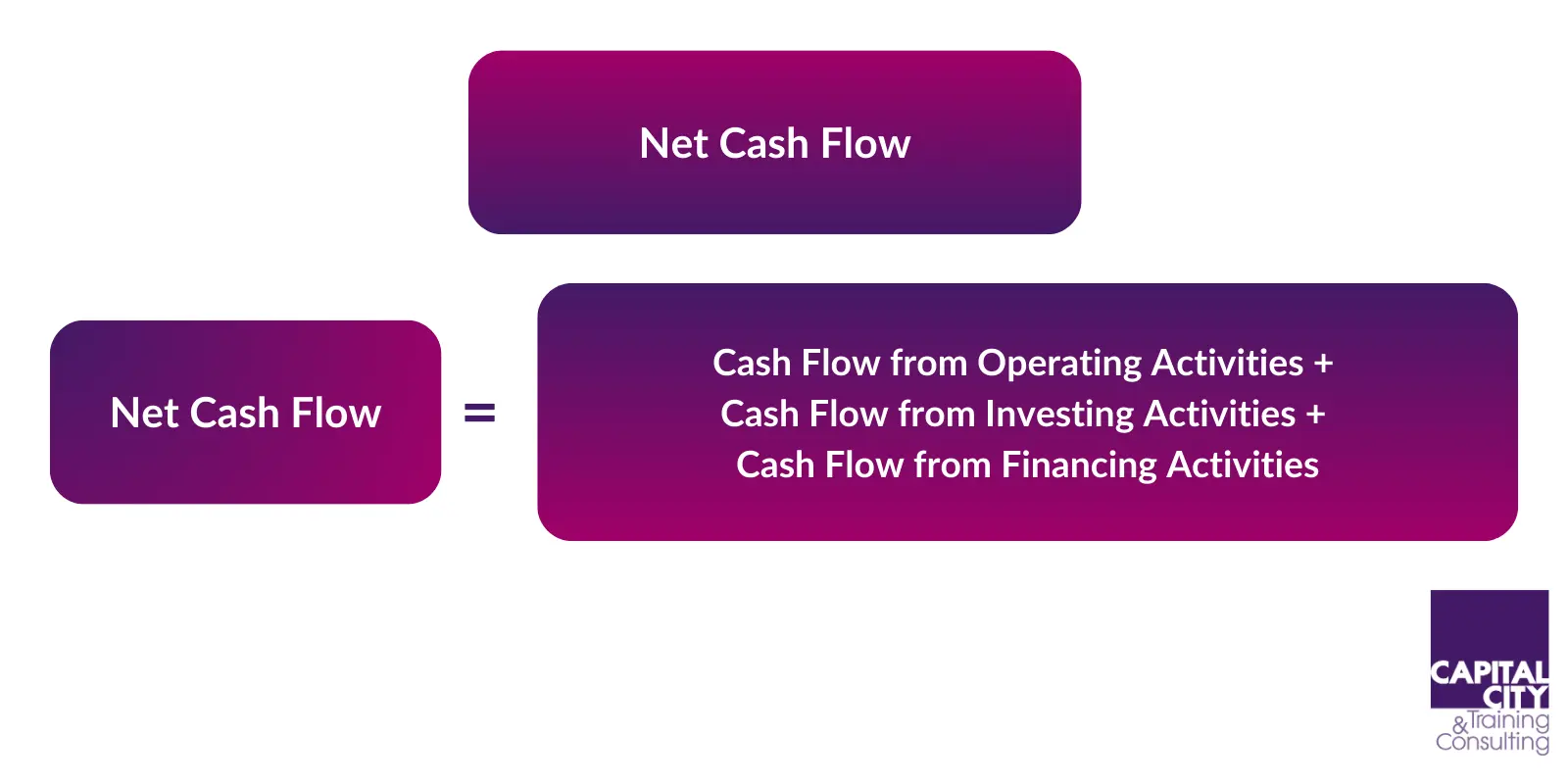
The annual net cash inflow formula calculates the total amount of actual cash generated by a business or project over a one-year period. The simplest expression is Annual Net Cash Inflow = Total Cash Receipts - Total Cash Payments. In capital budgeting, it is more specifically defined as (Revenue - Cash Operating Expenses) × (1 - Tax Rate) + (Depreciation × Tax Rate), which accounts for non-cash expenses and tax shields.
Understanding the annual net cash inflow is a fundamental requirement for financial analysts, business owners, and investors in 2026. While accounting profit (net income) provides a snapshot of performance based on accrual rules, net cash inflow reveals the actual liquidity of an entity. Without positive cash inflow, even a "profitable" company can face insolvency if it cannot meet its immediate obligations. This guide explores the various iterations of the formula, the nuances of its components, and how to apply it to real-world financial decision-making.
The Core Concept of Net Cash Inflow
Before diving into the mathematical formulas, it is essential to distinguish between cash flow and profit. In modern accounting, most businesses use the accrual basis of accounting. This means revenue is recognized when it is earned, and expenses are recognized when they are incurred, regardless of when the cash actually changes hands.
Annual net cash inflow strips away these accounting conventions to focus purely on the movement of currency. It represents the "breath" of a business—the actual oxygen available to pay employees, purchase inventory, settle debts, and distribute dividends to shareholders. In the context of 2026's volatile economic landscape, where interest rates and inflation remain key variables, the ability to accurately forecast and verify these inflows is more critical than ever.
Cash Inflow vs. Net Income
The primary difference lies in non-cash items. The most significant non-cash item is depreciation. When a company buys a piece of machinery for $100,000, it doesn't deduct the full $100,000 from its profit in Year 1. Instead, it spreads that cost over the machine's useful life (e.g., $10,000 per year for 10 years). However, the cash actually left the bank account in Year 1. Conversely, in Year 2, the company records a $10,000 depreciation expense that reduces profit but does not involve any actual cash payment. To find the net cash inflow, we must "add back" that depreciation to the net income.
The Basic Annual Net Cash Inflow Formula
For a general business assessment, the most straightforward formula is used:
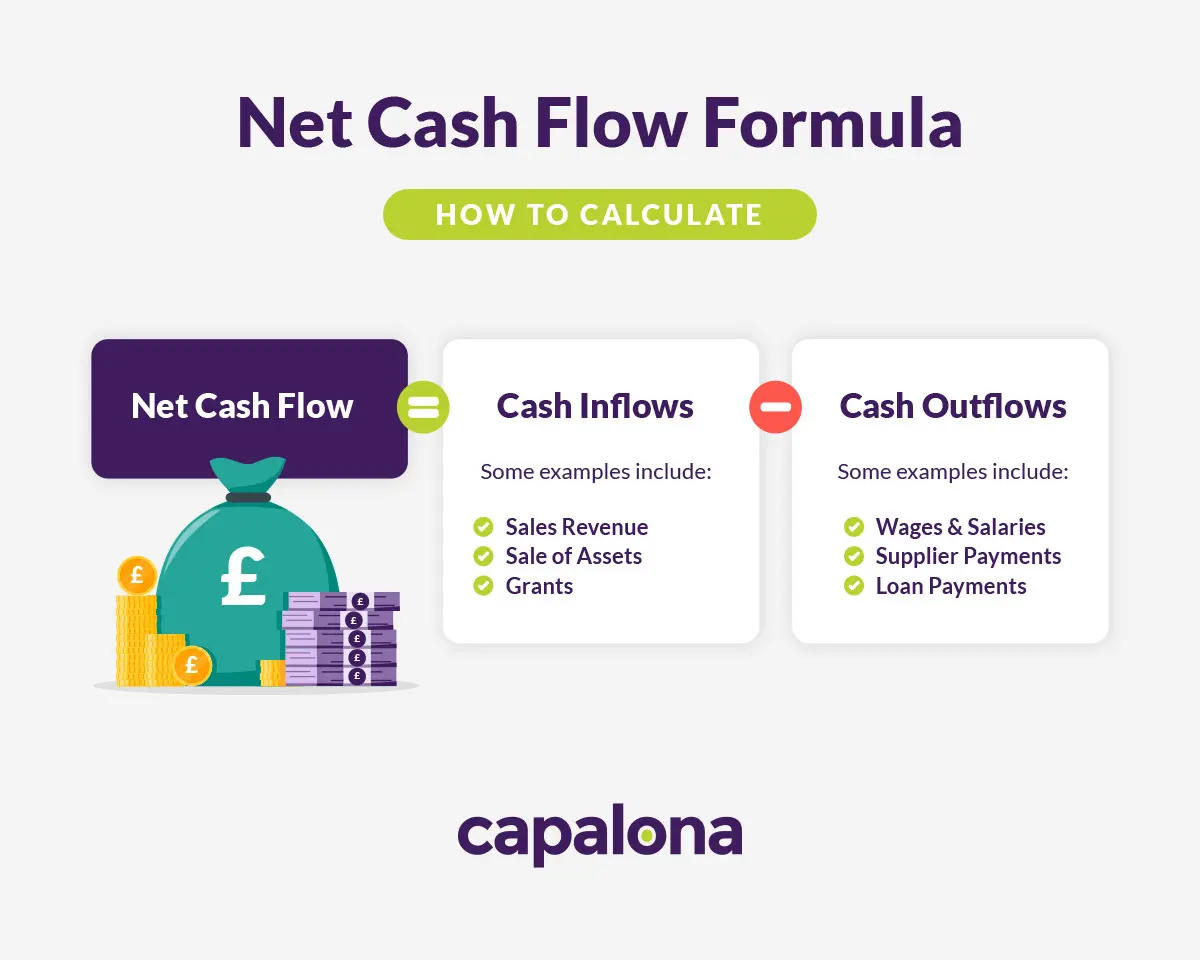
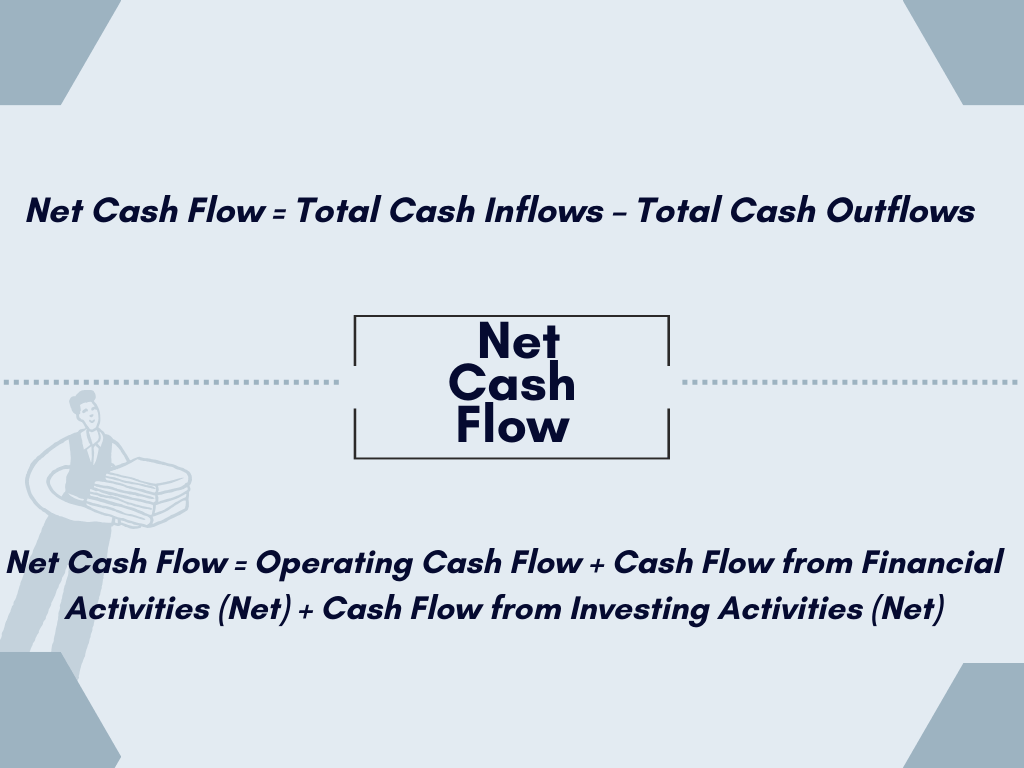
Net Cash Inflow = Total Cash Inflows - Total Cash Outflows
Where:
- Total Cash Inflows: Includes cash from sales, proceeds from the sale of assets, dividends received, interest income, and new loans or equity investments.
- Total Cash Outflows: Includes cash paid for operating expenses (rent, wages, utilities), inventory purchases, interest payments on debt, tax payments, and capital expenditures (purchasing new equipment).
This formula is often used by small business owners to monitor their "burn rate" or their ability to sustain operations without external funding.
The Capital Budgeting Formula (Incremental Cash Flow)
When businesses evaluate a new investment—such as a new factory, a software upgrade, or a marketing campaign—they use a more sophisticated version of the annual net cash inflow formula. This version is designed to isolate the cash generated specifically by that investment.
Annual Net Cash Inflow = (S - E) × (1 - T) + (D × T)
Breakdown of the Components:
- S (Incremental Revenue/Savings): The additional cash revenue generated by the project or the cash savings created (e.g., a new machine that reduces labor costs).
- E (Incremental Cash Expenses): The additional cash operating costs incurred due to the project (e.g., maintenance, additional electricity, specialized labor).
- T (Tax Rate): The corporate income tax rate. Taxes are a real cash outflow and must be deducted from the operating gains.
- D (Depreciation Expense): The annual depreciation of the asset associated with the project.
- D × T (The Depreciation Tax Shield): This is a critical technical concept. Since depreciation is a tax-deductible expense, it reduces the amount of taxable income. The "tax shield" is the amount of cash a company saves in taxes because of the depreciation deduction.
Why Add Back Depreciation?
In the formula above, the term (S - E) represents the pre-tax cash flow. When we multiply by (1 - T), we find the after-tax cash flow. However, because depreciation was subtracted to calculate the tax but didn't actually cost any cash, we add it back—or rather, we add back the tax-saving portion of it.
The Indirect Method Formula
In corporate finance and when reading a Statement of Cash Flows, the indirect method is the standard for deriving net cash flow from operating activities. The formula looks like this:
Net Cash Inflow = Net Income + Depreciation/Amortization ± Changes in Working Capital
Changes in Working Capital
Working capital changes are often overlooked by novices but are vital for accuracy. They include:
- Accounts Receivable (A/R): If A/R increases, it means the company made sales but hasn't received the cash yet. This is a decrease in cash inflow.
- Inventory: If inventory increases, the company spent cash to buy goods that haven't been sold yet. This is a decrease in cash inflow.
- Accounts Payable (A/P): If A/P increases, the company has kept its cash longer by not yet paying its suppliers. This is an increase in cash inflow.
Comprehensive Comparison of Calculation Methods
The following table compares how different stakeholders might calculate or view annual net cash inflow depending on their specific goals.
| Feature | Basic/Managerial Method | Capital Budgeting Method | Accounting (Indirect) Method |
|---|---|---|---|
| Primary Goal | Monitor daily/monthly liquidity. | Evaluate the viability of an investment. | Reconcile net income to actual cash. |
| Starting Point | Total Cash Receipts | Incremental Revenue/Savings | Net Income (Accrual) |
| Treatment of Taxes | Included as they are paid. | Calculated based on project income. | Part of the net income adjustment. |
| Non-Cash Items | Ignored entirely. | Added back as a tax shield. | Added back (Depreciation/Amortization). |
| Working Capital | Captured in "Cash Outflows." | Often treated as an initial outlay. | Adjustments for A/R, A/P, and Inventory. |
| Usage Context | Small Business Management | NPV and IRR Analysis | Annual Reports (10-K) |
Step-by-Step Calculation: A Real-World Example
To illustrate the complexity and application of the formula, let's consider a scenario for a logistics company in 2026 considering the purchase of an automated sorting system.
Scenario Data:
- Cost of System: $500,000
- Annual Labor Savings (S): $150,000
- Annual Maintenance Costs (E): $20,000
- Depreciation (D): $50,000 (Straight-line over 10 years)
- Corporate Tax Rate (T): 25%
Step 1: Calculate Pre-Tax Cash Savings
Subtract the operating expenses from the revenue/savings.
- $150,000 (Savings) - $20,000 (Maintenance) = $130,000
Step 2: Calculate After-Tax Operating Cash Flow
Apply the tax rate to the operating savings.
- $130,000 × (1 - 0.25) = $97,500
Step 3: Calculate the Depreciation Tax Shield
Determine how much cash is saved due to the non-cash depreciation expense.
- $50,000 (Depreciation) × 0.25 (Tax Rate) = $12,500
Step 4: Sum the Components for the Final Net Cash Inflow
- $97,500 (After-tax savings) + $12,500 (Tax shield) = $110,000
In this example, the Annual Net Cash Inflow for the project is $110,000. Note that if you simply looked at "Net Income" for this project, it would be lower because the full $50,000 depreciation would be subtracted. The net cash inflow is the actual amount the company has available to pay off the $500,000 investment.
Why Annual Net Cash Inflow Matters for Strategy
The result of the annual net cash inflow formula is rarely the end of the analysis. Instead, it serves as the primary "input" for several key financial metrics that determine the future of a company.
1. Net Present Value (NPV)
The NPV formula requires a series of annual net cash inflows. Because a dollar today is worth more than a dollar in the future, these annual inflows are "discounted" back to their present value using a discount rate (usually the company's cost of capital). If the sum of the discounted annual net cash inflows is greater than the initial investment, the project is considered profitable.
2. Internal Rate of Return (IRR)
The IRR is the discount rate that makes the NPV of all cash flows from a particular project equal to zero. Financial managers compare the IRR to the company's required rate of return to decide whether to move forward with an expansion.
3. Payback Period
The simplest use of net cash inflow is determining the payback period. If a project costs $300,000 and generates $100,000 in annual net cash inflow, the payback period is 3 years. While this method ignores the time value of money, it is a popular "quick and dirty" metric for assessing risk.
4. Debt Service Coverage Ratio (DSCR)
Lenders use annual net cash inflow to determine if a business can afford to take on more debt. The DSCR is calculated by dividing the net operating income (a variation of cash inflow) by the total debt service (interest and principal payments). A ratio below 1.0 indicates that the company does not have enough cash inflow to cover its debts.
Common Pitfalls and Mistakes to Avoid
Calculating annual net cash inflow seems mechanical, but several conceptual errors can lead to disastrous financial decisions.
- Treating Depreciation as a Cash Outflow: This is the most common mistake. Beginners often see "Depreciation Expense" on an income statement and assume cash was paid. Remember: the cash was paid when the asset was bought. The annual expense is just an accounting entry.
- Ignoring Opportunity Costs: In capital budgeting, if a new project uses a building the company already owns, the "rent" that could have been earned by leasing that building to someone else is a "lost" inflow and should be factored in as a cost.
- Sunk Costs: Costs that have already been incurred (like a $50,000 feasibility study done last year) should not be included in the annual net cash inflow formula for a new project. These are "sunk" and do not change regardless of whether the project proceeds.
- Forgetting Terminal Value: At the end of a project's life (e.g., after 5 years), the equipment might be sold for scrap. This "salvage value" is a massive cash inflow in the final year that must be included in the total analysis, though it is not part of the standard annual recurring formula.
The Role of Inflation and Real-Time Tracking in 2026
As of 2026, the traditional annual calculation is increasingly being supplemented by rolling monthly or even weekly "cash visibility" dashboards. However, the annual figure remains the gold standard for tax reporting and long-term strategic planning.
When calculating inflows for future years, it is critical to adjust for inflation. A $100,000 inflow in 2026 will not have the same purchasing power as $100,000 in 2029. Analysts must apply an inflation factor to both revenues and expenses to ensure the "net" result remains realistic.
Furthermore, jurisdictional tax laws (such as changes to the Internal Revenue Code or international IFRS updates) can alter the Tax Rate (T) or the allowed Depreciation (D) schedules. Always verify current local tax regulations before finalizing a cash flow model, as these are the most common sources of calculation variance.
Frequently Asked Questions
Does net cash inflow include loans?
Yes, in a general "Statement of Cash Flows" context, receiving a loan is considered a cash inflow under "Financing Activities." However, in a Capital Budgeting or Project Analysis context, loans are usually excluded from the operating net cash inflow formula because the goal is to see if the project itself is profitable, regardless of how it is financed.
How is net cash inflow different from Free Cash Flow (FCF)?
The terms are related but distinct. Free Cash Flow typically refers to the net cash inflow from operations minus capital expenditures (CapEx). It represents the cash a company has left over after maintaining or expanding its asset base. Annual net cash inflow is a broader term that can refer to the result of any specific cash flow formula or a specific project's annual return.
Can annual net cash inflow be negative?
Absolutely. A negative net cash inflow (often called "net cash outflow") occurs when a company's cash payments exceed its cash receipts. This is common in startups or during years of heavy capital investment. While a company can survive a negative cash flow temporarily by using cash reserves or borrowing, it is not sustainable in the long term.
Should I use the direct or indirect method?
For internal management and project evaluation, the direct method (Cash In - Cash Out) is often more intuitive and useful for planning. For external financial reporting and compliance with GAAP or IFRS, the indirect method (Net Income + Adjustments) is required because it bridges the gap between the Income Statement and the Balance Sheet.
Does interest expense affect annual net cash inflow?
Yes, interest is a cash payment. However, in many capital budgeting formulas (like those used for NPV), interest is excluded from the operating cash flow because it is accounted for in the "discount rate." Including it in both the formula and the discount rate would be "double-counting" the cost of money.
Practical Recommendation
When applying the annual net cash inflow formula, always start by defining your objective. If you are assessing the health of an existing business, use the Indirect Method to ensure you are capturing changes in working capital like uncollected invoices or excess inventory. If you are evaluating a new investment or purchase, use the Capital Budgeting Formula to account for the depreciation tax shield and incremental gains.
For the most accurate results in 2026, utilize automated accounting integrations to pull real-time data, but always perform a manual "sanity check" on your depreciation and tax assumptions. A single error in the tax shield calculation can swing an investment decision by thousands of dollars.