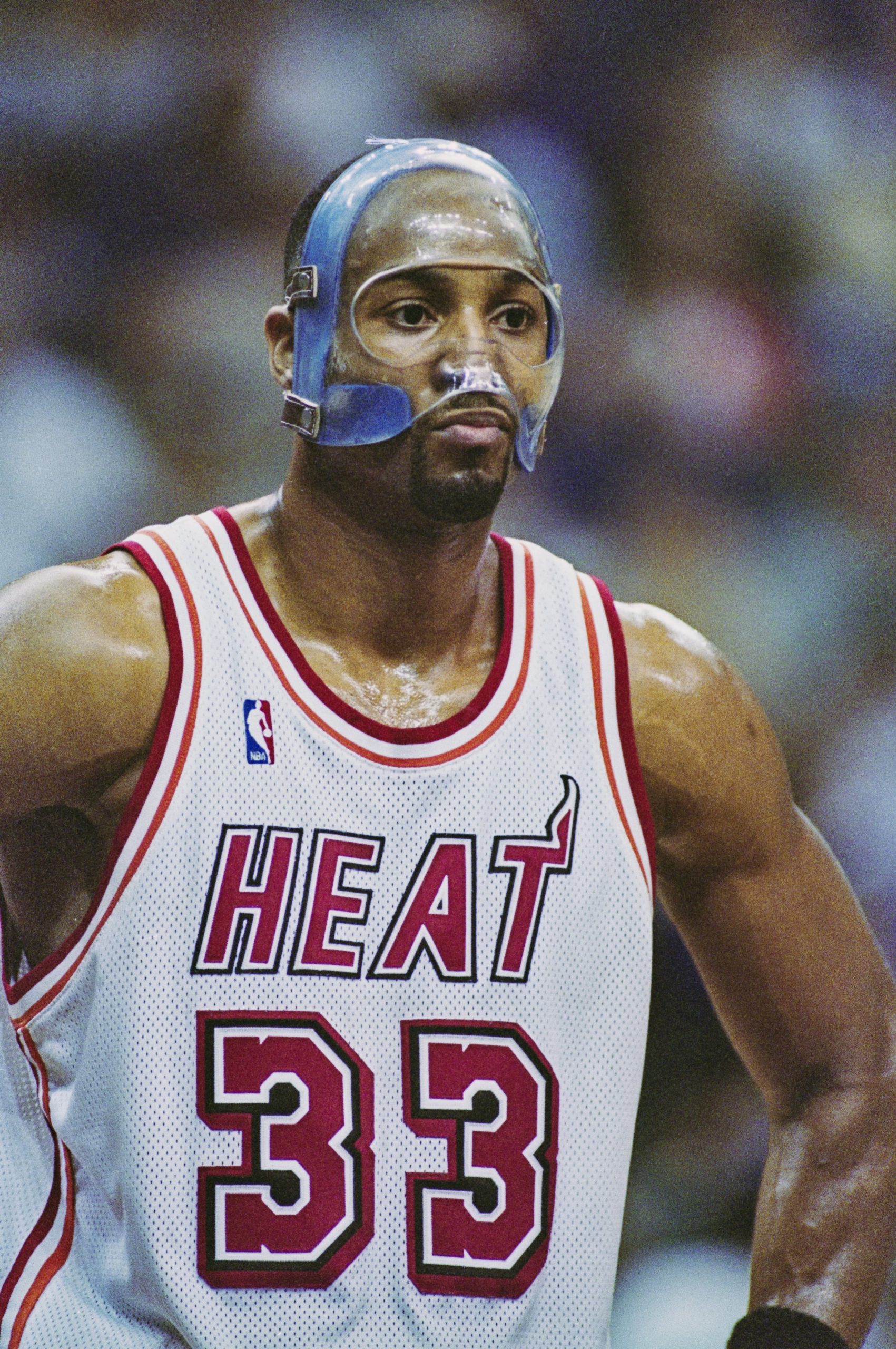
In the history of the NBA, few players have embodied physical intensity and defensive dominance quite like Alonzo Mourning. While his official playing weight was typically listed between 240 and 261 pounds, several myths persist regarding his muscle mass, the impact of his weight on his health, and the relationship between his physique and the kidney disease that altered his career.
Alonzo "Zo" Mourning remains a foundational figure for the Miami Heat and a Hall of Fame center whose career was a testament to resilience. However, in the years since his retirement and leading into 2026, many fans and amateur athletes have debated the "myth versus fact" of his physical conditioning. Some argue that his intense weight-lifting regimen contributed to his medical issues, while others believe his weight was artificially inflated by the media or team listings. To understand the reality, we must look at the intersection of professional athletic training, nephrology, and the specific physical demands of the center position during the 1990s and early 2000s.
The Physical Profile: Official Stats vs. Court Presence
During his prime with the Charlotte Hornets and the Miami Heat, Alonzo Mourning was often compared to his draft-class rival, Shaquille O’Neal. While O’Neal relied on massive girth and sheer power, Mourning was the archetype of the "shredded" big man.
Listed Weight vs. Functional Weight
Most official NBA records list Mourning at 6'10" and 240 pounds. However, as his career progressed in Miami under Pat Riley—a coach known for demanding extreme physical conditioning—Mourning’s weight was often reported closer to 260 pounds. The "myth" here is that Mourning was an undersized center. In reality, while he was shorter than the 7-footers he guarded, his functional weight consisted almost entirely of lean muscle mass.
The discrepancy in weight reports often came from the "Heat Culture" standards of the late 90s. Riley’s teams were required to maintain specific body fat percentages. Mourning wasn't just heavy; he was dense. This density allowed him to hold his ground against players who weighed 30 to 40 pounds more, such as Patrick Ewing or Arvydas Sabonis.
The Myth of the 300-Pound "Zo"
At various points in his later career, especially during his comeback following a kidney transplant, rumors circulated that Mourning had bulked up to 300 pounds to compensate for lost athleticism. This is a fabrication. Mourning’s frame simply could not support 300 pounds while maintaining the verticality and lateral quickness required for his signature shot-blocking. Even in 2026, looking back at his 2006 championship run with the Heat, his physique remained remarkably consistent with his younger years—lean, muscular, and focused on core strength rather than sheer mass.
The Kidney Disease Connection: Myth vs. Medical Fact
The most significant "myth vs. fact" debate surrounding Alonzo Mourning involves his diagnosis of Focal Segmental Glomerulosclerosis (FSGS) in 2000. FSGS is a rare disease that causes scarring in the filters of the kidneys. Because Mourning was a physical specimen, many observers at the time—and even today—erroneously linked his condition to his weight-room habits.
Myth: Weightlifting and Supplements Caused His Kidney Failure
A common misconception is that Mourning’s use of creatine or high-protein diets, intended to maintain his massive weight and muscle, caused his kidneys to fail.
- The Fact: Medical professionals, including his own doctors, have clarified that FSGS is a complex condition often linked to genetic factors or idiopathic causes. While a high-protein diet can put additional strain on already failing kidneys, it is not the primary cause of FSGS.
- The Nuance: Mourning has been vocal about the dangers of overusing Non-Steroidal Anti-Inflammatory Drugs (NSAIDs) like ibuprofen. In the high-impact world of the NBA, players often take high doses of painkillers to manage inflammation. This, combined with the dehydration that occurs during elite athletic performance, is a far more significant risk factor for kidney stress than the mere act of being heavy or muscular.
The Role of Body Mass in Kidney Health
There is a legitimate medical discussion regarding "secondary FSGS," which can be caused by obesity. However, this is triggered by high adipose tissue (body fat), which requires the kidneys to work harder to filter blood for a larger body volume. Mourning did not suffer from obesity-related kidney stress. His body mass was largely muscle, and his FSGS was the primary type, meaning it was a disease of the kidney itself rather than a secondary result of his weight.
Training Regimen and "Heat Culture"
To understand Mourning’s weight, one must understand the era of training he inhabited. The 1990s NBA was a "bruiser" era. The myth that Mourning was "naturally" that big ignores the thousands of hours spent in the weight room.
Powerlifting vs. Functional Strength
Mourning was known for his incredible work ethic. Unlike modern centers who might focus on "pre-hab" and mobility, Mourning’s era focused on power.
- Heavy Compound Movements: Bench presses and squats were staples, contributing to the thick upper body that defined his silhouette.
- Low Body Fat: While his weight was high, his body fat was rumored to stay between 6% and 8% during the season.
- Conditioning: Pat Riley’s infamous "suicides" and conditioning tests meant that any weight Mourning carried had to be "useful weight." If he had reached a mythical 300 pounds, he would have failed the Heat’s strict conditioning requirements.
Comparing Mourning to His Peers
To put Mourning's weight and physique into perspective, it is helpful to compare him to other legendary centers of his era.
| Player | Listed Height | Listed Weight | Physical Profile |
|---|---|---|---|
| Alonzo Mourning | 6'10" | 240–261 lbs | High muscle density, low body fat, elite shot-blocker. |
| Shaquille O'Neal | 7'1" | 315–350+ lbs | Massive frame, combination of power and surprising agility. |
| David Robinson | 7'1" | 235–250 lbs | Lean, "Admiral" physique, focused on speed and verticality. |
| Patrick Ewing | 7'0" | 240–255 lbs | Balanced frame, strong post-presence, high-impact style. |
| Ben Wallace | 6'9" | 240 lbs | Extreme muscle definition, similar to Mourning's build. |
This comparison highlights that Mourning was actually on the lighter side of the "elite center" spectrum in terms of sheer poundage, but his muscle-to-fat ratio was among the highest in the league. This is why he appeared larger on television than his 240-pound listing might suggest.
The Post-Transplant Comeback: A Physical Miracle
When Mourning returned to the NBA in 2004 after receiving a kidney from his cousin, Jason Cooper, the primary concern was his weight management. A kidney transplant requires the patient to take immunosuppressant drugs, which can lead to weight gain, muscle loss, and bone density issues.
The Fact of the Comeback
The myth was that Mourning would return as a "shell of himself," unable to bang in the post. However, the fact is that Mourning managed his post-transplant health with such precision that he remained a top-tier defender. In the 2005-2006 season, he averaged 2.7 blocks per game in only 20 minutes of play.
He had to be meticulously careful with hydration and his "playing weight." If he became too heavy, the strain on the new kidney would be too great. If he was too light, he couldn't survive the physicality of the NBA. He found a "sweet spot" at approximately 250 pounds, allowing him to provide the veteran grit that led the Heat to their first title in 2006.
Common Mistakes in Evaluating Athlete Weight
When fans discuss the weight of players like Mourning, they often fall into several traps:
- Relying on "Draft Night" Stats: Many websites still list Mourning at 240 pounds, which was his weight entering the league in 1992. By 1998, he was significantly more muscular.
- Confusing Muscle for Fat: In the modern "small-ball" NBA, a 260-pound player might look "heavy." In 1996, a 260-pound Mourning looked like a Greek statue.
- Ignoring Medical Realities: Attributing kidney failure to "supplements" is a simplified narrative that ignores the genetic and autoimmune complexities of FSGS.
The Legacy of the Mourning Physique in 2026
As of 2026, Alonzo Mourning’s career serves as a blueprint for "longevity through adversity." His ability to maintain a world-class physique while managing a chronic, life-threatening illness debunked the myth that a kidney transplant ends an elite athletic career.
His physical legacy isn't just about how much he weighed on a scale; it's about the quality of that weight. For modern athletes, Mourning’s story is a cautionary tale regarding the use of NSAIDs and a masterclass in the importance of body composition over raw poundage.
Frequently Asked Questions
Did Alonzo Mourning ever weigh over 270 pounds? While some team programs might have occasionally inflated numbers for intimidation purposes, it is unlikely Mourning ever played above 270 pounds. His game relied on his ability to jump and recover quickly. Carrying excess weight would have hindered his "second jump," which was his greatest asset as a rebounder and shot-blocker.
How did Mourning’s kidney transplant affect his muscle mass? Initially, the surgery and subsequent recovery led to a loss of muscle tone. However, through a strictly monitored renal diet and a modified lifting program, Mourning was able to regain his signature muscle mass. He had to replace high-phosphorus and high-potassium foods with kidney-friendly alternatives while ensuring he took in enough protein to repair muscle tissue without overwhelming his single kidney.
Is it a myth that Mourning’s workout routine was "unhealthy"? For a healthy individual, his routine was elite but standard for the 90s. However, for someone with undiagnosed or early-stage FSGS, the intense dehydration and potential use of anti-inflammatories associated with that level of training certainly didn't help. The routine itself wasn't the "cause," but the demands of the NBA are inherently taxing on the renal system.
What is the "Mourning Rule" regarding weight? While not an official NBA rule, many trainers refer to the "Mourning Rule" as the idea that a player should never trade mobility for mass. Mourning was the peak example of having exactly enough weight to be powerful without losing the "twitch" muscles needed for defense.
Does Alonzo Mourning still advocate for specific health practices? Yes, in 2026, Mourning continues to be a major advocate for kidney health and regular check-ups. Through his work with the Mourning Family Foundation and various health initiatives, he emphasizes the importance of understanding one's own body chemistry, debunking the myth that "looking fit" is the same as "being healthy."
Final Recommendation for Readers
If you are an athlete looking to model your physique after legends like Alonzo Mourning, focus on body composition rather than the number on the scale. High muscle density provides the leverage needed for contact sports, but it must be supported by internal health. Prioritize hydration, be cautious with the long-term use of NSAIDs, and consult with a medical professional before starting high-intensity supplement regimens, especially if you have a family history of kidney issues.