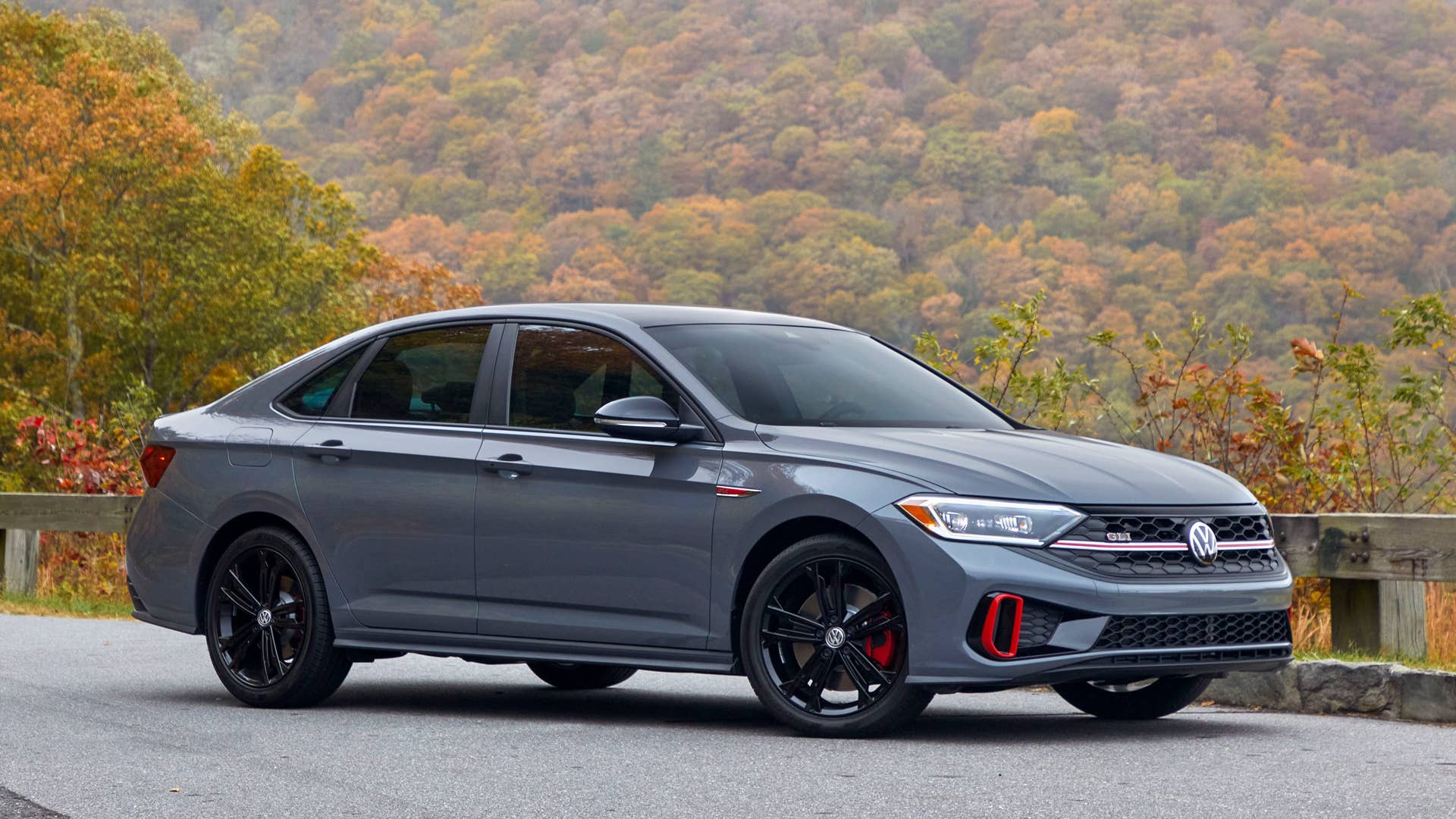
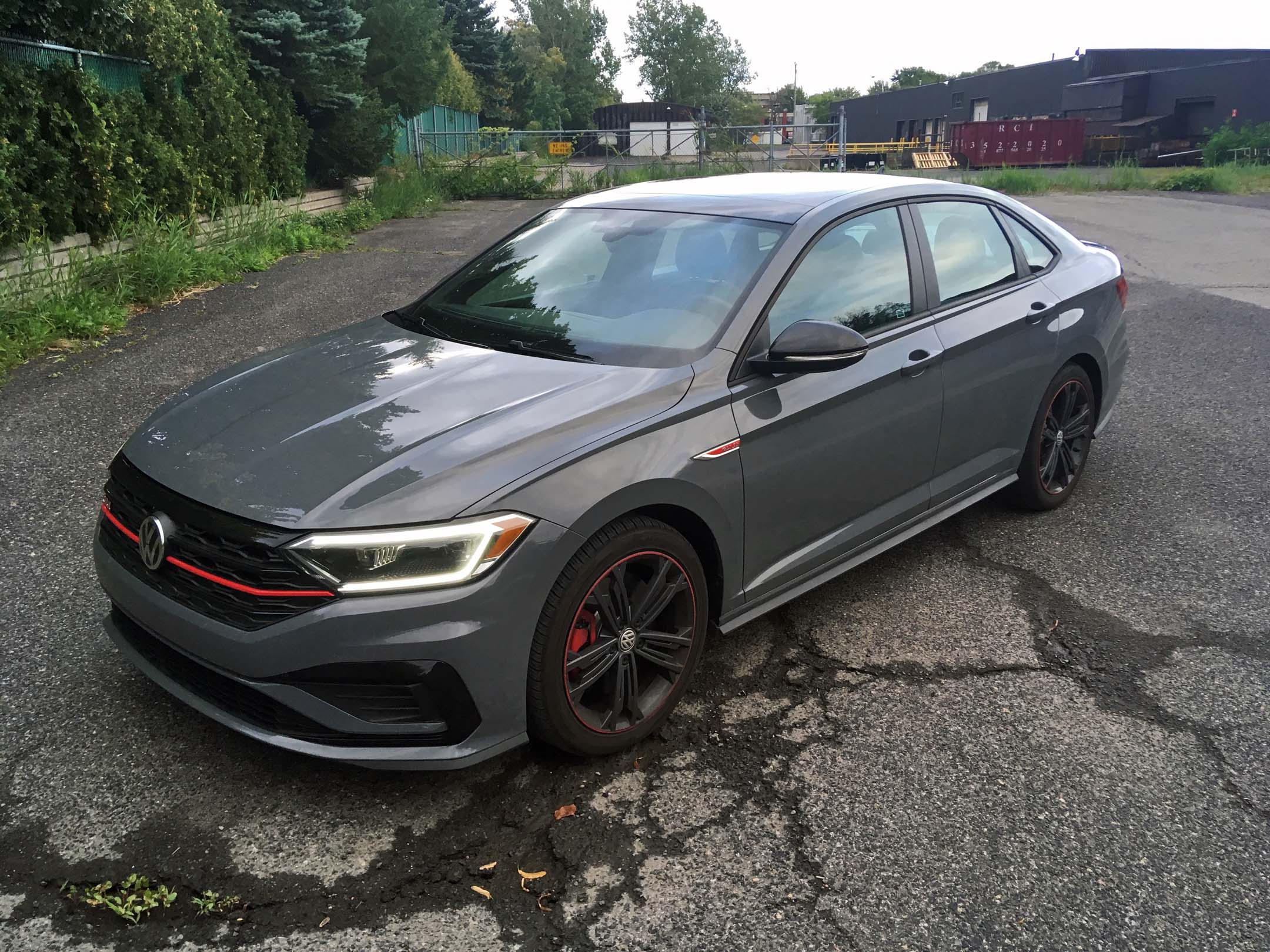
The 2019 Volkswagen Jetta GLI accelerates from 0 to 60 mph in 5.6 to 5.8 seconds when equipped with the seven-speed dual-clutch DSG transmission. Models paired with the six-speed manual gearbox achieve the same sprint in roughly 6.1 to 6.3 seconds, with real-world acceleration heavily dictated by launch execution and tire traction.
2019 Volkswagen Jetta GLI Powertrain Specifications
The 2019 model year marked a significant generational transition for the Jetta GLI. Built on Volkswagen’s modular MQB architecture—the same rigid foundation underpinning the Mk7 Golf GTI and Audi A3—the 2019 GLI received the full mechanical package from the performance-oriented GTI, leaving behind the older platform limitations of the previous generation.
At the core of the 2019 GLI is the third-generation EA888 2.0-liter turbocharged inline-four engine. In factory trim running on premium fuel, this direct-injected, iron-block engine generates 228 horsepower at 5,000 rpm and 258 lb-ft of torque starting as low as 1,700 rpm. Peak torque remains flat across a wide swath of the rev range, which provides immediate mid-range punch and minimizes the sensation of turbo lag once the twin-scroll turbocharger spools up.
| 2019 VW Jetta GLI Powertrain | Specification |
|---|---|
| Engine Architecture | 2.0L EA888 Gen 3 Turbocharged DOHC 16-Valve I4 |
| Horsepower | 228 hp @ 5,000 rpm (Premium Fuel) |
| Peak Torque | 258 lb-ft @ 1,700–4,800 rpm |
| Drivetrain | Front-Wheel Drive (FWD) |
| Differential | VAQ Electronically Controlled Mechanical LSD |
| Front Brakes | 13.4-inch Vented Discs (Golf R Componentry) |
| Curb Weight | ~3,220 lbs (Manual) / ~3,280 lbs (DSG) |
Power transfers exclusively to the front wheels via one of two transmissions: a standard six-speed manual or an optional seven-speed dual-clutch transmission (Direktschaltgetriebe, or DSG, internal code DQ381). The MQB platform integration also replaced the base Jetta’s torsion-beam rear suspension with an independent multi-link setup, while incorporating larger 13.4-inch front brake rotors borrowed directly from the Golf R. These mechanical additions stabilize the chassis during aggressive launches and violent longitudinal weight transfers.
Verified 0-60 Times: DSG vs. Six-Speed Manual
Acceleration figures across major automotive testing outlets vary based on ambient conditions, test surfaces, rollout calculations, and transmission options. Testing methodology accounts for some differences: instrumented tests (such as those conducted by Car and Driver or MotorTrend) typically factor in a standard one-foot rollout, which deducts approximately 0.2 to 0.3 seconds from raw telemetry data to simulate drag-strip timing equipment.
Seven-Speed DSG Dual-Clutch (5.6 to 5.8 Seconds)
The dual-clutch variant consistently delivers the fastest times. In independent instrumented testing, the 2019 Jetta GLI DSG registered a 5.6-second 0-60 mph time using integrated launch control. On standard unprepped asphalt without rollouts factored in, owners typically record times between 5.8 and 6.0 seconds.
The DSG manages uninterrupted power delivery during gear changes. Pre-selecting the next gear allows shifts to occur within milliseconds, preventing boost pressure from dropping between the first-to-second and second-to-third transitions. Because second gear typically runs out near 55 mph depending on tire diameter, achieving 60 mph requires a rapid shift into third. The DSG executes this upshift with zero torque interruption, preserving forward momentum.
Six-Speed Manual (6.1 to 6.3 Seconds)
The six-speed manual GLI records a 6.1-second 0-60 mph sprint under optimal test conditions, though real-world figures frequently land at 6.3 to 6.5 seconds.
The manual transmission exhibits higher drivetrain resistance to aggressive, sudden launches. Drivers must manually balance clutch slip against wheelspin to prevent the engine from bogging below its boost threshold. Human shift times—even when executed cleanly—cannot rival the electronic hydraulic shifting of the DSG. Furthermore, completing the manual shift into third gear to cross the 60 mph marker costs fractions of a second, widening the performance gap between the two setups.
Real-World Quarter-Mile and In-Gear Performance
While 0-60 times reflect initial off-the-line traction, rolling acceleration benchmarks provide a clearer picture of the 2.0-liter EA888’s actual power delivery once rolling grip is established.
Quarter-Mile Telemetry
- Jetta GLI DSG: 14.2 to 14.4 seconds @ 99–101 mph
- Jetta GLI Manual: 14.6 to 14.8 seconds @ 97–99 mph
The trap speeds (near 100 mph) highlight that both variants have identical power-to-weight ratios. The DSG gains roughly 0.4 seconds and 2 mph by the end of the quarter-mile solely due to launch consistency and rapid gear changes.
5-60 MPH Rolling Start (Street Start)
A "street start" test measures acceleration from a steady 5 mph crawl without using launch control or dropping the clutch. This eliminates tire launch advantage and exposes turbo spool characteristics:
- DSG Street Start: ~6.3 to 6.5 seconds
- Manual Street Start: ~6.8 to 7.0 seconds
The noticeable increase in elapsed time during rolling start testing illustrates the lag between low-rpm throttle opening and full boost pressure accumulation. Despite torque hitting full stride at 1,700 rpm on an engine dyno, moving roughly 3,250 pounds of car from low revs demands transient spool-up time from the turbocharger.
Mechanical Factors Influencing the Launch
Achieving sub-six-second 0-60 times in a front-wheel-drive sedan requires precise management of torque, traction, and chassis movement. Volkswagen equipped the 2019 GLI with dedicated hardware to combat front-wheel-drive physics, though some compromises exist.
- Engine: 228 hp / 258 lb-ft
- 7-Speed DSG or 6-Speed MT
- VAQ Electronic-Hydraulic LSD
- Left Front Wheel (Traction Managed)
- Right Front Wheel (Traction Managed)
- Dynamic Slip
- Stock Tires: Hankook Kinergy GT (Traction Bottleneck!)
The VAQ Limited-Slip Differential
Front-wheel-drive sports cars commonly suffer from inside-wheel wheelspin under aggressive acceleration or corner exit. The 2019 GLI incorporates an electronically controlled, hydraulically actuated mechanical limited-slip differential (known in the Volkswagen Group as the VAQ differential).
Unlike basic brake-vectoring systems that brake the spinning wheel—robbing the car of engine power—the VAQ uses a multi-plate clutch pack positioned between the right axle and the differential cage. It reads wheel speed sensors, steering angle, and yaw rates, hydraulically locking the differential to transfer up to 100 percent of available torque to the driven wheel with the most mechanical grip. This differential action eliminates torque steer and prevents excessive one-wheel burnouts during hard standing starts.
The Factory Tire Bottleneck
The single greatest operational bottleneck affecting the stock 2019 Jetta GLI’s 0-60 acceleration is its original factory tire fitment: Hankook Kinergy GT all-season tires (225/45R18).
Engineered for low rolling resistance, long treadwear ratings (UTQG 500+), and low road noise, these factory tires lack the compound stickiness needed to transmit 258 lb-ft of low-end torque to cold pavement. In first and second gears, the tires break traction easily, triggering the electronic traction control system (ASR), which cuts throttle input and retards timing.
Independent track testers and owners consistently find that replacing factory all-season tires with dedicated ultra-high-performance summer rubber (such as Michelin Pilot Sport 4S or Continental ExtremeContact Sport) drops 0-60 times by 0.3 to 0.5 seconds simply by minimizing tire slip during initial weight transfer.
Launch Control Operation (DSG Only)
The seven-speed DSG includes a built-in launch control algorithm. To engage the system:
- Bring the engine and transmission to normal operating temperatures.
- Select Sport Mode via the driving mode selector.
- Deactivate or switch the Electronic Stability Control (ESC) to ESC Sport by pressing and holding the traction control button.
- Press firmly on the brake pedal with your left foot.
- Depress the accelerator pedal to the floor with your right foot.
- The engine will rev and hold steady at approximately 3,000–3,200 rpm while building boost.
- Release the brake pedal cleanly.
The transmission’s electro-hydraulic clutch pack slips momentarily to maintain optimal engine speed without overwhelming the tires before engaging fully.
2019 GLI vs. Contemporary Competitors
When evaluating the 2019 Jetta GLI's straight-line pace, comparing it against same-era front-wheel-drive and all-wheel-drive compact performance benchmarks provides critical market context.
| Vehicle | Drivetrain | Output (hp / lb-ft) | Transmission | 0-60 mph (sec) | 1/4-Mile (sec @ mph) |
|---|---|---|---|---|---|
| 2019 VW Jetta GLI | FWD | 228 / 258 | 7-Speed DSG | 5.6 | 14.2 @ 101 |
| 2019 VW Jetta GLI | FWD | 228 / 258 | 6-Speed Manual | 6.1 | 14.6 @ 98 |
| 2019 VW Golf GTI (Mk7.5) | FWD | 228 / 258 | 7-Speed DSG | 5.7 | 14.3 @ 100 |
| 2019 Honda Civic Si | FWD | 205 / 192 | 6-Speed Manual | 6.6 | 15.0 @ 94 |
| 2019 Hyundai Elantra Sport | FWD | 201 / 195 | 7-Speed DCT | 6.4 | 14.9 @ 94 |
| 2019 Subaru WRX | AWD | 268 / 258 | 6-Speed Manual | 5.5 | 14.0 @ 99 |
Jetta GLI vs. Golf GTI
The Jetta GLI and the Mk7.5 Golf GTI share the MQB chassis, EA888 engine, VAQ differential, and transmissions. However, the Jetta GLI features a longer wheelbase (105.6 inches vs. 103.6 inches for the GTI) and a traditional three-box sedan profile. Despite being approximately three inches longer overall, the GLI weighs virtually the same as the GTI hatch. Real-world testing shows the GLI matching—and occasionally beating by 0.1 seconds—the GTI’s 0-60 times, thanks to the longer wheelbase slightly dampening rearward pitch and aiding front-axle traction off the line.
Jetta GLI vs. Honda Civic Si
The tenth-generation Civic Si represents the GLI’s primary front-drive rival. While the Civic Si is praised for its lower curb weight (~2,900 lbs) and sharp handling, its 1.5-liter turbocharged engine generates only 205 hp and 192 lb-ft of torque. The Civic Si was offered exclusively with a six-speed manual. With a 0-60 time of roughly 6.6 seconds, the Civic Si trails the manual GLI by half a second and the DSG GLI by a full second.
Jetta GLI vs. Subaru WRX
The Subaru WRX relies on permanent all-wheel drive, allowing aggressive high-rpm clutch drops that launch the car to 60 mph in 5.5 seconds. However, the manual WRX’s driveline shock during hard launches causes noticeable mechanical wear over time. By the end of the quarter-mile, the GLI matches the WRX’s trap speed (~99–101 mph), showing that the Volkswagen packs comparable rolling-acceleration punch once off the line.
Modifying the 2019 GLI for Faster 0-60 Times
The MQB platform and EA888 Gen 3 engine are well known for their tuning headroom. Owners seeking to lower their 0-60 acceleration times can make notable performance gains through modest aftermarket upgrades.
Acceleration Upgrade Progression
- Tier 1: Sticky Tires (235/40R18)
- Drops 0-60 to ~5.3-5.5s (DSG)
- Tier 2: Lower Torque Arm Insert ("Dogbone" Mount)
- Minimizes wheel hop; stabilizes front axle
- Tier 3: ECU / TCU Stage 1 Software Calibration
- Yields ~300 hp / 350 lb-ft
- Drops 0-60 to ~4.8-5.1s (Traction limited)
Step 1: Upgrading Rubber and Wheel Width
Before adding horsepower, maximizing front-axle traction is essential. Upgrading from the stock 225-section all-season tires to 235/40R18 or 245/40R18 extreme-performance summer compounds provides the grip necessary to handle the engine's off-idle torque. Sticky tires alone can bring the stock DSG GLI's 0-60 time down from 5.7 seconds to the 5.3-to-5.5-second range without changing engine output.
Step 2: Chassis Stiffening and Dogbone Inserts
Front-wheel-drive MQB vehicles encounter violent axle oscillation under hard launches, commonly known as wheel hop. Wheel hop occurs when the rubber lower engine mount (dogbone mount) flexes under load, allowing the engine and transmission assembly to rock back and forth. This rocking breaks and regains traction rapidly, rattling the cabin and risking axle damage.
Installing a polyurethane or billet aluminum dogbone mount insert costs under $100 and takes less than an hour to fit. The insert fills the voids in the factory rubber bushing, keeping the drivetrain stable under launch loads, reducing wheel hop, and allowing power to transfer directly to the ground.
Step 3: Stage 1 ECU and TCU Tuning
Software tunes recalibrate boost pressures, ignition timing, and fuel mapping without requiring physical hardware changes:
- ECU Tuning: A basic Stage 1 93-octane software flash bumps output from 228 hp and 258 lb-ft to roughly 300–310 horsepower and 350–370 lb-ft of torque.
- TCU Tuning (DSG): Flash software for the DQ381 transmission increases clutch-pack clamping force to prevent slip under high torque, raises the factory launch control rpm (often user-adjustable from 3,200 to 4,000 rpm), and quickens shift times.
With a Stage 1 tune, upgraded engine mounts, and summer tires, a 2019 Jetta GLI DSG can achieve 0-60 mph times of 4.8 to 5.1 seconds. Pushing 0-60 times below 4.8 seconds becomes challenging because front-wheel drive traction limits acceleration off the line, regardless of total engine horsepower.
Maintenance and Launch Longevity
Consistently performing hard, aggressive launches in a front-wheel-drive, turbocharged sedan increases thermal and mechanical wear across several core components. Keeping the car reliable requires sticking to a proactive maintenance schedule:
DSG Transmission Service Intervals
Volkswagen officially recommends servicing the DQ381 seven-speed dual-clutch transmission every 80,000 miles under normal driving conditions. However, vehicles subjected to frequent launch control engagement and track driving benefit significantly from fluid and filter renewals every 40,000 miles. Fresh DSG fluid keeps clutch packs cool and prevents high-pressure hydraulic solenoid contamination.
Engine Oil Thermal Breakdown
The EA888 engine runs oil temperatures between 215°F and 235°F under normal driving conditions, climbing higher under repeated full-throttle acceleration runs. Volkswagen specifies VW 508.00/509.00 (0W-20) or VW 502.00/504.00 standards depending on factory revisions. For performance driving, use an approved full-synthetic oil that meets factory specs and reduce change intervals from the standard 10,000-mile guideline down to 5,000 miles. This habit protects turbocharger journal bearings against heat degradation and oil coking.
Front Suspension Bushings and Half-Shafts
Repeated hard launches stress the front CV joints, wheel bearings, and lower control arm bushings. Inspect the rubber boots on the front drive axles annually for tears or grease leaks. If axle boots tear, grease escapes, leading to rapid CV joint failure under high-torque conditions.
Frequently Asked Questions
Does the 2019 Jetta GLI have launch control?
Yes, but only on models equipped with the seven-speed DSG dual-clutch automatic transmission. The manual version does not have an automated launch program. On DSG models, launch control is enabled by switching the vehicle to Sport mode, setting ESC to Sport, holding down the brake pedal, and pressing the accelerator to the floor. The car will rev and hold at approximately 3,000 rpm until the brake is released.
What is the 0-60 time for the 35th Anniversary Edition GLI?
The 35th Anniversary Edition shares the exact same 0-60 performance as the standard S and Autobahn trims: 5.6 to 5.8 seconds with the DSG and 6.1 to 6.3 seconds with the manual. While the 35th Anniversary Edition includes DCC adaptive chassis control dampers, unique wheels, and specific badging, its engine output (228 hp, 258 lb-ft) and curb weight remain identical to the rest of the lineup.
Why is the manual 2019 GLI slower to 60 mph than the DSG?
The manual transmission is slower primarily because human gear shifts take longer than the DSG's electro-hydraulic shifts, and because the manual lacks automated launch control. The DSG shifts gears in milliseconds without interrupting engine boost, whereas the manual loses manifold pressure between shifts. Additionally, hitting 60 mph requires a shift into third gear on both models, making the manual transmission's slower shift speed even more evident on the clock.
Can the 2019 Jetta GLI run on regular 87-octane fuel?
Yes, the engine's knock sensors allow it to safely run on 87-octane regular unleaded, but output drops. Volkswagen rates the EA888 engine at 228 hp and 258 lb-ft on 91-octane or higher premium fuel. Running 87-octane prompts the ECU to retard ignition timing to prevent pre-detonation, reducing power output to roughly 210 hp and adding 0.3 to 0.5 seconds to your 0-60 time.
How does the 2019 Jetta GLI's 0-60 time compare to a Golf R?
The 2019 Golf R accelerates significantly faster from 0 to 60 mph, completing the run in roughly 4.5 seconds. While the Golf R uses a higher-output variant of the EA888 engine (288 hp), its primary advantage off the line is its 4Motion all-wheel-drive system. The Golf R can direct engine torque to all four wheels during launch, eliminating the tire wheelspin that limits the front-wheel-drive GLI.
Practical Recommendation
If maximizing acceleration and daily straight-line speed is your primary goal, choose a 2019 Jetta GLI equipped with the seven-speed DSG. The dual-clutch gearbox not only delivers a faster 0-60 time (5.6 seconds versus 6.1 seconds for the manual), but its automated launch control ensures repeatable launches without excessive clutch wear.
For current owners looking to improve their car's acceleration, skip costly bolt-on engine modifications early on. Your best first investment is replacing the factory all-season Hankook tires with a set of 235-width maximum-performance summer tires, paired with an aftermarket dogbone mount insert. Eliminating wheelspin and axle hop allows the GLI to put all of its factory torque to the ground, giving you the quickest acceleration gains per dollar spent.